

Legend of Judge Arthur
During the presidency of Viktor Yanukovych, judge Artur Yemelianov rocketed up the career ladder from deputy head of the Donetsk regional economic court to deputy head of the High Economic Court of Ukraine.
He is still administering justice in spite of having been the subject of several journalist investigations on the large-scale raiding and corruption as well as criminal case investigation by the Prosecutor’s Office on unlawful interference with the operation of judicial bodies.
The judge is a regular visitor at his ex-wife’s Svitlana in Vienna, where she lives with their children. After a chance encounter with this judge during one of such flights, journalists of the programme “Scheme” (joint project of the Radio Liberty and the TV channel “UA:Pershyi”) decided to take a closer look at the assets of his ex-wife Svitlana Yemelianova.
What they discovered was elite property in various luxurious locations, such as hotels in Austria and Germany, fancy apartments in the Emirates, villa in Antalya.
The burning question is how did she have the means to pay for all those assets?
As for their 2014 divorce, which enabled judge Yemelianov to omit all the elite real estate from his public declaration, registered in his now ex-wife’s name, was it or was it not a sham?
Now Artur Yemelianov is the judge of the High Economic Court of Ukraine. Even though the High Council of Justice suspended him from administering justice at the beginning 0f 2017 for being prosecuted in the criminal case. Not for long, only 3 months.
Prosecutor’s General Office of Ukraine suspects him of unlawful interference with case distribution among judges. According to Serhiy Horbatiuk, chief of the Special Investigations department of the Prosecutor General’s Office, criminal proceeding against Yemelianov is close to completion.
“The evidence and the necessary materials are being organized. I am not authorized to mention the exact date, as it will put pressure on the investigating officer and prosecutor. They are the ones to set the date. However, I believe that the case is on a fast track to being tried”.
Judge Yemelianov has also been subject of the numerous journalistic investigations on raiding and corruption. In the Public Integrity Council they call him “the epitome of Yanukovych-time judicial system”.
It was during his presidency that the judge’s career got on such fast track: he was promoted from deputy head of the Economic Court of Donetsk region to deputy head of the High Economic Court of Ukraine in Kyiv.
Vitaliy Tytych, the Civil Integrity Council coordinator, is giving some highlights on how the system, designed by Yemelianov, was functioning: “It was the so-called “Donetsk Locomotive” (Ukrainian corruption term), when Yemelianov or negotiators would take orders from clients on the final decision of the court and guarantee prompt and painless proceeding from courts of first to last instance.
Nevertheless, even now, being under investigation, he continues hearing cases and makes rulings in the name of Ukraine in the High Economical Court – the court that has the final say in all the property and business disputes.
If judge Yemelianov was behind the numerous manufactured court decisions that he had to interfere with the judicial bodies to ensure (according to the prosecution), what personal gain did he have from all of that?
Elite property of the Yemelianov family
In June of 2017 Natalka Sedletska, author and presenter of the program “Schemes”, during her trip to the editorial conference, accidentally recorded Artur Yemelianov in Vienna airport on the flight from Kyiv.
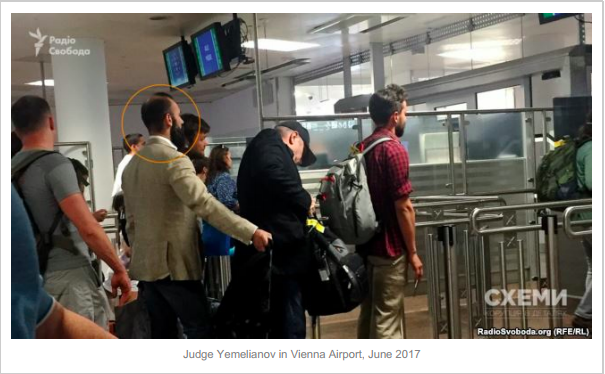
At the time it was revealed, that through the secret court order he was able to reverse the previous order that prohibited him from leaving Ukraine and took a flight to the Austrian capital. What was so important for Yemelianov to make him go there?
When looking for the answer to this question, the “Schemes” journalists went there themselves following the thread, which, unraveling, revealed the extensive geography of the elite property. This lead turned out to be Svitlana Yemelianova, now officially ex-wife of the judge and mother of his three children.
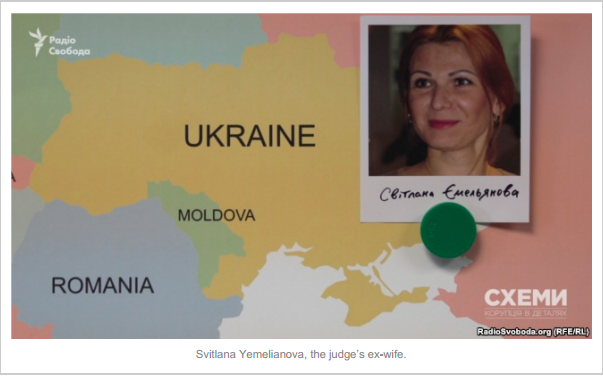
Up until 2014, Svitlana Yemelianova was member of Donetsk City Council from the Party of Regions. After the Revolution of Dignity in the autumn of 2014, she and her husband got a divorce, after the law enforcement started looking into the judge’s affairs. Ever since, Yemelianov is not formally obliged to declare the property registered in her name. Coincidentally, ever since, the number of his possessions took a plunge: for instance, the mention of 11 apartments, several houses and plots of land disappeared from his declaration. As for personal transport, he was left with nothing but a motor bike.
However, this list of the judge family property is far from exhaustive, and now Yemelianov does not have to come up with explanation of where the money for this property came from.
Since 2011, when judge Yemelianov’s career got on the fast track, his wife already had the small business in Donetsk – she was buying up elite real estate in Ukraine and abroad. She would go on doing just that even after divorce.
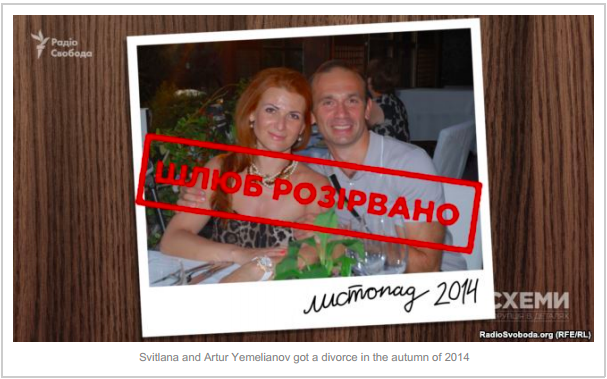
As for the divorce, was it even a real one? Or nothing but means to hide numerous properties of a shady origin?
Austria
In October of 2017, the filming crew of the program set off to Vienna. Just one block away from the drama theater Burgtheater there is street Herrengasse, literally meaning the “Street of Lords”. It’s one of the most expensive Vienna locations.
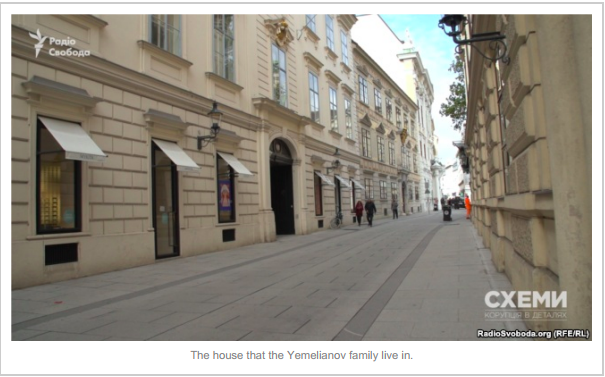
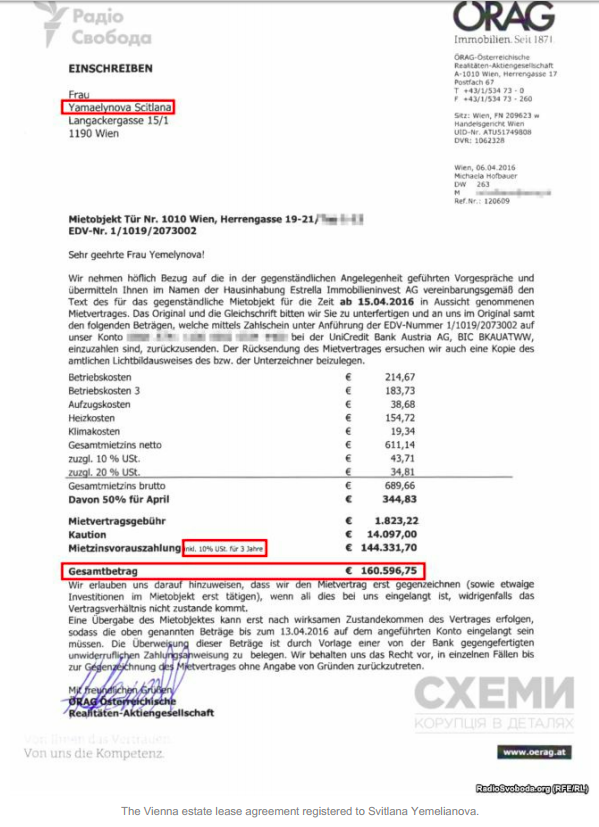
Family of the High Economic Court of Ukraine judge Artur Yemelianov live here, in one of the ancient renovated mansions. The estate is rented for 3 years and the total rent will cost the judge’s family over 160,000 EUR – according to the lease agreement that the journalists managed to get access to.
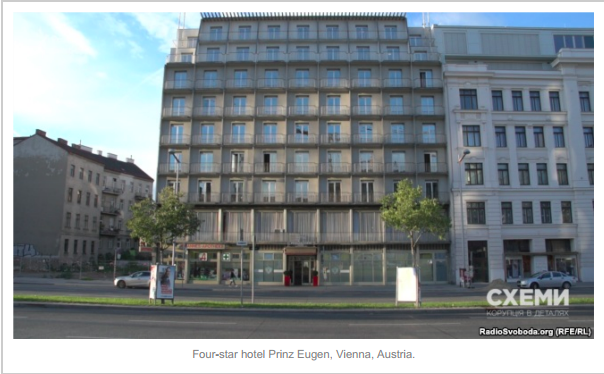
The four-star Vienna hotel Prinz Eugen. It is situated right opposite the main railway station of the Austrian capital, Hauptbahnhof. It is one of the two hotels that Svitlana Yemelianova co-owns.
According to the official data of the land registry, the hotel and the land it stands on are registered to the Austrian firm AHL REAL PEU GmbH, that purchased the real estate in 2012. The property is estimated at 4.5 million EUR.
What kind of firm is that? It was founded by the three Ukrainians of Donetsk origin, Dmytro Murakhver holds 1%, his brother Pavlo Malik holds another 85% (through another firm), and Svitlana Yemelianova holds the rest – 15 %. Ukrainian mass media often mention these three names in connection with occasional hostile takeovers of businesses, aided by the court decisions.
Turns out, their Austrian business is another thing that connects them.
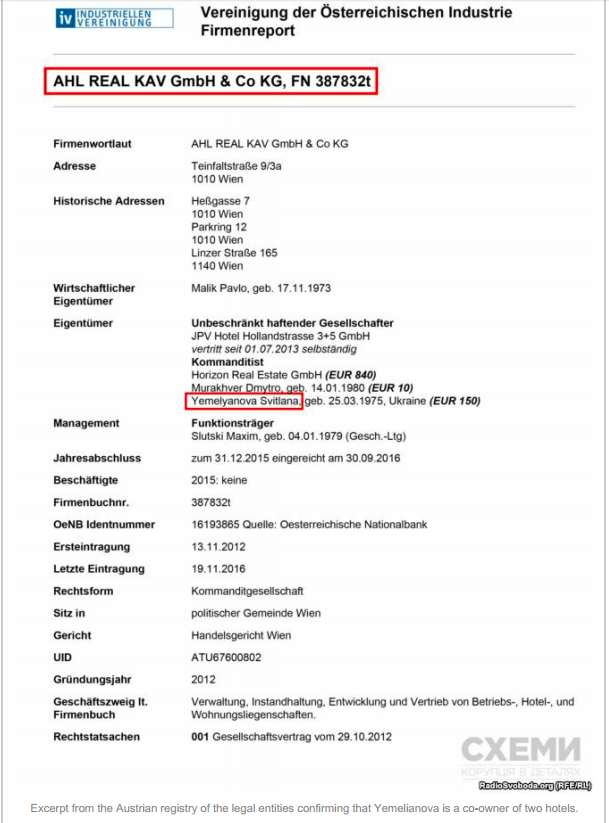
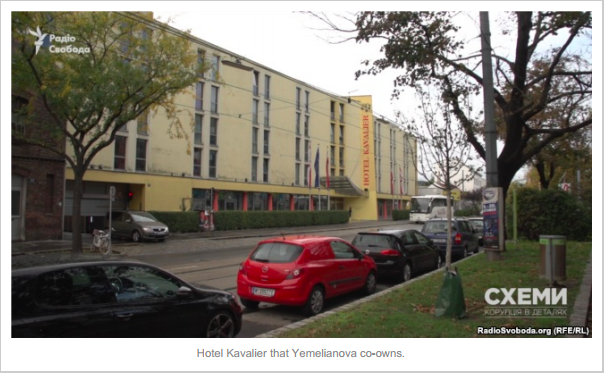
The other Austrian firm with the identical ownership structure is called AHL REAL KAV GmbH. Since 2012 it has owned another Vienna hotel Kavalier, which was also
estimated at 4.5 million EUR along with its land. It is situated close to the former summer residence of the Habsburg imperial dynasty – Schönbrunn Palace. Once again, according to the documents, Svitlana Yemelianova is the co-owner.
Both Prinz Eugen and Kavalier are part of the hotel operator Private Hotels chain, whose office the “Schemes” journalists decided to visit in order to talk to Svitlana Yemelianova. However, the filming crew was told that she was absent at the time and offered to leave their contact information so that they could pass it on to Svitlana. In addition, the journalists also sent their questions to Yemelianova’s email address. By the time the episode was aired and the article published, she did not contact the journalists.
Judge’s ex-wife officially became shareholder of the both firms that own the Vienna hotels in April of 2014. At the time, they were still legally married. Thus, if not for the divorce, the judge would have to declare his wife’s Vienna hotel business in the next annual declaration. This would provoke inconvenient questions about the origin of funds to pay for the property.
Turkey
Svitlana Yemelianova purchased the Antalya mansion in the Seashell Belek Elite Villas complex, at the Mediterranean seaside, in 2011.
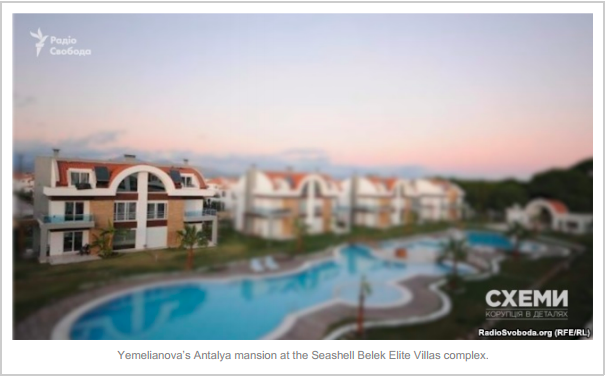
Investment in the Turkish real estate in the resort region of Belek totaled 350 thousand of the Turkish liras, or 250 thousand USD at the time. This information can be found in the registration documents for the villa that the “Schemes” journalists managed to access.
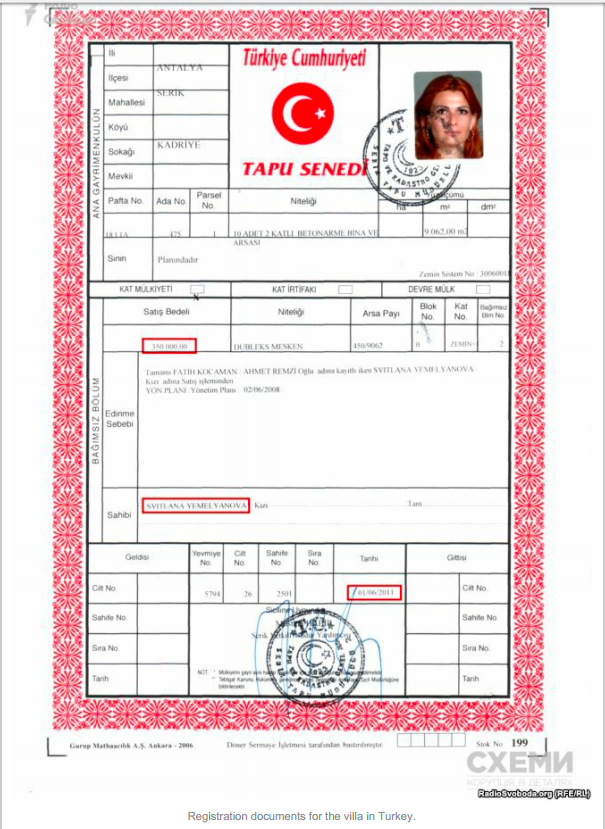
It is highly unlikely that Svitlana Yemelianova alone would have enough funds to purchase a house in Antalya. That year, according to the Tax Administration data, she officially earned mere 40 thousand UAH. In the whole previous decade, she earned less than a third of the cost of the Turkish villa – about 650,000 UAH.
As the judge’s career skyrocketed, his wife would proceed to purchase elite property abroad. For instance, in the summer of 2013, when Artur was already holding his position as the deputy head of the High Economic Court, Svitlana purchased real estate in the United Arab Emirates.
United Arab Emirates
Dubai. The famous artificial island of Palm Jumeirah. The northern wing of the Palm Jumeirah complex with panoramic views of the Arabian sea and the city.
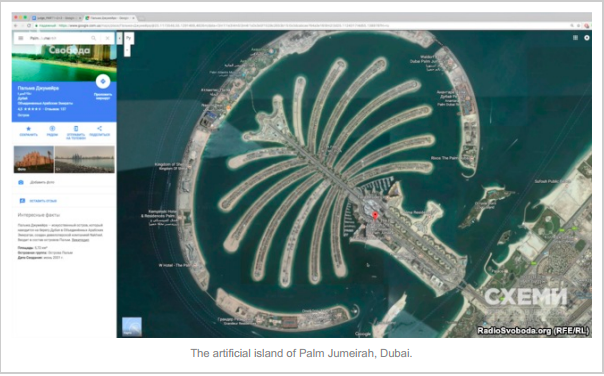
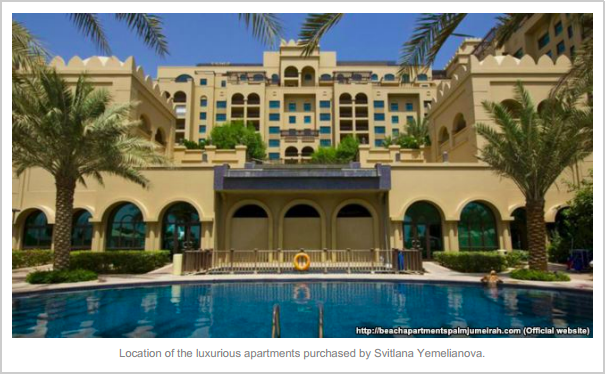
In this very location in August of 2013, 120 square-meter apartment became property of Svitlana Yemelianova from Ukraine, and the excerpt from the Emirate land registry confirms that.
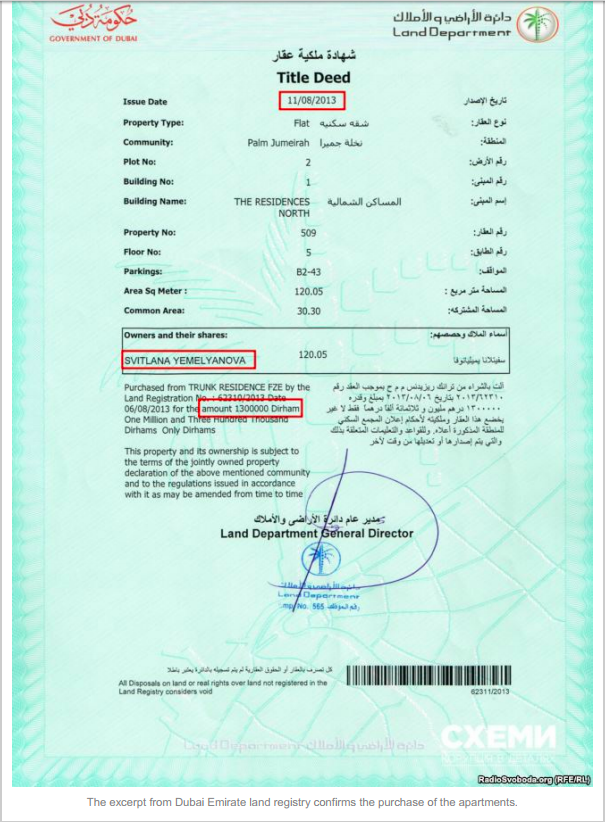
The price of the apartment is another piece of information that can be found in the excerpt, and it equals 1.3 million dirhams or over 350 thousand USD at the time. Still, the list goes on.
Germany
After their divorce with the judge was finalized, Svitlana became one of shareholders of the company that manages the hotel chain in Frankfurt-on-Mein.
According to the official German registry of the legal entities, in February of 2016 Svitlana Yemelianova bought 50% shares of the German company AVIAWEB GmbH.
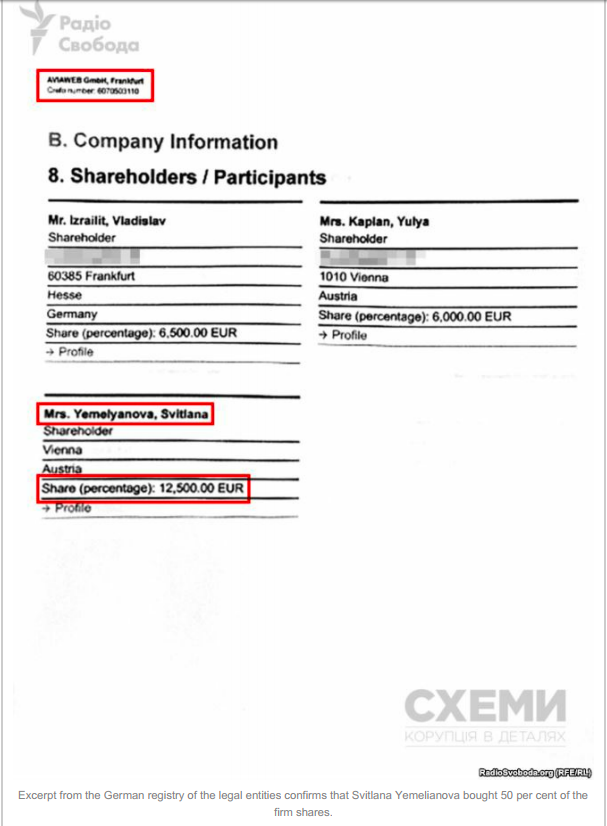
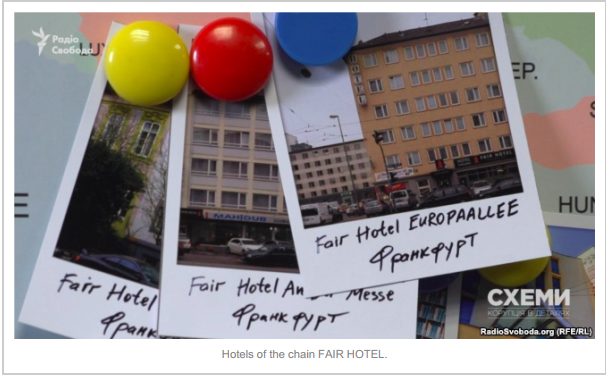
This German firm manages three Frankfurt hotels of the chain FAIR HOTEL: Fair Hotel Villa Diana, Fair Hotel an der Messe, Fair Hotel Europaallee.
Villa in Antalya, luxury apartments in Dubai, hotel chains in Vienna and Frankfurt are just those estates and businesses abroad that the journalists were able to track down in the course of their investigation. They were not intended to be revealed to Ukrainian citizens, as the judge divorced in 2014 and didn’t have to declare property, registered in Svitlana’s name ever since.
“My wife and I got a divorce in 2014. After that, according to the declaration form requirements, I had to declare only the property that belongs to me and members of my family who live with me or have family relations with me”, – previously explained Artur Yemelianov in his comment for the “Schemes”.
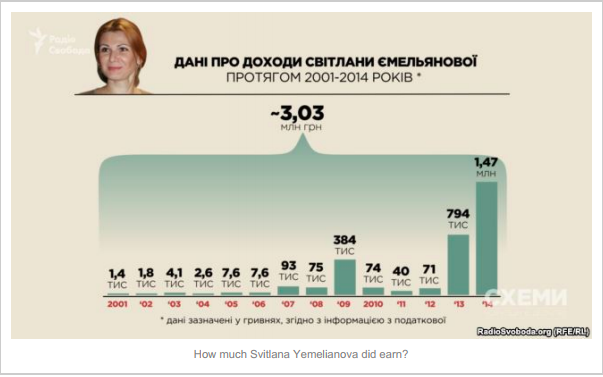
Most of Svitlana Yemelianova’s property, tracked down by the journalists, was purchased before and through 2014. While she was legally married with the Ukrainian judge. Where did the money for the property come from? According to Taxation Administration data, that the “Schemes” programme was able to obtain from their sources, her official income during 2001-2014 was just a little over 3 million UAH.
Therefore, the suspicions of their divorce being a sham grew stronger. The “Schemes” started looking for the evidence that Svitlana and Artur Yemelianov continue living as a couple. They did not have to search for long.
Façade of divorce?
On December 25, 2014, just one month after the divorce Svitlana and Artur Yemelianov flew together for the New year holiday to Vienna from Boryspil airport. Their taking the same flight was noted in the database of border crossing, the programme’s own sources confirmed this as well.
Moreover, the journalists managed to lay their hands on the whole itinerary of that trip: from Vienna the judge’s family took a car trip to Berlin, where they stayed in the famous five-star hotel Adlon Kempinski. It was where they celebrated the new 2015 year’s eve, then went to Amsterdam for a few days, returned to Vienna, from where they flew back to Kyiv on 11 January. This can be verified by the same border crossing database: Artur and Svitlana Yemelianova did take the same return flight on that day.
As a single trip together one month after the divorce is not enough evidence to prove that the divorce was a sham, journalist walked an extra mile and analyzed the data on all the joint flights of the divorced couple up until now.
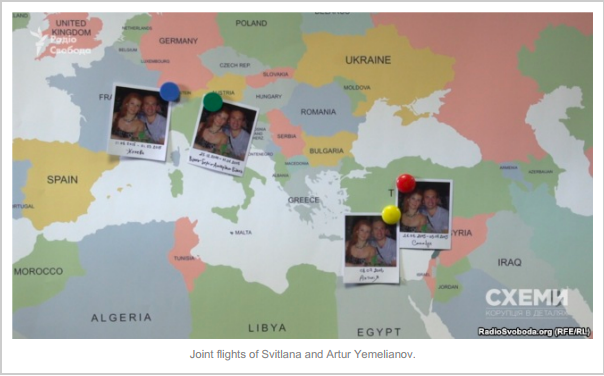
One month after the aforementioned new year euro-tour, the couple flew together to Geneva, Switzerland, to celebrate Artur’s birthday. In a few months, they vacationed in Istanbul, from which they came back to Kyiv together, on the same flight. In the summer of 2016, Artur and Svitlana Yemelianova, having been legally divorced for one and a half year, took the same flight to Turkish Antalya.
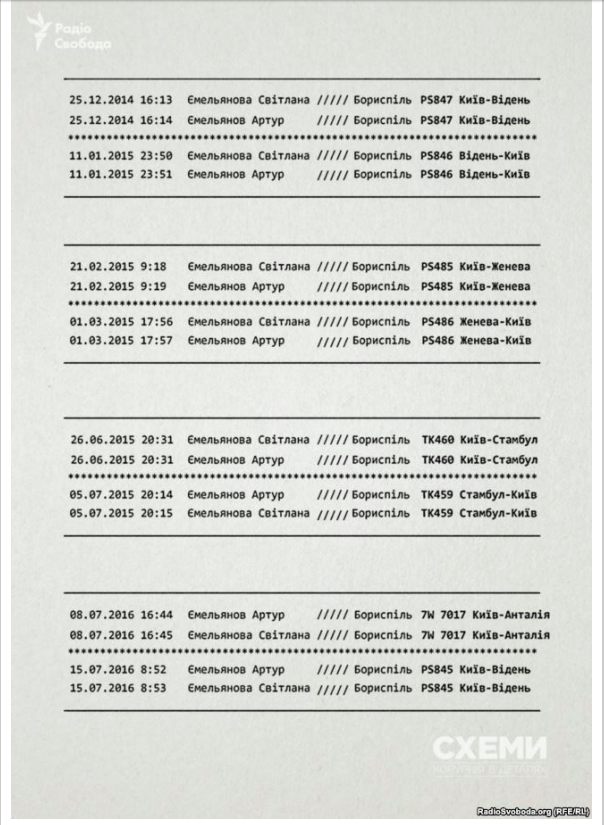
Granted, all of that would be their private matter, if not for the fact that their legal dissolution of marriage enabled the High Economic Court judge to omit all and any property, registered in his wife’s name, from his declaration, thus avoiding those annoying questions about where the money it had been purchased with came from
So, the journalists uncovered data of at least four shared vacations of the couple abroad. Therefore it was not surprising for them to see Artur himself near Svitlana’s house in Vienna on the very first evening they came to film the episode.
Family reunited?
October 5, 2017. Vienna, Austria. Herrengasse Street, where the officially divorced wife of the judge rents an apartment in an age-old house for more than 50 thousand EUR per year. Here the filming crew spots Artur Yemelianov himself behind the wheel of a white Range Rover.
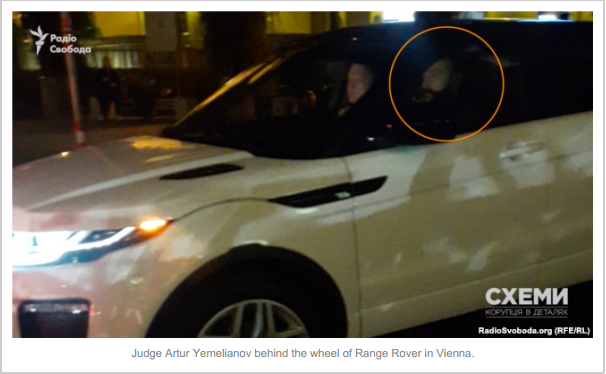
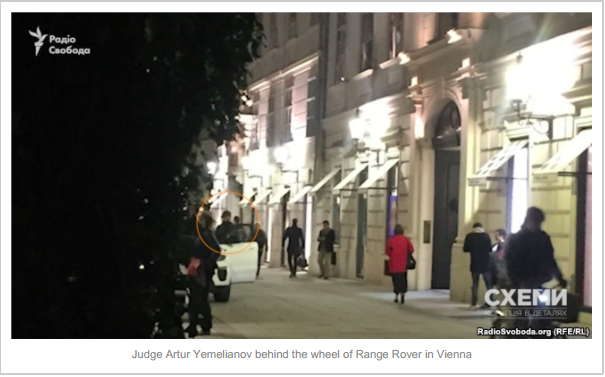
The “Schemes” encounter the judge in the same location on the next day. He is unwilling to talk to Ukrainian journalists. Curtly offers that visits Vienna fairly often – every week. “I visited my daughter, you see, I came to see my daughter”, says the judge.
He also says that this visit to Austria was special for him: “My son is getting married tomorrow. Wonderful occasion. So I came for my son’s wedding”.
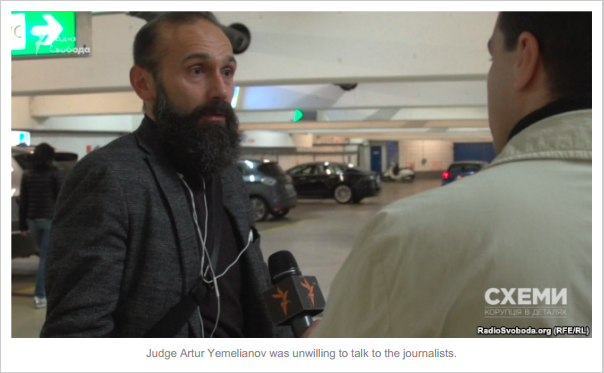
When asked about his wife’s business and where the money for the business came from, he offers to address these questions to Svitlana herself. Then he is quick to say his goodbyes: “You see, I am pressed for time today. On Monday or Tuesday I will be in Ukraine – then you can arrange everything. I’m willing to give an interview. You can prepare all the questions, I regularly stay in Kyiv. Now I must take care of my private life. When you are available, and I am available, feel free to contact me”.
Wedding of the Ukrainian judge’s son in Vienna
Hlib, son of judge Yemelianov, really had his wedding on the next day. The young man is 21, he studies in Switzerland in the prestigious private Glion Institute where they “prepare students for accelerated careers in hospitality business” and tourism.
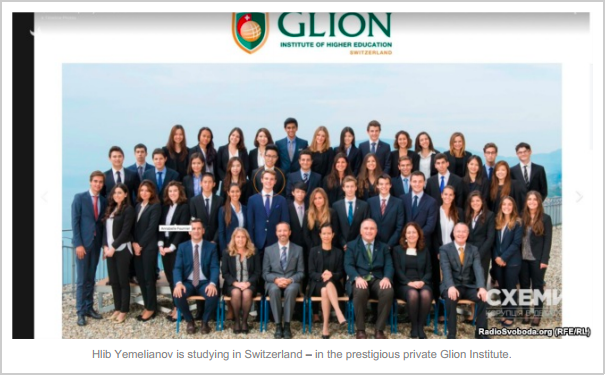
A year in Glion Institute costs about 40,000 USD. That is where the son of Ukrainian judge met his future wife Sofia from Russia.
When in Vienna, the filming crew of the program found out that the wedding would be held in Thalheim Palace, one hour away from the center of Vienna.
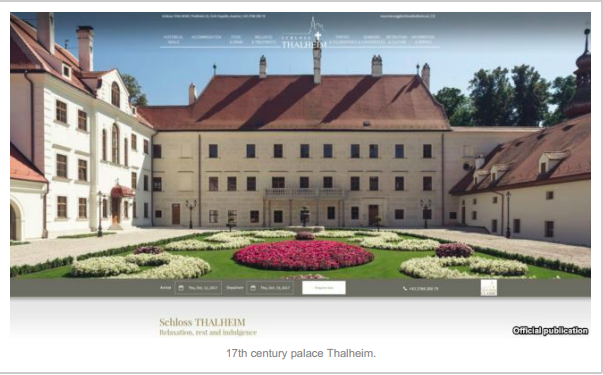
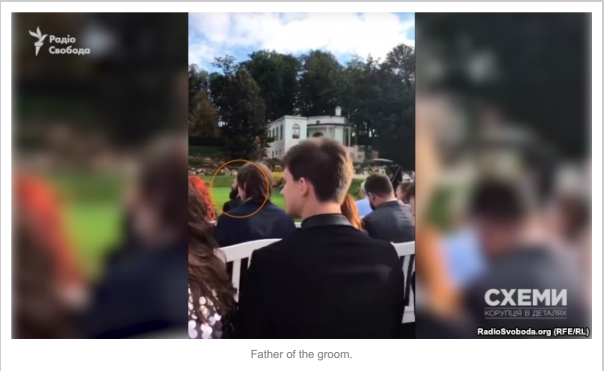
This palace with a gorgeous garden, built in the 17th century, still operates as a hotel and location for ceremonies and festive occasions. The territory turned out to be closed, however, the guests themselves provided a glimpse of the event when posting photos and videos on social media.
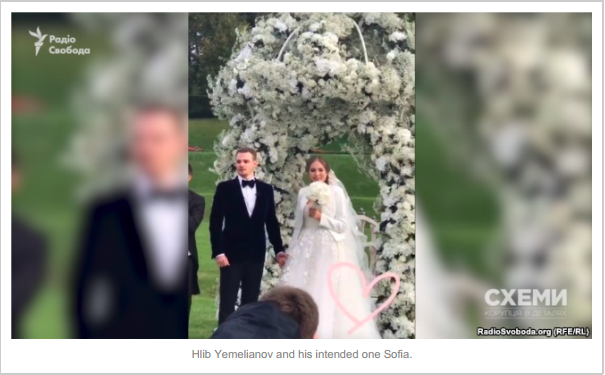
Here is Artur Yemelianov himself, father of the groom.
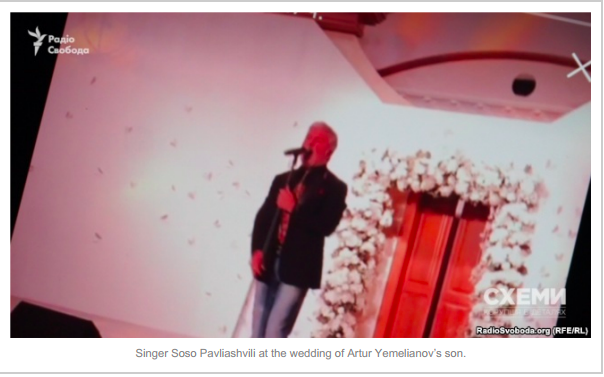
Russian singer of Georgian descent Soso Pavliashvili entertained the guests.
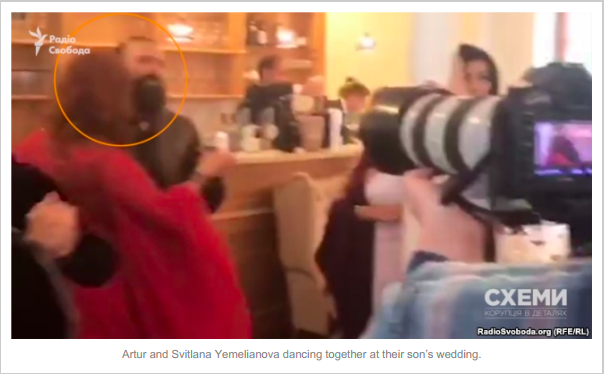
Here are groom’s parents Artur and Svitlana dancing together.
Questions we have. Will there be answers?
The whole range of elite real estate all over the world. Cars worth tens of thousands dollars. Children studying in expensive universities abroad. Son’s wedding ceremony in an age-old Austrian palace. Where is the money coming from to pay for all of that in the family of the Ukrainian judge? How real was his divorce from his wife, in whose name most of the aforementioned property is registered?
Following the judge’s request, the editorial team sent all of the above questions to his work e-mail and to his personal messages, mentioning the date that the investigation episode would air and reminding of the promised interview.
However, when faced with the specific questions, Artur Yemelianov refused to answer them after all before the foreseen date the program would air. What is more, threatening to sue, he demanded to put off the air until the time he would be able to comment on the aforementioned facts.
“I insist on all information about me to be released only after I have had a chance to comment on them. Otherwise, it is a puff-piece fodder, paid for, and not an independent journalistic investigation. The legal consequences will ensue”, – he wrote to the Radio Liberty in the messenger.
“Schemes” are publishing this investigation, as they sent the list of questions to judge Yemelianov well in advance and made all the conceivable efforts to give him the opportunity to offer his explanations before the air. Which he did not take. However, if the judge happens to be willing to give an interview after the release of this investigation, the editors will make sure it is published and shown in the future episodes.
Satan’s hand: Russian meddling behind Budapest’s metro chaos
The mayor of Budapest couldn’t hide his frustration anymore. “This is some kind of a Murphy’s law or a game of devilish powers,” Istvan Tarlos told reporters at his weekly press conference in March 2017. His laugh was filled with disappointment: “Although I’m a believer, I’m absolutely sure Satan’s hand is in this M3 metro line case.” Tarlos was referring to the newly arrived and constantly malfunctioning Russian metro cars, which kept breaking down since their first full day in service. The mayor was right when he suspected clandestine operations behind Budapest’s metro saga. By that time, he likely knew he had been fooled by the Russians four years earlier.
A successful smear campaign
In 2013, the old-school conservative mayor of Budapest became increasingly hostile towards Dávid Vitézy, the CEO in charge of running the capital’s public transportation company, BKK (Budapesti Közlekedési Központ). Vitézy was the exact opposite of Tarlós with his progressive views. The public enjoyed their fight, until it ended with the dismissal of the CEO, who was quite popular in Budapest’s intellectual scene. Everyone, including both the mayor and the CEO, thought their clash was purely about political ambitions, clashing worldviews and genuinely personal hatred between the two of them. What no one else knew was that a third party was secretly involved in the story.
Tarlós and Vitézy were working together since 2010, when Viktor Orbán’s party, Fidesz, won not only the parliamentary elections, but the municipal elections as well. When Tarlós became the mayor of Budapest, Vitézy, the 28-year-old young traffic expert who grew up as a tram and bus enthusiast, was an obvious choice to head the company coordinating public transport in the capital. Vitézy not only had a vision how to modernize Budapest’s public transportation system, but also had very strong family ties to the Fidesz establishment. Vitézy’s mother is a Fidesz MEP in Brussels, and more importantly, his half-sister is Viktor Orbán’s cousin.
But all of a sudden, the young CEO’s political support started to evaporate. VSquare found out about a Russian smear campaign that took place in 2013, aimed at removing Vitézy, who was in their way of winning the tender for the refurbishment of the old Budapest M3 metro line. Both the mayor and the CEO were victims of the manipulation.
VSquare discovered that in May 2013, a Russian delegation met with Vitézy, who made a big mistake by forgetting to take official notes of his negotiation with the Russians. Soon, false stories based on this meeting, were deliberately spread. The head of Budapest’s public transport was accused in the prime minister’s increasingly pro-Kremlin inner circles as being anti-Russian and threatening business deals with Moscow. He got fired. This way, the Russians had a clear path to more than 200 million euros in Hungarian public money. The mayor of Budapest admitted to VSquare that it was not his own initiative to get rid of the head of Budapest’s public transportation.
THE MAYOR GOT SURROUNDED BY RUSSIAN LOBBYISTS
István Tarlós, the maverick-type right-wing mayor who has been in charge of Budapest since 2010, has undertaken a number of political conflicts with prime minister Viktor Orbán’s powerful ministers and oligarchs. The latter constantly sought to drain Budapest’s budget and EU development funds through various corruption schemes and channels. Tarlós, whose integrity is rarely questioned, tried to fight back these attempts.
For example, he clashed with Lajos Simicska, the notorious oligarch in charge of the economic hinterland of Fidesz. Tarlós succeeded keeping him out of Budapest, at least to some extent. This is remarkable, because Simicska, Orbán’s best friend since college, was the master of life and death within the Fidesz government between 2010 and 2014. Simicska was so powerful that he actually picked and dismissed some of Orbán’s cabinet members.
During his battles, however, Tarlós needed influential allies to survive the attacks of greedy oligarchs and Fidesz politicians. He gave an increasingly important, but informal role to István Kocsis, a well-known russophile who used to be the chief executive officer of BKK’s predecessor, BKV, and MVM, the Hungarian state energy company. He was also the former CEO of the Paks Nuclear Power Plant, originally built by the Soviets. Kocsis, one of the decisive economic figures of the former Socialist-Liberal government between 2002 and 2010, was involved in multiple corruption scandals, hence he was forced to keep a low profile after 2010.
Tarlós also relied on a longtime ally, an ex-Socialist politician and Communist-era security officer, György Pető, who worked for the Americas department of the Hungarian counter-intelligence in the ‘80s. Later, András Tombor, a former national security adviser to Orbán also appeared on the scene, or, to be exact, behind the scenes. He informally offered Budapest’s leadership to help soothe ties with some of Tarlós’s dangerous adversaries in Orbán’s cabinet.
Both Kocsis and Tombor were seen as lobbyists with ties to various Russian businessmen, while Pető was known for starting his career at the Hungarian Ministry of Interior’s III/II department, which practically had been the local affiliate of the KGB, sometimes taking orders from Moscow. According to sources familiar with the case, Russian influence in Budapest became visible when various actors tried to convince the capital’s leaders to give the lucrative renovation project of the M3 metro line to Metrowagonmash, a Russian company selling metro cars.
HUNGARIAN POLITICIANS WERE FRIGHTENED
The construction of the third metro line of Budapest – known as the blue metro – started in 1970, and the line has been operating since 1976. Although more than half a million people use it every day, it had not seen renovation in the last three decades. After a series of severe technical problems involving scary scenes of fire and smoke created public outcry in 2011-12, the capital’s leadership realized that renovation and the purchase of new metro cars was inevitable. The type of Soviet metro cars used in Budapest since the 1970s, the construction technology of the tunnels and the ventilation system were almost the same as in Baku, Azerbaijan, where an electric fire left 289 people dead and 270 injured in 1995.
Russian lobbyists instantly spotted an opportunity.
Years ago, well before the winner of this metro tender was announced, we had a background conversation with one of the informal lobbyist advocating for Metrowagonmash’s victory. He declined to be called a Russian lobbyist, arguing he was just trying to convey the parties in order to avoid a major metro accident.
“No one wants to be responsible for the death of passengers, right?”, said the lobbyist, who claimed that Hungarian politicians were frightened and would opt for the speediest solution instead of a cost-effective one. Since both the metro cars and the tunnel were built by Russians, they were also the most qualified to refurbish it, the lobbyist argued. The essence of his reasoning was that a tragedy should be avoided at all costs. This argument is misleading, of course. For example, it was the Czech engineering company Škoda Transportation, not Metrowagonmash, that successfully refurbished Prague’s old Soviet metro carriages in 2011. No tragedy occurred.
Tarlós, however, reiterated the same argument in an email when asked by VSquare: “I still uphold my opinion that it seems logical to me that the most qualified to refurbish something, are the ones who produced it”, the mayor argued. “But I’m honestly saying I did not assist the Russians during the public procurement, nor did I intervene at any point. The only important thing for me was to get the refurbishment started”, he continued.
The mayor tried to downplay the role of both Kocsis and Tombor. “No one asked – at least not from me – Metrowagonmash to win. Neither István Kocsis nor Mr. Tombor. I questioned Kocsis on the phone once whether the rumor I heard that he is lobbying for Russian interests was true. Although he admitted he has different kinds of Russian contacts, but firmly denied this lobbying effort without hesitation. I very seldom ask Kocsis on some past issues (…), but I don’t ask for Mr. Tombor’s opinion on anything at all”, the mayor claimed.
FROM THE RUSSIAN ARMY TO BUDAPEST
There were two big obstacles in Metrowagonmash’s way.
The first obstacle was Dávid Vitézy, the young CEO leading BKK, whose loyalty to the governing party was never questioned and his position seemed solid. Vitézy showed no interest at all in foreign policy and had nothing against Russia as a political actor. “Maybe Vitézy did not sympathize with the Russians, but as far as I remember he did not explicate to me, he did not advertise it”, the mayor said.
But as a traffic expert, Vitézy opposed the idea of simply refurbishing the rusty, outdated Soviet metro cars. The head of BKK would have preferred a fair and competitive bidding process, where Budapest would buy new cars, not just face-lift the existing old ones. Despite their different backgrounds, Vitézy and Tarlós were on the same page this time, both preferring brand new metro cars for the cheapest price possible, with financial help from the EU. That was the second obstacle in front of the Russians, because Metrowagonmash knew that in the case of purchasing new cars, their inferior technology could not stand up to the competition.
Therefore, the Russians needed to accomplish two things to win the public procurement. The first thing was to get Vitézy out of the picture, the second to make sure Budapest would buy refurbished cars, not new ones. Luckily for them, the Russians had a very experienced representative placed in Budapest. For more than a decade, Metrowagonmash has been represented in Hungary by a man called Béla Juhász.
Despite his Hungarian name, Juhász was born as a Soviet citizen in Transcarpathia (Zakarpattia, now a part of Ukraine), and he advanced Russian state-linked interest throughout a very long period of his life. This was told to VSquare by a source who used to work for a Hungarian national security agency.
In the late 1980s, shortly before the regime change and the fall of the Soviet rule, Juhász resettled to Hungary, where, contrary to the vast majority of Transcarpathians, he quickly amassed his fortune, our source continued. Juhász started an export-import and consulting company in 1990, working with, among others, Russian clients. One notable client is Metrowagonmash, a Mytishchi-based company producing metro cars and rail buses. Metrowagonmash also produced armored vehicles for the Russian Army, like the chassis of Buk, Tunguska and Tor, the tracked self-propelled anti-aircraft weapons. Besides having partly been a military industrial company for a long period of time, Metrowagonmash is a subsidiary company of CJSC Transmashholding, a company of national strategic importance to Moscow, since the latter is the largest manufacturer of locomotives and rail equipments in the country.
In Russia, companies like these work closely with national security services.
VSquare’s source did not go into details about Juhász’s Soviet past. We are unsure why his background caught the attention of Hungarian national security services, but we know for sure it did. This spring, former senior counter-intelligence officer Ferenc Katrein hinted in an interview that Hungarian spycatchers are usually looking for possible Russian agents not only among diplomats, but around Russian state-owned and state-backed companies as well. “Besides traditional positions, offering diplomatic immunity, it is worth to map individuals connected to different state-owned or state-backed companies, airlines, travel agencies, cultural centres, educational institutions, and state-owned media, based on professional counter-intelligence considerations”, Katrein said.
Hungarian national security services have been aware of Metrowagonmash’s ties to Russian intelligence for a long time. Moreover, they even tried to utilize the company’s connection in the past. Back in the mid-1990s, Hungary’s ex-communist, socialist government had plans to buy Russian intelligence gathering device from Metrowagonmash, investigative site Atlatszo.hu wrote last year. “To keep the deal confidential, they created an intermediary company, Nádor 95′ Rt., which was to buy metro carriages from Metrowagonmash as a financial and administrative cover for the acquisition of the reconnaissance gear”, Atlatszo.hu wrote. That deal, however, never came to fruition (the Nádor 95′ story was originally reported by ÉS, a Hungarian weekly).
Ten years ago, in 2006, Juhász’s name appeared in the news for the first time when he legally challenged Alstom, the French company that topped Metrowagonmash in the contest of supplying metro cars to Budapest’s fourth metro line. His attempt, however, failed. Not least because Alstom might have bribed former Hungarian decision-makers, according to an investigation by OLAF, the European Anti-Fraud Office, whose report on fraud, corruption and misappropriation of EU funds was released earlier this year. The report lists Péter Medgyessy, former prime minister of the Socialist-Liberal Coalition (2002-2004), the Socialist-Liberal led Budapest Municipality, and Alstom Transport S.A. as persons concerned. Both Medgyessy – a well-known Francophonic – and the former mayor of Budapest denied these allegations.
The report, however, supports what many already believe: that in Hungary, to win a public procurement involving the Budapest public transport system, it is business as usual that one needs to assure first the goodwill and active support of those in power. For this reason, when Viktor Orbán announced his new pro-Russian and pro-Chinese foreign policy doctrine called “Eastern Opening” in 2011, Russian companies could reasonably feel that their time had come.
FAKE STORIES OF A MEETING
In May 2013, the deputy trade representative of Russia to Hungary (Rustrade), Victor Sorokin requested an official meeting with the leadership of BKK. Sorokin seemed to be emboldened by Orbán’s Eastern Opening strategy and hinted that he wants to lobby for Russian companies.
The following story has been confirmed by anonymous sources with knowledge of the meeting between Vitézy, his people, and the Russian delegation. Additionally, an internal written report on this meeting exists, but it is important to note that it was produced only weeks after the event. The report was received by the mayor’s office, VSquare has learned.
The meeting took place at BKK’s headquarters in the 7th district of Budapest on 24 May 2013. Sorokin was accompanied by two people, including an interpreter. Vitézy also had multiple staffers in the room. The main topic of the discussion was supplying Budapest with new trolley buses, and to a lesser extent, the future public procurement regarding the M3 metro cars.
VSquare’s sources recall that Vitézy only gave a general overview of these processes. He didn’t disclose any sensitive information that could have resulted in a competitive edge for Metrowagonmash. He made it clear that Budapest Municipality wanted open competition and public procurement, since this was the only way the European Union could fund or co-fund these projects. Vitézy also noted that the capital prefered buying brand new metro cars instead of renovating the old ones. According to our sources, the atmosphere of the meeting was calm and friendly, but the Russian delegation could have noticed that the CEO and his team forgot to take official notes of the discussion, or to record it. Which turned out to be a huge mistake.
Weeks later, the leadership of BKK was surprised to hear about an alleged confrontation they had with representatives of the Russian Federation. They were questioned on a political level about a mysterious negotiation of Vitézy and the Russian ambassador at the Russian embassy in Budapest, a meeting that was intentionally kept secret from the mayor, and everyone else. Vitezy was basically accused of going rogue behind the mayor’s back and picking a fight with the Russians to prevent Budapest Municipality from making business with Metrowagonmash. BKK had to face allegations of not being in cooperation with Russian diplomats, obstructing the refurbishment project in general, as well as being hostile or disrespectful with the Russian ambassador, Aleksandr Tolkach.
Multiple sources claimed that none of these rumours were true, Vitézy’s mysterious visit to the Russian embassy never happened. According to the report received later by the mayor’s office, the CEO had no talks at the embassy and the Russian ambassador wasn’t involved in meeting with Vitézy at all.
None of these did matter. The fake story of Vitézy’s confrontation with Tolkach continued to grow while BKK initially had no official notes or recordings to support their refutation. Tarlós also acknowledged remembering there was whispering about Vitézy’s allegedly controversial meeting with Russians. “I remember a ‘Vitézy versus the Russian embassy’ hallway rumor, but it seemed quite surreal to me that Vitézy had sneaked to the embassy in secret, so I didn’t deal with it. I’m not totally sure, but I might have brought this up to Dávid, who refuted the story”, the mayor told VSquare.
It also became obvious that someone reported Vitézy to Hungarian government circles for risking their mutually beneficial agreements with Russia. While trying to investigate the details of the Russians’ objections about Vitézy, VSquare approached a former high-ranking official at Hungary’s foreign ministry. If the Russians contacted the Hungarian government on a diplomatic level, this high-ranking source of ours must have been informed. Unsurprisingly, the source claimed not having heard anything about this story. “By that time, the bureaucracy of the foreign ministry had already been left out of managing Russia-related businesses, from which only a narrow circle of Fidesz strongmen benefited”, another source familiar with the Russian lobby commented to VSquare.
“The Vitézy-affair reached the highest political level, meaning Viktor Orbán and his inner circle, who started to see Vitézy as a liability”, our source added.
Neither the Russian Federation’s embassy in Budapest, nor Rustrade have replied to our questions regarding their (alleged) meetings with Vitézy. We also sent official questions to Metrowagonmash and Hungary’s Ministry of Foreign Affairs and Trade, but we have not received a response to date. Luckily, we managed to hear the story from a Russian angle by talking to a business source with ties to state-owned Russian companies. “Vitézy visited the ambassador. It is a true story. The news made it’s round first through the Russian government, than the Hungarian. That is all. I do not know what motivated Vitézy (in picking a fight with the ambassador), but I think it was the same as with the buses. I think they wanted to privatize the metro system too”, our source claimed.
CLASSIC PROVOKATSIYA
When VSquare contacted Dávid Vitézy, currently general director of the Hungarian Museum of Science, Technology and Transport, Vitézy asked to send our inquiry via email. Instead of answering our questions, he replied with a short statement. “Currently, I’m focusing on the establishment of the new Museum of Transport on the highest possible quality, I don’t want to comment stories from years ago”, he wrote. The former CEO, however, did not deny any of our informations.
Despite his political loyalty and family ties to Orbán’s relatives, Vitézy’s influence gradually faded throughout 2013 and 2014. He lost the government’s political support after being labeled as anti-Russian and the smear campaign irreparably damaged his bond of trust with Tarlós. “I do not believe to this day that Vitézy simply walked in to the Russian embassy with an intent to prevent something, unless he knew someone there. It doesn’t seem realistic, however, I never asked the embassy”, said Tarlós to VSquare, to some extent leaving us in doubt what he really believes.
In the end, the ‘divide and conquer’ strategy of the Russians and their lobbyists worked. It was partly the result of smooth cooperation between the Russian diplomacy, a Russian company, their Hungarian proxies, and probably other branches of the Russian state too. Multiple national security experts suggested to VSquare that provokatsiya – staging a crisis, inventing a conflict – and spreading false stories like this, are longstanding trademarks of both the old KGB and contemporary Russian intelligence services.
Dávid Vitézy was eventually fired in late 2014.
The mayor of Budapest left some things unexplained while telling us his version of the story. Tarlós recalled to VSquare that he appointed Vitézy as CEO of BKK on the request of one of his deputies back in 2010. “After some time, it became gradually clear that Vitézy’s beliefs are not harmonizing with mine on a lot of issues”, he continued. He said their relationship deteriorated, and confessed that he wanted to sideline Vitézy. “I did not like him, and I did not really want him to be the head of BKK anymore”, he added.
The mayor, however, surprisingly hinted that although he supported the decision, it was not him who initiated the firing of Vitézy. Tarlós refused to disclose the background story of that move and where it originated. “I don’t want to talk in details about the circumstances of this initiative, partly because not long after I would have likely initiated the same move, too.” He stressed that the dismissal had nothing to do with Russians.
“Or at least to my knowledge”, he added. What the mayor said exactly is that – in connection with the dismissal of Vitézy – “specifically the Russians” weren’t mentioned by neither “the Russians”, nor “the Hungarian government and it’s members”.
EVEN THE MATCH COULD HAVE BEEN FIXED
After they achieved their first goal by sidelining Vitézy, the Russian lobbyists around Budapest’s leadership started to work on their second goal. The lobbyists tried to achieve the metro refurbishment to take place in a so-called extraordinary procedure, without public procurement or competition. If that had succeeded, Metrowagonmash could have won without having to compete against anyone.
VSquare obtained the official request – previously quoted by Népszabadság – for the extraordinary procedure, sent on 23 August 2013, three months after Vitézy’s meeting with Sorokin. The request was signed by Tarlós and sent to Lászlóné Németh, head of the Ministry of National Development (Nemzeti Fejlesztési Minisztérium, NFM), the ministry deciding on development funds.
“The risk associated with operating the old metro cars is unacceptable in our view”, the request claims, mentioning safety reasons and risks of various natures. The letter refers to national security interests when asking to skip public procurement for the sake of a quick refurbishment. Contrary to his earlier position, Tarlós is now explicitly arguing against the purchase of new cars and wants refurbished carriages.
The mayor even states they do not want the European Union to fund the project anymore. Tarlós does not specifically identify who they want to hire for the job, but writes in the letter that they will reach out to companies that are included in a non-public list run by Hungary’s Constitutional Protection Office, the security service also dealing with counter-espionage.
Back in those days, minister Lászlóné Németh and NFM were under the total control of Simicska, the powerful oligarch at odds with Tarlós, hence the request was rejected. (Tarlós claimed to VSquare he never felt any kind of pressure coming from Simicska.) But Simicska soon broke up with Orbán after the parliamentary elections of 2014. Simicska’s influence rapidly vanished and later Lászlóné Németh was sacked too. When all obstacles were gone, the Orbán government made a financial decision by accepting a government decree that basically eliminated all other possibilities but a refurbishment.
When asked by VSquare, Tarlós claimed that despite his earlier position he accepted the government’s decision, which left him no choice but conducting the refurbishment of the metro cars. The mayor did not mention at all that for some reason he had changed his mind in August 2013 – or at least to the extent of this letter -, as his request for the extraordinary procedure shows.
Béla Juhász and Metrowagonmash finally won. Although there had to be a public procurement, the terms and requirements of this process were tailored to the Russians. Seven companies entered the competition, of which five made it into the second round: Alstom (France), CAF (Spain), Škoda Transportation (Czech Republic), Skinest Rail (Estonia) and Metrowagonmash. Before the results were announced, we met with a legal representative of one of the European engineering companies that participated in the competition. This representative told us that they saw exactly that the match was already fixed, but their sense of justice dictated they should compete anyway.
Alstom, CAF and Škoda, seeing their chances, soon dropped out of the race. Of the remaining competitors, the Estonians gave the better, more modern and cheaper offer (196 million euros), causing serious trouble to Budapest and the Hungarian government. Finally, citing unimportant technical reasons, Skinest Rail was disqualified. This was the way how Metrowagonmash won the competition with a more expensive (225 million euros) and less attractive offer. Their metro cars weren’t even equipped with air conditioning.
The first refurbished Russian metro cars – mocked as Moskvitch after the cheap Soviet automobile brand – arrived to Budapest in early 2017. It turned out that the Russians might have tricked everyone. Instead of refurbishing the old cars, they were suspected of selling completely new carriages, but outdated models which they couldn’t get rid of. If they have had to compete with these models in a public procurement on brand new metro cars, this technology would not have had a chance against the Estonians, Spaniards and Czechs. The mayor of Budapest reacted to the scandal back then by saying “we should not be complaining that we got something nicer and better than expected”.
The new Moskvitches broke down almost instantly. Doors of the cars in motion were thrown open, but did not open when they should have had to, leaving hundreds of angry passengers trapped. Sometimes the emergency brakes got automatically activated. Weeks later, the National Transport Authority even ordered all refurbished Russian metro cars to be temporarily withdrawn from service.