Bismarck’s Hut in the Forest – The most absurd tax haven in Germany
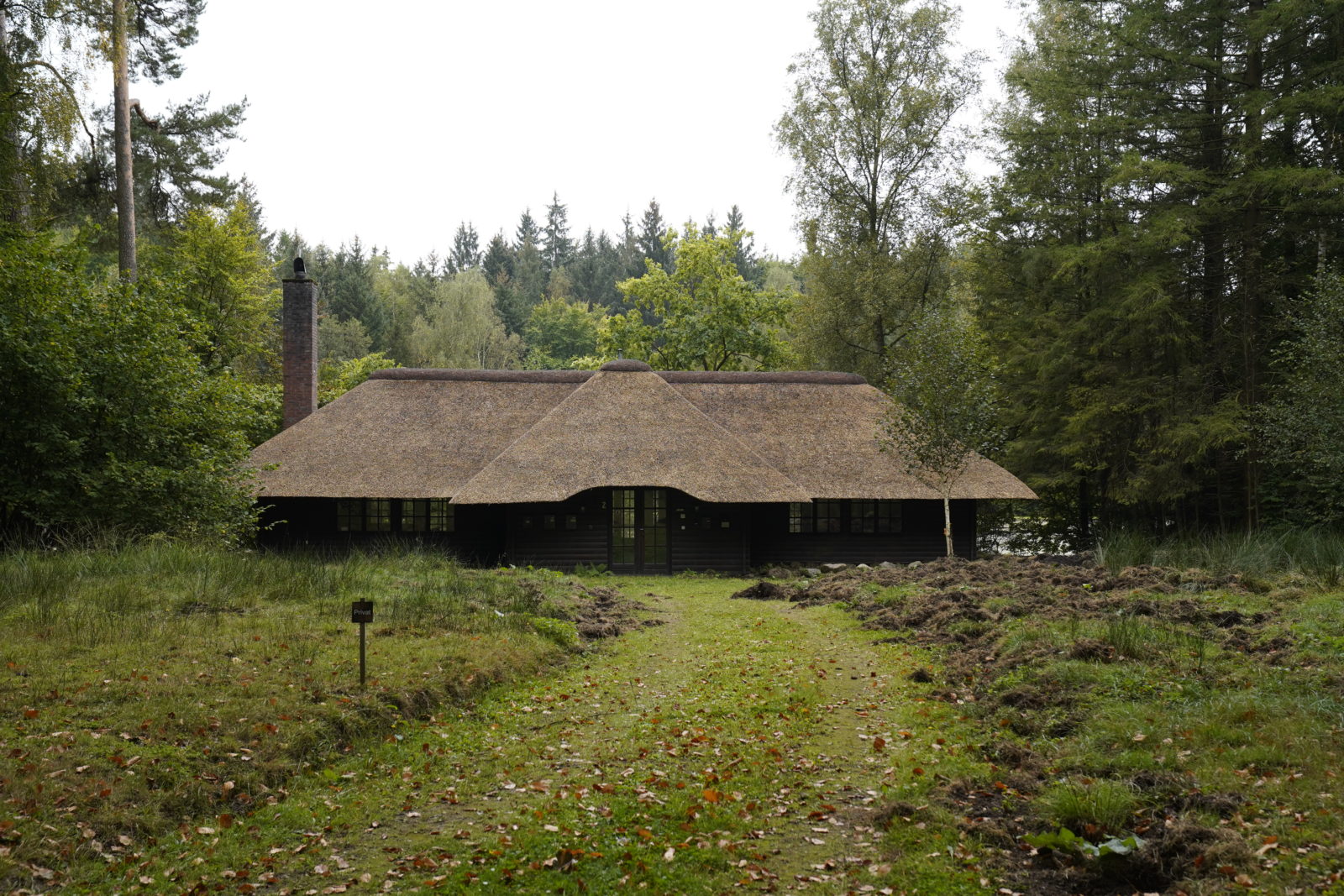
Stangenteich 2, 21521 Sachsenwald—at least 21 companies currently have their registered office at this unassuming address. But there is no factory, no large commercial building, not even a car park. About an hour’s walk from the nearest town, at the end of a muddy forest path and a few metres beyond a “No Entry” sign, stands only a lonely thatched roof surrounded by tall trees.
The old hunting lodge by the pond looks idyllic. Only at second glance do some of the details seem a little out of place: several letterboxes attached to the hut’s outer wall, company names on the doorbells and a small metal sign next to the door: “Office.” For about a decade, Count Gregor von Bismarck, great-great-grandson of the founder of the German Empire, Otto von Bismarck, has been operating a tax haven in this lonely hunting lodge, benefiting companies worth millions—and, most of all, Bismarck himself.
@ ZDF Magazin Royale
Together with ZDF Magazin Royale, we spent the last few months digging through the commercial register, sifting through tax equalisation tables and pouring over historical laws. We sent countless emails to ministries, agencies, and a district administrator. We made multiple trips to the mixed forests of Schleswig-Holstein and even resorted to methods that had a touch of a spy thriller. In the end, we sued Count Gregor von Bismarck based on press law. The result is a detailed picture of the most absurd tax haven in German history: Bismarck’s hut in the forest.
The forest of millionaires
To understand Bismarck’s tax haven hidden among the beeches and oaks, one must first understand the forest in which this hut stands. The Sachsenwald is the largest forested area in Schleswig-Holstein, a few kilometres east of Hamburg. It was once the hunting ground of Kaiser Wilhelm I. In 1871, he gave it to his Chancellor of the Reich, Otto von Bismarck, as a thank-you for unifying Germany into the German Empire. Even today, a large part of the Sachsenwald still belongs to the Bismarck family, who live at Friedrichsruh Castle on the edge of the forest.
The Sachsenwald is also the source of the enormous wealth of the Bismarck family. Within a few years, Otto von Bismarck transformed the forest given to him by the Kaiser into a flourishing timber trade that made him one of the richest Germans of his time. Today, the Bismarck family fortune is estimated at several hundred million euros.
The Bismarck family business in the forest
The former steam sawmill at Friedrichsruh, with which his great-great-grandfather laid the foundation for his wealth, is still operated by Gregor von Bismarck today. However, he has significantly transformed the operation over time. The former core of the Bismarck family business is now called “Sachsenwald Energy GmbH” and has greatly expanded its scope. In addition to the classic core business of a timber company—processing and distributing wood, as well as producing wood chips for power plants—the company now also engages in “trading raw materials, foreign currencies, securities, options, and index futures.” In addition, the former sawmill, which is now also active on the financial market, has moved its official business address: from “Am Sägewerk 4” (“at the sawmill 4”) to the new address “Am Stangenteich 2”—the hut in the forest.
This is not the only business Gregor von Bismarck runs. He is also the managing director of several real estate firms, a wealth advisory and trust company, and Floh Enterprises—a business that sells a combination of a backpack and a kick scooter, allegedly an invention of Gregor von Bismarck himself. Over the past ten years, all these companies have relocated to the hut in the Sachsenwald. In addition, a double-digit number of subsidiaries of international corporations have since joined them. All these companies in Bismarck’s hut benefit from a surprising advantage in the middle of the forest: very low trade taxes. Since 1958, the Sachsenwald has had a trade tax rate of only 275%—meaning companies here pay only about half as much as they would in nearby Hamburg.
What is trade tax?
Trade tax is the tax that companies pay on their profits. It is the most important source of income for municipalities. The money goes towards road construction, school renovations or city cleaning, for example. The municipalities have to forward part of the trade tax they collect to the federal and state governments as a levy. How much trade tax companies have to pay is determined by the trade tax rate. Each municipality is free to choose its own rate, with the only restriction being that it must be at least 200%. The average rate in Germany is 407%. Some municipalities deliberately set their trade tax rate very low to attract more companies to settle and pay taxes in their area. For companies, choosing such a tax haven as their location results in significant tax savings. A company with a trade income of one million euros would have to pay around 160,000 euros in trade tax at a collection rate of 470%, as is the case in Hamburg, for example. At a collection rate of 275%, however, it would only have to pay a little over 90,000 euros, a tax saving of almost 45%.
Municipality-free area: “a historical relic”
A forest with its own trade tax rate? This is possible due to a situation rooted in time when Germany was still ruled by an emperor. The Sachsenwald area gifted to the Bismarcks is not only their private forest, but has also been their private administrative unit for over a century. This is because Sachsenwald is a “municipality-free area.” it still operates under special rules dating back to pre-democratic times—specifically, the “Rural Municipality Code for the Province of Schleswig-Holstein” from 1892. This ordinance recognised independent estate districts as an equal form of municipal administration. Instead of an elected local council, the estate owner was designated as the “responsible for public duties” and managed the area.
In 1927, a Schleswig-Holstein law largely abolished these special privileges for estate districts and their owners. However, the law—still in effect today—contained one crucial exception: the Sachsenwald of the Bismarcks.
There are still some municipality-free areas in Germany. As a rule, these are uninhabited forests, lakes, coastal strips or state-owned military training areas. In the Sachsenwald, on the other hand, it is an aristocrat who has all the rights and duties that would otherwise belong to a democratically governed municipality. And one of the rights and duties of a municipality is to collect trade tax.
“He pays taxes to himself”
As the landowner of the municipality-free area of Sachsenwald, Gregor von Bismarck is entitled to propose a head of the estate, who is then appointed by the district administrator. In accordance with the 1927 law, this estate manager takes over the “governmental duties,” i.e. the day-to-day business of the estate district. They have a say in how high the trade tax rate should be, which is used to calculate how much trade tax companies in the area have to pay. And they are responsible for actually collecting the trade tax.
In recent decades, the Bismarcks have repeatedly appointed their employees as estate managers. Since 2021, this position has been held by Andreas I., who has worked in the Bismarcks’ administration for well over a decade. He is also the managing director of a real estate company—alongside Gregor von Bismarck—with its registered office in the hut in the forest. This employee and business partner of Gregor von Bismarck is currently responsible for collecting the trade tax that his own company and Bismarck’s companies in the forest have to pay—to the Sachsenwald, owned by estate holder Gregor von Bismarck.
In 1990, Schleswig-Holstein’s then-Interior Minister Hans-Peter Bull, described the tax practice in the Sachsenwald as “a kind of internal accounting.” “Since there is no municipality that can be the tax creditor, there can be no real taxpayer either,” he said in a state parliament debate. “So they pay their taxes to themselves, or what?” joked an SPD member of parliament at the time. But what caused hilarity among the MPs in 1990 has led to numerous companies paying their taxes not to a city or municipality, but to a nobleman who owes his special right to a legal relic from the imperial era.
At the time, Minister of the Interior Hans-Peter Bull announced in parliament that this “historical relic” of the municipality-free area would be abolished in the following year. However, the plan to incorporate the Sachsenwald into the surrounding municipalities failed. The municipalities were concerned that they would incur additional costs for maintaining the forest roads. At the same time, no tax revenue was expected from the forest to cover these costs.
A new address for companies worth millions
The former concerns about the lack of tax revenue in the Sachsenwald now appear to be outdated. In addition to Gregor von Bismarck’s companies, numerous other companies are currently registered in the small hut in the forest: more than a dozen subsidiaries of Luxcara, Aves One and the Heinze Group. They all pay their trade tax to the Sachsenwald and its landowner Gregor von Bismarck. Most of these companies have long names such as Aves Rail Rent Hamburg GmbH & Co. KG, Aves Rail III Holding GmbH & Co. KG & Co. KG or Luxcara Infrastructure GmbH.
The parent companies of most of these firms are two financially strong international companies headquartered in Hamburg. Luxcara, an asset manager for renewable energy, claims to manage a portfolio with an investment volume of six billion euros. Aves One, a company specializing in freight car leasing, had a total balance sheet of over one billion euros at the end of 2020. Until a few years ago, Aves One was listed in the Prime Standard of the Frankfurt Stock Exchange, a precursor to the DAX. In 2022, the company was acquired by its main shareholder and subsequently delisted. The company justified this move by pointing out the elimination of transparency obligations.
The Sachsenwald: a sustainable tax haven
We asked the parent companies and managing directors of the 21 companies why they share a tiny office in a wooden hut deep in the forest, miles away from civilisation. Their unanimous and surprising answer? Sustainability.
The main reason for settling in the forest was that most of the trade tax revenue is earmarked for the conservation of the Sachsenwald forest, emphasises Aves One, a freight car leasing company. “It’s just a good fit for our business.” The billion-euro investor Luxcara similarly explains that directing their business taxes toward the forest fits with their overarching corporate goal of advancing the energy transition. Meanwhile, the managing director of the now-insolvent Heinze Group wrote that he couldn’t work from home for personal reasons and was therefore grateful to find peace and quiet in his Sachsenwald office. What remains unclear, however, is just how quiet an office can be when 21 companies are operating out of a single room.
Count Gregor von Bismarck also cites noble environmental goals as the reason why his companies have been paying their taxes in his personal forest municipality for years: “The companies managed by me and Mr I. are committed to sustainable corporate governance. That is why they chose the Sachsenwald forest district as their place of business, because the trade taxes levied there are used for the maintenance and reforestation of the largest forest in northern Germany, which makes a valuable contribution (in addressing—ed) climate change.”
Moving his office to the forest hut doesn’t save Gregor von Bismarck any taxes, he writes to us. Furthermore, it is not true that he personally receives the trade tax collected: “The trade tax goes to the municipality-free area of Sachsenwald, where it is used entirely for the maintenance of paths and bridges, reforestation, salaries and other costs.” What the count fails to mention, however, is that he owns the Sachsenwald, the forestry workers are employed by him, and that the timber trade in the Sachsenwald, which is intertwined with the reforestation he mentioned, has been part of his family’s business for generations.
An office like an abandoned theatre set
All the companies registered in the hut in the forest agree on one thing: they are not operating letterbox companies designed to exploit the low trade taxes in the Sachsenwald by falsely claiming a local business presence. Employees, they insist, are regularly on-site, using the office space for legitimate business purposes. At the same time, both Aves One and Luxcara acknowledge that none of their subsidiaries employ any staff—they are purely administrative companies. Gregor von Bismarck, who rents out office space in his forest hut to these companies, emphasises that “proper offices” have been set up at Am Stangenteich 2, and that all the resident businesses regularly use them as their place of business.
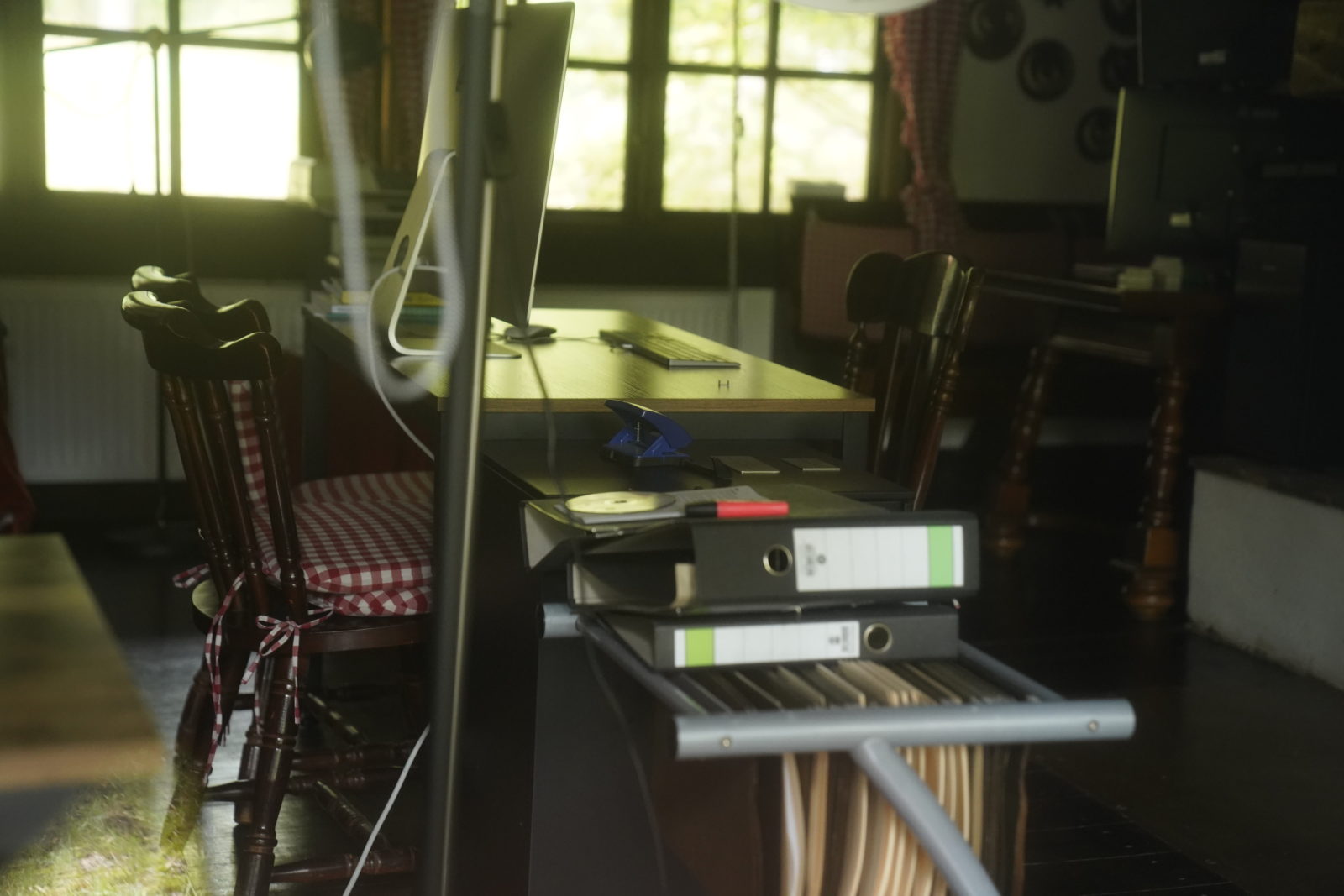
At first glance through the large windows and glass doors of the hut, the out-of-place computer monitors among the rustic solid wood furniture immediately stand out. But a second look reveals a scene that resembles an abandoned theatre set rather than an office where millions in revenue are supposedly generated. Empty desks; empty wastepaper baskets underneath them; empty folders in an empty filing cabinet. In the small office kitchen, there is a box of peppermint tea that has been out of date for four years. The kitchen clock is 19 minutes slow. An unplugged refrigerator is kept ajar by a bottle of Bismarck water. It is an absurd-looking office set in the middle of the forest. What we didn’t see there on a normal Tuesday afternoon in September 2024 were people working in the hut. And it didn’t seem like it was just that day.
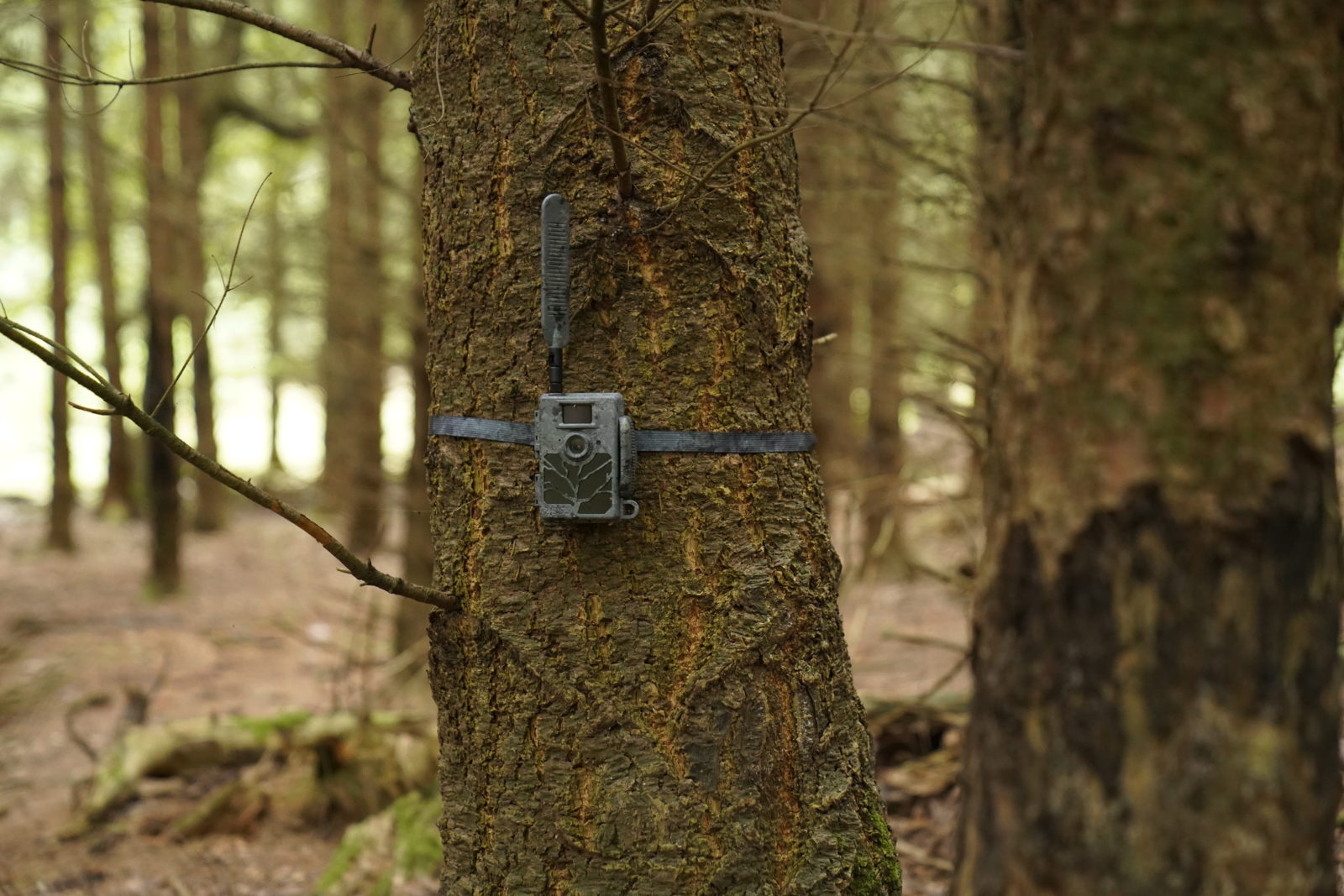
To find out how often people visit the forest hut, where 21 companies are based, we teamed up with ZDF Magazin Royale and installed a wildlife camera at the only public access road leading to the hut. Over two months, the camera was triggered every time someone passed by.
@ ZDF Magazin Royale
“Regularly used as a place of business”
The result? During the entire period—44 workdays plus weekends—people moved toward the hut only 25 times, despite it being the registered headquarters of 21 companies at Stangenteich. Sometimes, they were cyclists. Other times, it was a car. Occasionally, pedestrians. We don’t know whether these people were jogging, going for a walk or on their way to work. But in the majority of the cases we documented, it was very unlikely that the people were going to the hut to work in the traditional sense. They were obviously tourists, going on a weekend bike ride or driving a short distance before heading back in the opposite direction. What we did see regularly near the forest hut were squirrels, woodpeckers and plenty of wild boars.
We asked Gregor von Bismarck and the local companies how they explain the very low number of people around the hut and how this can be reconciled with their statements that the workplaces there are regularly used. None of them commented on this specifically. Luxcara merely wrote to us that the management of the companies went to work in the hut “usually at least once a month”. In previous responses, Gregor von Bismarck and Luxcara mentioned having documented when and how the hut in the forest was used as a place of business. We asked both of them to send us this data for the two-month period we monitored so that we could correct our findings if necessary. We never received a concrete answer.
@ ZDF Magazin Royale
Letterbox companies that don’t use their letterboxes?
What we never saw once over the entire two months on the access road to the hut was a postal vehicle. That’s why we sent letters, equipped with trackers, to the subsidiaries of the Hamburg-based companies Aves One and Luxcara. They were addressed to their company addresses in the Sachsenwald, using the exact company names listed on the letterboxes next to the door.
But instead of being delivered to the hut, the post delivered them to another of Gregor von Bismarck’s company headquarters: the former sawmill on the edge of the forest. From there, the letters were sent on their way again a day later, ending up in Hamburg—at the addresses of the parent companies: at Aves One directly on the Elbe and at Luxcara in the city centre, not far from the Alster. The letters never reached the cabin in the forest—i.e. the address on the envelope—on their circuitous route to Hamburg.
After one of our letters spent the weekend at Aves One’s headquarters in Hamburg following its delivery on a Friday morning, we tracked its movement again on Monday morning. This time, however, there were no detours through postal distribution centres—it travelled directly and swiftly by car to the hut in the Sachsenwald at Stangenteich 2. By this point, we had already confronted Aves One with the findings of our investigation. Shortly before our tracker left Aves One’s headquarters for the Sachsenwald, the company wrote to us, stating that the office in the hut was regularly in use. When we visited the hut again two days later, our letter—its tracker hidden inside a promotional brochure—was still there, seemingly placed in plain sight next to one of the tables.
Why mail addressed to tenants of his hut in the forest is first delivered to another of his business addresses and only then forwarded remains unanswered by Gregor von Bismarck, despite repeated inquiries. In an initial response, he stated that his business relationship with the companies in his forest hut was limited to renting office space and that he did not provide office services for them.
“It occasionally happens that we have the few letters still sent to us by post forwarded as a courtesy,” Aves One told us—while once again insisting that the office in the forest was regularly used. Luxcara, for its part, stated that the “processing” of mail for the companies in the forest hut was carried out “regularly at the business address there.” However, they claimed they could no longer trace the specific delivery route we described. Two business days earlier, our letter had reached the Luxcara headquarters. There, the tracker’s signal ended.
Subsidiaries and letterbox companies
This is a typical problem, says Christoph Trautvetter, coordinator of the Tax Justice Network. “Companies often don’t pay taxes where their profits are actually generated but shift them via subsidiaries to locations with lower tax rates.” According to him, the high number of businesses in the hut in the middle of the forest raises the question of whether the line has been crossed into illegality. “That’s why the authorities must look very carefully into this,” demands Trautvetter. Profit shifting becomes illegal when businesses create the illusion of actual operations at a given location while no real business activity takes place there. And in the case of Bismarck’s tax haven in the Sachsenwald, there are enough indications to warrant a thorough investigation.
When asked, the Hamburg tax authorities declined to comment on whether they are aware that multimillion-dollar Hamburg-based companies have registered their subsidiaries in a hut in the forest. They also refused to say whether investigations are underway, citing tax confidentiality. However, they did emphasize that they are aware of “the issue of abusive corporate tax arrangements in municipalities with conspicuously low tax rates.” This includes “merely maintaining a letterbox.”
Christoph Trautvetter from the Tax Justice Network also points out another key point that highlights the absurdity of Bismarck’s tax haven in the forest: the fact that in 2024 Germany, an aristocratic landowner can collect his own taxes through his estate manager. “We actually moved past that system,” Trautvetter points out. “The idea was to decide these matters democratically: we pay into the municipal treasury, and then the community determines how taxes are used—not a feudal lord.”
How much money goes to the Sachsenwald?
One crucial question remains unanswered: How much business tax has the Sachsenwald and its landowner Gregor von Bismarck collected from all the companies in the hut over the past decade?
In theory, it should be easy enough to find out. The Statistical Office of Northern Germany publishes detailed information on its website about how much trade tax each municipality in Schleswig-Holstein has collected each year. The municipalities are legally obliged to report this data to the statistical office—including the municipality-free area of Sachsenwald. However, when searching for numbers on the website of the Statistical Office, no data for the Sachsenwald can be found. When asked, the office admitted that, after internal research, they had discovered that no reports had been received from the Sachsenwald.
Every year, the Ministry of the Interior of Schleswig-Holstein publishes extensive calculations on the municipal financial equalisation, a redistribution of tax revenues between the state, districts and municipalities. In these long tables, the authority lists the actual trade tax revenue of each individual municipality in the federal state. The Sachsenwald Forest District is included in one of the lists. However, in the most recent calculation published by the Ministry, the actual trade tax revenue of the Sachsenwald is listed as zero euros, which is surprising given the business activity in the forest hut.
Even in earlier calculations from the last two decades, which we obtained through the German Freedom of Information Act (“Informationsfreiheitsgesetz”), the same figure is always given for the Sachsenwald: a trade tax revenue of zero euros. In response to our enquiry, the Ministry admitted that the figures from the Sachsenwald estate were missing there too—and that it was now being examined to what extent this data gap could affect the entire municipal financial equalisation system. After repeated enquiries, employees of the Schleswig-Holstein Ministry of Finance discovered that the Sachsenwald estate had duly paid the trade tax allocation to the state. The Ministry concluded from this that trade tax had clearly been levied in the Sachsenwald; however, no one there could answer the question of how much tax Bismarck’s estate manager had collected. And neither the district office of the Herzogtum Lauenburg district nor the office of Hohe Elbgeest, the smallest administrative unit above the municipalities, have any information on how much trade tax is due in the Sachsenwald.
The people who should know exactly how much money flows into Bismarck’s and his Sachsenwald coffers each year through the numerous company registrations in the hut are Gregor von Bismarck and his estate manager Andreas I. But we have not received the requested information from either the estate owner or his estate manager in response to our questions.
That is why we have now sued Gregor von Bismarck on the basis of press law. We want clear answers to our questions. After all, the rights and obligations of a municipality include not only collecting business tax, but also providing information to the press—even for an aristocratic landowner and his estate manager. Especially in 2024.
In the course of this investigation, we have been in contact with numerous authorities. We also repeatedly requested statements from Gregor von Bismarck, as well as the parent companies or managing directors of all firms registered at the hut in the forest, regarding our findings. To ensure transparency, we are publishing the full email correspondence, including the companies’ responses, here. Our inquiries were always based on the information available at the time, which may not always align with later findings. In some cases, authorities contradicted each other, and some offices provided different answers after repeated questioning.
The statements from Gregor von Bismarck and the companies also contain claims that we cannot verify. Additionally, at least one false statement appears in Bismarck’s response: he claimed that the Sachsenwald’s trade tax rate was in line with surrounding municipalities. However, as of now, the rate in the Sachsenwald forestry district is more than 100 percentage points lower than in any other municipality within the same administrative area.
Deadly Prices – How Big Pharma Feeds Inequality in Europe
She is only three years old, but the process is as routine as if she had done it thousands of times before. On this far too warm spring day, Milda, a little girl with a short ponytail, puts on the pink waistcoat, which looks like a life jacket, without much grumbling. And somehow it saves Milda.
The girl sits down on the white chair in the kitchen-living room of a terraced house in Klaipėda, a harbour town on the Baltic coast of Lithuania. She puts her inhaler over her mouth and nose. “Shaky, shaky?” asks Urté Gyliené, her mother. Milda nods. It’s time to get the mucus out of her lungs. Milda skilfully closes the fastenings.
You have to imagine what happens next as if the girl is sitting on a jackhammer: the waistcoat is filled with air in bursts by a generator and Milda is shaken to the core. Her whole body shakes, her head, chest and legs. For half an hour, until she coughs vigorously. That was it. The phlegm is out. This happens every morning, before nursery, and every evening, before bedtime.
Milda has a serious hereditary disease called cystic fibrosis. CF for short. Due to a genetic defect, thick mucus forms which is difficult to remove. This leads to constant infections – with viruses, bacteria and fungi. Milda will only just reach adulthood, the doctors said when the disease was diagnosed.
In Lithuania, where Milda and her parents live, children with CF only live to the age of 18 on average. By then, the lungs are usually so damaged due to the constant infections that they can no longer breathe properly, and only a transplant can help.
Or, in fact, one medicine.
It’s called Kaftrio and has been authorised in the European Union since summer 2020. Only Milda doesn’t get it.
The life expectancy of patients with CF has increased significantly in countries where Kaftrio is available. “Not giving this drug costs patients an average of 20 years of life,” says Carsten Schwarz, Medical Director of the Cystic Fibrosis Centre at Klinikum West-Brandenburg. “It drives you crazy when you find out that other countries have such wonderful medicines and you are left behind,” says Milda’s mother.
Kaftrio is still not available on prescription in Lithuania. The US company Vertex from Boston, the only manufacturer of so-called CFTR modulators such as Kaftrio, is demanding a price that the health authorities in Vilnius are unable or unwilling to pay. The government currently estimates the annual costs per patient at 175,000 euros. Too much.
“Where you live should not determine whether you live or die,” said EU Health Commissioner Stella Kyriakides last year. All patients in the EU should have “early and equal access to effective medicines”. Süddeutsche Zeitung, NDR and WDR, together with the journalists’ cooperative Investigate Europe, have investigated the fact that this is still just a pious wish. The reporters spoke to people who get even the most expensive medicines on prescription – and to those who have had to leave their home country, go to court or, like Milda, have to wait a long time for them.
It’s all about secret pricing and the political influence of the world’s most lucrative industry. According to a 2021 analysis by international management consultancy EY, pharmaceutical companies achieve an average return on sales of more than 25 percent – no other industry achieves more.
Every important medicine that exists in one EU country could actually be available in all member states. This is because new medicines in certain categories are tested and authorised centrally by the European Medicines Agency (EMA) in Amsterdam. However, each country has to negotiate individually with the manufacturers whether and at what price these medicines are then sold in pharmacies in the individual countries – and the prices usually remain secret. This gives the pharmaceutical companies enormous power; they can set the price as high as they want each time.
Illustration: Alexia Barakou
In fact, innovative, patent-protected drugs are becoming increasingly expensive. The manufacturers of gene therapy drugs such as Zolgensma for spinal muscular atrophy or Zynteglo for sickle cell anaemia charge around two million euros per treatment. Hemgenix, used to treat haemophilia, is currently the most expensive drug in the world, costing 3.5 million euros per dose.
The EU Parliament’s scientific service recently wrote that this practice “imposes costs on society in the form of reduced access to medicines, higher prices, poorer health outcomes, a greater need for care and a higher risk of mortality”. This is because if a country’s healthcare system cannot or will not pay the required price, patients there do not receive the best available medicine, or only many years later when patent protection has expired or there are competing drugs. Such drugs are protected from copycat products for eight years.
The flaw in the system: poor countries pay more than rich ones
A research team from SZ, NDR, WDR and Investigate Europe has now succeeded in providing a plausible estimate of the price of CFTR modulators such as Kaftrio, which are so important for cystic fibrosis patients, in nine EU countries. The reporters put together pieces of the puzzle from Vertex’s sales data, data from health insurance companies, purchasing documents, hospital audit reports and patient numbers. The results show publicly for the first time that smaller and poorer countries sometimes pay much more than wealthier countries – and how often the medicines are not available at all in such countries.
More than 180 new medicines were authorised in the EU between 2019 and 2023, but most of them differ only slightly from those that already exist. However, some of the new substances actually have a major additional therapeutic benefit that significantly improves the treatment of diseases. Together with the Cologne Institute for Quality and Efficiency in Health Care (IQWiG), the team of reporters identified 32 drugs for which this applies. IQWiG regularly determines the additional benefit of new drugs and its analyses form the basis for price negotiations between health insurance companies and pharmaceutical companies in Germany. These 32 important medicines include new drugs for cancer, migraines, diabetes, skin diseases and the CF drug Kaftrio, which Milda’s parents in Klaipėda, Lithuania, would like to have reimbursed in order to prolong their daughter’s life.
Urté Gyliené remembers the exact day when a genetic test revealed that Milda had CF. It was her own birthday, after which she just cried. She and her husband had been trying in vain to have a child for six years. Milda seemed to be a healthy baby in the first few months of her life – until she didn’t recover well from a coronavirus infection. The whole family was infected with Covid-19 in autumn 2020. Everyone soon recovered, but Milda didn’t stop coughing. Then came the diagnosis.
The congenital genetic defect only becomes a problem if a child happens to inherit the disease from both parents. The risk for Milda was one in four. “We were really unlucky,” says Urté Gyliené and quickly adds: “But of course we are still very lucky to have Milda.”
Theoretically, they could also buy Kaftrio for their daughter privately, with a doctor’s prescription from a pharmacy abroad. But they can’t afford that, even though Milda’s father works as a surgeon and her mother works for a marketing agency. It would cost 17,000 euros a month. And in Lithuania, people only earn about half as much as in Germany. Milda’s family has therefore already considered moving to another EU country where Kaftrio is reimbursed. “This is a progressive disease, it gets worse and worse over the years,” says her mother. “My greatest fear is that Milda will suffer and die in my arms.”
Lithuania, with a population of around 2.8 million, has been part of the EU for ten years. Anyone travelling to this country can still sense a hint of the former Soviet Union, the wide streets, the many flag holders on the houses. The euro has been in force since 2015, which is reflected in the standard of living, for example in the BMWs and Porsches that drive along the cobbled streets of Klaipėda’s old town. But when it comes to access to medicines, the European Union is far, far away.
When asked, Julijanas Gališanskis from the Lithuanian Ministry of Health confirmed that nine of the 32 drugs on the IQWiG list are missing in Lithuania. The Lithuanian government is currently negotiating the price of a small number of them with the pharmaceutical companies, for example Kaftrio, which Milda so urgently needs. For most of the missing drugs, the companies have not even submitted an application for reimbursement in Lithuania.
Not only in Lithuania, but in many EU countries important medicines are missing, as research by SZ, NDR, WDR and Investigate Europe shows. According to the research, only in two EU countries, Germany and Austria, are all 32 medicines available. In the Baltic states, around ten are not available. Almost half are missing in Cyprus and as many as 25 are missing in Hungary, where patients in need can apply for reimbursement individually; 25,000 patients tried to do so in 2022. Every tenth application was rejected.
Monika Luty, 27, from Poland, has even changed her whole life for this reason. Like Milda Gyliené, she suffers from CF. Four years ago, her condition worsened dramatically, her lung capacity was only 20 per cent and the young woman weighed 23 kilograms at the time. Monika Luty posted a video online in which she pleaded with the manufacturer Vertex for Kaftrio, which was not available in Poland at the time. “Although I lived in the EU, I was discriminated against because I wasn’t German or of a different nationality,” she says.
With the help of her friends, Luty raised 200,000 euros via crowdfunding and her father sold his car. This enabled her to pay for Kaftrio herself. When she saw how much better she felt with this therapy, she moved to Frankfurt, worked in an office there and from then on received Kaftrio on prescription. “I cried because it was so easy,” she says. However, she also suffered from depression during the therapy, which is a known side effect of the drug. Luty now lives in Poland again, where CFTR modulators are now reimbursed. Would she have made it through the crucial years without Kaftrio? Monika Luty doesn’t know.
According to the research, in Romania alone, six highly effective cancer drugs that have been newly authorised in the EU since 2019 are either not reimbursed by the national health insurance fund or only reimbursed to a very limited extent, i.e. not for all types of cancer for which they have long been used in other countries – too expensive. The government in Bucharest has rejected the demand to double the drug budget, citing the national budget.
Not everyone knows that you can sue the healthcare system
Bogdan Radu, who does not want to speak publicly about his illness under his real name, can tell us what this means. The businessman, 39, joins us via video from Romania. Radu, short beard, striped shirt, sits in an open-plan office, he travels a lot for work and is now able to do so again.
At the end of 2019, doctors diagnosed him with colon cancer. After surgery and chemotherapy, immunotherapy with the drug Keytruda would have significantly improved his chances. But while this antibody, which targets the body’s own immune cells against the cancer, is the best-selling drug in the world, Radu’s doctor was unable to prescribe it to him. And Radu could not afford the treatment privately; he would have had to pay 2,300 euros every three weeks for two years.
In the summer of 2023, metastases appeared in his liver and Radu’s life was at risk. The engineer has two children, who are now eleven and four years old. “I wasn’t allowed to die,” he says, “I had to live at least another ten years to see my children grow up.” He seems surprisingly calm as he says this. “I’m an optimist, I always think there’s still an option.”
He hired a lawyer. Oncologist and head of Romania’s national cancer commission, Michael Schenker, says that more and more patients are taking their doctors to court to get the cost of prescribed drugs reimbursed by the national health insurance fund. In 2023 alone, more than a thousand cancer patients successfully went to court and the state had to provide them with the medication because it could demonstrably help them. Bogdan Radu also won.
He has been receiving Keytruda on prescription for a year now. The metastases have shrunk. Radu knows that his chances would have been better if he had been given the medication from the start, but he also knows that many Romanians don’t manage what he has achieved. You have to find the right lawyer and have the courage to fight not only against the disease, but also against the healthcare system. “I’m young, I work in an international company, I speak English, I know how to get information,” he says, “others can’t do that.”
However, the problem is not only that each EU country has to negotiate the price of important medicines itself, but also how this is done.
The pharmaceutical companies pressurise the negotiators of the national health authorities and health insurance funds to sign confidentiality agreements about the content of the discount contracts, known in industry jargon as “managed entry agreements” – meaning that the prices actually negotiated remain secret. Francis Arickx, Head of the Pharmaceutical Policy Directorate at the Belgian state health insurance organisation, gives a vivid description of how this works. “I have conducted a good hundred such negotiations,” he says. “I sat at the table with two colleagues opposite a delegation from the company in question with a whole team of lawyers. It feels threatening and is also somehow theatre.”
This means that companies can grant large countries with many patients high discounts without the other countries finding out about it – and pay much more money. Or the large countries pay high prices because they can afford them – but these are unaffordable for poorer countries in the EU.
In the case of Milda’s disease CF, France paid around 71,000 euros net per year for each patient treated with CFTR modulators in 2022, according to the research. In Italy it was 81,000 euros, in the Netherlands 88,000 euros. This is significantly less than the healthcare systems in Poland (112,000 euros) and the Czech Republic (140,000 euros), for example, had to pay in 2022. Even if taxes are possibly included in the Eastern European prices, the price is immense compared to the richer Western European countries. Due to the secrecy between manufacturers and national health authorities, the extent of the disparity in Europe was not previously known.
Germany is the only country that makes the reimbursement price public: After deducting VAT and a statutory discount of twelve per cent, which the manufacturers have to pay, a Kaftrio patient cost the health insurance funds around 156,000 euros in 2022. This sum is also confirmed by the AOK Federal Association.
On request, Vertex states that the price estimates for the countries mentioned are “incorrect”, but the manufacturer itself does not want to name any prices. In general, the company states: “Reimbursement prices are not set unilaterally by the manufacturer, but are agreed confidentially with the health authorities in each country.” They are based on “their innovation and the value they bring to the cystic fibrosis community, carers and healthcare systems”. In addition, the revenue from such medicines “funds our ongoing research into other serious diseases”.

Illustration: Alexia Barakou
Pharmacist Martin Hug knows all about the burdens of the healthcare system – and those of patients. He manages the pharmacy at the University Medical Centre in Freiburg and has two daughters with CF himself.
Hug welcomes us to his flat in a Freiburg suburb for an interview. Since he became head of the hospital pharmacy twelve years ago, the cost of medicines has more than quadrupled, while the number of prescriptions has only risen slightly, says Hug.
Although he was surprised by the development, he does not believe in “demonising the pharmaceutical industry”, as he calls it. Without their innovations, many patients would be worse off. New drugs for rare diseases in particular may be expensive, but they are life-changing. Emphasising this is important to him, and when he talks about it, he leans forward on the wooden table in his living room as if to push his words.
Like Milda in Lithuania, Hug’s daughters were also diagnosed with cystic fibrosis as babies; both would probably not have reached adulthood according to the medical standards of the time. They have now been adults for a long time and are living well with the disease. Family photos and colourful drawings hang on the wall in Hug’s flat, where he himself grew up.
The younger of the two daughters, Maria Hug, sits opposite her father and watches him closely as he talks about the medical details that she knows only too well. She is 27, wears a striped jumper and large round glasses and is currently doing her Master’s degree in cultural studies.
She has been taking Kaftrio for one and a half years and its predecessor Kalydeco for more than ten years. Today, both medications are usually prescribed together, one is taken in the morning, the other in the evening, because they complement each other in their mode of action.
Back in the 1990s, the average life expectancy for cystic fibrosis sufferers increased slightly almost every year – even without new medication. Back then, the father remembers, it was said that you could even live to be thirty with cystic fibrosis. But since the company Vertex launched its CFTR modulators on the market, the curve has been rising steeply. In Germany, the life expectancy for CF patients is now 60 years.
Maria Hug has already gone through some “difficult phases” with her illness. Her lungs were so damaged that she would have needed a lung transplant sooner or later without the new medication – the only question is whether she would have received a donor organ in time. And this treatment would also have been expensive, Martin Hug points out. This is often the case with new drugs whose prices seem fantastic at first: you always have to consider how much money would be saved elsewhere.
Maria Hug used to have severe coughing fits every few minutes. She still keeps a mug on her bedside table to get rid of the phlegm at night. Back then, it was always full in the morning, but now it’s just a dust catcher. “If I work on myself now, do sport and eat right, I actually get fitter and don’t just stay the same,” says Maria Hug and smiles. Her everyday life is no longer determined by the illness: “Suddenly your life is in front of you.”
She has been very lucky, she says, lucky to have two pharmacist parents who know their stuff. And lucky to live in a country where new medicines are reimbursed by the health insurance: “A huge privilege.”
Sharp criticism of planned changes to the law in Germany
This is due to the very special role that Germany plays in the complicated structure of authorisation and pricing on the European pharmaceutical market. Unlike everywhere else in the EU, German legislation guarantees pharmaceutical manufacturers that the statutory health insurance funds initially purchase every drug authorised by the European Medicines Agency (EMA) at the manufacturer’s list price. Only after one year do the experts at IQWiG in Cologne examine on behalf of the health insurance funds whether an additional medical benefit can actually be proven for the drugs. If this is the case, the health insurance funds negotiate the value of the additional benefit with the manufacturers – and a possible discount from the so-called list price demanded up to that point. In the event of a dispute, an arbitration board with equal representation decides, as the law in Germany requires that patients can obtain such effective medicines on prescription in any case. In the end, patients pay – even if the price is very high.
Only if the alleged innovation does not offer any major additional benefit, i.e. it is possibly only a sham innovation, does the price automatically fall to 90 per cent of the price of the comparable therapy.
Germany also has another special feature compared to other EU countries: The final negotiated price that the health insurance funds pay for a medicine, the so-called reimbursement amount, can be viewed by experts. This should help doctors and hospitals to act economically. And for the other states, the prices they have learnt from Germany so far have been a kind of upper limit for their own negotiations with pharmaceutical manufacturers.
But that could change soon.
This is because the German government is currently planning to join the “secret prices” that are common in the EU. The pharmaceutical industry lobby has been pushing for this for a long time. However, seven years ago, when the former health minister Hermann Gröhe from the CDU wanted to overturn transparency in the grand coalition, an SPD health politician named Karl Lauterbach said: “We are living in a time when we need more transparency because both doctors and patients have a right to know the prices of prescribed medicines.”

Illustration: Alexia Barakou
Today, Lauterbach himself is Minister of Health, and apparently he has had a change of heart. He receives the research team for an interview at the ministry in Berlin. Back then, Lauterbach says, he had hoped “that other countries would publicise the price like we did”, but that didn’t happen. That is why he is now also in favour of secret prices. The minister hopes that this will lead to higher discounts, as the prices for medicines in Germany are currently higher than in any other comparable country. Lauterbach believes that the pharmaceutical industry in Germany, despite its large market, gives so few discounts on its medicines so that other countries do not demand similarly high discounts with reference to Germany. “But we can’t be the paymaster for everyone else,” he says.
Josef Hecken (CDU) was once Minister of Health in Saarland, but that was a long time ago. Today, he is chairman of the Federal Joint Committee, which decides on the entitlements of people with statutory health insurance. Like the health insurance companies and many doctors’ associations, Hecken, 64, does not have a good word to say about the plans of the traffic light government to maintain secrecy. There is “no economic rationale” for this, he says in an interview with the research team. If nobody knows the prices for new medicines, doctors can no longer prescribe economically because they don’t know which new medicine is the cheaper one, says Hecken. The discounts that Lauterbach is hoping for are in any case “a groundless promise for which there is no evidence”. And they would be immediately cancelled out by the disadvantages of secret pricing.
Former Cypriot Health Minister George Pamboridis says that the secret contracts enable “the industry to abuse its position of power over its customers, the states”. The pharmaceutical companies would play the EU countries off against each other “by locking us in separate rooms”. A small country like Cyprus is being put at a particular disadvantage. When he was a minister, he learnt on the quiet that his health insurance fund “paid double, triple or even five times the prices of other countries”. If medicines are marketed in Cyprus at all: Only in Malta and Hungary are even fewer new medicines regularly available.
In its response to the research team’s enquiry, the Kaftrio manufacturer Vertex also admits that one of several factors in price negotiations with countries is “a country’s ability to finance innovative medicines”. So you have to be able to afford it.
Milda has now had enough of her vibrating waistcoat in the large living/dining room of the terraced house in Klaipėda. It’s only been 20 minutes when she says she has to go to the toilet. Urté Gyliené is stung by this, she wants to do everything as well as possible, to protect her daughter’s lungs as much as possible. Nevertheless, she cancels the procedure, knowing that she mustn’t put too much pressure on Milda so that she can do well again tomorrow.
Urté Gyliené is fighting with all her might to ensure that her daughter receives Kaftrio before her lungs are so scarred that Milda can barely breathe. She is involved in the self-help organisation “Right to Breathe”, an international association of CF sufferers from all over the world. A few months ago, they travelled to the Vertex headquarters in Boston, released black balloons into the sky and distributed dollars stained with red paint in the reception hall. How many more billions do you need, they asked. What are our children’s lives worth?
Patients outside the EU also have to fight to be provided with the best available medicines. In the post-Brexit UK, an online petition is underway to prevent the state healthcare system there from removing Kaftrio from the list of reimbursable preparations as planned in order to save money.
The production costs of Kaftrio are only 4 per cent of the sales price. In 2023, Vertex spent around 400 million US dollars to produce the drugs, which the company then sold for 9.8 billion dollars. If Kaftrio were sold for 5,600 dollars per year per patient, it would still be profitable, according to calculations by pharmacologist Andrew Hill from the University of Liverpool, a consultant to the World Health Organisation (WHO). He finds it “outrageous” that the pharmaceutical company negotiates so doggedly over prices and “lets children die” in the process. But Vertex has a monopoly, “so a country only has the choice of buying the drug at the Vertex price or getting nothing, so the children suffer”.
If the EU acted as a community, corporations would not be able to threaten individual countries
Companies often argue that research costs are high, and by no means every drug is a success. When asked, Vertex (most recent annual turnover of around 10 billion dollars, net profit of 3.6 billion dollars) states that it has invested more than 70 per cent of its operating costs in research and development over the past ten years, with a total of 10 billion dollars being invested in cystic fibrosis research alone. When asked, Vertex also described the stated production costs as “inaccurate”.
Illustration: Alexia Barakou
In the case of the CFTR modulators, the initial research apparently did not even come from Vertex itself. Rather, the American Cystic Fibrosis Foundation, a non-profit organisation, raised money and used it to support a small biotech company called Aurora. A year later, in 2001, Vertex bought Aurora. “First the taxpayers pay for the invention of new therapeutic approaches, but then we force the inventors to obtain the capital for further commercial development from a kind of mafia that demands extreme returns,” says Anja Schiel, who helps decide the value and reimbursement of new drugs for the regulatory authority in Norway.
Vertex, on the other hand, states that “all of our approved cystic fibrosis drugs were discovered and developed by Vertex in Vertex laboratories”.
A number of companies are clearly not interested in making their drugs widely available, as the analyses by SZ, NDR, WDR and Investigate Europe show. For example, the cancer drug Breyanzi from the US pharmaceutical company Bristol Myers Squibb is not available in 17 of the 25 countries analysed, tumour patients in 13 EU countries are waiting in vain for the cancer drug Empliciti from the same company, and the breast cancer drug Talzena from Pfizer, of which a pack of 30 tablets costs 1800 euros, is not available to patients in twelve EU countries.
A spokesperson for the European Federation of Pharmaceutical Industries and Associations (Efpia) said in response to an enquiry that there is a “consensus that prices should be based on a country’s ability to pay”. The “reasons for unavailability and delays” are “slow regulatory procedures” and “delays in reimbursement of a new medicine and local decisions by healthcare providers”. When “prices are higher” than “perceived value or affordability”, there is “inevitably a delay in negotiating the price.”
The solution would be obvious: the EU could, like a real community, negotiate the prices for medicines protected from competition by patents centrally for the entire EU. It would have the market power with its 450 million inhabitants in mostly successful economies, and during the coronavirus pandemic, the EU has done exactly that when procuring vaccines. Until now, pharmaceutical companies have always been able to threaten individual countries with not supplying them if their health authorities do not pay the prices demanded. But the pharmaceutical industry could not afford to stop selling its medicines in the world’s largest single market altogether.
Urté Gyliené hopes that her daughter will not have to rely solely on the power of the shaking waistcoat in future. The negotiations between the Lithuanian authorities and Vertex could soon be finalised, in which case Milda would also have the chance to get Kaftrio. Her mother says: “Every child in Europe equally deserves a long and happy life.”
*
Editor’s note: Investigate Europe is a non-profit co-operative of journalists from eleven countries who research together and publish the results throughout Europe. Investigate Europe is financially supported by foundations, private donors and readers. These include: Adessium Foundation, Fritt Ord, GLS Treuhand, IJ4EU, Journalismfund Europe, Open Society Foundation, Reva & David Logan Foundation, Rudolf Augstein Foundation, Schöpflin Foundation, Hübner & Kennedy Foundation.
In addition to SZ, WDR and NDR, the Standard in Austria, EU Observer and Alternative Economiques in Belgium, Investigace in the Czech Republic, Eesti Ekspress in Estonia, YLE in Finland, Mediapart and ARTE in France, Reporters United in Greece also report on research into pharmaceutical prices, Partizán in Hungary, The Journal in Ireland, Il Fatto Quotidiano in Italy, Klassekampen in Norway, Delfi in Latvia, 15 min in Lithuania, Gazeta Wyborcza in Poland, RTP in Portugal, Snoop in Romania, Investigative Centre of Jan Kuciak in Slovakia, InfoLibre in Spain and Open Democracy in the UK.
A full list of all articles published under this investigation can be found on the groups’ Laureate page.