

Lost generation: Russia’s mephedrone teen crisis
Warning! This text contains details about drug use and production which some may find distressing
“Dreams come true”
On 22 July 2023, 18-year-old Maxim (name changed) woke up in a rented apartment in the centre of a small town in southern Russia. By 10 in the morning, the sun was already shining brightly, and Maxim was late for work in a nearby café. The apartment was a mess: tables were covered with a jumble of rags, glass flasks, and plastic syringes; a pile of garbage bags sat in the corner; the kitchen was cluttered with boxes of baking soda mixed with empty vials.
Maxim was used to sleeping in his clothes without a blanket. Broad-shouldered and tall, with a close-cropped haircut and a heavy watch on his wrist, he looked older than his age. Jumping up quickly, he grabbed a lump of damp white powder, wrapped it in a striped towel, stuffed it into a sports bag, and left the apartment.
He peered out the stairwell window. Down in the courtyard, overgrown with hazel trees, he could see two men in tracksuits. Maxim hesitated — for weeks he had been plagued by constant paranoia: at night, nightmares tormented him that the apartment was about to be stormed. During the day, when leaving for work, he circled the block to make sure he wasn’t being followed.
But on the morning of 22 July, he was in a hurry and decided to ignore his fears, stepping quickly out of the building. Immediately, blows rained down on him; a bag was pulled over his head and he was shoved into a car. As he wrote later in his diary, being caught was actually a relief: “I relaxed. A long-awaited rest.” Left alone briefly in the car, Maxim began to sing words from a popular Soviet pop-song: “Dreams come true. And don’t come true… But all the good things are never forgotten.”
“I can make money out of this”
Credit: BBC
Over the next several months Maxim documented his life in two school exercise books which he later shared with the BBC. He called these diary-memoirs his “confession,” and on the title page of one notebook (the cover shows a ginger kitten cuddling a Teddy bear, playfully tilting its head) he wrote his alias: MANDRAGORA – a name taken from the Harry Potter books.
“It was a hard time for our family.” Maxim wrote. “We lived in poverty for a long while.”
The family moved from the Urals to a small town in southern Russia and began building a house. They had to sleep on jackets laid out on the concrete floor and heated themselves by burning planks left over from construction. “A year later my stepfather died, and we were left alone — me, my mother and my four-year-old sister.”
Tatyana, Maxim’s mother, worked as a nurse, but money was tight. Maxim “felt like a loser” compared with classmates who had “new clothes, phones and school lunches.” To earn some money he sold cigarettes individually, then decided to look for something more lucrative.
Realising there were no legal opportunities for work as a 15-year-old, Maxim moved his job search to the messenger app Telegram where in no time at all he came across adverts recruiting illegal drug couriers.
Drug dealing in Russia happens online and has become completely depersonalized: buyers are given coordinates to a stash (usually a small batch of drugs) and go to pick it up. Themselves. These stashes are made by a stashman, or kladman in Russian — who receives a wholesale supply from a dealer, breaks it into small portions and sends the coordinates to a curator, who then passes them on to the specific buyer.
Stashmen usually get paid for each drop (payments are sometimes made in cryptocurrency), but they risk far more than they earn. In Russia, stashmen are often young people who end up with long prison terms for just a handful of drops.
Maxim remembers his first experience as a stashman. He was told he would be sent the coordinates of a wholesale batch of drugs. His job was to retrieve it, divide it into smaller portions and then to hide them around the city. “I was sitting with a friend at the back of the class. He was doing his own class work and mine, while I sat sweating and trembling, waiting for the address. During the 4th lesson I got the address, and by the end of the 6th I was on the bus heading into town.”
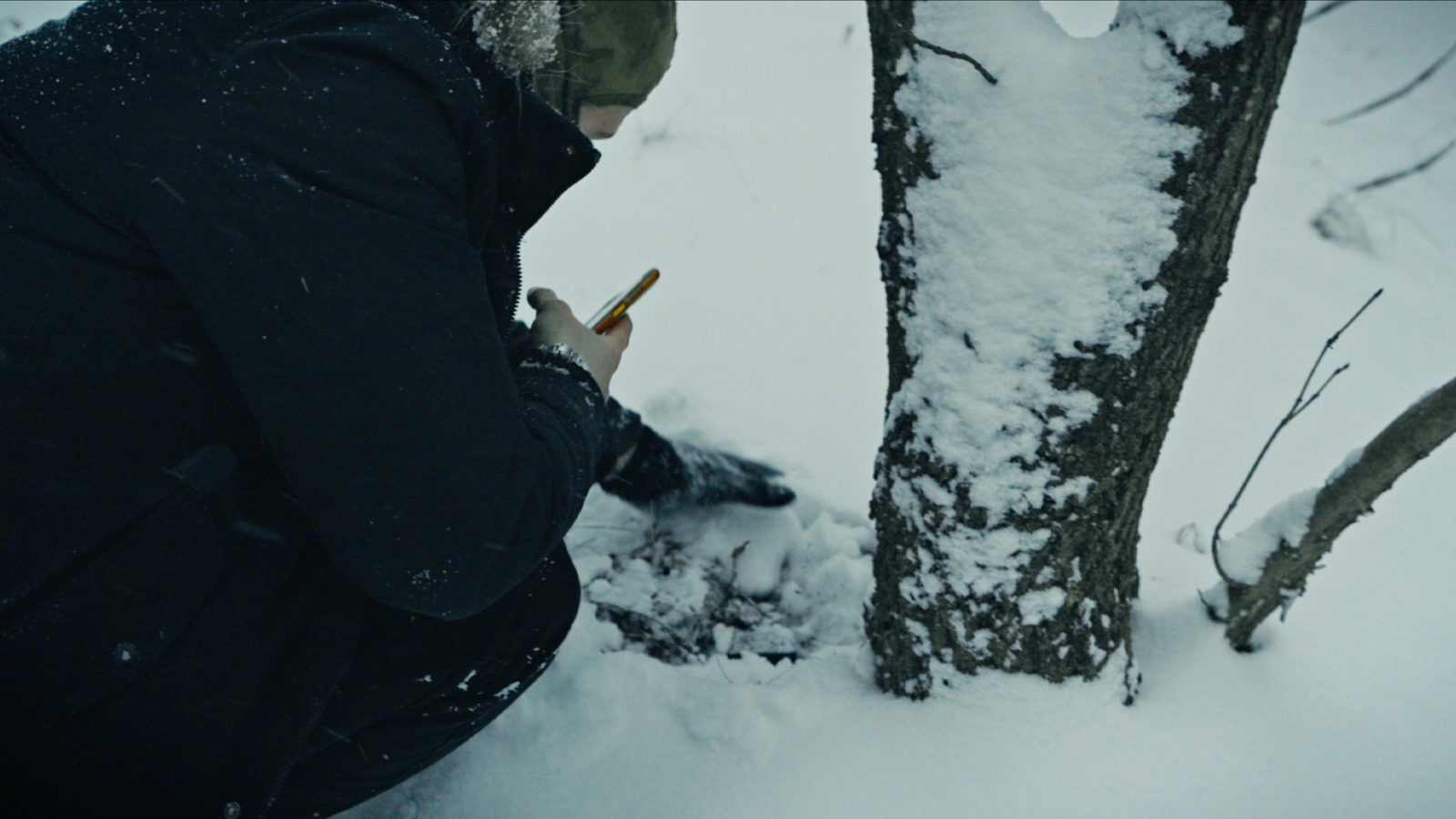
The coordinates led him to a snow-covered wooded area. “I dug in the snow until dark, messaging my curator that I couldn’t find the stash. My phone was blowing up with calls from my mother, but the curator didn’t allow me to postpone the job until the next day, so I went home and that night I sneaked out again to make the drops.”
Maxim was paid 200–300 roubles (roughly £2.00-£3.00) for each stash. “It was stupid to work for that kind of money,” he reflected years later. But he was motivated not only by money, but also by the adrenaline rush of selling banned substances: “And I can make money out of this too? That was just ‘wow.’”
With the money he earned, he sometimes bought groceries for the house, and once he treated himself to a quality fur-trimmed coat. “For the first month that coat stayed in a bag under my bed,” Maxim recalls — he couldn’t explain to his mother where such an expensive thing had come from, so he was afraid to wear it around her.
Maxim kept at this work for a couple of years. By age 16, after finishing nine grades of school, he was working part-time as a sous chef when he saw that a drug seller was recruiting ‘chemists’ — people who could synthesize Russia’s most popular drug: mephedrone.
“Poor man’s cocaine”
Mephedrone first appeared in the early 2000s, when it was popularized by an Israeli chemist working under the pseudonym Dr Zee.
Mephedrone penetrates the brain faster than other synthetic drugs, producing euphoria, a surge of energy, sexual desire, and sociability — but it also wears off more quickly, causing a severe withdrawal syndrome (anxiety and depression) and, as a result, rapid addiction.
In 2010, Russia banned mephedrone and its components, but this did not stop its growing popularity, especially among teenagers. According to psychologist and rehabilitation centre staff member Irina Medved, as well as the director of another rehab centre interviewed by the BBC, children in Russia now try drugs as early as age 12, and by 14 many are already using mephedrone regularly.
Denis, a practicing narcologist and employee of a charity organization that works with drug users, stresses that dependence develops very quickly in teenagers, and without help they risk dying — whether by accident or suicide. At the same time, getting help is extremely difficult: addicted teenagers fall into a “grey zone.”
“We are losing an entire generation,” he warns.
It’s estimated that about one third of all illegal drugs sales in Russia now involve mephedrone.
The Russian research project DarkMetrics, monitors and studies activity on darknet marketplaces. Incredibly Russians buying drugs on these sites often leave reviews. The researchers looked at reviews posted on four popular marketplaces and found that in just one month one third of all the reviews (more than 300,000 posts) were for mephedrone. Since most users only leave feedback after their second or third purchase that means that the real number of mephedrone purchases every month on these four sites alone could be as high as 700,000.
Continuing their number crunching the researchers also took one random day in 2024 and counted the amount of mephedrone available for sale across Russia on the country’s two biggest darknet marketplaces. They found 617 kg worth of mephedrone on offer stored in ready-to-pick-up stashes in cities across the country – about a third of the total volume of all illegal substances on sale on the darknet on that particular day.
“A merciless drug”
Eighteen-year-old Olya has come to a Moscow lab to get tested for HIV and hepatitis. She’s carrying a backpack with a sweater for the evening, some makeup, and — always — a supply of clean syringes.
For the next 15 minutes, two nurses try unsuccessfully to find a vein in Olya’s arms; they manageto draw blood only after several attempts — the veins in her arms are almost collapsed from intravenous drug use.
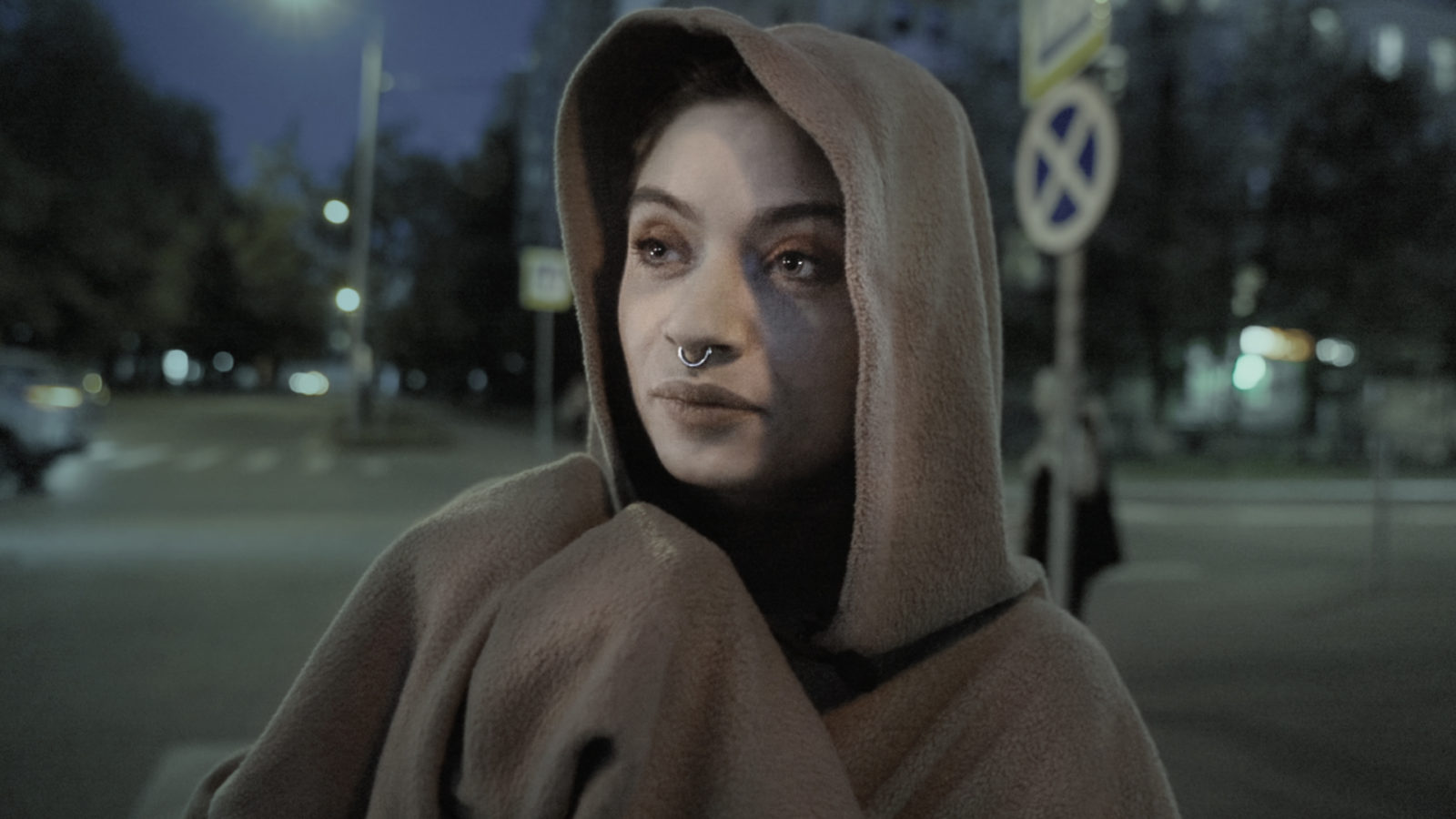
Olya was first introduced to mephedrone at the age of 15 by her boyfriend. At the time, she was living on the outskirts of Moscow in a large family and was still in school. “It just opened up a whole new world.”
Within a couple of weeks, Olya was snorting mephedrone several times a week — it turned out her boyfriend was also dealing. She remembers the period of her life between ages 15 and 17 like this: she went without mephedrone “for at most a couple of days in a row.” Soon after, she dropped out of school and started to tusovat’sya — hanging out and partying.
Credit: BBC
At first, Olya liked her new life: “Everyone’s out there looking for money or for drugs. But I’ve got a guy who is dealing drugs. Well, that’s it, I’ll stick with him.”
But soon problems began — Olya’s boyfriend was arrested, while her dependence on mephedrone deepened: “I wasn’t using to get high anymore, but just to wake up. To get out of bed. To stay alive.”
To get money and mephedrone, Olya went to parties organized in Moscow chat groups where men invited girls to “snort together”. She would post on Telegram asking friends to come with her: “Girls, a guy invited me to a party, who wants to come with me? They’ll order us a taxi from my place.”
Things got even darker when a friend gave her contacts to a 60-year-old Moscow businessman. Before meeting, the man asked her seemingly innocent questions in chat: “Do you do well in school? What grade are you in? What do your parents do?” Olya’s friend insisted he just wanted to talk, but it quickly became clear what the man really wanted from 15-year-old Olya was sex.
“He would give me either mephedrone or money, which I then spent on mephedrone anyway.”
Olya met him several times: “I’d get loaded on drugs and go to him. Sober it was impossible.” Soon he suggested that Olya bring along some of her friends.
Credit: BBC
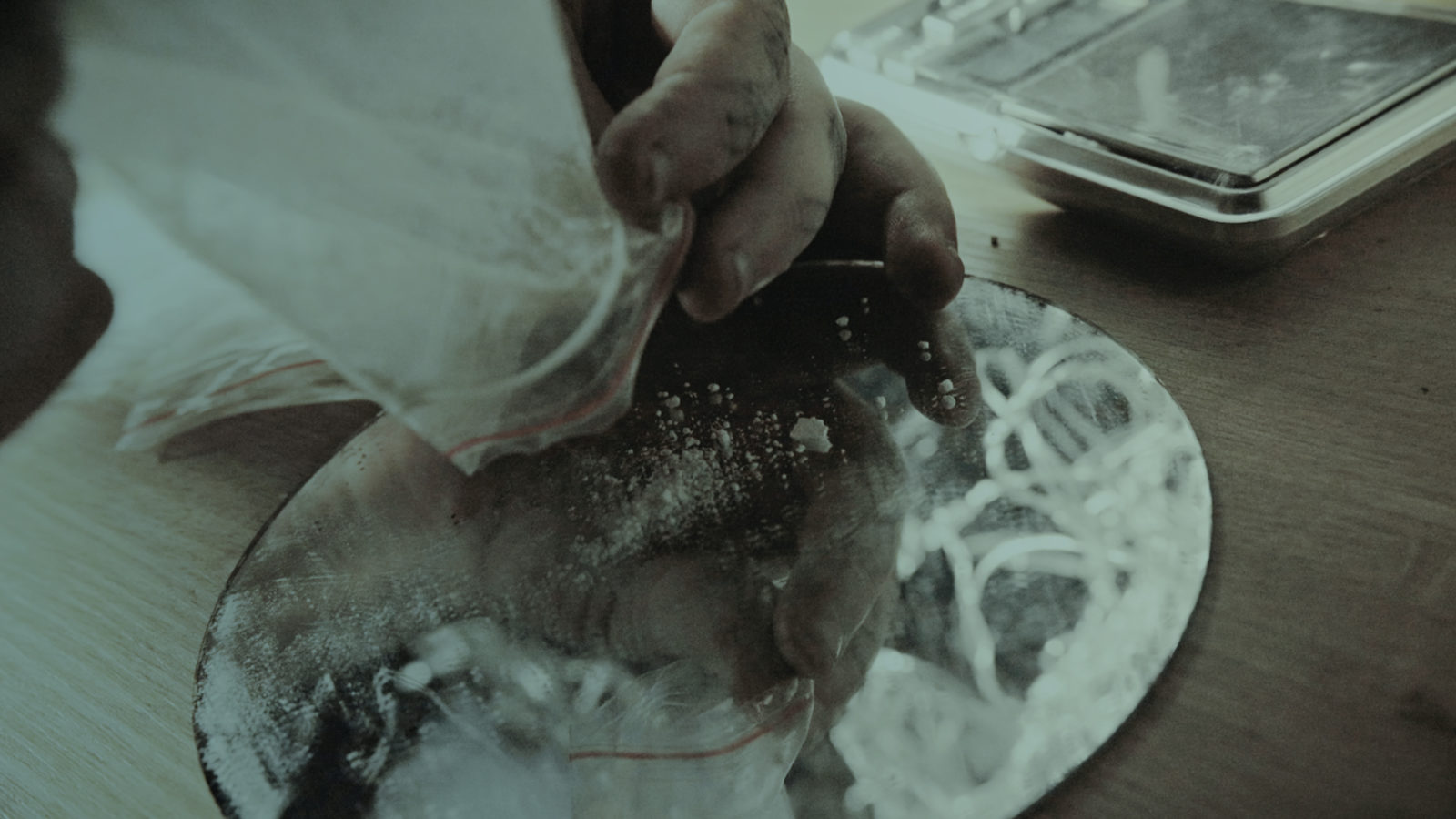
For every new girl, Olya says, she got a cut: “He wanted schoolgirls. I’d text this man that I could bring a girlfriend. — ‘Show me her photos. How old is she, where does she study?’ It was like a questionnaire. If he liked her he’d say: ‘Okay, come over.’ We’d go to him, there’d be sex, we’d take the cash and leave. Later I even started demanding a cut from the girls themselves — I wanted more drugs, and the prices kept rising. I’d lie on the bed, hold their hand and try to calm them, while in my head there was only one thought: ‘Just do your thing, I’ll take my money or my mephedrone. And you don’t interest me anymore.’”
“Mephedrone erases everything: your sense of worth, your self-respect, love for yourself, for your family, for your friends. Like if you took a cigarette butt and put it out on your own skin — you’d get a hole [in your flesh]. That’s what mephedrone does — it burns everything away. It’s a merciless drug,” Olya says.
In March 2023, Olya’s mother decided to send her 17-year-old daughter to rehab. “I looked like a skeleton, my nose was burned through [from the drugs], I couldn’t eat, I couldn’t sleep — nothing interested me except the next dose,” she recalls. Olya spent seven months in a closed rehab centre, counting down the days until her release.
Four months after she got out, in March 2024, Olya got in contact with the BBC. She told us she had found a job. She said she had relapsed once but after that experience she had decided she was finished with mephedrone for good.
Unfortunately, it was not to last.
“Every schoolkid can cook it”
All the rehabilitation-centre staff and narcologists interviewed by the BBC agree on one thing: mephedrone is popular because it’s accessible and cheap — it’s easy to buy or, if you know where to look, you can even just find a stash hidden for someone else,
Mephedrone is also popular with producers because it’s cheap and simple to make. It costs between 30,000 to 150,000 roubles (£270 – £1,330), to produce a kilo of mephedrone, according to dealers who spoke to the BBC. The street value of one kilo of mephedrone is around two million roubles (£17,800) according to data from the DarkMetrics research group.
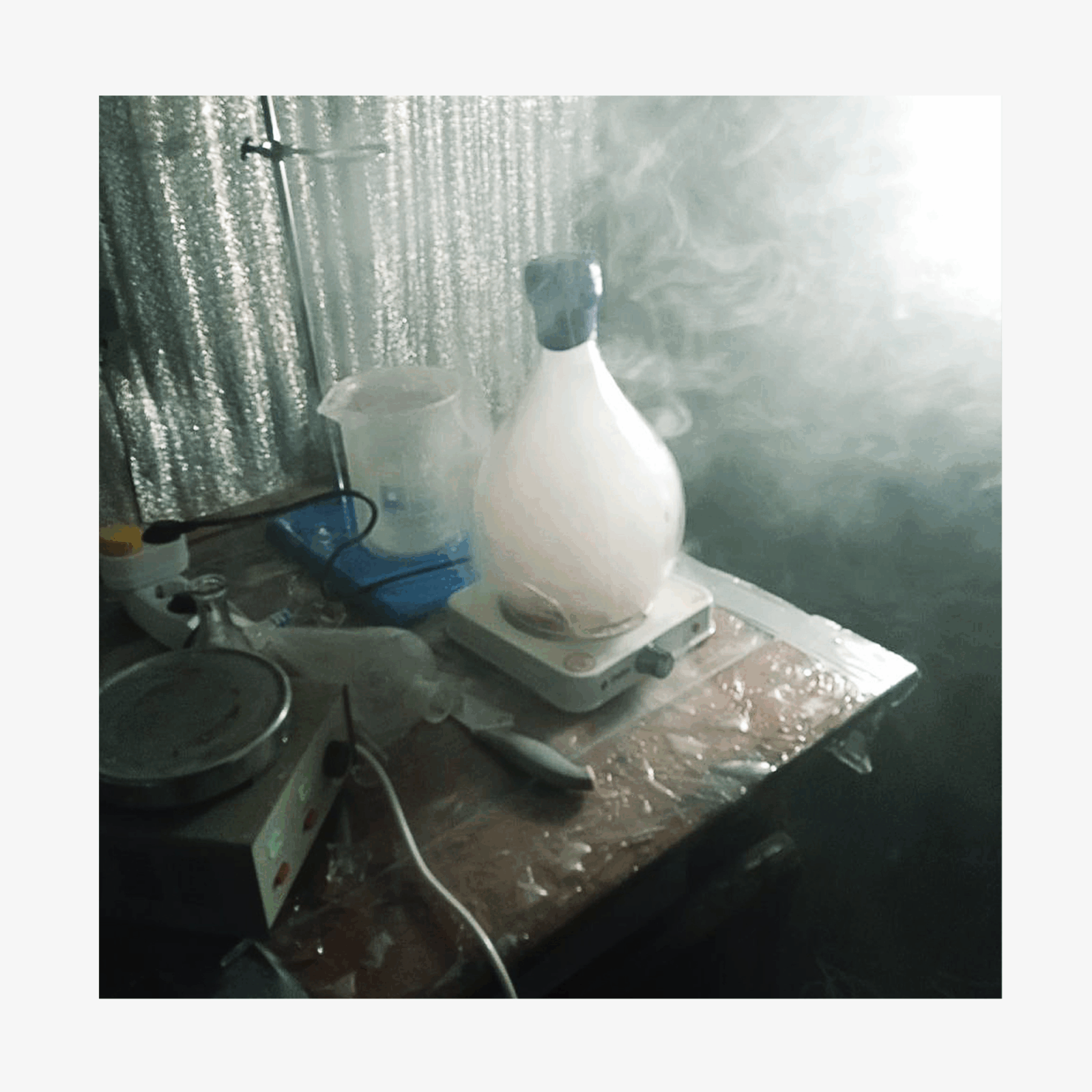
“To make other synthetic drugs you still need high precision and some expensive equipment,” says Nikolai (name changed) — a chemist who writes how-to guides for people learning how to ‘cook’ up synthetic drugs.
Credit: BBC
“Mephedrone became popular [with producers] because you could make it in the kitchen. Now any schoolkid can cook it.”
His view is echoed by Renat Kuramshin — a former investigator with the Ministry of Internal Affairs who has investigated large drug shipments into Russia: “We shut down big supplies of hashish. We shut down big supplies of heroin. Something had to replace them. And mephedrone came along. It’s an easily synthesized drug that can be produced anywhere from central Russia to beyond the Arctic Circle. You can set up labs anywhere and cook in peace.”
The BBC obtained access to a number of manuals for synthesizing mephedrone. They describe the production process in detail. “These instructions are aimed at a person who has done chemistry at school received a grade of three or higher,” says the introduction to one such 157-page manual.
The manual advises buying necessary chemicals in household-chemical stores or shops for home distillers (but in either case, it’s better not to draw attention), explains how to find private houses or apartments for labs, and gives step-by-step instructions on masking smells and disposing of liquid toxic waste (which, the authors complain, inexperienced cooks pour into the sewer).
It also offers general advice (the main one being — don’t use what you produce, and always have a reliable cover story for why you might be on a vacant lot at one in the morning: “needing to pee is also a legend”).
Despite all these precautions, mephedrone labs in Russia are shut down every two to three days — in 2024 alone more than 138 such laboratories were dismantled (about half of all drug labs closed by the law enforcement).
Credit: BBC
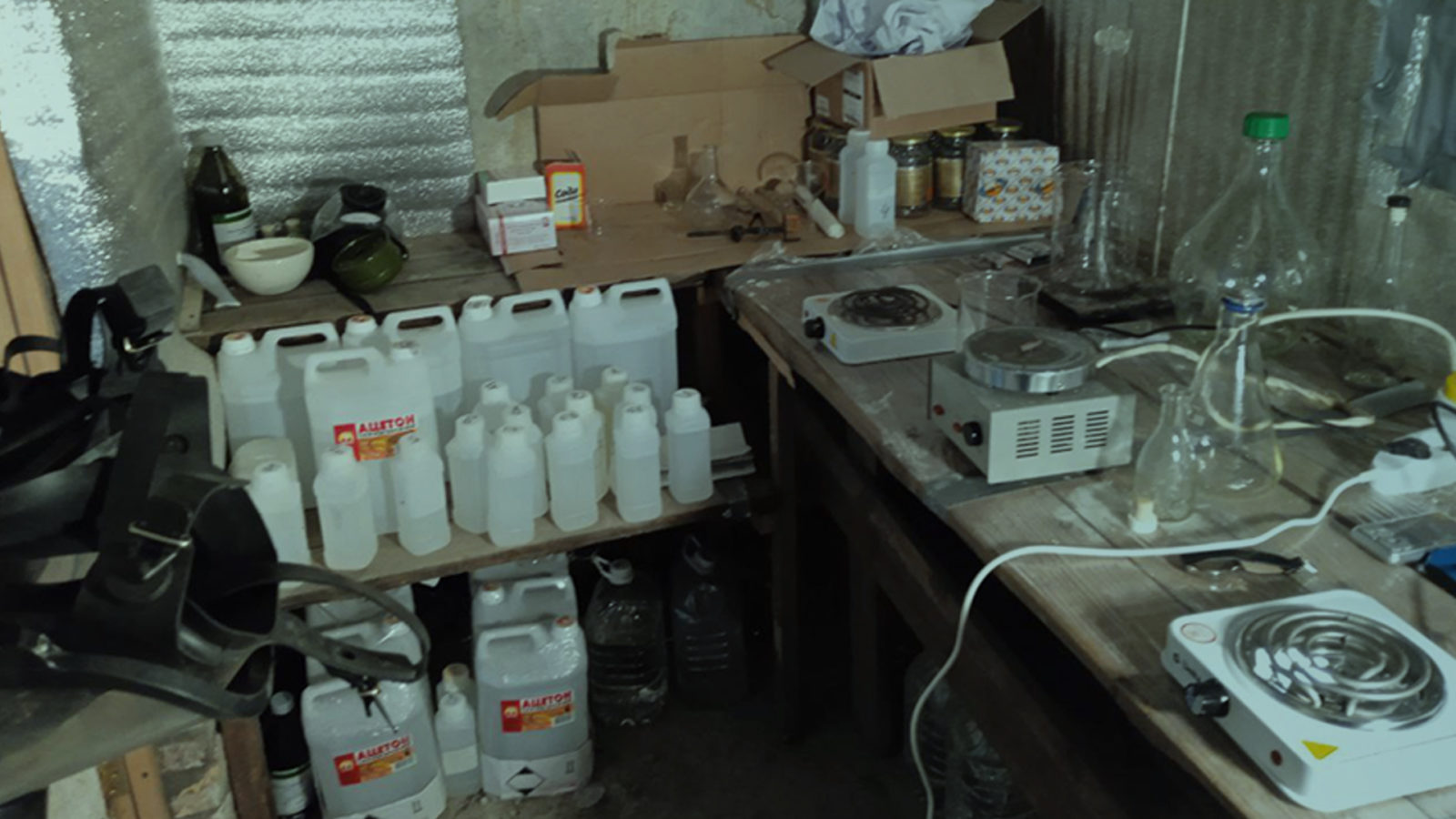
To start cooking, Maxim the sous chef ordered a basic kit for synthesizing mephedrone from one of the darknet marketplaces. These kits are called konstruktor because of the simplicity of production — the set contains several numbered vessels, and you just follow the instructions: “mix one and two, pour into three.”
“It’s like building a dragon out of LEGO. You don’t have extra pieces in a LEGO box, right? The kit has no extra parts either. And by following the instructions you’ll assemble mephedrone from the reagents,” Maxim explains. He told the BBC that the kit was sent to him to be picked up at a regular parcel collection point in a supermarket.
Credit: BBC
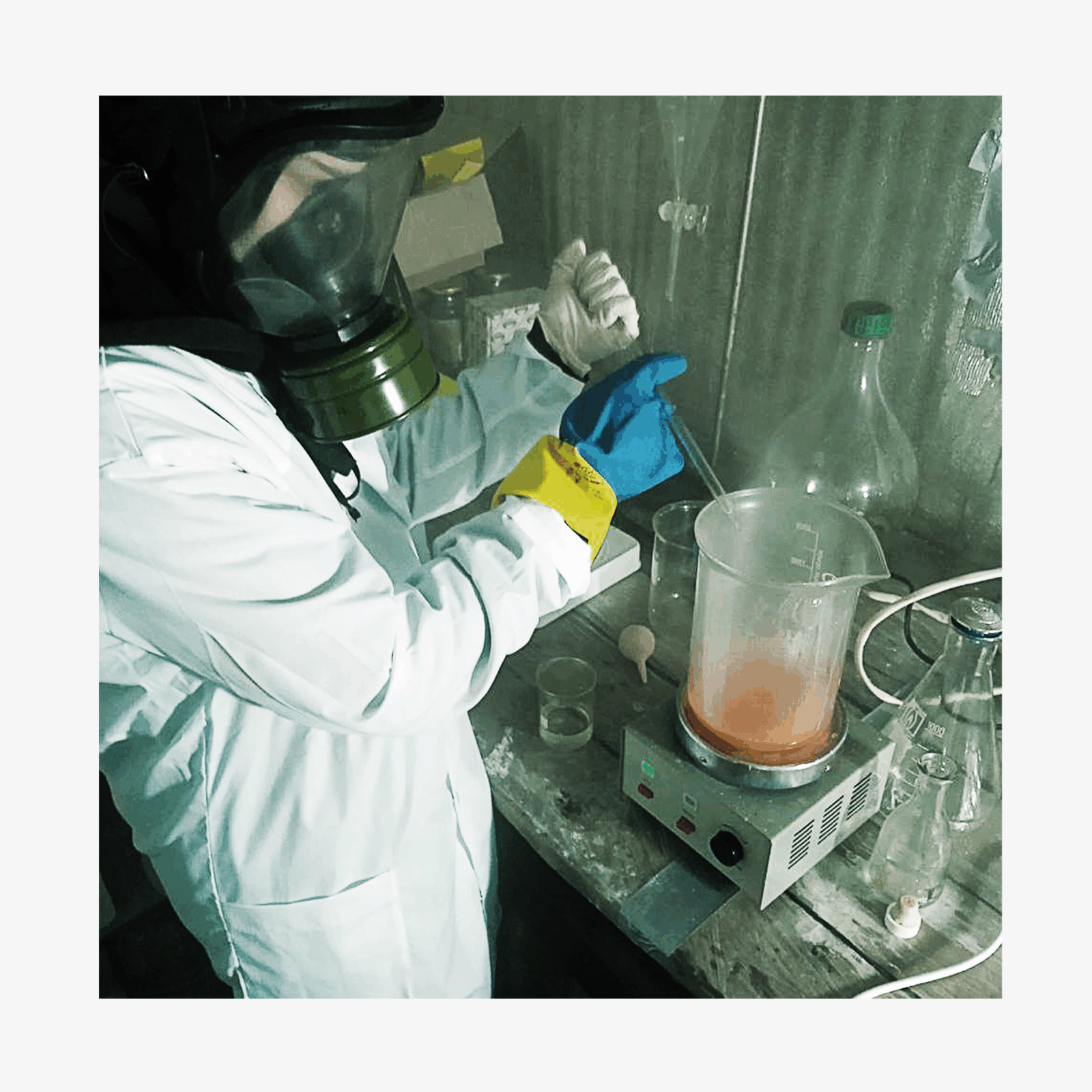
The young man decided to cook drugs in an abandoned bathhouse — he checked that there was electricity, set up the flasks, and began following the instructions. But he did something wrong, and a flask exploded during the reaction, spilling reagents outside.
“The bath house became deadly dangerous to be in. My body was burning, my eyes refused to open, and my nose could no longer breathe.” Running outside, Maxim lost control of his bowels and felt very nauseous. “I thought I was going to die,” he recalls in diaries he handed over to BBC. On the way home in the bus, Maxim noticed that passengers were turning away from him because of the smell.
The next experiments also failed, and only on the fourth or fifth attempt did Maxim manage to synthesize mephedrone. “And those hundred grams sold out very quickly,” the young man recalls. “[Synthesizing drugs] — it’s not scary at all. It’s just that you don’t understand what you’re actually doing. Here it says: mix one and three. So you mix one and three. I had this youthful maximalism. I didn’t understand what it could lead to. I even created a channel and showed my successes online.”
Credit: BBC
BBC asked Maxim if he felt any responsibility for the fact that many of his peers became dependent on the mephedrone he produced.
“So what? I also became addicted to mephedrone,” Maxim quickly replied. “I don’t blame some dealer who sold it to me when I was 15. It’s everyone’s own business. Everyone decides whether to use it or not. Whether to put a cross over their own life or not.”
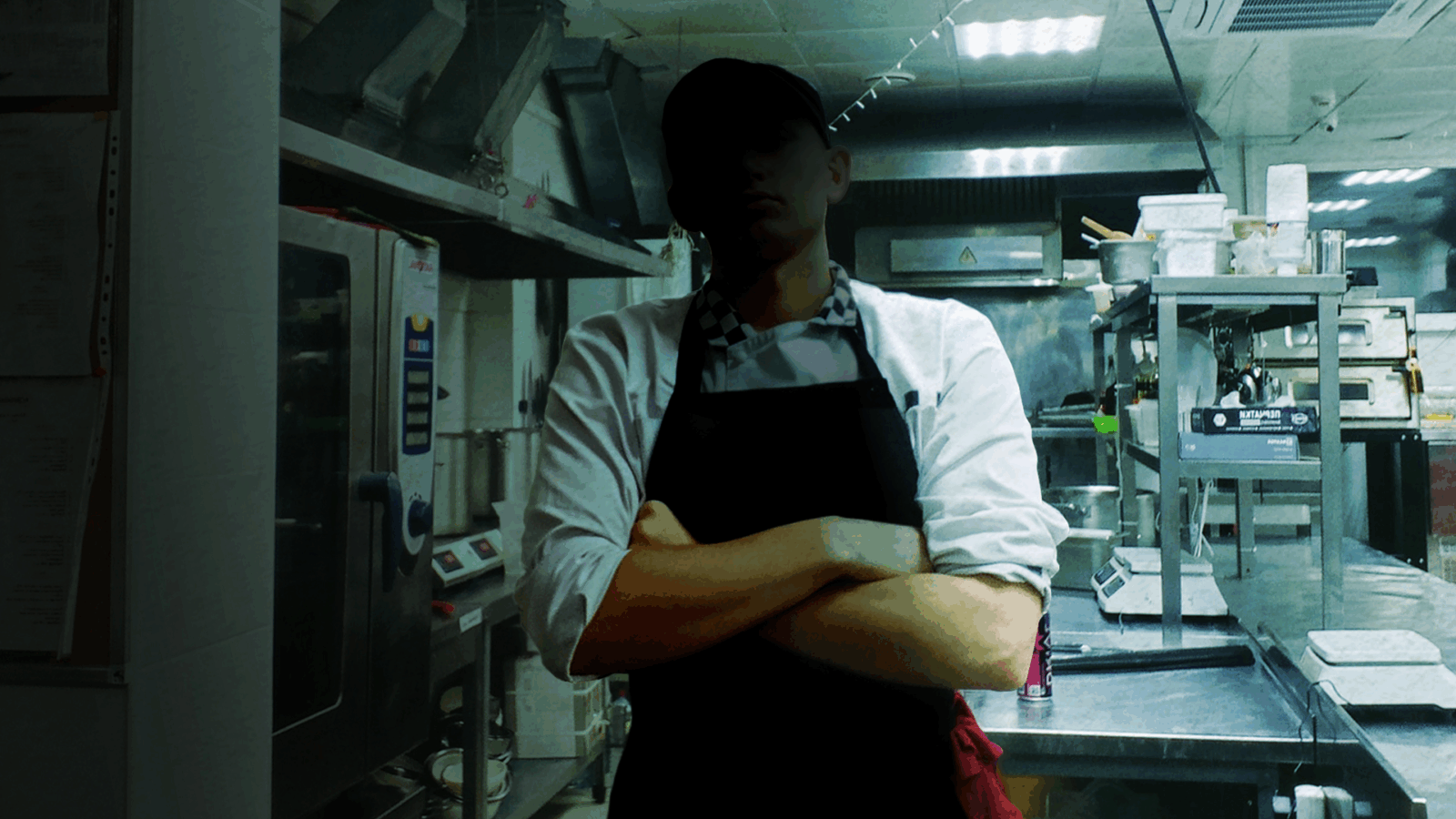
By the age of 17, Maxim was leading a double life — living in a rented apartment and working as a (real) cook in a café. In the mornings, he would go to work, and by noon he would return home and start cooking mephedrone: he moved the laboratory from the abandoned bathhouse to the rented apartment, where he installed a ventilation system and sealed the door gaps to hide the strong smell of the chemical reaction. In one room he would set up the large flask where the reaction took place; the process took about 12 hours, so by morning Maxim was free again to head off to his legal job.
At work, people noticed a strange smell from the young man and asked what it was — Maxim referred to it as some chemical work being done in his residential block of flats. He explained the smell to his mother by saying that he left clothes next to vegetables at work. Tatyana (his mother) visited his apartment more than once but noticed nothing suspicious.
Credit: BBC
But his double life was beginning to take its toll.
“Once a week I dreamed that I was being arrested. I would wake up in a cold sweat, flush everything down the toilet, and break the flasks.”
When asked why he still continued synthesizing drugs, Maxim, after a slight pause, quickly answered: “It’s also like drugs. You sell once. You realise you can make money from it. You realise it brings adrenaline, new emotions…When you’ve been doing it for a long time, dependence appears, and it’s already hard for you to stop yourself internally and say: ‘No, that’s it, we’re not selling drugs.’ That doesn’t happen. It’s as if something inside you drives you to do it.”
In his diary, Maxim was more direct: “Drug trafficking is my addiction, without it I start going through withdrawal.”
How raw materials for the drug are reaching Russia
On a sunny Saturday in a town outside Russia, 17‑year‑old Dan (name changed) is sitting on the balcony of a rented apartment vaping and checking his phone constantly. He’s wearing an immaculately-ironed white shirt and is sipping a non-alcoholic beer.
Dan works for a business on the darknet coordinating the supply of raw materials, chemicals, and equipment for drug production. On the day the BBC met him he was remotely overseeing the production of mephedrone — advising the ‘chemists’ who were supposed to carry out the work.
While we were speaking to him he was getting regular calls from people inside Russia checking details of how to ‘cook’ mephedrone. He showed us some of the conversations. Before meeting Dan, BBC reporters spent months talking to him and verifying that he was indeed involved in supplying raw materials and producing drugs.
During one of the calls that day, the ‘chemists’ were complaining about leaking equipment. The internet connection was unstable and eventually the line went dead. Dan was left guessing – maybe the police arrived, maybe they were overwhelmed by fumes, or maybe their phone just ran out of battery.

Credit: BBC
Dan says little about himself: he is not yet 18, but he has already been in the drug business for several years. One of the main challenges, he says is the supply of precursors for mephedrone to Russia. There are two which each cost between 18–40 thousand roubles (£160-£355) per kilogram. The main difficulty is not the price, but the import process: since 2022, both substances have been included in the list of drug precursors, and their circulation is now very restricted.
Renat Kuramshin, a former investigator with Russia’s Ministry of Internal Affairs, says illegal drug producers in Russia now have two options for obtaining precursors: legal chemical production in Russia (but this option has its drawbacks — law enforcement closely monitors precursors used in legal industry, so any “leak” of precursors to illegal use will immediately arouse suspicion), or importing from China.
The Chinese route mirrors the way the precursors for the synthetic opioid fentanyl are being smuggled into the US – with packages hidden in high volume legal Chinese imports – often with the collusion of both Chinese and Mexican organised crime groups. In 2022, fentanyl use in the U.S. resulted in 73,654 deaths — eight people per hour.
Drug traffickers in Russia are using exactly the same scheme, the BBC has discovered.
“In China chemical production is developed,” former narcotics detective Renat explains, drawing maps on a school exercise book. “They produce not only common chemicals, but also precursors for narcotics. But the border checkpoints between China and Russia are well known and controlled. It’s dangerous to transport directly.”
“In China, a batch is prepared, disguised as legal goods that at first glance will not arouse suspicion from law enforcement. They go where there is less inspection, so they bring all this into Kazakhstan.”
Since Kazakhstan and Russia are part of Eurasia Customs Union, Renat continues, “there is practically no border,” and then “the batch is distributed”. Some of it is stored in Moscow, which acts as a logistics hub for supplies, and the rest is sent directly to the regions.
Dan, the importer, confirms that he buys in precursors from China disguised as other legal chemicals — for example, pesticides: “Completely legal logistics are used. A truck carrying the precursors from China could be bringing in anything from sneakers to vibrators,” he says.
The BBC also gained access to a closed chat of wholesale drug traffickers where the synthesis and supply of precursors were discussed. The BBC monitored the chat for more than six months: users congratulated each other on national holidays, griped about unreliable suppliers and personnel shortages, and periodically discussed precursor deliveries. According to the correspondence, the “standard route” for delivering precursors is from China via Kazakhstan.
To confirm the route and method of delivery, posing as a buyer, the BBC contacted several Chinese factories that sell fentanyl precursors. In particular — the Amarvel Bio factory, some of whose representatives were arrested in Fiji in 2023, and extradited to the US on charges of money laundering and trafficking fentanyl precursors. Soon after, the same factory started expanding its focus to Russia, actively advertising and targeting buyers of mephedrone precursors.
A BBC reporter contacted the factory posing as a buyer, the factory representatives assured that delivery would be carried out safely and sent a tracking number for the cargo, which, according to them, had already been sent to a client in Russia. This cargo also passed through Kazakhstan. Other factories also sent the BBC correspondent tracking numbers for shipments, and these deliveries were also carried out through Kazakhstan.
Representatives of the Amarvel Bio factory sent the BBC a photo of a storage facility where, according to them, the cargo could be picked up. The photo showed a yellow portable building, in front of which were boxes wrapped in yellow tape. In October 2023, the BBC was able to geolocate this photo — the portable building is located on the territory of the ‘Yuzhnye Vorota’ (Southern Gates) market in Moscow.
And in January 2024, ‘Yuzhnye Vorota’ was mentioned in correspondence among drug traffickers in a closed chat — according to participants, arrests became more frequent there when couriers came to collect precursors.
‘Yuzhnye Vorota’ in publications about goods delivery from China is called a “centre of ‘grey’ customs clearance.” In the constant flow of goods from China and Kazakhstan a barrel with precursors can easily be hidden.
Renat Kuramshin confirms that such markets can be widely used by drug manufacturers and suppliers: “Every such market is a city within a city, where anything can be hidden — from a luxury car to a tonne of heroin or mephedrone,” he says, standing about a hundred meters from the yellow portable building whose photo was sent to the BBC correspondent by employees of the Amarvel Bio factory. Behind Renat, boxes wrapped in yellow tape are being actively unloaded.
‘Yuzhnye Vorota’ is owned by the influential Moscow-based entrepreneur God Nisanov, who also owns the ‘Sadovod’ market and the ‘Moscow’ trade fair complex. According to reports in the Russian news online news outlet ‘Baza’ the ‘Moscow’ trade complex has also been used as an endpoint for precursor deliveries from China. The management of ‘Yuzhnye Vorota’ did not respond to the BBC’s request for comment.
Dan, the supplier, told the BBC that for drug traffickers ‘Yuzhnye Vorota’ is a favoured destination because it is easy to hide barrels of precursors in the nearby forest for producers and couriers to collect.
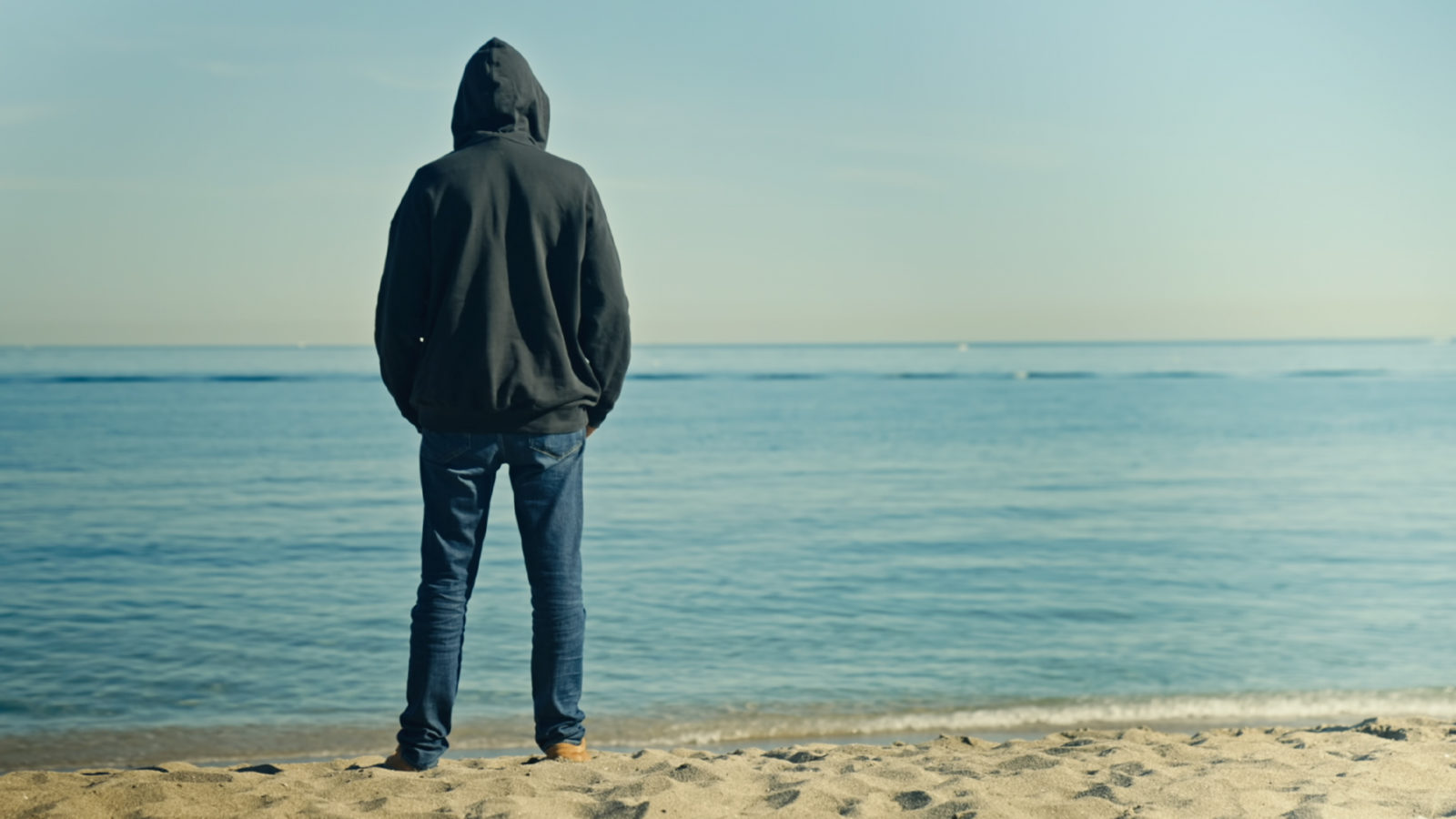
To show us the system Dan sends an instruction to a courier in Moscow— telling them that several barrels of precursors have been left for them to pick up under a big fir tree in woods near the highway, 60 kilometres from the Moscow Ring Road.
As we are talking to Dan, the ‘chemists’ he had been in touch with in Russia get back in contact. He’s obviously relieved that this particular strand of his business model is safe for now, but he acknowledges that everyone gets caught in the end. They’ll probably last three or four years,” he says. Almost all of them start off just wanting to earn money and then leave, but the environment pulls them in — “you want more, and life changes”. Cooking can bring in up to 200 thousand [roubles, £1780] at a time.”
— Do you feel responsible for selling drugs?
— Well, I’m not running around playgrounds with a syringe anymore.
— So what? It destroys people’s lives.
— I don’t really care. People sell tobacco, alcohol, and so on.
— Yeah, alcohol is quite a destructive substance too.
— Yeah, my dad drank himself into ruin.
— So you’ve personally felt how destructive addiction can be. And now you act, in a sense, as a sponsor of addiction for others. Don’t you see a contradiction there?
— Not at all.
— Why not?
— Well, back then alcohol companies made money, now it’s me.
Credit: BBC
Mephedrone to opiates
Back in Moscow, and after just a few months clean, Olya has relapsed.
She began by injecting mephedrone intravenously — to achieve a stronger effect. But then one night at a party with friends, realising mephedrone wasn’t giving her the same high it used to, she decided to try heroin instead.
The following morning her friends found Olya “on a mattress, blue with a bloody mouth.” A 17‑year‑old boy sleeping on a nearby mattress had died.
After that incident, Olya and her friend were called into the police station for questioning. “We haven’t even been in school for a long time,” the 18‑year‑old girl explained in response to the officers’ questions.
Dying doesn’t seem scary
After the party, Olya thought about it — she too could have died that night: “But they revived me? [So] let’s just keep going.”
By the summer of 2024, Olya had switched to the heroin substitute methadone, which she used intravenously.
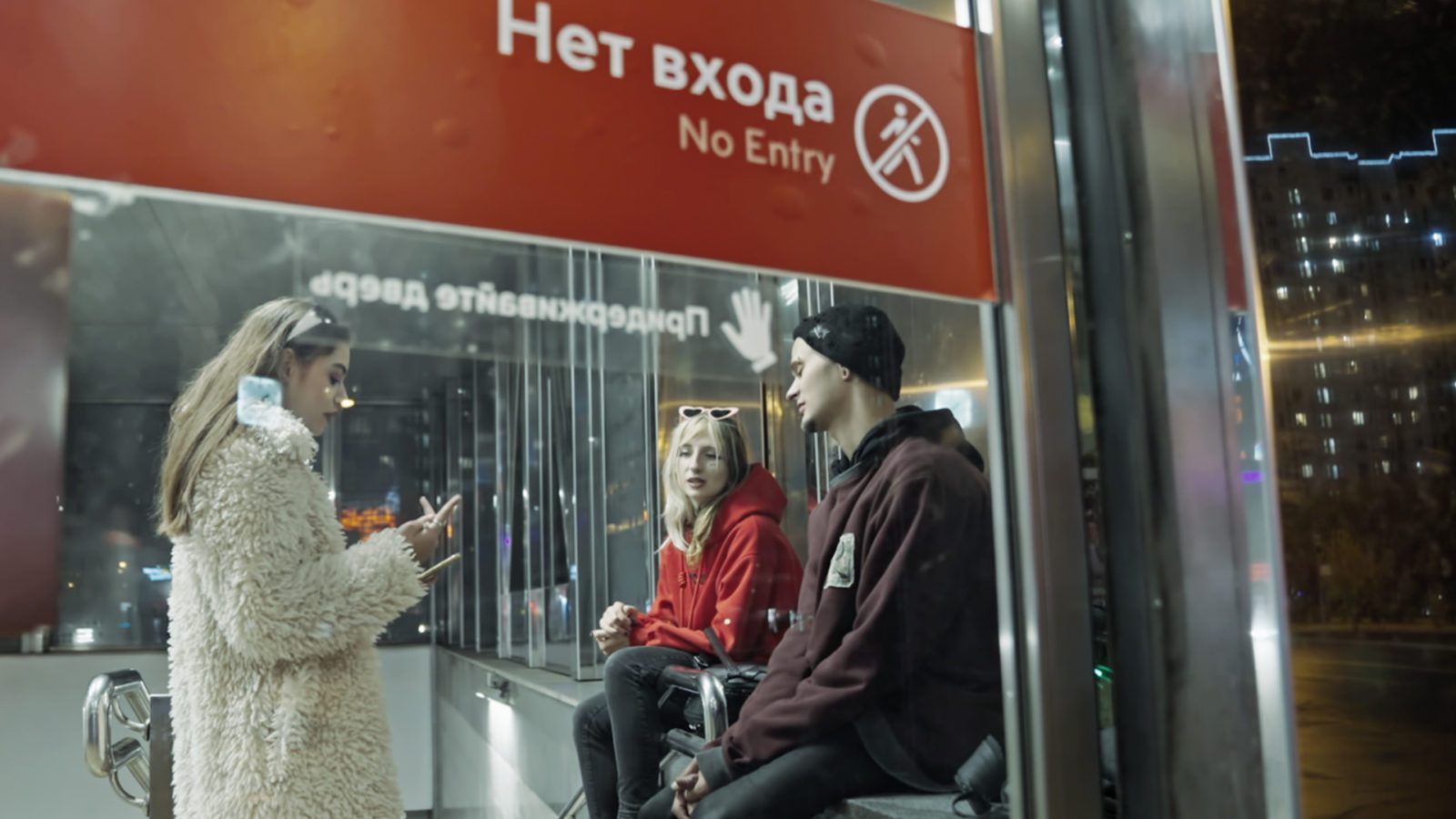
She posted videos about her life. In one she is staggering through a Moscow metro underpass in high heels, clearly high. She is wearing a white faux-fur coat, her bright pink eyeshadow contrasting with her deathly pale face.
“Let’s shoot up again? she asks the friend filming her. “Shall we?”
The BBC caught up with her one evening as she was walking through a park. Still slightly sleepy after a party the night before, she describes how she and her friends stroll through the city looking for drug stashes — “you just have to look where stashers usually hide things”.
“I don’t even like Moscow. There are so many drugs here. So many temptations,” she says. Olya speaks of her plans to leave the city to stay with her grandmother in Vladimir and try to come off drugs there. But it never happens.
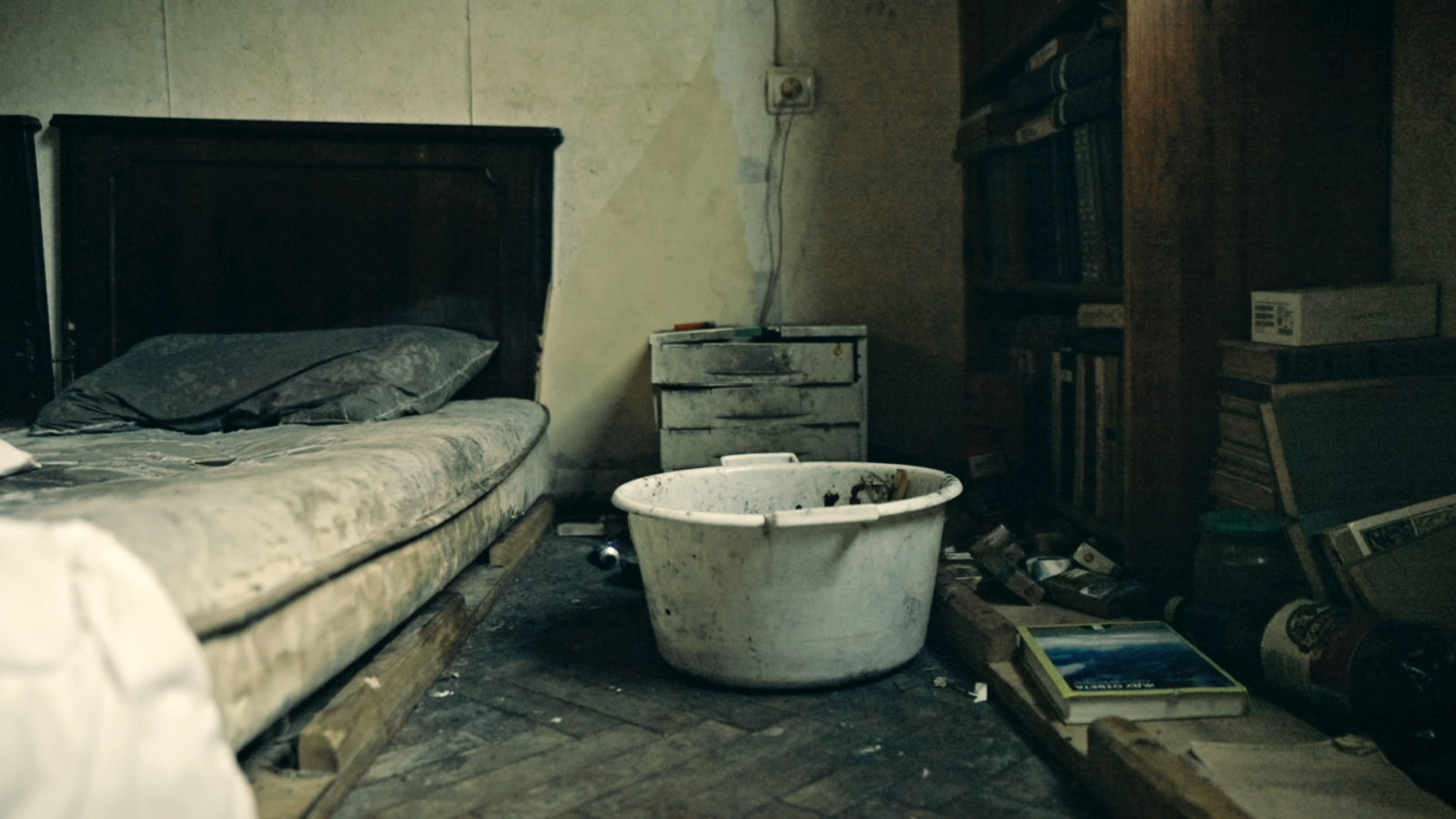
After walking in the park, Olya returns to her friend’s apartment — in one room blood-stained mattresses are piled up, in the corner there is a basin with dried vomit or blood. In the grim kitchen, with walls yellowed from cigarette smoke Olya and her friend Vlad make instant noodles and try to remember where they put the money they’ve put by for their next hit.
Credit: BBC
By the evening they still haven’t found it so they decide to go for a walk in a nearby park to see if they can find any stashes hidden there.
“Honestly, I’ve been thinking that I just want to throw myself out a window, just to forget all of this, for none of it to exist,” Olya says. “I do want to live — but dying doesn’t seem scary either. I’m grabbing onto anything I can.”
“It’s impossible to stop”
In the summer of 2023, Maxim was arrested — the two guys in tracksuits who had been watching his building turned out to be police operatives. During the search of his rented apartment, they found synthesizing equipment, 700 grams of mephedrone, precursor remnants, and several bank cards. Maxim and his partner were sent to a pre-trial detention centre.
“When I was arrested, I felt so relieved,” Maxim recalls. “My head was overloaded. I had to go to work, prep food at the restaurant, pay rent…” In detention, Maxim started keeping a journal, which he later gave to BBC correspondent.
“A grey winter sky hung over the city. The air was enriched with the sharp taste of freedom, and outside, a light rain began to fall. In the distance, the streetlights flickered,” Maxim wrote, lying on his bunk in the cell.
Relations with his cellmates were tense — the young man was forced to do dirty work in the cell, and they reproached him for producing drugs. On days when the pressure from his cellmates intensified, Maxim’s journal entries became more emotional: “My consciousness has shrunk to 4 meters wide and 10 meters long. I wouldn’t wish this on anyone. It kind of feels like a dorm: TV, phone, fan, kettle. All the conditions for living — but it’s impossible to live.”
His mother, Tatyana (name changed), tried to find an answer while her son was in detention — why had he spent several years distributing drugs?
“He saw how hard his mother worked and how little she earned. And how much you could make just by going and leaving a stash under a bench somewhere. After trying easy money, it became hard for him to stop,” she says.
One day, while shopping for T-shirts, Tatyana caught a familiar scent — the same smell Maxim used to have when he made up excuses. In front of her stood a young man picking out a flashy tracksuit, and Tatyana realized: he was a cook (someone who synthesizes drugs). She wanted to approach him, tell him about her son, and say: “Stop.” But looking at his “satisfied face,” she understood — “no pleas from a stranger’s mother” would make a difference.
“My son is gone — and two hundred others have taken his place. This will never end,” she says.
“Lost generation”
In detention, Maxim was thinking through possible ways to “escape from prison” — he was facing a long sentence, which meant he wouldn’t be released until he was nearly 30.
“Who needs a guy who’s been in prison, has no education, and spent half his life behind bars?” he wrote.
To avoid serving the full sentence, Maxim decided to sign a contract with the Ministry of Defence and go to fight in Ukraine. When his accomplice Nikita found out that Maxim was planning to sign the contract, he sent him a note from the neighbouring cell: “Brother, if you’re going to the special military operation [SVO – Russia’s official name for its war in Ukraine], maybe you could take all the blame, so I get a lighter sentence. You’re going to the SVO anyway, and there it doesn’t matter how long your sentence is.”
Credit: BBC
In January 2024, Maxim, who had entered a pre-trial agreement, was released from detention and placed under house arrest.
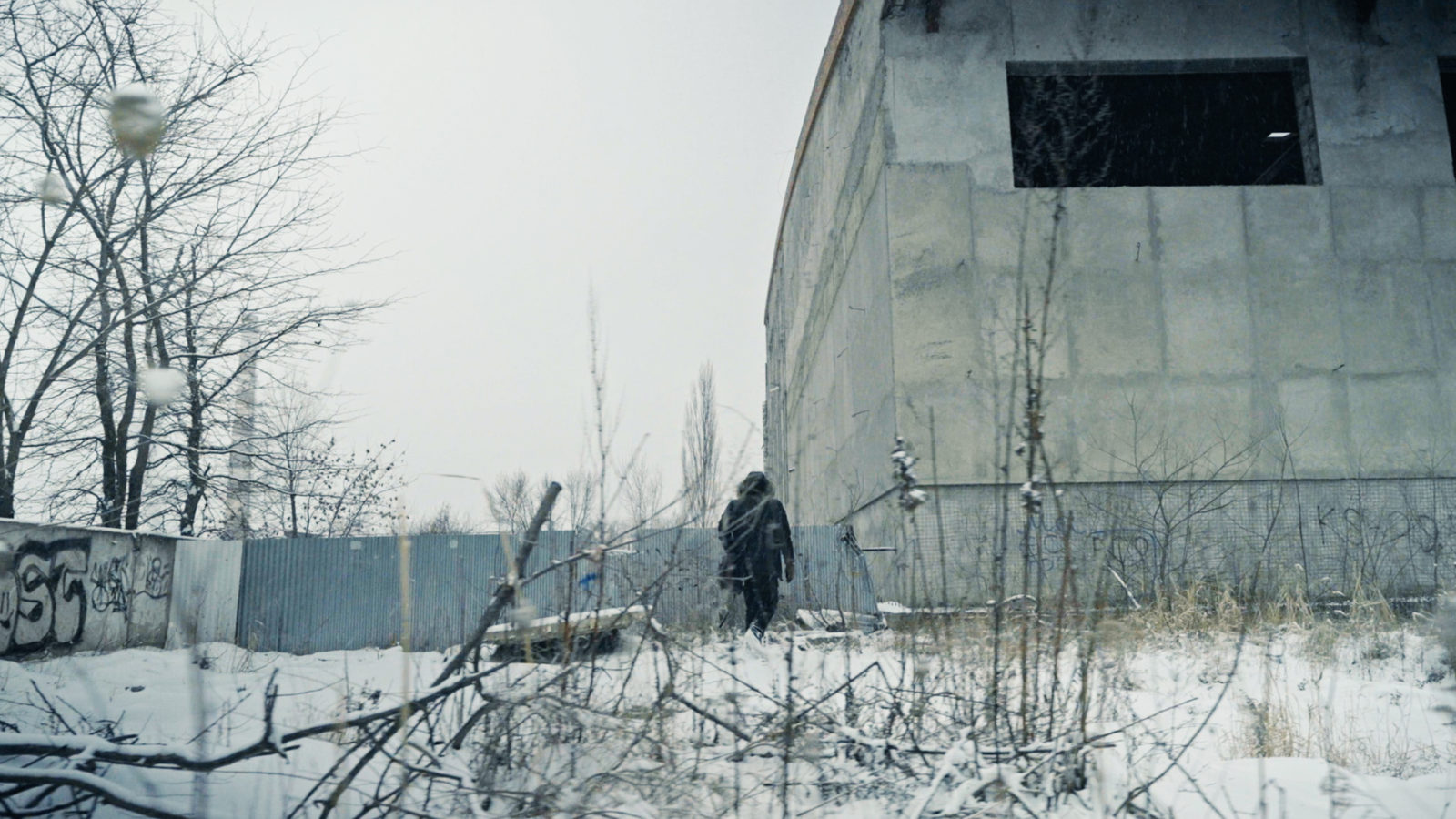
Before the ankle monitor was installed, he was free to move around the city. Standing in the forest where he had once found his first stash, wearing a balaclava and a hoodie with a darknet shop logo, he recorded himself on video: “I would’ve ended up in prison sooner or later anyway. We know what we’re getting into. But 12 years — that’s a lot.”
His mother told the BBC that Maxim signed the military contract in July. In August, his fellow soldiers informed her that Maxim may have died during a combat mission.
By autumn 2024, Maxim’s official status was “missing in action.” Nikita, Maxim’s partner in crime, according to Nikita’s father, was also planning to sign a contract and go to war.
At a meeting with BBC correspondents, Maxim’s mother read his journals for the first time and began to understand the deep despair her son was feeling.
“A lost generation. We didn’t know what to do. Deception all around […] I lost everything because of these drugs, because of insomnia and endless work. I let down my family, I let down my mother. I let down my sister, I let down everyone. I said it couldn’t get any worse. But it did. […] The guilt I feel toward my family is endless. I’ll never be able to make up for it. Will I get a chance? I’m in deep trouble.”
Credit: BBC
Back in Moscow, in the autumn of 2024, Olya was using heroin again.
She bought drugs using money awarded to her as moral compensation — the man who had sex with Olya in exchange for money or drugs was arrested and prosecuted. Olya was also considered a suspect because she had brought her friends to this man and took a cut from them, but she wasn’t charged since she was under 18 at the time of the crime.
In November 2024, she was detained and put under house arrest.
In May 2025, she was sentenced to six years in a penal colony for attempting to sell drugs.
Olya’s mother declined to speak with the BBC.
In December 2024, Dan got back in touch with the BBC.
He said the chemists he had been calling during our earlier meeting were now in prison, but that he was now running a much larger lab capable of producing mephedrone on an industrial scale. He even sent a video referring to production cycles of several kilos of the drug at a time.
More money for the suppliers and dealers. More broken lives and more misery for families across Russia.
The BBC asked the Russian Ministry of Internal Affairs to comment on the scale of illegal mephedrone trafficking and precursor supply. We did not receive a reply.
Andrey Gorianov — editor
Yaroslava Kiryukhina — data journalist
One day in Gaza
12:00 a.m.
In the first minutes of the new day, Bashar Khattab arrives at his destination. The 18-year-old electrician has been walking through the darkness for two hours; now he reaches the bridge near the small town of Nuseirat, in the middle of the Gaza Strip, and sits down. A few hundred metres away, behind a checkpoint of the Israeli army, is a food distribution centre that will open in nine hours. Bashar hopes to get food for himself and his family there. He is not the first to wait; hundreds of people are already huddled along the embankment at the foot of the bridge, and hundreds more are still to come. The people have piled up a sand wall for protection, behind which they hide. They are repeatedly fired upon from the checkpoint. Strictly speaking, no one is allowed to stay here. But Bashar has learned from experience that only the fastest get any food. And from here, he doesn’t have far to go when the centre opens. Bashar will later send Die Zeit video footage of the waiting crowd. He will say that he leaned his back against the sand wall and tried to doze off a little.
2:00 a.m.
About three kilometres away, on the second floor of a house in Bureij, the town next to Nuseirat, an explosion rouses 23-year-old Jamil Mahmoud from his sleep. After a moment of disorientation, he stumbles outside, together with his sister and her two children. From the street, they see that the fifth, top floor of their house has been destroyed. That is where Jamil’s cousin and uncle live.
©Mahmoud Issa
Jamil Mahmoud will later tell Die Zeit that he immediately ran back into the house, up the stairs, smoke rushing toward him. He sees collapsed walls, smashed furniture, what he believes to be parts of a rocket. Then he finds his uncle, trapped under the bed, which was apparently knocked over by the blast wave from the explosion. His uncle is conscious but bleeding from a head wound. Jamil bandages it with a T-shirt lying on the floor. A little later, someone films his uncle being led out of the house in a daze, supported by several people. His upper body is bare; he has a cloth wrapped around his waist. Jamil Mahmoud stays upstairs on the fifth floor. He goes into the next room and sees a lifeless body. It is his cousin. He was 25 years old and due to get married next week.
5:00 a.m.
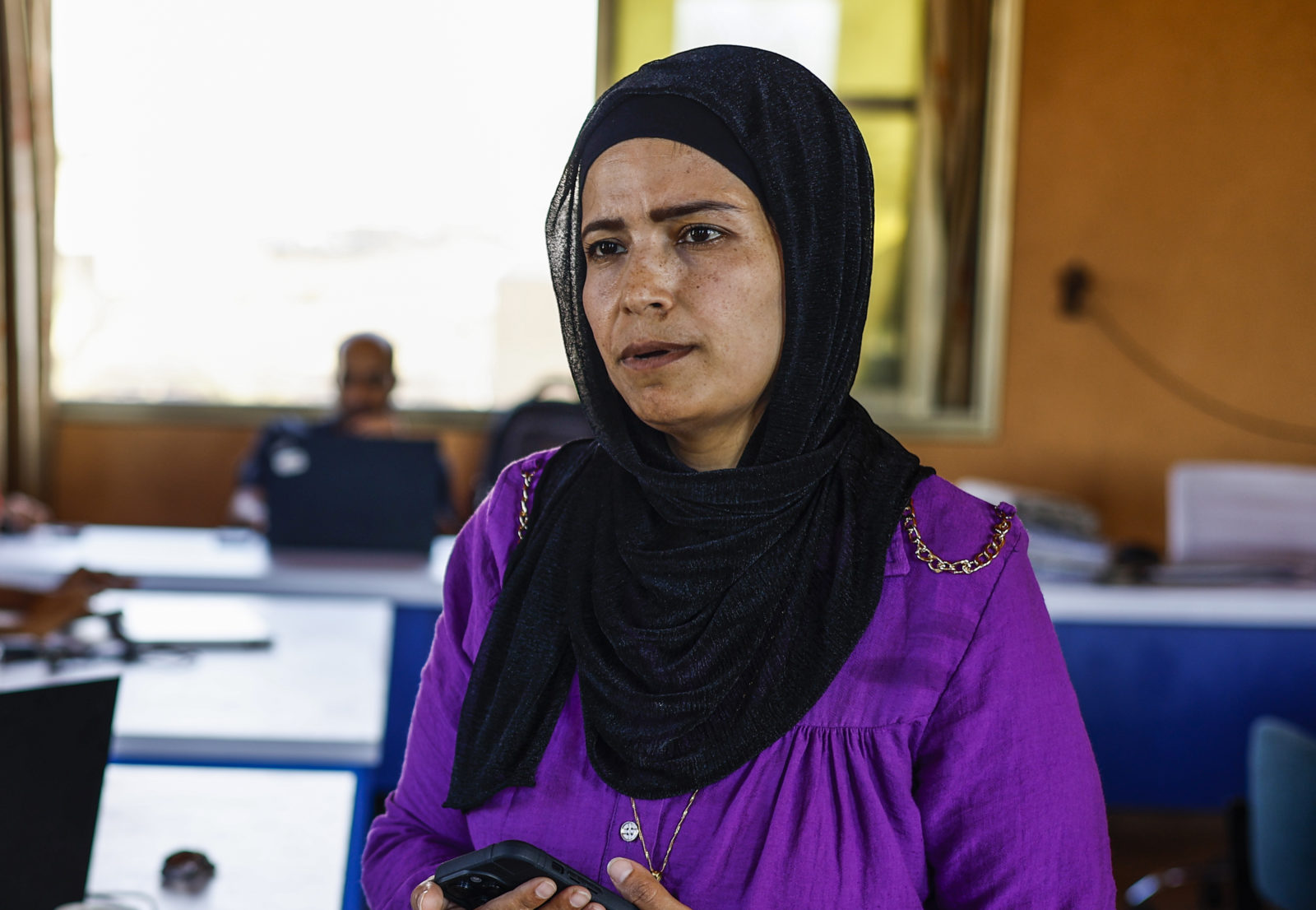
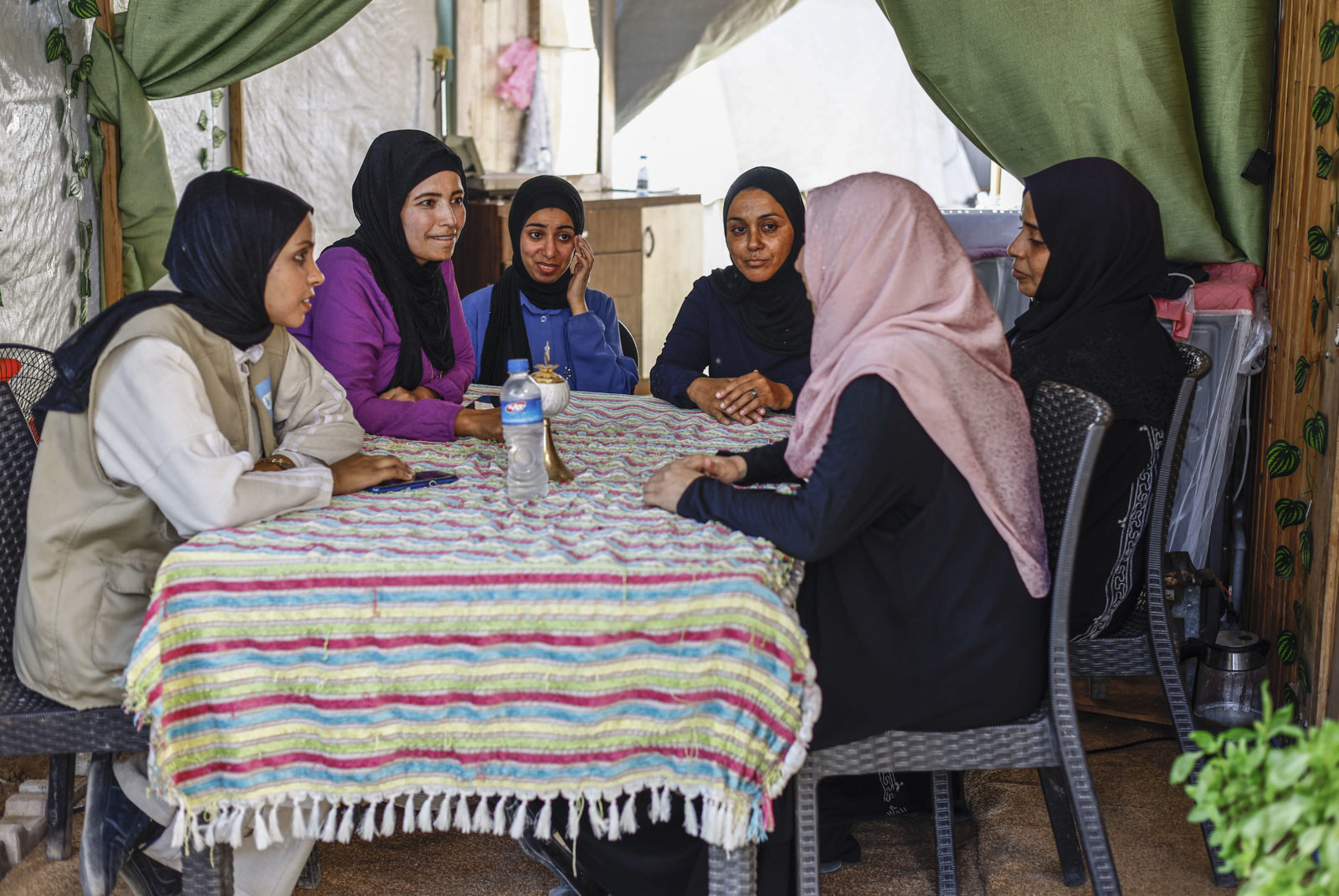
In Al-Mawasi, a small town in the south of the Gaza Strip, Reem Alreqeb, 37, steps out into the darkness. She lives in a fenced and guarded camp made up of tents and wooden trailers. This is where SOS Children’s Village has found a temporary refuge. It was originally located in Rafah, on the border with Egypt, but the town was almost completely destroyed by the Israeli army last year. Reem Alreqeb is the director of the village. Together with her team, she looks after sixty children and young people, most of them war orphans.
©Mahmoud Issa
This morning, they are saying goodbye to four girls and four boys between the ages of 16 and 18 who had been staying with them temporarily. Today, they are to be given the opportunity to do something almost impossible: leave the Gaza Strip. The teenagers have received scholarships for boarding schools in Bosnia, Tanzania, and South Africa. UNICEF vehicles will take them to Jordan, from where they will continue their journey. Reem Alreqeb hugs the girls goodbye and shakes hands with the boys. “As soon as they are in Jordan,” Reem Alreqeb will say later, “we will hopefully hear from them.”
©Mahmoud Issa
This dossier recounts the events of 10 September in the Gaza Strip, a completely normal, randomly chosen day in this war, described from the perspective of ordinary people: small business owners, students, mothers, pensioners.
Israel does not allow journalists to enter the Gaza Strip, at least not for independent reporting. It was therefore impossible for the authors of Die Zeit to get a picture of the situation on the ground. Instead, months ago they began establishing contact with people in the Gaza Strip. They accompanied these people remotely through 10 September by means of phone calls, video calls, text messages and voice notes.
Wherever possible, Die Zeit verified their accounts by making inquiries with the Israeli army and the Palestinian Red Crescent, conducting interviews with other eyewitnesses, reviewing photos and videos, and with the help of the Palestinian photographer Mahmoud Issa, who works for renowned agencies and visited some of the people featured here.
6:00 a.m.
In her flat in Gaza City, Alaa Albana, 33, has got up early, quietly so as not to wake her husband and their five children. The whole family sleeps in one room. Now Alaa Albana is mixing wheat flour, yeast, salt, and water into bread dough in the kitchen. There are no more bakeries in this part of town. Her son will take the dough outside in a moment. Some neighbours have built homemade clay ovens in which they bake bread over an open fire and earn a little money that way.
For several days now, since the bombing has become so intense, Alaa Albana says she has been unable to shake a thought: What if I am killed? That is why she is trying to teach her eldest daughter, Tala, everything she needs to know so that, in case of emergency, she can look after her younger siblings. Tala is twelve, and the day before yesterday she did homework for the first time on her own with her seven-year-old sister and her nine-year-old brother. She washed the youngest sibling, a three-year-old girl. Today, Alaa Albana has decided to show Tala the most important things in the household.
7:00 a.m.
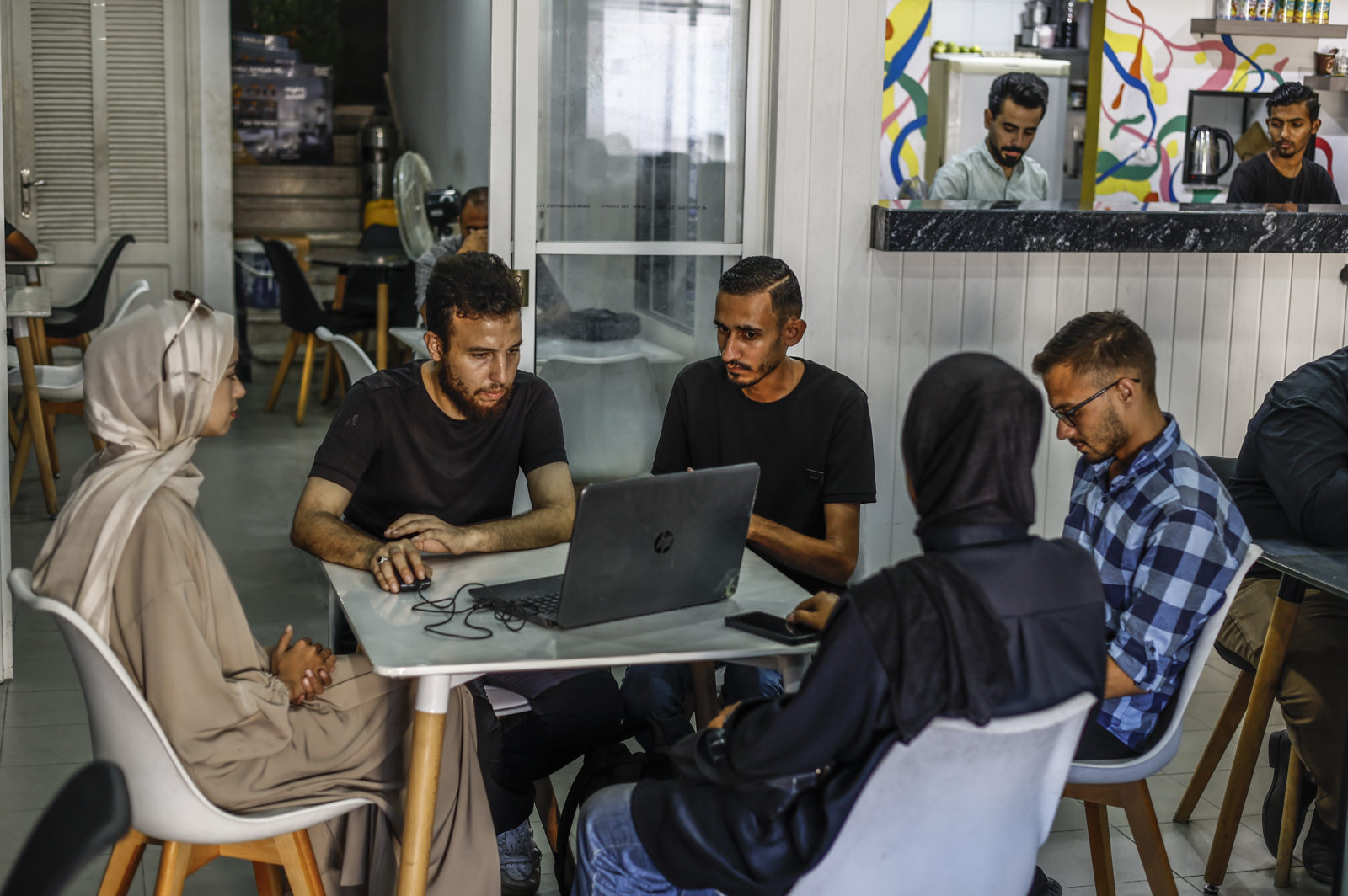
On Rimal Street in the centre of Gaza City, Rami Bolbol, 28, rolls up his mattress and unlocks the door to his internet café, where he also lives. It’s called Techno Time; he only opened it at the beginning of the year, during the brief ceasefire between Israel and Hamas. Bolbol says he put all his savings into the project. Through his phone camera, he shows Die Zeit the interior of the café: a large room with desks, walls painted in bright colours, a spotless floor, and a few potted plants.
©Mahmoud Issa
Rami Bolbol’s wife fled to Egypt at the beginning of the war. He wanted to follow her, but then the border was closed. When the power supply in Gaza City collapsed and almost no one had stable internet at home anymore, Rami Bolbol decided to open the café. Here, petrol-powered generators run all day. Bolbol charges the equivalent of two dollars per hour for internet use. Today, he already knows, it will be busy.
10 September, which was supposed to be a normal day, happened to be the day after the largest evacuation order of the war. On 9 September, the Israeli army dropped thousands of leaflets over Gaza City, where one million people live. They read: “To all residents of Gaza City. The Israeli forces are determined to destroy Hamas and will act with great severity in the Gaza City area, as they have already done in other parts of the Gaza Strip. For your safety, proceed immediately to the humanitarian zone in Al-Mawasi. It is extremely dangerous to remain in this area.”
8:00 a.m.
In their flat in Gaza City, Shorouq Elgherbawi, 32, and her husband have already begun packing. Early tomorrow morning, a lorry will come to take them and their three children to the south of the Gaza Strip, to Al-Mawasi, as ordered by the Israeli army. Shorouq Elgherbawi and her husband have the possibility of renting a tiny plot of land there. But they still need a tent to live in, which they plan to get today. Now they are filming themselves dismantling their furniture. The video shows cupboard panels, drawers and doors lying scattered on the floor.
They chop up the furniture that doesn’t fit on the truck bed into firewood, which they will also take with them. Their one-and-a-half-year-old daughter toddles across the screen in a watermelon dress. The three-year-old throws a board onto a pile of wood. The five-year-old bangs on a piece of wood with a hammer. Behind him, you can see down to the street; the outer wall is missing.
The five-year-old: “Are we leaving Gaza City?”
The mother: “Yes, we’re leaving.”
The five-year-old: “Why?”
The mother: “Because it’s become dangerous, there is bombing. Didn’t you hear today how much bombing there was? We’re going somewhere far away.”
The three-year-old: “There’s the sea.”
The mother: “Do you want to stay here in Gaza City?”
The three-year-old: “Yes.”
The mother: “Hopefully we’ll come back. Say: ‘Hopefully we’ll come back!’”
The three-year-old: “Hopefully we’ll come back!”
9:00 a.m.
Bashar Khattab has been sitting under the bridge for nine hours now. Suddenly there is a loud bang, the signal for those waiting: the distribution centre has opened. Hundreds of people start running up the embankment and onto the street. They stream into the fenced-off area, whose gate is now open. Behind it are packages. People rush over, tear them open, and take whatever they can carry. Bashar grabs something from the ground. Three packs of lentils, three packs of macaroni, five packs of flour. With the parcels in his arms, he runs back.
Fifteen kilometres away, in Rami Bolbol’s internet café in Gaza City, around the same time about fifty schoolgirls and female students arrive. They sit down at the tables, some open their laptops, others connect their cell phones to the Wi-Fi. Some are taking their high school exams; others their university exams.
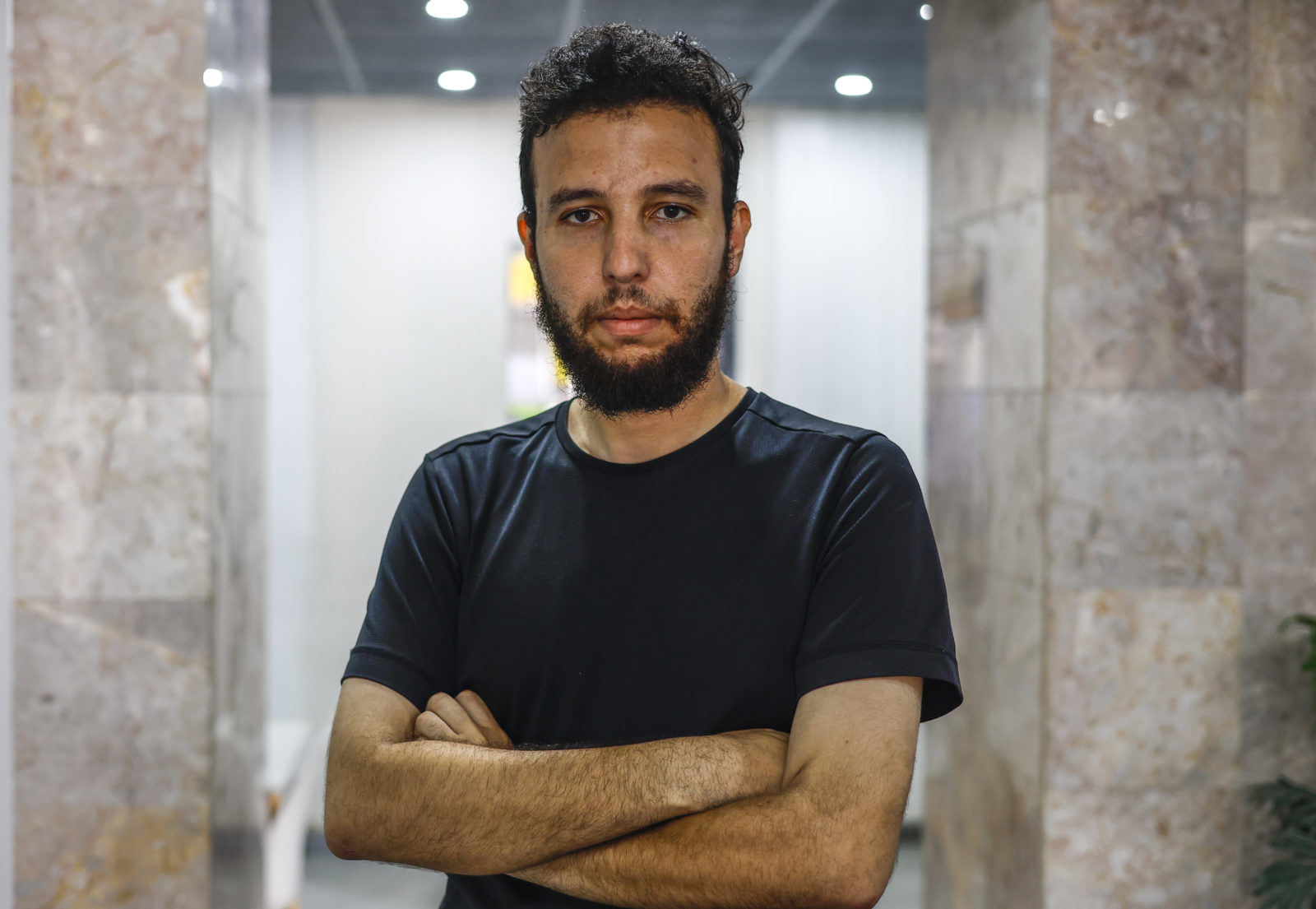
Rami Bolbol decided long ago to allow exclusively girls and women into his café. With men, he says, you never know whether the Israeli army might accuse them of having ties to Hamas. He hopes this will reduce the risk of an attack.
Bolbol has actually agreed with his wife in Cairo that he will leave the city as soon as the Israeli army asks him to. The income from his café affords him privileges that few people in Gaza City have. As a precaution, Bolbol has rented a basement in the south of the Gaza Strip where he can store the tables, chairs, and cabinets from the café. He has also arranged two lorries for the move. Now that the leaflets have been dropped, he should really call the drivers. But he doesn’t. At least today, he wants to stay and keep the café open. How else are the schoolgirls and students who are now sitting at their laptops supposed to take their exams?
For the young women, today will determine whether they are allowed to study or admitted to the next academic year. It is the first time since the beginning of the war that exams are being held again. This time digitally, as most schools have been destroyed. Classes have also been held online in recent months. Rami Bolbol will later say that many of the women were visibly nervous. Bolbol checks the internet connection and makes sure the generators are running.
10:00 a.m.
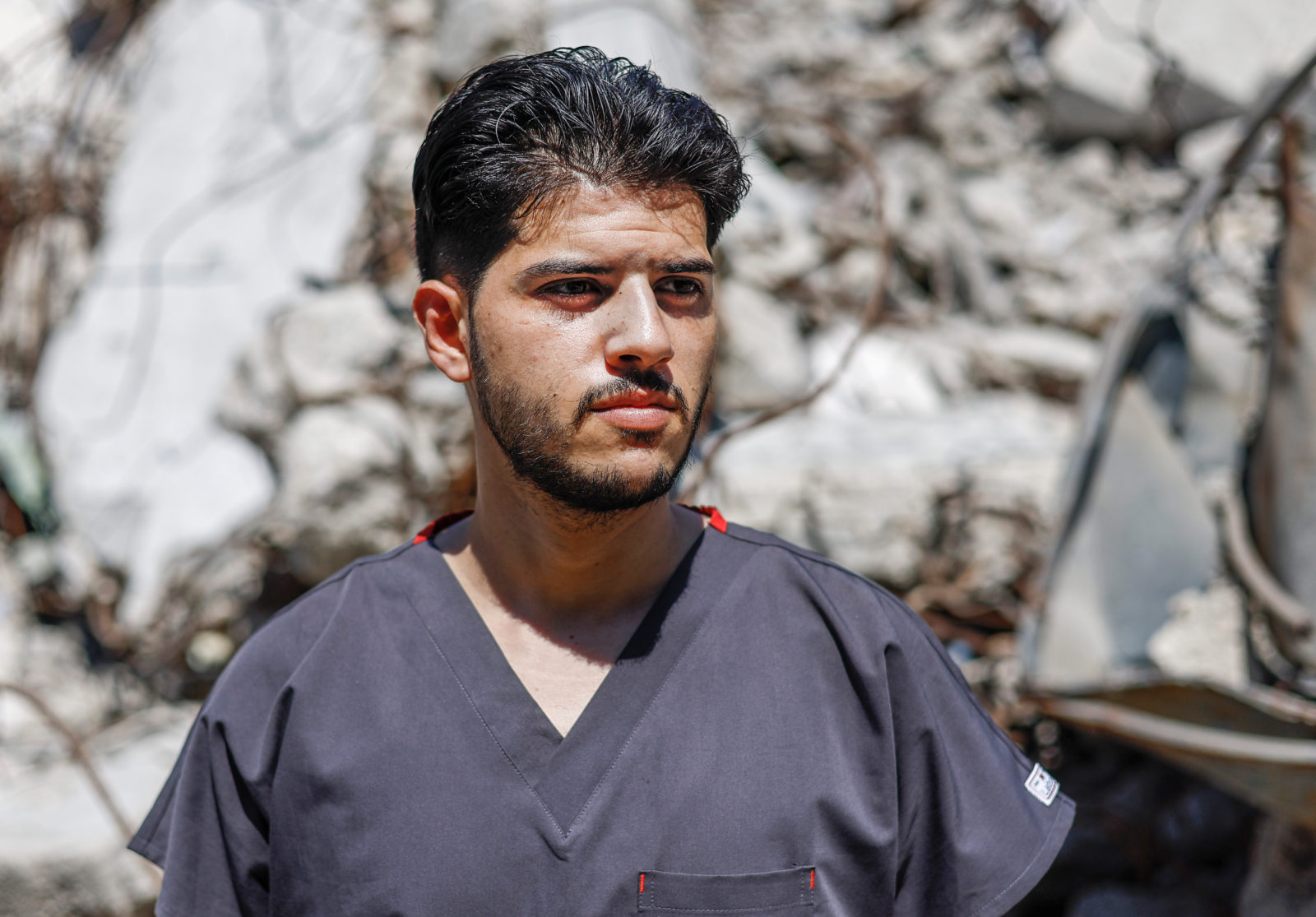
The 23-year-old medical student Nour Nofal is standing in operating room 6 of Nasser Hospital in the city of Khan Yunis, the largest clinic in the southern Gaza Strip. Nour is in her sixth year of study and today she is assisting the surgeon. Nour Nofal later reports that a large man was lying on his stomach on the operating table. She estimates him to be around his mid-thirties. The man has a gunshot wound to his lower back. Nour Nofal cannot say exactly where the injury came from, but as she understands it, he was shot a few days ago while queuing for food. The bullet pierced two lumbar vertebrae. Nour Nofal hands the surgeon the instruments; she is the only woman in the operating room. Today, she is also allowed to insert a screw, which she is doing for only the second time. Later, she says that during the operation a fly landed on the surgeon’s glove. “A fly in the operating room – that’s not acceptable!”
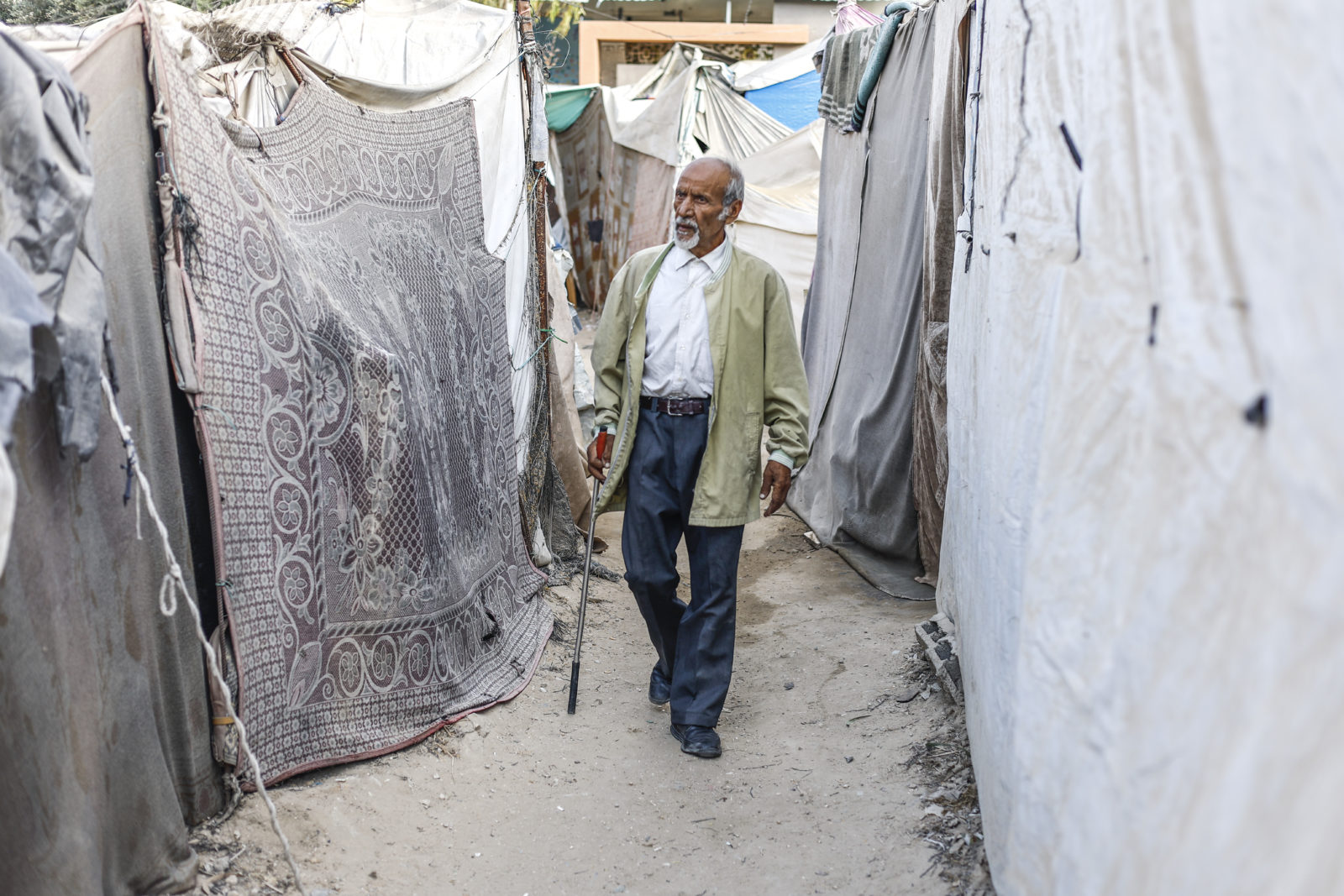
While Nour Nofal is operating in Khan Yunis, twenty kilometres to the north, near the small town of Nuseirat, Mohammed Khattab is standing on the street. He is wearing a light blue shirt, has a Palestinian scarf wrapped around his head, and is leaning on a crutch.
Khattab is 80 years old and has a grey beard. He is the father of Bashar Khattab, who waited under the bridge for nine hours that night until the distribution centre opened. The father is not sure whether his son was there, but he suspects so – and he is angry. Bashar had already been to the distribution centre the day before and came back completely distraught. He said he had been robbed and that one of his best friends had been shot and killed.
Mohammed Khattab forbade his son from going back to the food distribution centre. Apparently, Bashar did not obey. Now the father has come to a street corner to look for his son. Bashar should pass by here on his way back from the distribution centre. Mohammed Khattab is with one of his daughters, 21 years old, who is filming him standing on the street. In the video, he calls the food distribution centre the “death distribution centre.”
©Mahmoud Issa
Bashar’s friend is not the only person to have been killed while waiting for food. On 10 September alone, at least nine people are reported to have been killed near the distribution centres in the Gaza Strip, as the Palestinian Ministry of Health was later to report. According to UN figures, between the end of May and the beginning of August 860 Palestinians were killed while searching for food.
Mohammed Khattab sees people returning from the distribution centre with large white sacks. Most are walking, some are sitting on carts pulled by donkeys. Some of the passers-by greet him; Mohammed Khattab is a well-known man in this area. He is a professor of medicine who studied and worked in Germany, in Düsseldorf and Bochum. He has been back in the Gaza Strip since 1995. He does not see his son Bashar.
A few kilometres away, a body is being carried through the streets of Bureij, wrapped in a white cloth. It is the body of Jamil Mahmoud’s cousin, who was killed early in the morning on the fifth floor of his house. Family, friends, and neighbours have gathered; dozens of people sing and shout “Allahu Akbar.” Jamil’s uncle, the father of the deceased, is also there. In videos of the funeral procession, he can be seen with crutches and a bandage around his head.
The cemetery, located just outside the city, is in a so-called “red zone,” a restricted area controlled by the Israeli army. Anyone who enters such a zone risks being shot without warning. Most of the people in the funeral procession stay behind, but Jamil Mahmoud and about twenty others continue on. They bury the cousin next to an oleander bush. Later, Jamil will send a photo of the grave and say that after the funeral he told his dead cousin: “Go to my brother and tell him that Jamil misses him.” His brother was killed in June last year, says Jamil Mahmoud, also in an attack by the Israeli army. At the funeral, his cousin was still standing next to him.
11:00 a.m.
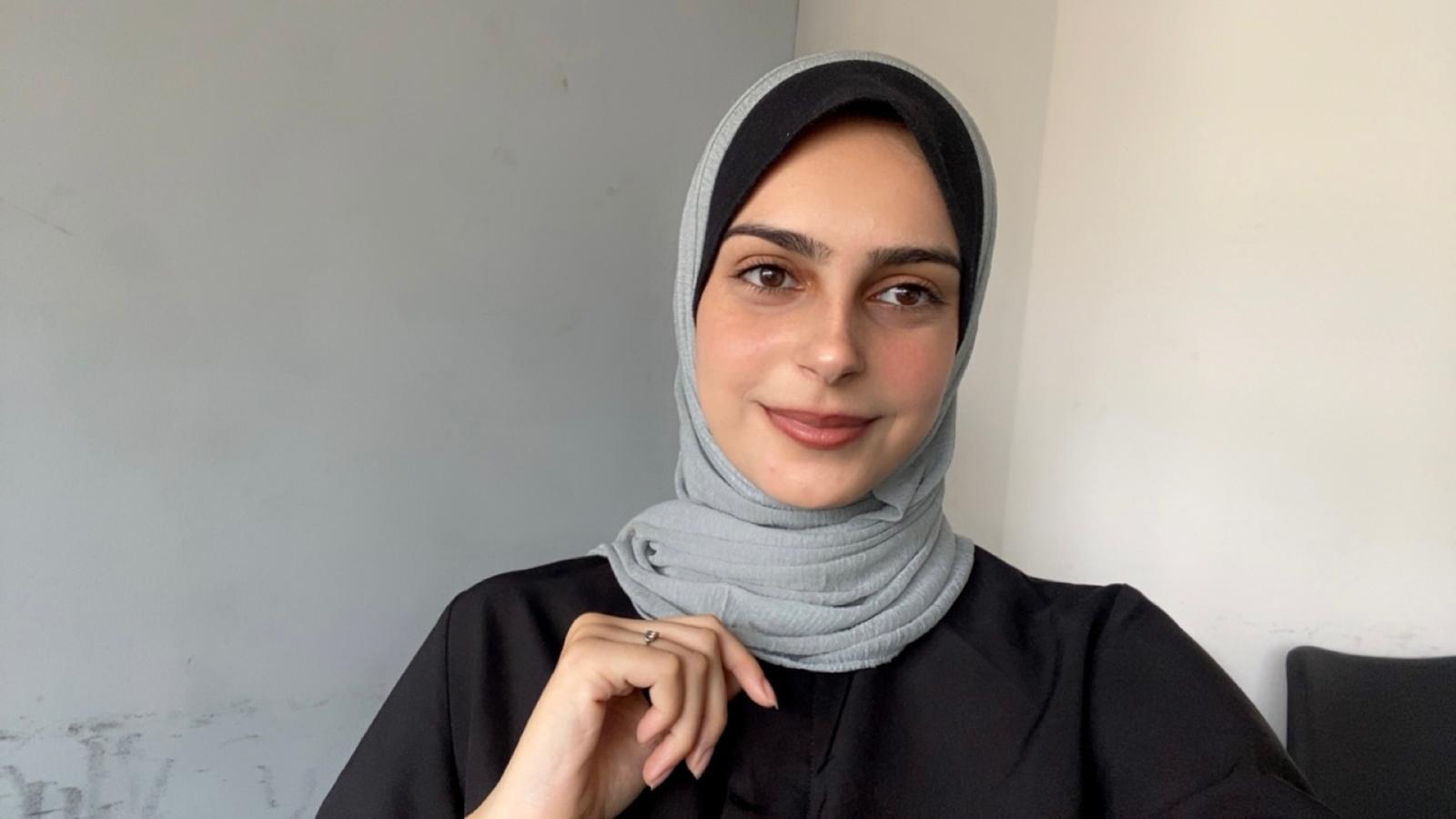
In Rami Bolbol’s internet café, Malak Lafi, 19, is sitting her final exam for her first year at university. Multimedia Studies. Actually, she will say later, this is how she imagined studying would be: first a coffee in the morning, then taking the bus to class. But there is no longer a lecture hall; the university has been destroyed. Malak studies at home or in the internet café, watching videos that her professors send her – recordings in which you can sometimes hear a bomb going off in the background. Or she experiences moments like this: “You’re watching a lecture, you think the professor is great, you love the course, and then you get a message that she was killed in an Israeli attack.” Malak Lafi has studied a lot in the past few weeks; her exam will last three hours. She is due to receive the results later today.
©private
In Al-Mawasi, Mahmoud al-Shaer, 35, watches the long line of refugees. Al-Shaer is a writer. Before the war, he ran two cultural centres, one in Rafah and one in Gaza City, both of which have been destroyed. Now he lives in Al-Mawasi, in the south of the Gaza Strip. This is where, according to the leaflets distributed by the Israeli army, people from the north are supposed to flee to. Al-Shaer sees the road clogged with lorries, cars, and donkey carts. In a video call, he says that friends from Gaza City have been calling him all morning, asking if he can help them find a place to stay. He starts making phone calls.
12:00 p.m.
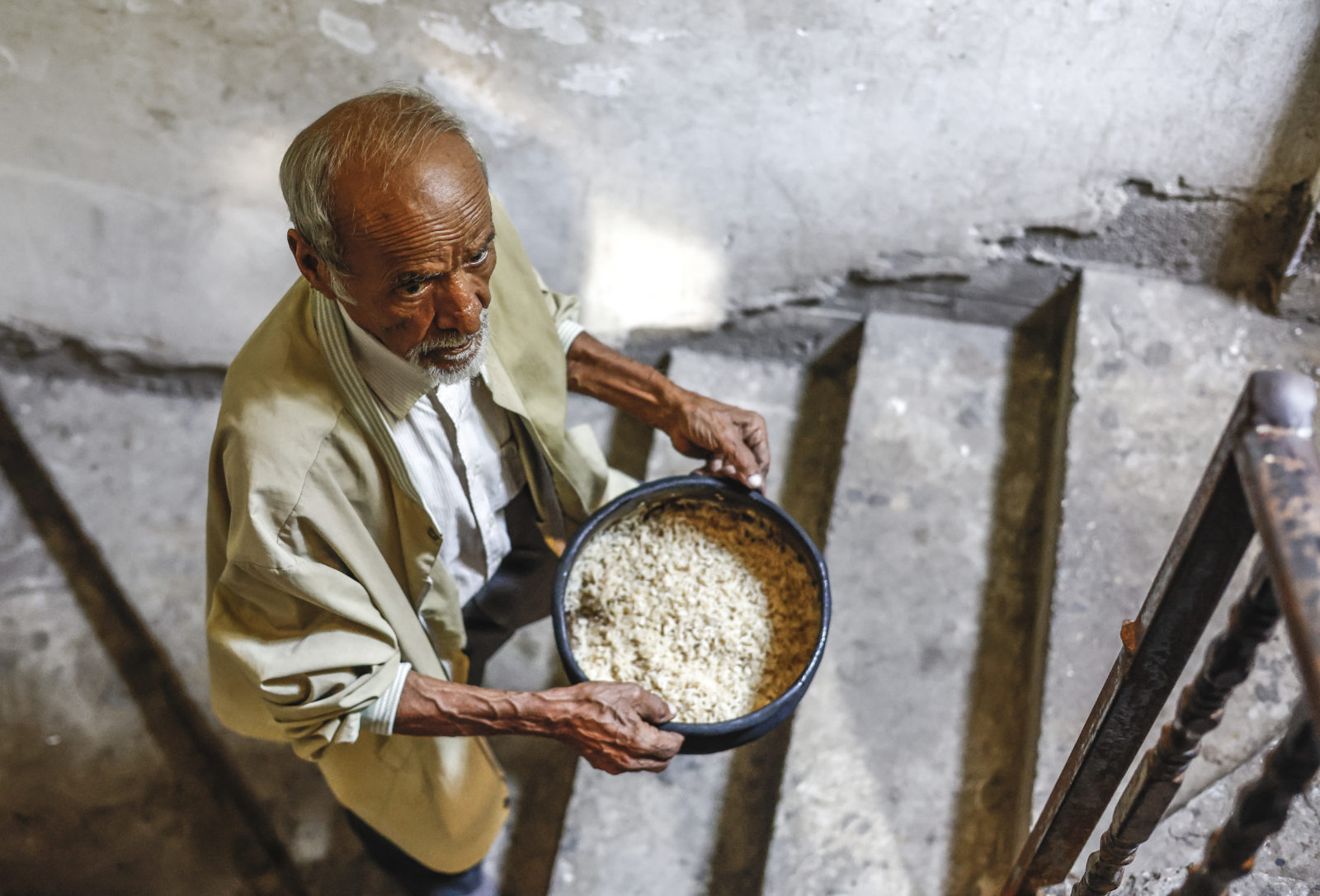
Mohammed Khattab, Bashar Khattab’s elderly father, has been waiting in vain at the street corner for two hours. Now he comes home and sees packs of lentils, macaroni, and flour on the table. Bashar is back, then – he must have taken a different route home. The father finds his son asleep on a mattress. “I can’t describe how relieved I was that nothing had happened to him,” the father says on the phone in German. “I tell my children that they mustn’t go there anymore. It is completely forbidden.”
©Mahmoud Issa
In the internet café, Rami Bolbol is on the phone with his business partner. They are discussing whether they should close the café and flee. They wonder if they will ever be able to return to Gaza City. Gaza City is Rami’s home. This internet café, he later tells Die Zeit, is his workplace, his source of income, his creation. Bolbol says he has hardly left the café in three months. “I wouldn’t just be leaving my dream behind. I would be leaving Rami behind,” he says.
On the call, Bolbol and his partner settle on a compromise. The day after tomorrow, they plan to move half of the furniture to the basement in the south that Bolbol has rented. For the time being, they themselves will remain in Gaza City with the rest of the furnishings.
After three hours, medical student Nour Nofal leaves the operating room in Khan Yunis. In the end, she was even allowed to suture the wound. The patient survived, but he will never be able to walk again. Now, during her lunch break, she says on the phone that during the operation she forgot the worries with which the day had begun. Nour Nofal lives with her family in a tent not far from the clinic. The tent belongs to a man from Gaza City. This man wrote to her saying that he might have to follow the Israeli army’s orders and leave the city. In that case, he would need the tent for himself.
If that happens, Nour Nofal would have to find new accommodation for herself, her parents, and her three sisters with their children. She plans to call the man after work.
1:00 p.m.
Alaa Albana, the mother who is trying to prepare her twelve-year-old daughter Tala to take care of the family in an emergency, is standing on the roof of her house in Gaza City. She is cooking lunch on an open fire. Tala helps her, adding wood and seasoning the soup with salt, onion powder, and chili. She sets the table.
Jamil Mahmoud’s family has returned from his cousin’s funeral. While his mother makes coffee for the mourners in the kitchen, Jamil sits in the bedroom and says on the phone that the funeral was difficult to bear. Just two days ago, he had talked to his cousin about his planned wedding. His cousin had been very excited and joked, “Jamil, don’t make any other plans for that day.”
After the phone call, Jamil’s mother comes into the room and asks him to fetch some firewood so she can cook lunch. Later, Jamil Mahmoud sends a video showing him chopping the family’s old red-and-gold lacquered television cabinet into small, burnable pieces with an axe. His mother cooks a stew for the mourners.
2:00 p.m.
In the internet café in Gaza City, it is very quiet. Everyone is concentrating on their exams. Suddenly, there is a loud bang and the walls shake; a rocket has struck somewhere nearby. The students stand up and go to the window. Rami Bolbol later finds a photo of the impact on social media. It shows a column of black smoke about 500 metres from his café. The young women sit back down at their tables. “It doesn’t affect us anymore. We’ve lost that feeling,” Bolbol says on the phone.
©Mahmoud Issa
Malak Lafi finishes her exam. Despite the generators, the internet went briefly down twice, but she was able to complete all the tasks. Now she is waiting for the results.
3:00 p.m.
In Gaza City, Ali al-Joujou, 39, sits in the place where he says he can still be himself. A photo shows him in a small room lined with chipboard. It is the warehouse of a music store. Guitars and Arabic string instruments hang on the walls. In the middle is a keyboard with a laptop on top.
Ali al-Joujou is a music producer. Before the war, he wrote music for films and commercials in the United Arab Emirates and Jordan. He had a studio and his own equipment. He says it has all been destroyed.
Since then, he has been recording music in this room. Last night, for example, he recorded a song he wrote, sung by a friend. Now he is busy mixing it on his laptop. Al-Joujou says he just needs to open his laptop, plug in the sound card, and he feels better. “When I’m working, I’m happy for a moment. The rest of the time, I’m like a zombie.”
In his song, Ali al-Joujou wrote:
“I am in pain, even though the tears have dried.
The pain is still there.
Longing burns in my heart.
I wait for the morning to break.”
4:00 p.m.
Jamil Mahmoud’s father complains of chest pains. Jamil sees that he is sweating profusely. He asks his father if he has taken his blood pressure medication. His father says no, he hasn’t, because of the chaos in the morning, the rocket strike, the funeral. So Jamil Mahmoud goes to the pharmacy to buy Concor, a medication that slows the heartbeat and lowers blood pressure. It is not in stock in Bureij. Jamil later says that he then walked on to a neighbouring district, where he was able to get it, for 60 shekels – about 18 dollars.
5:00 p.m.
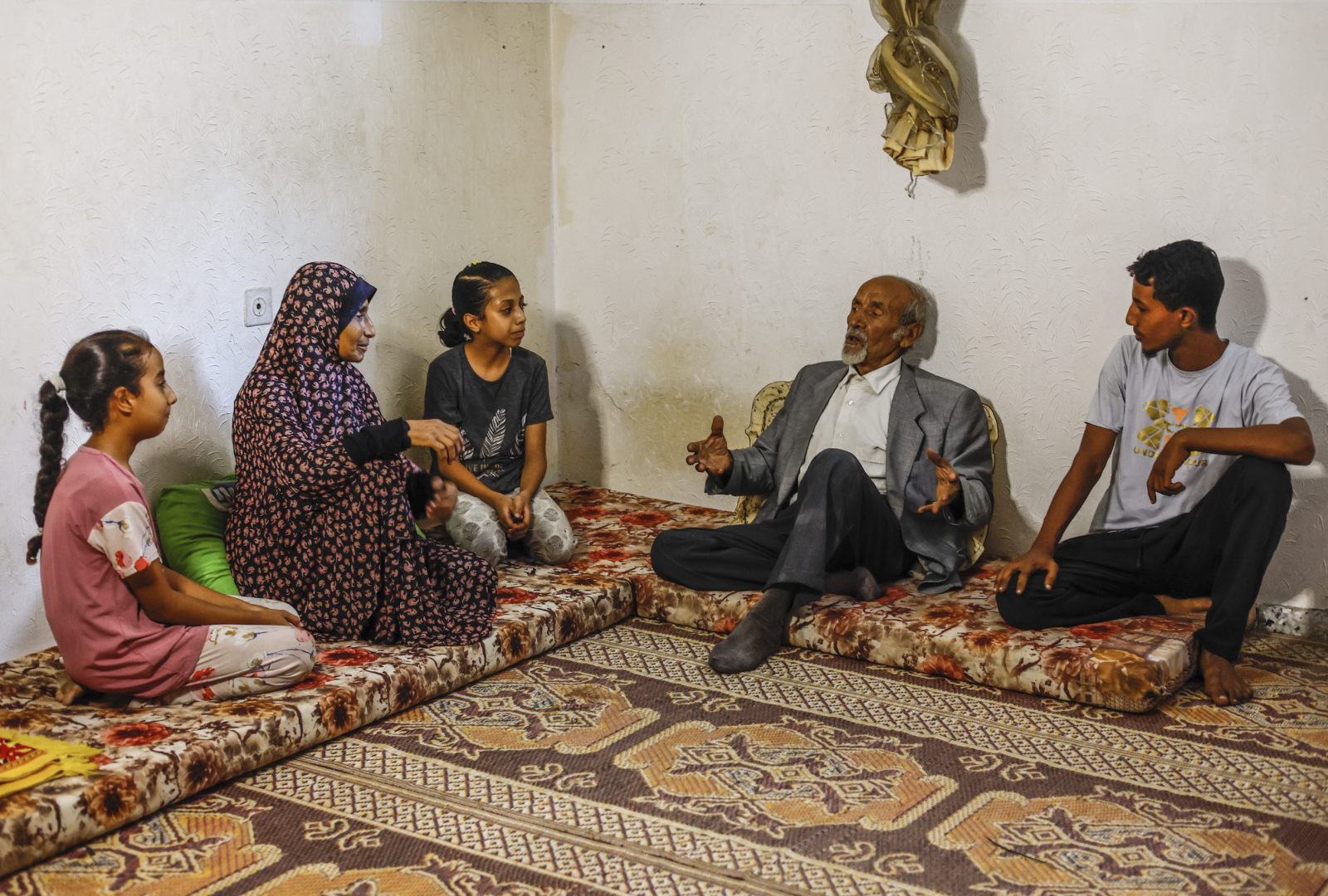
Mohammed Khattab, the elderly professor, sits with his six children drinking tea – they talk about the day, about the situation at the food distribution centre. His daughter writes down what he says: “As we walked down the street toward the death distribution centre, I kept telling my daughter to walk to my left. That way, if a bullet came from the east, I would be hit and not her. My daughter cried when she saw tens of thousands of young people forced to go to the death distribution centre just to get a little food. The scene was shocking and extremely sad.”
©Mahmoud Issa
Malak Lafi receives an email. She passed the exam at the internet café with 92 out of 100 points and has been admitted to the next academic year.
It is the third phone call that day with Rami Bolbol, the internet café owner. The schoolgirls and students have left. Only now does he mention that today is his birthday. He is turning 28. Two of his friends are still there; he now tells them as well that it is his birthday. Jokingly, he asks them: “Will you bring me something sweet?”
6:00 p.m.
Alaa Albana’s twelve-year-old daughter bakes bread on her own for the first time. Tala kneads the dough, shapes the loaves, and fills them with cheese. Then she goes down on her own to the neighbours with the makeshift clay oven.
7:00 p.m.
After finishing her shift at the hospital, the medical student Nour Nofal calls the man from Gaza City whose tent she is sharing with her family. He reassures her, saying that he will not come immediately to take back the tent for himself, but probably in about ten days. Nour Nofal goes home and tells her parents and three sisters about this. One of her sisters says she has a camping tent; it is too small, but in the worst case, they could use it.
8:00 p.m.
In Gaza City, Shorouq Elgherbawi, who is preparing to flee with her family, has returned home after a day of packing and running errands. Her husband has bought wood, nails, and tarpaulins to build two tents for the family in the south – one for sleeping, one as a bathroom. Buying ready-made tents was too expensive, with one currently costing at least 1,000 dollars.
A lorry has been ordered for the next morning to take them all south to Al-Mawasi. They have prepared mattresses, water tanks, toilet bowls, the toddler’s cot, and the chopped-up furniture.
Shorouq Elgherbawi sends a voice message: “I just want this day to end. I want us to be able to sleep peacefully, just sleep, like human beings. And wake up like human beings. And I want us to just drive south and be safe there. It’s such a terrible feeling to leave your own home, even if it’s half destroyed. To move into a tent. Then we’ll be living on the street.”
In Bureij, in the middle of the Gaza Strip, Jamil Mahmoud’s family is trying to find some peace. The fourth and fifth floors of the house are uninhabitable. Jamil’s injured uncle will stay with a brother that night. His father is doing a little better after his heart problems. Jamil writes: “I’m trying to lift the family’s spirits, but I have nothing to lift my own. I’m completely exhausted. Now I’m trying to sleep.”
Die Zeit asked the Israeli army why Jamil’s family’s house was bombed. As of the editorial deadline on Tuesday evening, there had been no response.
9:00 p.m.
In Al-Mawasi, the writer Mahmoud al-Shaer sits in the dark in front of his computer. The light from his phone’s flashlight falls on his face. He says he called about fifty people in the area today, asking if they have land or an apartment for his friends from Gaza City. No luck. No one has room. He sends photos showing tents lined up close together. “There are already so many people here. I just can’t imagine how they plan to accommodate another million.” Reem Alreqeb, the director of the SOS Children’s Village, which is also located in Al-Mawasi, confirms this.
Al-Shaer says that rents here in the south have also risen dramatically. His uncle is currently living in a building shell, without electricity or water. Previously he paid 800 dollars a month; now the landlord wants 2,000. His uncle will move out at the end of the month.
10:00 p.m.
Rami Bolbol and his two friends, who will be staying with him overnight in the internet café, have laid mattresses on the floor. They talk, all of them glancing at their phones from time to time. They ate crêpes that evening. Rami Bolbol got them at a café next door. It was the only sweet treat they could find at short notice. A few days earlier, he had already bought a jar of Nutella, he said, for 100 dollars. The three men eat the whole jar.
11:00 p.m.
Alaa Albana lies in bed and cannot sleep. Through the window she sees flares lighting up the sky, fired by the Israeli army. Albana says that the flares are often followed by bombs. And indeed, she now hears explosions from the neighbouring district.
Albana wonders whether it is right to stay in Gaza City. Her sister-in-law decided to leave today, taking her five children and her sick father-in-law. Of the 25 people in Albana’s apartment, seven will probably soon be gone. Her daughter wants to organise a farewell party for her cousins. Outside, Albana hears the sounds of lorries and cars. It is almost midnight, but the streets are full of people fleeing. The next morning, she says she lay there for a while and wondered: Shouldn’t we leave after all?
Six days have passed between 10 September and the editorial deadline for this issue. During this time, Reem Alreqeb has learned that the eight teenagers from the SOS Children’s Village have arrived safely in Jordan. They have since travelled on to their respective countries.
Bashar Khattab defied his father’s ban again on 11 September. His brother sent Die Zeit a photo of the food Bashar brought back. He wanted to sell some of it on the street.
Jamil Mahmoud’s injured uncle is now living with him on the second floor of the damaged house.
Shorouq Elgherbawi and her family fled Gaza City in a lorry on 11 September as planned.
Rami Bolbol has stored not only half of the furniture from his internet café, but almost everything. In a few days, he plans to move to the south himself.
Nour Nofal and her family unexpectedly had to vacate the tent belonging to the man from Gaza City on 11 September. Since then, she has been sleeping in the small camping tent with her mother, her three sisters, and niece. The men sleep outside on the sand.
Alaa Albana and her family are still in Gaza City. Two of her brothers were injured in a bombing on 14 September, and one is in critical condition.
Malak Lafi has not been reachable by phone since the day of her exam.
On the night of 15–16 September, Israeli forces intensified their attacks, with tanks advancing into Gaza City. An army spokesperson said that more than forty percent of the city’s residents had left.
Musician Ali al-Joujou was at home on Sunday when an explosion shook the building where he lives. He was thrown from the second floor onto the street. He survived, but his right wrist and all the fingers on his right hand are broken. On the phone, his wife says that he will probably never be able to play the piano again.