

Roland Berger’s self-deception: The star consultant, his Nazi father and the guilt of German industry
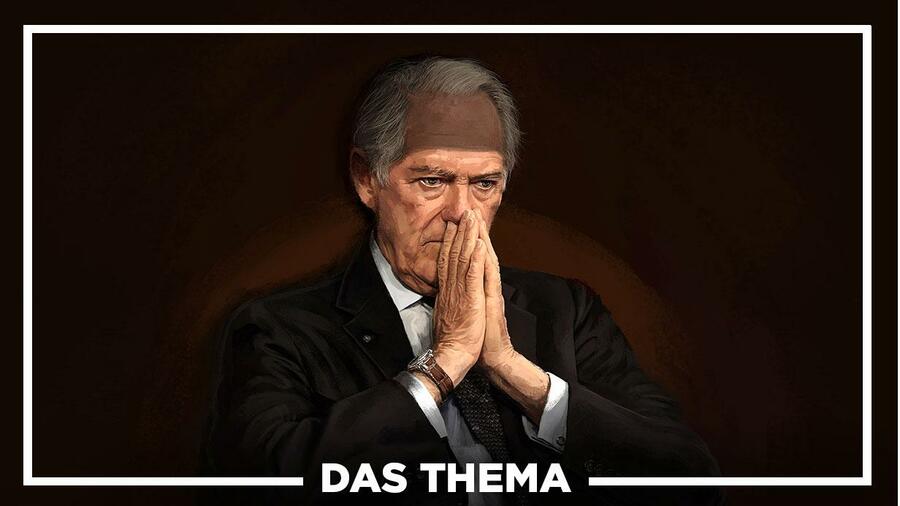
Photo: Mona Eing & Michael Meissner / José Giribás [M] Düsseldorf, Munich, Vienna
It is a prize that is particularly dear to Roland Berger: The foundation of the most prominent German management consultant has awarded one million euros for extraordinary services to the protection of human dignity. Since 2008, Roland Berger has also used the award to commemorate the man he always called his moral role model: Georg Berger, his father.
When Berger calls, everyone comes. The now 81-year-old has left his mark on the German economy and has a top-class network. Patrons of the Roland Berger Prize have been German Presidents Christian Wulff and Horst Köhler. The jury was composed of former Foreign Minister Joschka Fischer, former President of the European Commission Romano Prodi and Nobel Peace Prize winner Kofi Annan. When the eighth Roland Berger Human Dignity Award is presented next Monday in Berlin, the keynote speaker will be Wolfgang Schäuble, President of the German Bundestag.
So many friends, and much honour – especially when you consider one thing: Berger’s father was not the upright Nazi victim his son made him out to be in numerous interviews. On the contrary: Berger senior was a profiteer of the Hitler regime.
For 13 years, Georg Berger was a member of the National Socialist German Workers’ Party (NSDAP). He worked as chief financial officer of the Hitler Youth, was appointed Ministerial Councillor by Adolf Hitler in 1937, later headed an “Aryanised” company in Vienna as General Director and lived in a villa confiscated from its Jewish owners.
Handelsblatt researched these details in months of work. Faced with the results, Berger did not deny them. He engaged the well-known historian Michael Wolffsohn, an expert on German-Jewish history. A few days ago, they spoke about the true face of Georg Berger together for the first time. The bitter conclusion of his son: “If you will: Yes, then it must have been an unintentional ‘tragic self-deception’ that I was guilty of” (see interview).
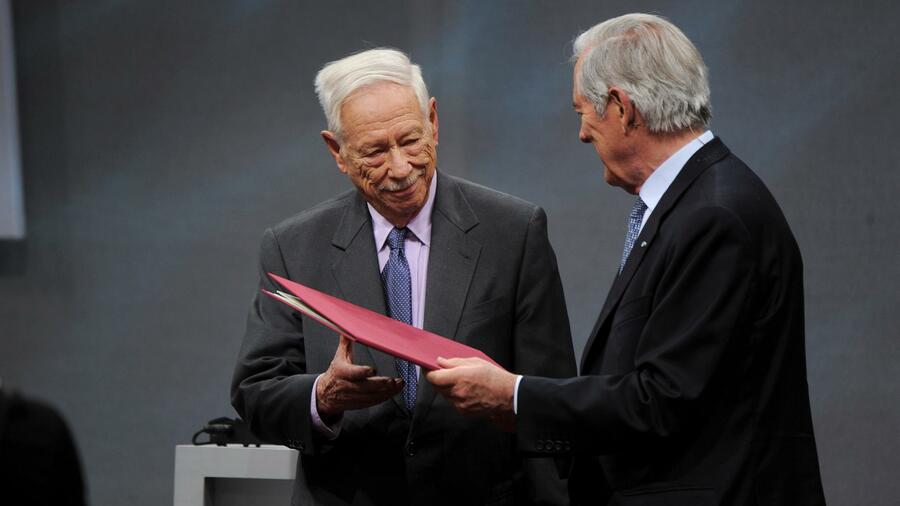
Director of the Jewish Museum in Berlin, Michael Blumenthal (left), with Roland Berger
Photo: ddp
German history remains complex – and the process of coming to terms with it still has many facets, even in 2019. It is only five months ago that „cookie heiress“ Verena Bahlsen caused outrage with her words on the Nazi history of her family business. “Bahlsen did nothing wrong,” said the great-granddaughter of the founder, Hermann Bahlsen, although the company employed more than 200 forced laborers during the Nazi era. Shortly afterwards, she apologized. Now an independent historian is to examine the topic – as other companies such as Dr. Oetker have already done (see box “Dark Foreboding”).
Verena Bahlsen was 26 years old when she presumed to make her statement about the German past once. Roland Berger is 81 and has been telling people for almost two decades that his father was a victim of the Nazis.
He could have known better. The contradictions in his father’s life seem too obvious. This raises the basic question: Was it a case of tragic self-deception or a deliberate historical misrepresentation?
Dealing with the past is a difficult topic in Germany. The NSDAP once had more than seven million members. The children of the Nazis rarely spoke about crime and guilt. “The ambivalence between the love for the parents and the awareness that the parents have done wrong is a tensile test for the children,” explains sociologist Uta Rüchel. “An embellishment of a reality so different is not an isolated incident.”
This also applies to those to whom others look up. For decades, Roland Berger was the number one in his industry. He has counselled business leaders and governments, taught at universities and received numerous national and international awards (see box “Doyen of the consulting industry”). Nothing that Georg Berger may have ever done diminishes his son’s life achievement. But whatever drove Roland Berger to publicly transfigure his father, naivety would be a strange response from an otherwise well-versed judge of character.
Chief Financial Officer of the Hitler Youth
Roland Berger’s first public statements about his father date from March 2003, when he told the Berlin newspaper Tagesspiegel that his father was a member of the NSDAP but had “left the party due to religious conviction” before the war began. In the course of time, Berger dramatized the role of his father, who died in 1977, more and more. In 2012 he praised him in the Frankfurter Allgemeine Sonntagszeitung: “Even though it meant mortal danger for himself, he demonstrated: Not with me.”
It was a moving story that Berger told. But it’s not true. Handelsblatt has evaluated historical newspaper articles, combed through numerous archives and studied Georg Berger’s personnel and criminal records. He was not the man his son described.
Georg Berger was born in Würzburg on 12 September 1893. He learned the merchant’s profession and in January 1911 became a stock accountant in Kulmbach. Berger fought in World War I where his arm was wounded. After the end of the war, he worked freelance for various companies, becoming director of the Tiroler Industriewerke in November 1922; from 1927 to 1934 he was an independent tax consultant and trustee. Afterwards, he dedicated his labor entirely to the National Socialist German Labour Party.
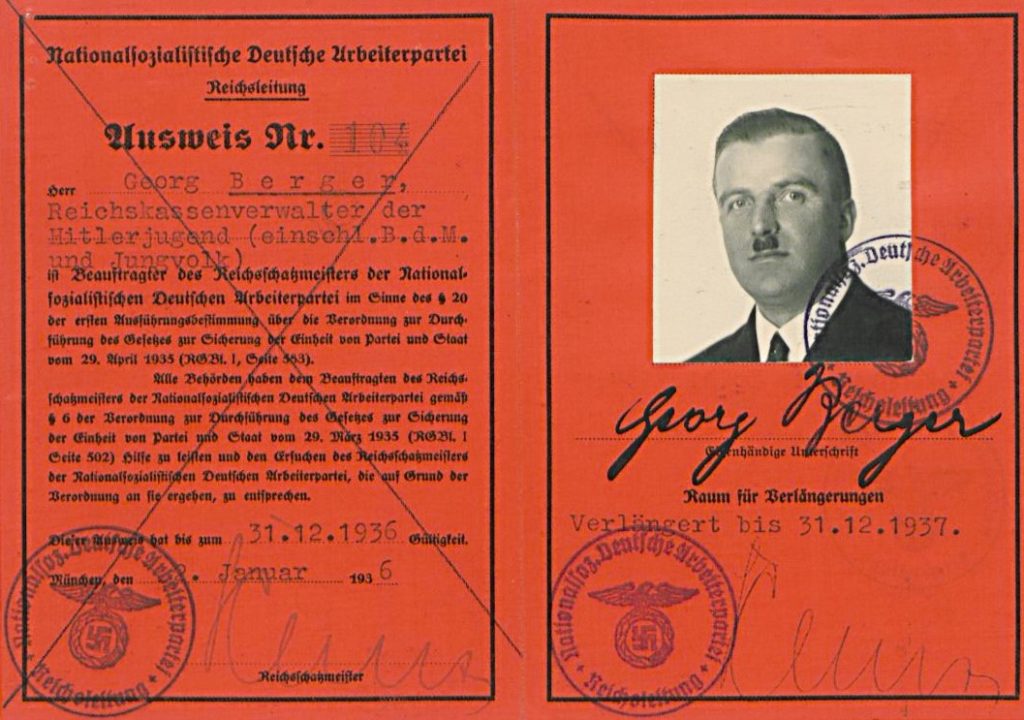
Georg Berger was a member of the NSDAP from 1931 to 1944
Photo: Archive
All of this can be seen from the personnel questionnaire of the NSDAP administration dated 22 September 1935, signed by Georg Berger himself. His son later said that Berger had joined the NSDAP in 1933 on the advice of Reichsbank President Hjalmar Schacht. “He probably also believed that the party could do something positive,” Berger junior told the Rotary Magazin, and continues the quotation: “After the ‚Night of Broken Glass‘ 1938 it became clear to him where the whole thing would lead, namely to the Holocaust. Consistent as he was, he therefore quickly left Hitler’s party.”
That’s not true. Georg Berger had joined the NSDAP two years earlier – on 1 June 1931 – and paid his membership fees until September 1944, when he became an auditor in the NSDAP administration in April 1934. On February 24, 1935, in the Bürgerbräukeller in Munich, he took his oath to the Führer: “I swear: I will be loyal and obedient to the Führer of the German Reich and people, Adolf Hitler, I will observe the laws and conscientiously fulfill my official duties, so help me God.
On January 10, 1936, Berger was promoted to Reich Treasury Administrator for the Hitler Youth. In November 1937, when his son Roland was born, the father was the chief financial officer of the Nazi junior staff and also liaison officer to the top authorities. Berger carried a service pistol, a Walther PPK, caliber 7.65. He immortalized his attitude in the foreword of the book “Verwaltungs- Dienstvorschriften für NSDAP-Hitler-Jugend” („Administrative Manual for NSDAP Hitler Youth“). When Berger resigned from his posts on 30 September 1939, he said this was due to health reasons. He requested a letter of thanks from Hitler’s deputy Rudolf Hess – and got it.
Director of an “Aryanized” factory
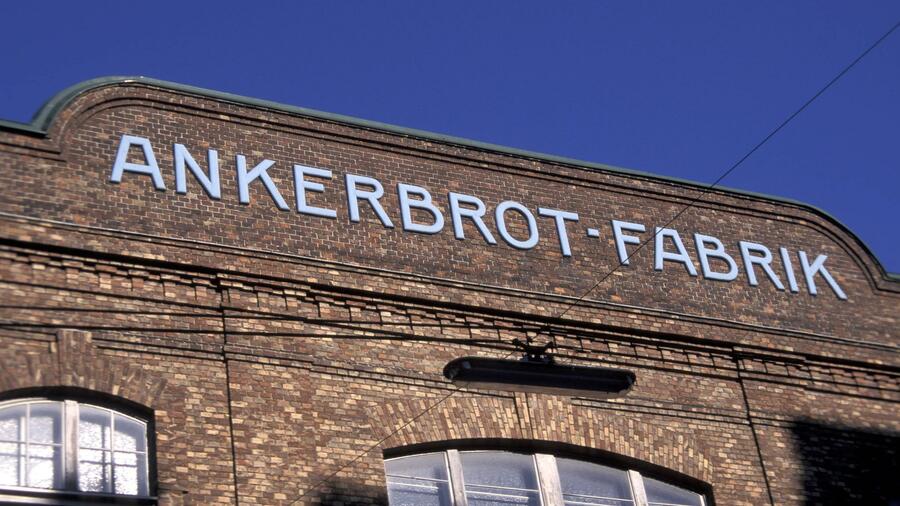
Ankerbrot factory
Photo: imago stock&people
Handelsblatt asked Roland Berger for an interview a month ago. What made him think that in 1938, his father tangled with the Hitler regime risking his life, when actually, Georg Berger was and remained a top functionary of the NSDAP?
On 11 October, the management consultant invited to his office in the noble Maximilianstraße in Munich. At his side: Michael Wolffsohn. Together with the Historical Institute of the University of Potsdam, the Jewish historian is to examine the role of Berger’s father during the Nazi era. One thing was already clear, Wolffsohn said in the interview: “Georg Berger was indeed a profiteer of the NS system.“
On this afternoon in Munich, Roland Berger explained that he had so far believed the opposite – the victim story: “It all seemed plausible to me,” said Berger. “In that respect, there was no doubt in my mind.“
In fact, the image of his father became more and more favorable over the years. In November 2008, he took his idealization to a new level: The Roland Berger Foundation was created. Equipped with 50 million Euros in capital from Berger’s private assets, it was to work for a fairer distribution of opportunities in society. In addition, his foundation also awarded the Roland Berger Human Dignity Award. “This goes back to my father, a convinced Christian,” Berger later explained to the Süddeutsche Zeitung.
Berger’s good deeds did not go unnoticed. On 15 November 2008, the Jewish Museum in Berlin awarded him the Prize for Understanding and Tolerance. The jury, headed by Museum Director Michael Blumenthal, postulated: “Roland Berger’s commitment to human rights and education is also based on his family’s experience under the National Socialist regime. His father had publicly distanced himself from the NSDAP and was arrested in 1944.”
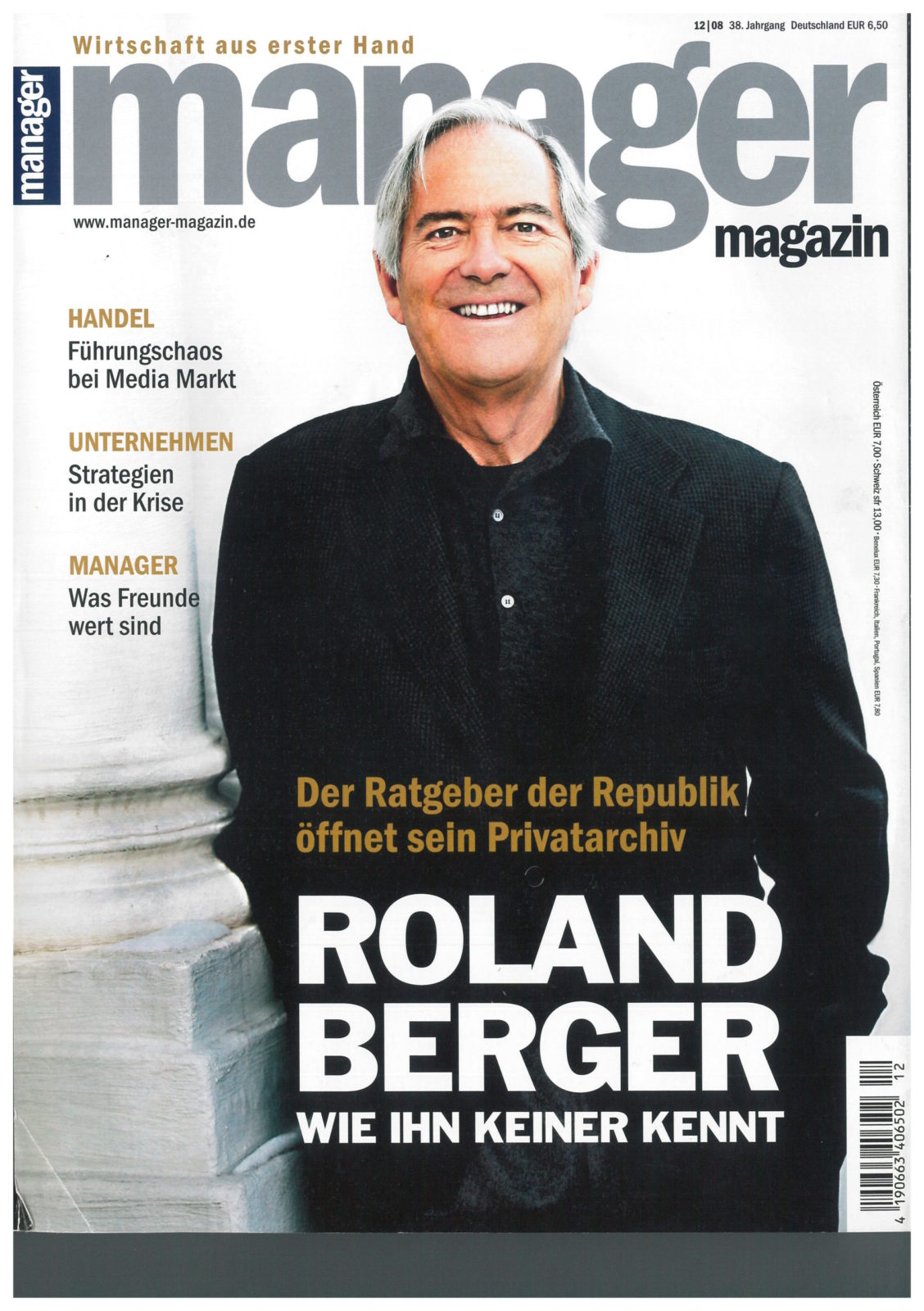
In November 2008 Manager Magazin dedicated a cover story to Berger
Photo: Manager Magazin
Berger’s conscious or unconscious lie thus received a moral seal that no one questioned anymore. All the German media, including Handelsblatt, believed the heroic stories of his father as a shining light in dark times. One magazine from Hamburg was particularly trusting.
“Exclusively for Manager Magazin, the First Counsellor of the Republic has opened his private archive and took stock of his life in a number of conversations,” wrote the editorial staff in its cover story in November 2008. As a child, Berger “experienced how degradingly his father was treated in the Third Reich.“
His father was supposedly defiant. The deep believer would have steadfastly refused to resign from the church against the Nazis’ urging. Reich Youth Leader Baldur von Schirach would had even forbidden Roland Berger to be baptized. His parents wouldn’t have stuck to it. Georg Berger had refused to finance anti-religious events as a money manager. “In order to change his mind, he was offered the post of a ministerial councilor,” the article said. Yet Hitler had already appointed Georg Berger as a ministerial councilor on April 20, 1937 – seven months before Roland Berger’s birth.
“To this day my father is a moral role model for me. He stands for decency and courage.”
– Roland Berger in Focus, July 9, 2012
There were many of these contradictions when Berger spoke about his father. No one asked. In the Hamburg narrative of Georg Berger’s life story, he went his way upright under the totalitarian regime. “Berger renounced the supposed career and switched back to the free economy in May 1939,” wrote the Manager Magazin. And continued: “He rose to the position of General Director of the Ankerbrot-Werke, the largest bread bakery in Austria. … Berger had been assigned a classic task of financial rehabilitation. He was to deleverage the company, minimize losses and adjust the ownership”.
Free enterprise? Classic task of financial rehabilitation? Ankerbrot was founded in 1891 by the Jewish brothers Heinrich and Fritz Mendl. In 1938, the Reich Commissioner for the Treatment of Hostile Assets confiscated their company, the Mendl family fled to Switzerland, later to the USA and New Zealand. Thus “Aryanised”, the large bakery was put into public sequestration.
The fact that Georg Berger was able to become general manager of Ankerbrot was systemic. “Leading cadres of the Hitler Youth received preferential treatment in Nazi Germany,” explains NS historian Michael Buddrus. Details were regulated by an order of Hitler’s deputy Heß. Those Hitler Youth leaders who wanted to take up a different profession were “to be supported by all party departments in their efforts to obtain an appropriate position”.
A splendid villa in Vienna
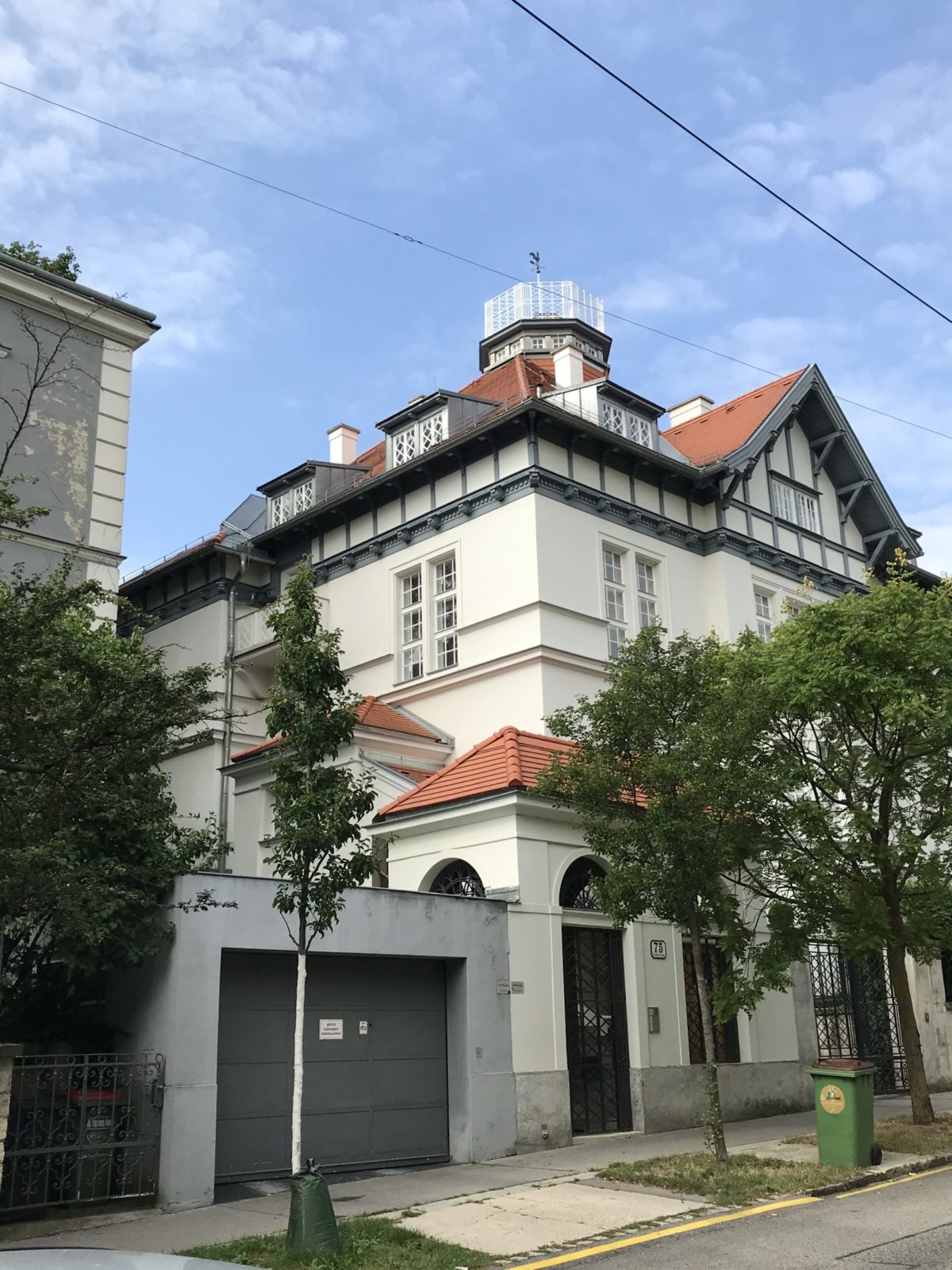
Villa Sternwartestrasse 75 in Vienna
Roland Berger spent his early childhood in the villa confiscated from Jews
Photo: Archive
And Berger senior was supported. The newly appointed boss moved from Berlin to Vienna and stayed in the Hotel Erzherzog Rainer for ten months. Then, the Nazis made a villa available to him.
The property at Sternwartestraße 75 still adorns Vienna today. It is located in the Cottage Quarter, designed at the beginning of the 19th century as a residence for civil servants, teachers and officers. Later, artists settled here, two houses further lived the writer Arthur Schnitzler until 1931. Behind the opulent villa, into which the Berger family moved shortly before Christmas 1941, there was a pond in the large garden, Roland Berger later told journalists. Here, in winter, he learned how to skate as a little kid.
The Bergers had plenty of room. A floor plan of the villa shows two living rooms, a dining room, a ladies’ room, a gentlemen’s room, two children’s rooms and a children’s playroom. In the attic, there were two rooms for servants, one for guests, one for ironing and a room for reflection.
The rightful owners of the estate were Heinrich and Laura Kerr. On November 10, 1938, Gestapo officials took all cash from the then 74 and 76 year old Jewish couple, their insurance policies, necklaces, watches, even cuff links and tie pins. Later, the Nazis also confiscated their villa. The Kerrs were expatriated – like many Jews from this neighborhood.
As a rule, high-ranking National Socialists moved into their houses. Sternwartestraße 75 was added to the “Aryanised” company Ankerbrot, and the villa was used as a “company flat” for its general director from then on. Georg Berger had his Supervisory Board grant him a right of preemption. The Kerrs’ housekeeper was allowed to stay; she was of Aryan descent.
Roland Berger never mentioned any of this when talking about his father. He talked a lot, though. “To this day, my father is a moral role model for me. He stands for decency and courage,” Berger told the German magazine Focus in July 2012 and told Rotary Magazine in August 2015, “If my father did something, he was convinced of it. He was a serious believer.”
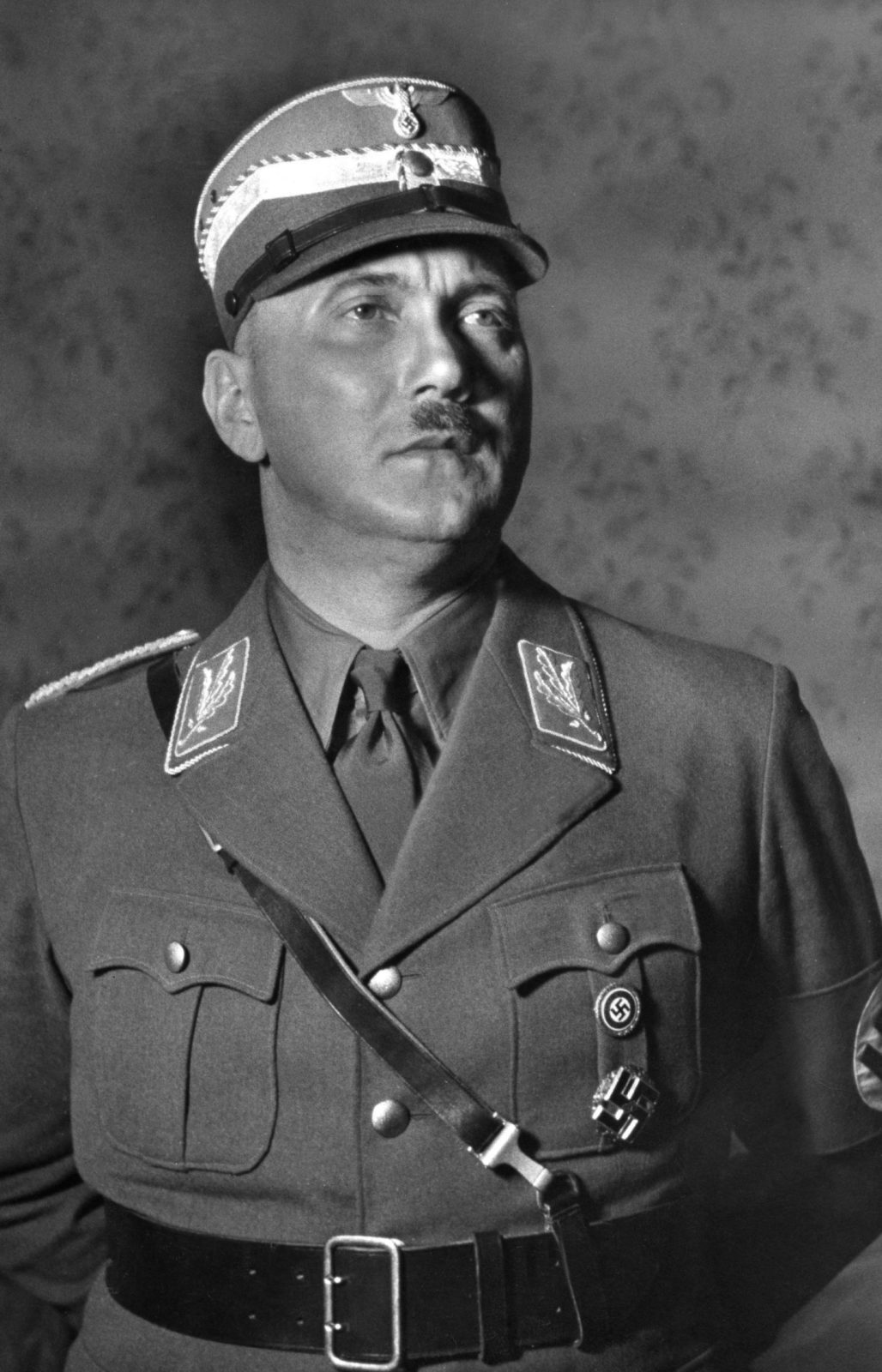
Alfred Proksch
In 1941, the SA-Obergruppenführer introduced Berger as the new head of the large Ankerbrot bread factory
Photo: ullstein bild – Erich Engel
In spring 1941, Ankerbrot organized a “social evening” in the Sofiensäle, a very popular event location in Vienna. It was a symbolic place. In May 1926, the NSDAP in Austria was founded there, and from 1938, the Sofiensäle were a collection point for Jews who were to be deported. It was precisely here that SA-Obergruppenführer Alfred Proksch introduced Berger to the company and Vienna’s society.
Proksch was a Nazi of the first hour. He had helped build up the NSDAP in Austria and even lost his citizenship due to his ardent admiration for Hitler. When the NSDAP was banned in Austria in 1933, Proksch fled to Germany. In 1938, he returned to his home country, which had meanwhile been occupied by Hitler’s troops, and became a group leader of the Sturmabteilung (SA).
On 15 March 1941, Proksch appeared before the Ankerbrot staff in the Sofiensäle. He was now the bearer of the NSDAP’s Golden Badge of Honour and President of the Vienna Regional Labour Office. When this man introduced a new boss, each of the 2000 employees present knew how to assess Georg Berger.
Living it up
Almost a year later, Berger came back to the Sofiensäle. On 2 February 1942, the Neue Wiener Tagblatt reported on a “Social Evening of the Ankerbrotfabrik” which had taken place there the Saturday before. There was a ballet performance, artistic cyclists demonstrated their skills. “The brilliant performances of two music bands also contributed to the fact that from the very beginning there was a brilliant atmosphere among those present”, the newspaper wrote. Berger spoke the words of welcome. The motto of the evening: “The home front greets the field front”.
In his son’s memory, this Nazi idyll did not take place – on the contrary. After his father had left the NSDAP after the “Night of Broken Glass” in 1938, Roland Berger told the Süddeutsche Zeitung that “we had the Gestapo in the house every six to eight weeks. The Gestapo came even after we had moved to Vienna in 1941 … They searched everything, right down to the coal cellar, to find something against my father. It turned ridiculous. A farmer’s wife from Egglkofen, my mother’s home village, once sent us pickled eggs. They used it as an excuse to arrest my father for the first time in 1942.”
Was it? Handelsblatt has a copy of the 1943 file of the Chief Prosecutor at the People‘s Court of Vienna. In the spring of the previous year, there were several charges against Georg Berger, one of which came from the sales manager of Ankerbrot. He had been called up for military service and complained that the general director who had stayed at home was living it up in his “Jewish villa” while food and clothing were rationed everywhere.
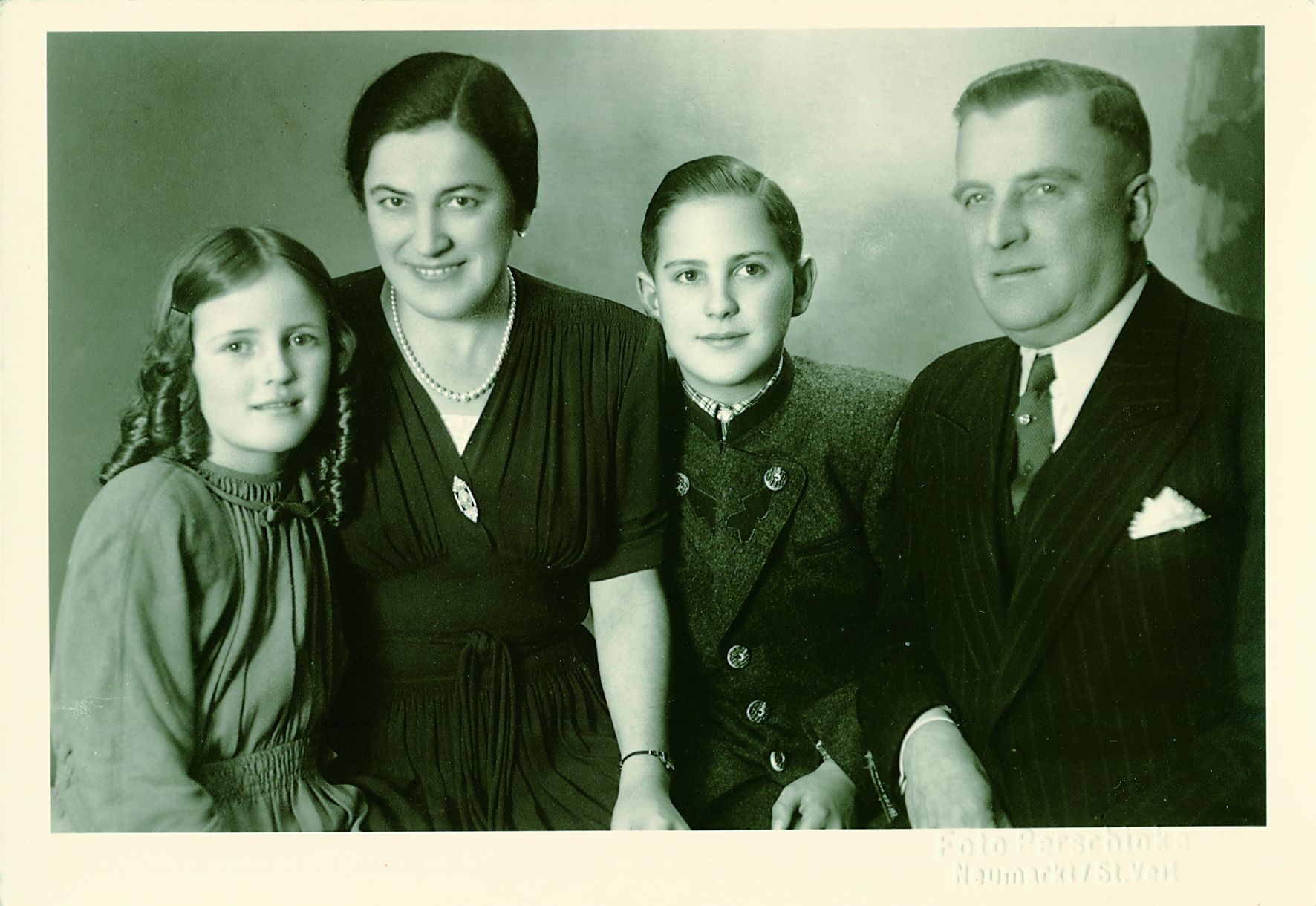
Berger family after the war
Sister Renate, mother Thilde, Roland Berger and his father Georg
Photo: Roland Berger Foundation
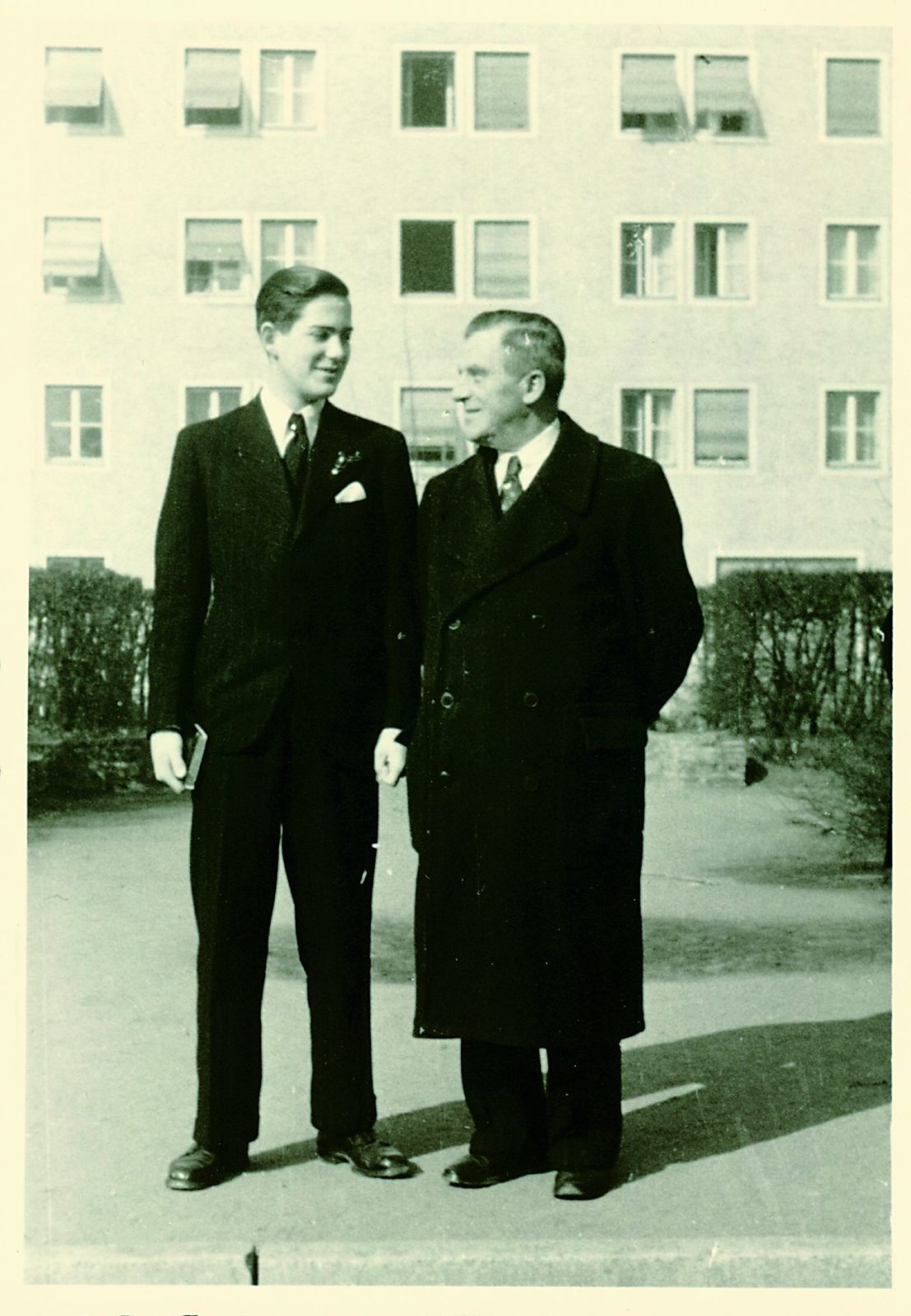
Confirmation
Roland Berger with his father. The recording dates from about 1952.
Photo: Roland Berger Foundation
Details are described in a police report of 20 June 1942, which states that Berger had expanded his villa “with an outrageous amount of effort, in stark contrast to the austerity measures necessitated by the war situation”. 22 of his employees spent 3,724 working hours in the middle of the war to beautify Berger’s magnificent building. Admittedly, the plant manager of Ankerbrot warned that this went at the expense of the company. However, he had “not been able to achieve the withdrawal of the workers from the adaptation work”.
The officials estimated the cost of the reconstruction at 80,000 Reichsmark. This would correspond to a current purchasing power of more than 300,000 Euros. According to documents, Berger paid one tenth of the sum, the company paid the rest. In fact, the project would have required a permit from the Labour Office and the municipal administration, the police officers criticised. Berger had circumvented the regulation by declaring the reconstruction as “minor”. In the report this was recorded as “deliberate deception”.
The Nazi officials classified Berger’s activities as war economy crimes and initiated proceedings. Berger had damaged the reputation of the NSDAP through his conduct as a manager. According to the investigations, almost every day an employee brought “three to four kilos of fine baked goods” into the house, without Berger handing over the food stamps provided. Berger is also said to have burned 3,850 kilograms of heating material, which “was only intended for the vital operation of the company”.
On April 3, 1942, the Gestapo confiscated 68 eggs, a pot containing ten kilograms of tallow, seven and a half sticks of clarified butter and four and a half kilograms of chocolate from Berger’s villa. Food hoarding was punishable by law. On June 16, 1942, the Gestapo arrived again and, according to the protocol, found 18 bottles stored in a wine rack that were filled with clarified butter, 30 kilograms of sugar cubes, 45 bottles of fruit juices, 50 kilograms of bee honey and more than 300 bottles of sparkling wine and wine. In addition, Berger had stored 130 packages of washing powder, eight kilos of curd soap, as well as furniture and clothing fabric in large quantities in his villa.
Berger later testified that he had acquired the food and textiles shortly before the war. Berger’s wife, Thilde, on the other hand, explained during her questioning that she had received the clarified butter from relatives in 1941 – two years after the war began.
The NS officials not only classified Berger as a thief, but also as a fraud. After the first search, he decanted the clarified butter into wine bottles to deceive the police. In July 1942, Berger had to leave the board of Ankerbrot AG. Nevertheless, he did not leave his official residence.
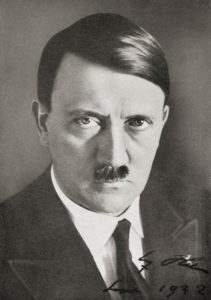
Adolf Hitler
The dictator appointed Georg Berger as a ministerial councilor on April 20, 1937
Photo: imago images / Design Pics
Roland Berger’s father now actually became a resistance fighter. For 24 months he defended his magnificent building with 600 square meters of ornamental garden against the Nazis. Information about his fight is provided by the Vienna State Archives.
According to the documents kept there, the dream property in Sternwartestraße was much sought after among Nazi leaders. Berger had made an early move, in 1942 Alfred Proksch wanted to have it. As soon as Berger was dismissed at Ankerbrot, the Gauleiter contacted the administration in Vienna. He intended to use the luxury villa as a company flat, Proksch wrote. The problem: Berger was still living there.
He had negotiated well. He paid 305 Reichsmark to the administrator of the villa every month. However, this ridiculous price hardly covered the property tax and operating costs. While the General Prosecutor reported an urgent suspicion against Berger for war economy crimes to the Vienna Regional Court, Georg Berger referred to his rental contract: it did not provide for a termination.
Under totalitarian rule, Berger fought the Nazis over contract clauses. Since he wanted to buy the villa in 1941, a possible end of the tenancy remained unregulated. The correspondence shows how Berger outmaneuvered the Nazi authorities: The president of the State Labor Office wrote in a note on February 16, 1943 that he would probably have to be provided with a replacement apartment. But either none was found, or Berger did not like them. One year later, the former General Director still lived at Sternwartestraße 75 and Proksch complained to the State Council that he “could not imagine that a rather simple transfer of a Reich-owned building” would be so difficult.
In May 1944, the villa became the property of the Reich Ministry of Labor. However, even when a representative of the Gauarbeitsamts (regional labour office) came by on 13 June 1944 for an inspection appointment, Berger held the fort. Only later that year, the Nazis put him on the street. The outcome of his trial for war crimes is unclear. He was apparently expelled from the NSDAP only in the second half of 1944.
A „minor offender“
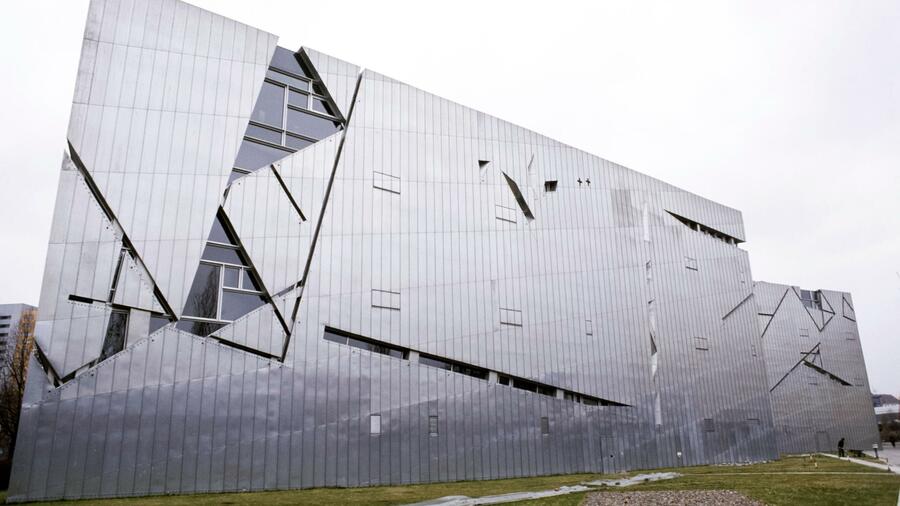
Jewish Museum in Berlin
Europe’s largest Jewish museum awarded Roland Berger a prize for understanding and tolerance in 2008. In 2013, the museum, in turn, received the Roland Berger Human Dignity Award
Photo: Gamma-Rapho/Getty Images
Roland Berger summed up his father’s descent quite differently: “Political persecution and war changed my father a lot. Before that he had been a wealthy, respected entrepreneur … He was arrested for conspiracy against the NSDAP for the first time in 1942, finally in 1944. He was sent to the Eastern Front in 1945, where he became a Russian prisoner of war.” Berger also told some media that his father had been sent to the Dachau concentration camp before the last war mission.
Handelsblatt has asked all registries that could confirm this. The Dachau concentration camp memorial site has no entry for Georg Berger. The International Center on Nazi Persecution in Bad Arolsen, whose file contains 50 million references to 17.5 million persons persecuted during the Nazi era, did not find a single card on his person. The same applies to the Federal Archives Berlin Lichterfelde, the Military Archives Berlin, the State Archives Amberg, the Bavarian Main State Archives, the State Archives Munich, the State Archives Würzburg, the Vienna City and State Archives and the Austrian State Archives. Nowhere are there any documents that identify Georg Berger as an inmate in Dachau, a Nazi victim of justice or a prisoner of war of the Soviet Union.
Berger only had to answer for his deeds and functions later. On 21 July 1947, the Spruchkammer (the German civilian court handling denazification) of the internment camp in Regensburg condemned him as a “minor offender” during the Nazi era. Berger received a fine of 500 Reichsmark and two years suspended prison sentence. During this phase he was not allowed to run a business, work independently or be a teacher, preacher, editor, writer or radio commentator.
Berger had undergone a denazification procedure – as had millions of other Germans. 95 percent of all those examined were thereby exonerated of any blame, classified as “followers” or remained unpunished for other reasons. Only 0.05 per cent were subsequently considered to be the “major offenders”. 0.63 per cent were “offenders”. 4.1 percent of those examined ended up in Berger’s category of “minor offenders”.
Historians later regarded this attempt by the allied victorious powers to come to terms with the past as problematic. “There was a lot of lying during the denazification process. Often relatives, friends or people who were dependent on the accused helped and issued them with a „Persilschein“ (denazification certificate),” explains Nazi researcher Helmut Rönz. “It is difficult to rely on the classification as a minor offender.”
“He joined the party early and served it in important positions. Therefore, he supported the NSDAP considerably through his activities.”
– Regensburg Court of Appeals decision in the denazification proceedings of Georg Berger, July 21, 1947
Georg Berger’s denazification file seems to confirm this. Given his accumulation of functions and rank in the NSDAP, he was to be classified as a major offender, the judges noted. However, numerous witnesses had testified in his defense. According to the report, Berger had been a ministerial councilor “only on paper” and had later “immediately taken up the fight against the corruption practiced by the party” at the Ankerbrot factory. In addition, he had “turned against the Aryanization of the company by the party and Gestapo”.
Evidence of this is missing in the file. While no other archive finds documents on Berger’s alleged resistance against the Nazis, his conviction or his captivity as a prisoner of war, the judges of the Spruchkammer in Regensburg apparently simply believed him. From the judgement: “The Chamber came to the conclusion that the person concerned resisted to the extent of his strength and suffered damage as a result”.
Opportunism and a career in the NSDAP did not lead to a prison sentence. Berger, however, also felt that the classification as a minor offender was still too harsh. He appealed. The Court of Cassation in the Bavarian State Ministry for Special Tasks then accepted his “political persecution of 1944”, but on 22 July 1948 it confirmed the assessment of the first instance: Berger had “substantially supported the NSDAP through his activities”.
Sales representatives after the war
Georg Berger did not want to accept the verdict. His father’s sense of justice was forever disturbed after denazification, his son told Manager Magazin in 2008. He told the Süddeutsche Zeitung just last year: “All this was very difficult for him – also the fact that he was imprisoned by the Americans in Dachau of all places.”
Georg Berger was never in Dachau. His internment camp was located 120 kilometers to the north – in Regensburg. The living conditions there were undoubtedly hard. A comparison of the calorie values of the camp rations with those of the food rations in the American occupation zone shows, however, that the inmates were in some cases better provided for than the civilian population. The prisoner newspaper Der Lagerspiegel also bears witness to a rich cultural life – including “cabaret, concerts and Punch-and-Judy shows”.
Nevertheless, Roland Berger later complained that the punishment was too much for his father. “The hero of my childhood had become a man who no longer hoped for a fair chance in life.” The father had laboriously built up a new existence as an independent sales representative. “But in business – his great passion in the past – he never really achieved anything really big.”
The son is quite different: Roland Berger made a name for himself in the post-war history of the German economy like no other. On Monday, his foundation will present the Roland Berger Human Dignity Award 2019 at the Jewish Museum in Berlin.
The interview
“Painful doubts”
Management consultant Roland Berger and Jewish historian Michael Wolffsohn talk about the dark sides of Berger’s father Georg and the question: Is this a case of deliberate whitewashing or a tragic case of self-deception?
The interview Roland Berger is facing on October 11 in the light-flooded rooms of his Munich office high above Maximilianstrasse is not an ordinary one. The 81-year-old did not come alone either: Ellen Daniel, the head of communications of his foundation accompanies him, as well as a second PR consultant and the renowned historian Michael Wolffsohn.
The preparation has a reason. Today it is not about the topics that are usually discussed passionately with the management consultant legend: Europe, Brexit fears, forecasts for the world economy. This time Berger himself is the subject – and especially his father Georg.
Mr. Berger, for many years you have spoken about your father repeatedly and in detail in interviews, whom you described as a Nazi victim. Now, Handelsblatt research has revealed that Georg Berger was a profiteer of the regime during the Nazi era. How do you explain this discrepancy?
Roland Berger: First of all, I can only say that the image I had of my father until now comes from his own stories, from my mother’s memories, and from the reports of relatives and friends who knew him during the Nazi era and often visited us after he returned home from Russian captivity. It all seemed plausible to me. For example, I experienced how the Gestapo repeatedly searched our house in Vienna between 1942 and 1944. Sure, at that time I was still a small boy who could not interpret the overall context. But the pictures of the Gestapo henchmen in our house have remained vivid in my memory.
What concrete memories do you still have of your father?
Berger: On September 12, 1944, for example, I visited the Munich headquarters of the Gestapo in the Wittelsbacher Palais with my mother and my sister where I was able to recite a few poems to my father on his birthday. Then we had to leave again quickly. The image I had of my father was very solid until your call and the first hints about his background followed that shook me deeply.
How did it come about that you only began to talk about your father’s life in interviews about 15 years ago?
Berger: For my 70th birthday in 2007, the Econ publishing house wanted to publish my autobiography.
But you gave the first interviews with him back in 2003. Did the preparatory work start that early?
Berger: Around this time, I started thinking about setting up a foundation and thus also started to deal with my life and family history. In any case, the author appointed by the publishing house did her own research for the first time, the results of which largely coincided with my findings…
… which assumed that your father returned his NSDAP party book after the so-called “Reichskristallnacht” in 1938 – in protest against the anti-Semitic excesses at that time? That he was followed by the Gestapo afterwards? That he was allegedly even imprisoned in the Dachau concentration camp, as you have often explained?
Berger: Yes, at that time I had no reason to really doubt my image of him. Now, of course, I want to know everything. And that’s why, after the first hint of Handelsblatt, I also asked the historians Michael Wolffsohn and Sönke Neitzel to clear the air and clarify everything that needs to be clarified. This is to be fully documented in the coming months. I want to know the truth – and then also change my image of my father and take back my earlier statements, if that is necessary. Things and life stories are often not just black or white, but grey…
…although in your stories, your father was a devout Christian and an opponent of the Nazis.
Berger: If it should turn out that I have purported wrong facts, I sincerely regret that – and will publicly correct it.
Among other things, you said in interviews that your father had joined the NSDAP in 1933.
Berger: No, 1931.
You mentioned both numbers from time to time. And the – wrong – date 1933 is the more flattering, of course. Once the National Socialists had seized power, millions of Germans flocked to the NSDAP. Your father was early.
Berger: Yes.
You mentioned the Econ publishing house earlier, which wanted to publish your life story. Why was this book, your autobiography, never published?
Berger: That had nothing to do with the Third Reich.
Your father’s career as a Nazi must have played a part in that, too.
Berger: Among other things, the manuscript listed a number of clients of the management consultancy to whom we as consultants are obliged to maintain confidentiality, even after done deals. There were different opinions about structure and language style, it was supposed to be published in the first person style.
Our research has revealed, among other things: Your father did not leave the party in 1938 in protest. He worked as the supreme administrative head of the Hitler Youth and was personally appointed Ministerial Councilor by Adolf Hitler in 1937. In 1939, he asked Hitler’s deputy Rudolf Hess for a letter of thanks, which he did receive.
Michael Wolffsohn: I have only been working on the case for two weeks, in collaboration with my colleagues Neitzel and Scianna from the University of Potsdam. We will examine and then evaluate everything. So you have an enormous lead here – and you are right about the facts mentioned. What Mr. Berger said about this in interviews I only know cursorily. To Hess’ letter of thanks: Berger did not receive the title “honorary”. This is relevant. Here, too, the How and Why has to be examined carefully. For historians, sources and the verification of sources go hand in hand.
Vita
Roland Berger
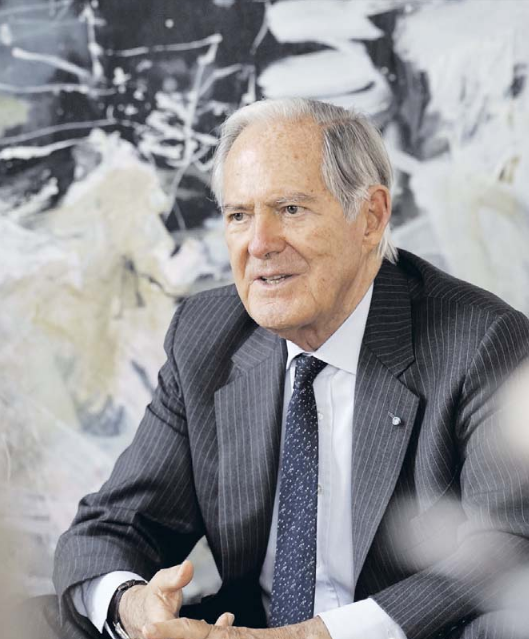
Roland Berger
Photo: picture alliance / SZ Photo
Childhood: At birth, Roland Berger was still called Roland Altmann. His father Georg Berger married his mother later on as his second marriage.
Career: Berger founded his first company at 20: a laundromat. At 24, he worked for the Boston Consulting Group. Five years later, Berger went into self-employment and became Germany’s most famous and influential consultant.
Donor: In 2008, the Roland Berger Foundation was established, endowed with 50 million euros from his private assets. It promotes talented children and young people from socially disadvantaged families.
“Things and life stories are often not just black or white, but grey…”
– Roland Berger
But you will understand that we also have to rely on Roland Berger’s interviews as a source.
Wolffsohn: Every source, especially NS sources, require source verification.
From 1941, Georg Berger headed the “Aryanised” Viennese company Ankerbrot as general director and from then on, him and his wife and family lived in an aristocratic villa, which had previously belonged to a Jewish family.
Berger: During this time, many people were guilty and took advantage of Aryanization. This was wrong and cannot be justified – even if the house was not transferred to my father and he paid rent.
Wolffsohn: As far as can be determined so far, Georg Berger was indeed a profiteer of the NS system. That seems clear. The fact that he is supposed to have been a perpetrator cannot be determined from the current state of my research.
Berger: At that time I was not even ten years old yet. How was I supposed to know all this, let alone understand it?
In Vienne, your father was introduced into his position as the boss at Ankerbrot by the NSDAP giant Alfred Proksch. Such treatment is not exactly given to opponents of the system.
Wolffsohn: We will research this thoroughly and publish all details accordingly.
Mr. Berger, in April 1942, the Gestapo did indeed come to your house – albeit on the basis of various charges for violations of the Wartime Economic Order. It was about your father allegedly hoarding food on a large scale.
Wolffsohn: Whereby you surely know how seriously many of these Gestapo files should be taken. These were often also instruments of denunciation.
Some should certainly be regarded just as critical as denazification documents, which were often embellished after the war by the testimony of old friends, neighbors and relatives.
Wolffsohn: Both is true.
Our conclusion is that he apparently did not cause offence for political reasons, but for economic reasons. In September 1942, he had to vacate his post, but refused to leave his service villa. Do you know the outcome of his trial on the grounds of war crimes?
Wolffsohn: Believe me, we will turn over every stone and show no consideration whatsoever. But we’re just not there yet. Quality and depth come before speed. I’m asking for a little patience here.
We could also not find any evidence that Georg Berger was first imprisoned by the Nazis and later by the Americans in Dachau, as has often been claimed. Nor did we find any evidence that the father served on the Eastern Front.
Wolffsohn: Apparently he wasn’t in Dachau during the NS era. He was definitely not on the Eastern Front in Poland or the Soviet Union. What else do you understand by “Eastern Front”?
You better ask Roland Berger. He was the the one talking about this often in interviews.
Wolffsohn: Georg Berger was a soldier in Eastern Austria. We know that for a fact. As a non-historian, Roland Berger does not need to be familiar with the specialist terminology. When I read Ostfront, I feared of war crimes by Berger in the Soviet Union. This topic must be methodically based on worst-case scenarios. So far we have no evidence of this. I don’t want to defend Roland Berger’s language hickups, but he is an amateur in the field. An amateur who worshipped his dad.
We fully understand such personal bonds. On the other hand, he then went into great detail about his father and his supposed role as a victim for more than 15 years.
Wolffsohn: I think we can agree on this: Father Berger was not a victim.
With all due respect: Couldn’t you have noticed this much earlier, even: had to?
Berger: I can only repeat: it all seemed plausible to me – especially based on my own experiences. I had no reason for doubts, which that could have set in motion a process of rethinking.
You even called your father a “moral role model”. With today’s knowledge, would you still maintain this assessment?
Berger: In this context, certainly not any more, even though I have experienced other things with him that still seem exemplary to me today.
How often did you actually see him after the war?
Berger: After the war I only saw him again after his Russian captivity. He returned a broken man. My contact with him was most intensive during years in Vienna years. He was not allowed to work then. Later on, I only met him on the weekends. He died and was buried in Egglkofen, my mother’s hometown.
When?
Berger: He died in 1977, at the age of 84.
What did your father do initally after the war?
Berger: He tried his hand as a sales representative for a few years. But honestly: he was miserable. After all, he was no longer allowed to take on any managerial duties.
That could have made you suspicious, too.
Berger: We will still have to work through why he was imprisoned by the Russians and later interned by the Americans. We have to get to these documents first.
Since 2008, you have been awarding an annual “Prize for Human Dignity” – also in memory of your father, as you explained when the Foundation was established.
Berger: Well, it’s not in the foundation charter. That is all about the protection and promotion of human dignity worldwide and the remembrance of injustice, not least during the Nazi era and the Holocaust.
We don’t want to question the award. The purpose of the foundation is highly honorable. But on 27 March 2008, when you handed over the foundation deed, you gave a speech in which you talked about your father’s fate. Isn’t it possible that this was also about misleading the public?
Berger: I can’t see it that way. I have judged my father’s life to the best of my knowledge and belief. Today I am smarter – also due to the new facts and documents. But I never intended to deceive. Why would I do that?
Your prize was awarded for the first time on 24 November 2008. Nine days earlier, you received the Prize for Understanding and Tolerance from the Jewish Museum in Berlin. In April 2013, in return, this museum was awarded the Roland Berger Prize.
Wolffsohn: But relationships such as those are not linear and mono-causal. Roland Berger is not seen as the initiator of an award by the Jewish community, but as a person who has many merits. By the way, the Jewish Museum was never and is still not a representative of the German Jewish community, but a state museum.
And we do not want to question this lifework either. But the fundamental question is simply whether we are witnessing a case of deliberate whitewashing or tragic self-deception. Get the picture?
Wolffsohn: Of course are both variants theoretically conceivable. But it is far more plausible here that first a very young and then a grown-up man has glorified his father in retrospect … to what extend, that is what we will clarify in the next few weeks.
Berger: If you will: Yes, then it must have been an unintentional “tragic self-deception” that I am guilty of. I do not imagine, though, that it would be easy to resign from office in such a regime in 1939. But a resignation is not an act of resistance.
Wolffsohn: And believe me: I have experienced and researched a lot about coming to terms with the past – both brown and red history. I think it is very good how openly Mr. Berger is dealing with all the possible results of our further research.
Berger: In a way, I am grateful to Handelsblatt that you have raised these painful doubts about my image of my father in me, and have thus brought the truth closer.
Mr Berger, Mr Wolffsohn, thank you very much for the interview.
The questions were asked by Sönke Iwersen, Andrea Rexer and Thomas Tuma.
“If it turns out that I have claimed the wrong things, I sincerely regret it.”
– Roland Berger
Vita
Michael Wolffsohn
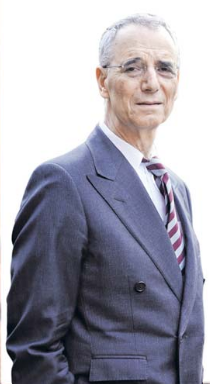
Michael Wolffsohn Photo: Markus Nowak/KNA
Origin: Wolffsohn was born in Tel Aviv in 1947 as the son of a Jewish merchant family. His grandparents were victims of the “Aryanization” in Germany.
Work: The historian is considered one of the most knowledgeable experts on German-Jewish-Israeli relations.
Honoured: bearer of the Federal Cross of Merit and numerous other international awards.
Master and Chef
An investigation into how Russia participates in the Libyan Civil War
Report jointly prepared with the Dossier Centre and The Daily Beast
“Master and Chef” is the fourth part in a series of four pieces by “Proyekt”
It appears from the correspondence between the envoys of the “Kremlin Cook”, Yevgeny Prigozhin, that there is a military contingent in Libya headed by the Deputy Commander of the Russian Airborne Forces, Andrei Kholzakov. “Proyekt” reports on the secret Russian operation to remodel this North African country.
This report contains strong language
“— So, you sl*t, you shot your gob off. You’ve really gone and disgraced yourself now. We’re going to be getting our own back on you, you traitor. Get ready.”
“Proyekt’s” correspondent received this threatening letter on August 29th. It’s signed with a pseudonym and was sent from an unknown address, registered with a free service; however, it arrived at the same time as the publication by the news agency FAN – which has links to businessman Yevgeny Prigozhin – of an investigation about links between “Proyekt” and the Russian opposition.
Twenty-four hours before that, correspondents from “Proyekt” contacted Prigozhin’s representative to ask him questions about Russia’s involvement in the Libyan civil war.
Arrest
In the early hours of the morning of May 17th, a couple of jeeps with armed men pulled up outside a private house in Tripoli. They crashed through the gates into the courtyard, broke into the building and then shoved two Russians who had been renting the house for a couple of months into cars and drove them away to an unknown destination. The Russians – Maxim Shugaley, a political strategist from St. Petersburg and Samer Suaifan, a medic/interpreter of Arab origin from Moscow and graduate of the PFUR (People’s Friendship University of Russia) – were both associates/employees of Prigozhin. The story of their arrest is reproduced according to the accounts of Aleksandr Malkevich and Aleksandr Prokofiev, both political strategists working with Prigozhin.
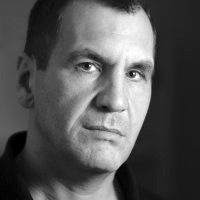
Maxim Shugaley
On 14 March, together with one other Russian – political strategist Aleksandr Prokofiev – they flew from Moscow to Istanbul, and then on to Libya. Two months into his mission Prokofiev flew out of Libya on leave – that’s how he avoided arrest.
Ever since then, the Russians have been hostages in Libya – they are under arrest in a prison near a Tripoli airport. The prison in question is controlled by the Agency Combatting Organised Crime (a structure officially reporting to the Ministry of Internal Affairs of the Libyan Government of National Accord – LAN), which is led by Abd ar-Rauf Kara – a warlord of one of the armed groups active in the Libyan capital – this information is contributed by political strategist Malkevich – chairman of the “Fund for the Protection of National Values”, an organisation set up in 2019 as an “umbrella” for activities carried out by Prigozhin’s specialists abroad; this is confirmed by numerous publications in foreign media. No official accusation has been levelled against them.
That was the finale of the unannounced intervention of Russia in the civil war which has been raging in Libya since 2014. The leak of documents from Prigozhin’s “back-office” (hereafter called the “Libyan file”) gives us now, for the first time, the opportunity of assessing the scale of this interference.
“Proyekt” has already reported on the work of the so-called “back-office” in St. Petersburg; it is precisely from there that all the work of Prigozhin’s people abroad is coordinated. Documents were received during 2019 from sources familiar with Prigozhin’s activity in Libya, and some of the facts related in the documents are confirmed in the words of other interlocutors, including Prigozhin’s staffers. The activity of the Russians working for Prigozhin mentioned in the documents (including the meta-data of the files) are confirmed by information in the public domain, by knowledge gained form social network accounts, and by the words of the sources themselves.
The editors do not publish documents in their entirety to protect the safety of the sources.
Russian assault
Almost nothing was known until that day about the presence of Russian troops in Libya, where a bloody civil conflict continues to rage unabated. In the years 2017 and 2018, Western and some Russian media (specifically, the British tabloid The Sun and the Russian press agency RBK), referring to anonymous sources, reported on units of Russian paratroopers being deployed to Libya. According to the journalists’ sources, they were helping the armed forces of Libya in the east of the country, fighting with the UN-recognised Government of National Accord in Tripoli (the latter of which was associated with the arrest of the Russians). However, this information was never confirmed by any documentary source, and the details of any possible presence of Russian military in North Africa was not known.
According to the correspondence of Prigozhin’s envoys in Libya, a “group of (Russian) Armed Forces” headed by Deputy Commander of the Airborne Forces, Andrei Kholzakov, was active in the country. In the mass of documents that the editorial board studied, Kholzakov was twice mentioned in that capacity. “Proyekt” forwarded questions about the activity of a Russian group under the command of Kholzakov to the press service of the Ministry of Defence but received no response. The 57 year-old Lieutenant General has extensive combat experience at home and abroad; he has served in Afghanistan and Chechnya and commanded the Russian military base in Gümri, Armenia. A representative of the Russian Paratroopers Union confirmed that Kholzakov is on mission in Libya, but refused to reveal the details of the mission, saying that such information is classified. The editors sent a request to the press service of the Airborne Forces, but at the time of publication, no reply had been received. Both the State Duma Defence Committee and the former Commander-in-Chief of the Airborne Forces, Vladimir Shamanov, declined to comment.
In one of the episodes which took place on April 4th, 2019, Prigozhin’s Libyan associates reported to Russia that the command of the national army of Field-Marshal Khalifa Haftar (see below) had requested the “commander of the group,” Kholzakov, to “deploy a squadron of UAVs (unmanned airborne vehicles) to locate the enemy’s artillery positions and to annihilate them. As seen from the report, Kholzakov refused the request.
The documents do not contain any evidence that Russian regular forces are currently taking part in military activity in Libya. However, there is mention of Russians assisting Haftar during an operation in Darnah: In 2018, Haftar’s army – possibly with help from the Russians – cleansed this eastern town of Islamists. RIA Novosti covered this operation, but without any reference to Russia’s role. It is possible that the Russians taking part in the operation in Darnah were not regular servicemen, but members of the private army affiliated to Prigozhin, which in the press is more commonly known as the “Wagner Group.” Previously, The Telegraph, referring to sources, had reported on the participation of Russian mercenaries in the events in Darnah.
Andrei Kholzakov
Deputy Commander of RF Airborne Forces (VDV), Lieutenant-General
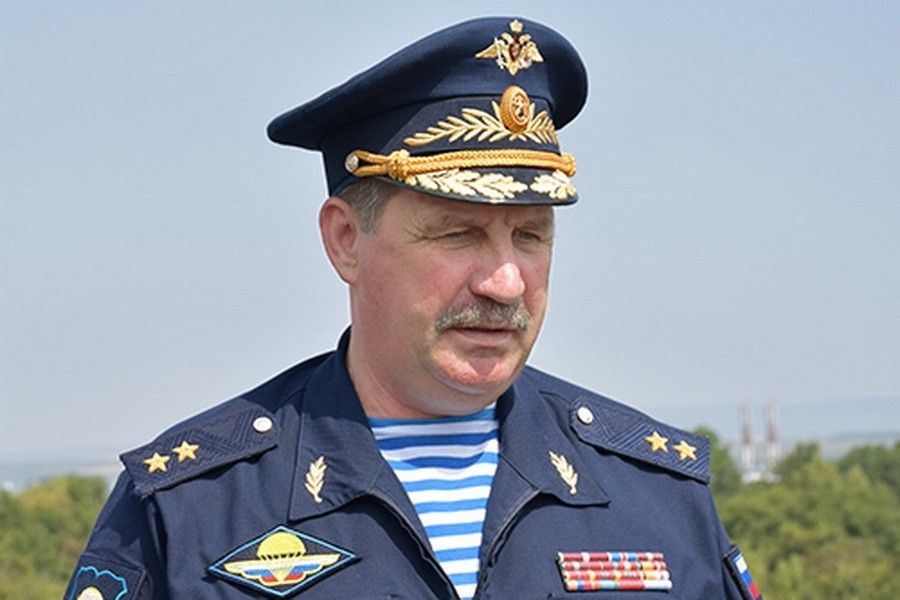
Andrei Kholzakov, Source: ruspekh.ru
According to his official biography, Kholzakov was twice deployed to Afghanistan, and took part in a counter-terrorist activities in the Northern Caucasus during the operation to close the Chechen border with Georgia in 1999. In 2013, he was appointed Deputy Commander of the Russian Airborne Forces (VDV). He has been decorated twice with the Order of the Red Star, twice with the Order of Courage, once with the Order of Military Merit, and has received the Ministry of Defence anniversarial medal “In commemoration of 25 years since the cessation of military action in Afghanistan.” In 2016, he was elected leader of the civil organisation “Udmurt Fraternity.”
It is highly likely that the headquarters of the Russian group in Libya is based in Beghazi – the port town situated in the east of the country and controlled by Haftar’s army, a source familiar with the activity of Prigozhin’s team in Libya confirmed. This is also indirectly confirmed by the correspondence in which there is mention of Haftar’s repeated requests to redeploy the “Russian HQ” nearer to the frontline, which is to the west of Benghazi – for example to El-Jufru. Apart from ground weapons, the HQ is defended by Air Defence Forces, the source states.
The numbers of the Russian military contingent in Libya is not known with any certainty. However, the documents contain information about the numbers of an auxiliary unit, carrying out repairs of military equipment for Haftar’s army (this detachment could be manned by military contractors from Prigozhin’s firm – from the source’s correspondence, it is not entirely clear).
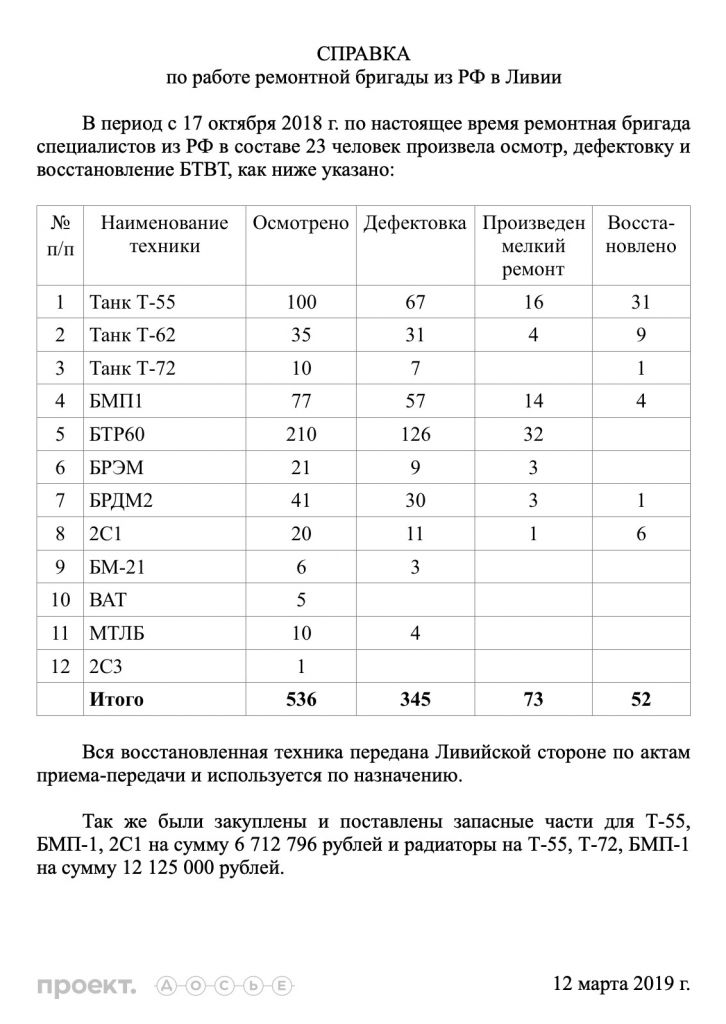
Report on repaired military equipment
In two documents, there is mention of the presence in Libya of 23 repair technicians. The correspondence also contains information as to the amounts of restored military equipment ceded to Haftar by the Russians (see illustration). It transpires from the correspondence that new key parts and components are being supplied from Russia for repairs. From 17 October 2018 onwards, Russia procured spare parts for a sum of 18.8 million roubles. In the meta-data of the documents, there is an indication that their author is Valery Chekalov, who, according to media publications, is connected to the so-called Wagner Group, the group of Russian mercenaries sponsored by Prigozhin.
New Russian weaponry is also being supplied to Haftar, if we believe the correspondence of the “Prigozhin contingent” – “Every day there are three IL-76 planes/flights delivering Russian weaponry from the UAE via Jordan”, it says in one of the documents. Traces of this “airlift” were discovered on 26 July 2019, when two IL-76 military-transport planes, capable of bringing Haftar’s troops weapons, were hit by enemy fire. The incident occurred on territory under Haftar’s control. Additionally, the very fact of the shootdown and destruction of the planes were confirmed by the aviation authorities of Ukraine, where the planes were registered.
It is possible to establish from the registration numbers that the planes were operated by the Ukrainian company Europe Air. This was one of the companies that could have been used for the transit of Russian shipments to the Middle East and North Africa.

Burnt IL-76 aircrafts
Source: bmpd.livejournal.com
The chairman of Europe Air up until August 2016 was Jaideep Mirchandani, according to the Ukrainian database of legal entities. He is also the well-known founder and executive director of the SkyOne company, which has its offices in UAE. Mirchandani was born in India, studied engineering in Baku and speaks fluent English and Russian, as stated on the SkyOne site. Mirchandani had an aviation business in Britain and Russia, according to the registers of legal entities in both countries.
In 2014, the US government included Mirchandani and the members of his family, as well as several companies belonging to him, on the list of persons acting against the national interests of USA. Washington asserted that Mircahndani’s family was involved in activities supporting the Syrian regime, and the companies linked to Mirchandani were delivering “large amounts of Russian currency to the government of Syria.” In 2016, the Mirchandanis were removed from this list after an appeal was lodged.
The documents we have studied allow us to draw the conclusion that the activity of “Prigozhin’s men” in Libya has, at the very least, the approval of the military and political leadership of Russia. A number of reports on the politico-military situation in the country are addressed to the senior leadership of the Ministry of Defence or personally to Sergei Shoigu, Russian Minister of Defence. Another series of documents are dedicated to a plan to organise a major international conference in Sochi – the location of Vladimir Putin’s favourite residence, where he frequently hosts important international meetings. Over many years, Prigozhin had also accompanied the president there; a few years ago, he was not above serving the president personally at the residence, Bocharov Ruchey, a source says, who was at the residence and saw Prigozhin there. As a high-ranking Russian politician once told “Proyekt,” Prigozhin “of course agrees” with his own foreign policy activities with Putin (read about Prigozhin’s actions in other countries of Africa too in the documentation of the project: Parts 1 and 3).
In their everyday work in Libya, Prigozhin’s delegates also cooperate with servicemen: in the documents, there are numerous reports of contacts with military experts of the Ministry of Defence – for example, in one case a military expert assessed Haftar’s troops’ chances of taking Tripoli, and in another, the Russian military command asks Haftar for a plan of his combat operations.
The Return of Gaddafi
— The world situation is complicated, Dima. We could even lose the country.
— But why, why should I lose it?
— Because as I said, the world situation is very complicated, Dima. Gaddafi also thought that he wouldn’t lose it – But it turned out that the Americans were craftier.
As the writer Mikhail Zygar says, an exchange more or less similar to the one above could have taken place in 2011 between the then-PM Putin and President Dmitri Medvedev on a fishing trip near Astrakhan – the dialogue is quoted in his book “All the Kremlin’s Men”. In exactly the same manner, Putin forced Medvedev to give up the presidency and offer him the opportunity of standing for a third term as president, says Zygar.
It is impossible to vouch for the accuracy of the conversation, but we know for sure that Putin was very concerned indeed by the fate of the now-deceased leader of the Libyan Jamahiriya and that it played an important part in his decision to return to the Kremlin. Gaddafi was deposed in the course of the Arab Spring of 2011 and murdered by a mob when trying to flee from Tripoli. The first time Putin and Medvedev publicly clashed was because of Libya, when the international coalition intervened in the civil war on the side of Gaddafi’s enemies. Medvedev thought the UN resolution on Libya was right, and Moscow had not used its veto. On learning this, PM Putin criticised the position of Russia, prompting Medvedev to react harshly. In the wake of this squabble the security officials in Putin’s entourage advised him to return to power, writes Zygar; this had also been confirmed previously by people interviewed by “Proyekt” in the circles of both leaders. Putin personally watched the sadly famous video of the execution of Gaddafi by the armed mob and was incensed by what he saw and by “Medvedev’s weakness,” said a federal politician who had been contact with the President and the PM.
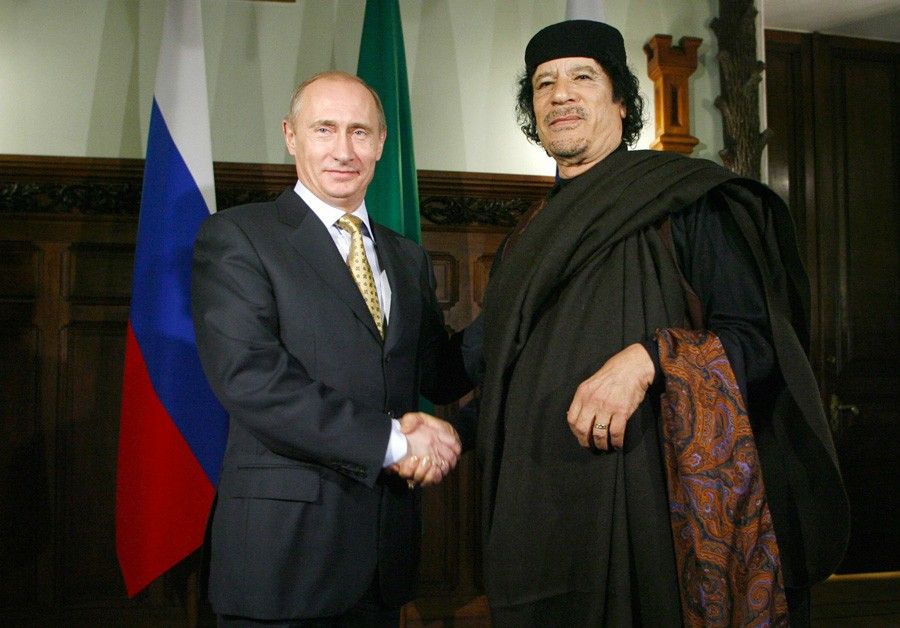
The meeting of Vladimir Putin and Muammar Gaddafi in Moscow, 2008.
Source: premier.gov.ru
Now, some eight years later, Russia has decided to build new relations with Gaddafi – with the son, that is, of the murdered Libyan leader, Saif al-Islam, who has ambitions to return his family to power in the country, as evidenced from the correspondence between Russians working in Libya.
A number of documents that the editors have seen show that up until the end of 2018 Russia saw its best bet in Haftar: he came to meetings in Moscow, visited a Russian warship in the Mediterranean and is in constant contact with Shoigu’s ministry.
However, over the last months or so the envoys of Prigozhin working alongside Haftar have criticised him, reporting back to the centre that the field-marshal is too arrogant, not up to assessing the situation, and saying that he doesn’t have the resources needed to take Tripoli and concluding that he is unlikely to be a long-term partner “in the light of his ongoing illness from cancer” – But the main complaint against Haftar is that he has no intention of giving up his American citizenship; his family lives in the United States and the marshal himself is in negotiations with European and Arab countries, while at the same time accepting Russian assistance. “There are solid grounds for supposing that if he had a politico-military success, Haftar would not remain loyal to Russian interests,” one of Prigozhin’s political strategists summed it up in a document headed “For the Ministry of Defence.” “So as to neutralise the risks, we propose to strengthen the positions of the western part of the country by uniting all forces under Saif Gaddafi,” the author of the report states.
Contacts with Saif began at the end of 2018 and beginning of 2019, it would appear from a number of documents that the editors have learnt of – Prigozhin’s delegates have on at least one occasion met Gaddafi personally and also have had telephone conversations with him. The meeting took place in Zintan, a town in western Libya, at the beginning of 2019. There are indications in one of the documents that the meeting-place was kept secret. This is to do with the fact that Saif, who is rumoured to have served time in a Libyan jail, still faces international criminal charges against him – he is wanted by the International Criminal Court in The Hague for crimes committed during his father’s rule.
The report of the Russian delegation on the meeting with Saif on April 3rd is particularly noteworthy: the author describes the circumstances of the conversation – Gaddafi was continually distracted by the TV relaying news about Haftar – and then concludes with recommendations as to the way ahead. They propose that Prigozhin’s men take a compromising video of Haftar and post it on social media.
Prigozhin’s men, on their own admission, had by March 2019 set up in Libya 12 Arab-speaking groups on Facebook – partly in the interests of Gaddafi, partly in those of Haftar.

One of the versions of the logos for Gaddafi’s party designed by Russians
The IT tech reports that their permanent public audience is more than 250,000, and the weekly hits total more than 2,000,000 users.
In another document the couriers of Prigozhin report that they have provided financial support to the “Jamahiriya TV” television channel which broadcasts from Cairo on behalf of Gaddafi junior; the document talks of financial assistance, but also says that the Russians advise Libyan journalists on content issues. To demonstrate the effectiveness of their work, Prigozhin’s men even show two images of a Jamahiriya TV live studio – before and after Russian money.
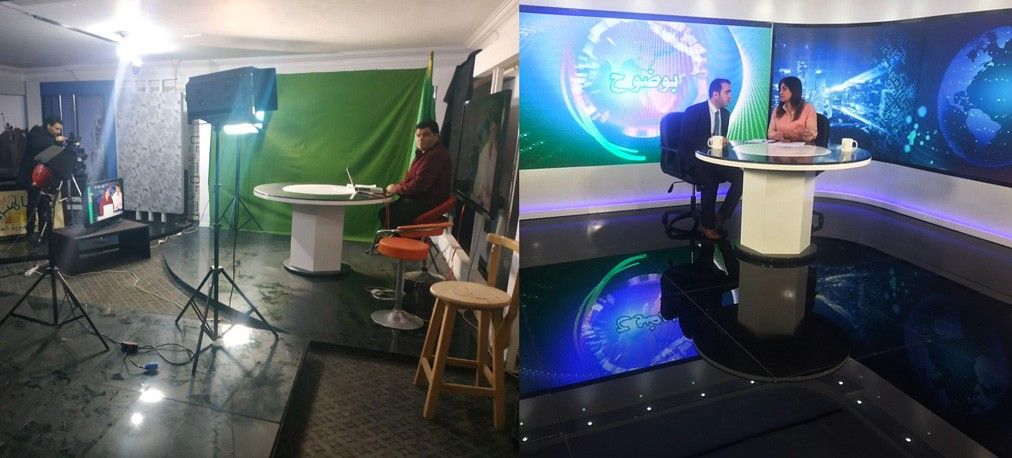
Transformation of a live studio, according to the documents of “Prigozhin’s men”
In general terms, Prigozhin’s envoys drew up for Saif a set of recommendations. Amongst other things, Prigozhin’s associates included recommendations such as having Russian forces setting up a party with the provisional title of “Libya Resurgent,” the discrediting of Gaddafi’s enemies and organising international protests and flashmobs in his support.
Relations between “Prigozhin’s men” and Gaddafi are almost certainly coordinated by the government in Moscow: in the beginning of 2018, exactly at the same time as Prigozhin’s associates began to show interest in him, two of Saif’s representatives met in Moscow with the Deputy Foreign Minister, Mikhail Bogdanov. According to reports of the official Russian media, they conveyed to Putin their request that he support the political ambitions of Gaddafi and his plan to get Libya out of its crisis.
Divide and Rule
In November 2018, Prigozhin’s political strategists carried out street and telephone surveys in Libya. According to them, Saif would beat all his rivals in the event of an election, including Haftar and the head of the central government in Tripoli, Fayez al-Serraj (supported by the majority of the international community).
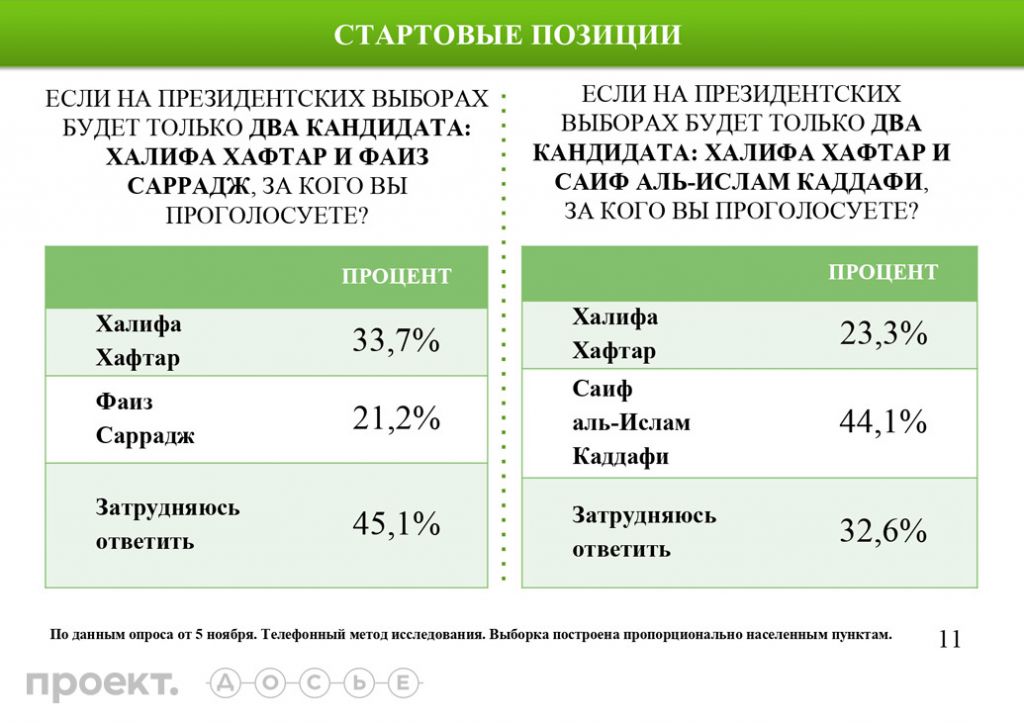
Voter turnout of Libyan politicians
STARTING POSITIONS
Q: If there were only two candidates at a presidential election, who would you vote for – Khalifa Haftar or Fayez al-Serraj?
Result: Haftar: 37%; al-Sarraj: 21.2%; Don’t know: 45.1%
Q: If there were only two candidates at a presidential election, who would you vote for – Khalifa Haftar or Saif al-Islam Gaddafi?
Result: Haftar: 23.3%; Gaddafi: 44.1%; Don’t know: 32.6%
Results of survey of November 5. Research by telephone. The selection is based proportionally on population centres.
However, not wanting to limit itself to just two potential candidates, Moscow is also in contact with other warlords in Libya – one of the documents says that the only influential player who refused to contact the envoys was Fayez al-Serraj, who fears that relations with Russia will spoil his image in the west; he occasionally plans protests against Haftar and Gaddafi behind their backs.
In one of the documents, it says openly that Russia has had talks with Sudan about invading Libyan territory and attacking Haftar’s forces. “Agreements have been reached with the leader of the Rapid Reaction Forces of Sudan, Mohamed Hamdan Dagolo “Hemeti” with regard to possible joint actions in Libya. Sudan’s interest here would be in routing the mercenary group from the Sudanese opposition fighting on Haftar’s side. Hemeti’s forces, in conjunction with the Tubu (a numerous tribe in the south of Libya), would neutralise the politico-military success of Haftar in the south of Libya, thus forcing him to the negotiating table,” it states in a document entitled “Note for the Ministry of Defence.” Prigozhin’s men’s activity in Sudan has been known about long since. There was at the very least one Russian working for Prigozhin in Sudan who was subsequently seconded to Libya (see below). “Hemeti” Dagolo, who is mentioned in the document, is an influential warlord in Sudan whom the Air Force call “the most powerful man” in the country. He is also considered to be responsible for acts of genocide in the province of Darfur and his name is linked to the recent crackdown on demonstrators in the Sudanese capital, Khartoum.
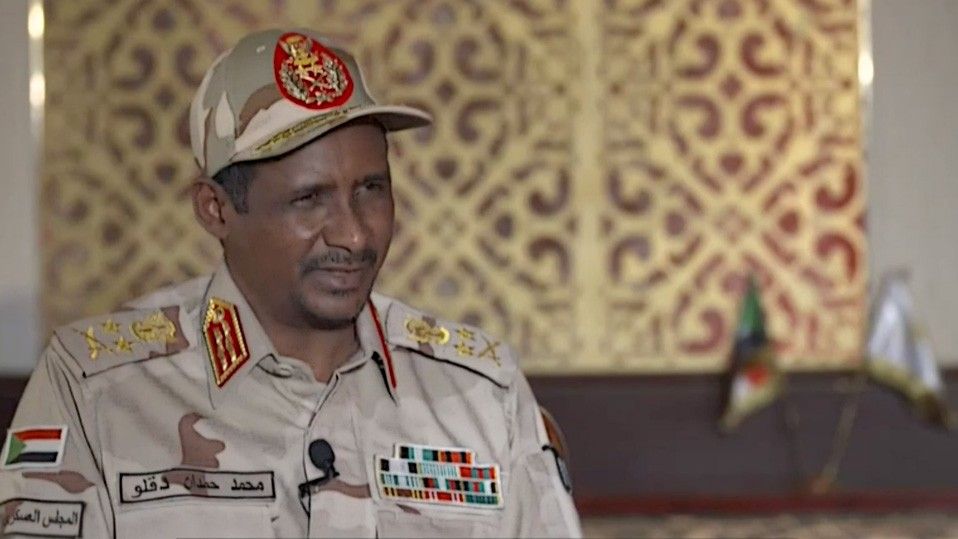
Mohamed Hamdan Dagolo “Hemeti”, Sudanese warlord
Source: bbc.com
On the other hand, the Russians are not very happy with the “narcissistic” behaviour of Gaddafi and are wondering about his future. As a result of his possibly not cooperating with Haftar, Gaddafi may be “arrested and tried in The Hague”, Russian political strategists write.
Their level
Once a political strategist sent out by Prigozhin’s company to the Central African Republic was called on his mobile by the “Kremlin Cook” himself. As “Proyekt” reported earlier, each member on mission in Africa has his own telephone for direct calls with Prigozhin. The latter, as political consultants themselves have told us, occasionally phones to personally check up on their work. When he took the call, the Russian was so drunk that he couldn’t answer Prigozhin’s important questions – for which he was instantaneously dismissed. This tale, paraphrased from the words of two sources unknown to each other, shows not only the degree of involvement in foreign policy of Prigozhin himself, but also the level of professionalism of many Russian consultants. Proyekt has already reported on the background of some of Prigozhin’s political consultants in Africa.
“— One of them worked for me in a regional company. He was doing placards. And that was his level – ” said the Russian political consultant familiar with the members of Prigozhin’s team.
Amongst the documents in the “Libyan file” there are some recommendations which look decidedly odd. They contain ideas calqued from Russian circumstances about setting up a civic chamber, an institute of representatives and even a civil national front to support the president. To see these plans through the media the technologists propose that the Libyans create four new newspapers, two of which will be comics and will have a print-run of 20,000.
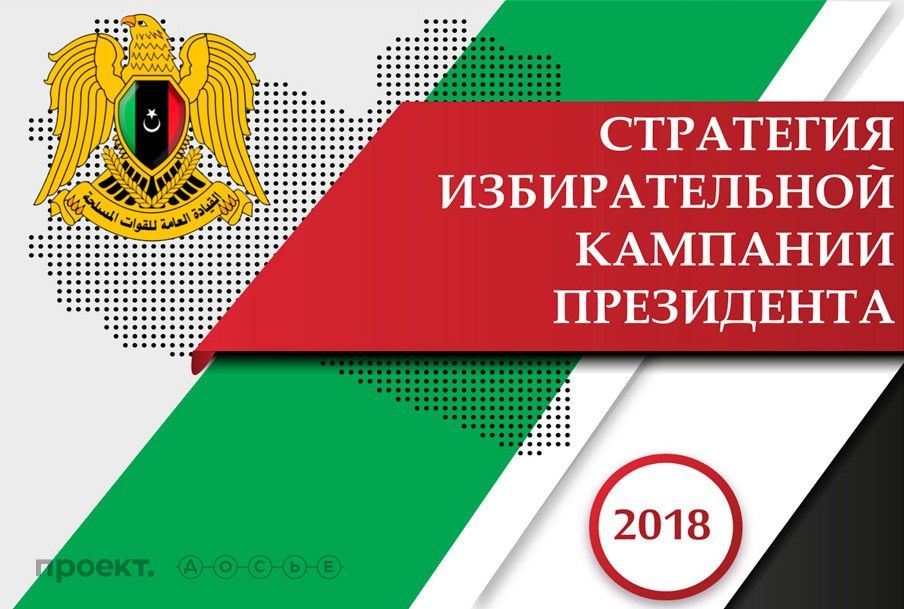
Cover of the brochure designed by Prigozhin’s political strategists: ‘Strategy of the President’s Electoral Campaign’
A number of different groups of “Prigozhin’s men” have worked in Libya, either at the same time or concurrently – and only one of the groups was arrested. The missions started from October of last year – the date of the first “mission” was given by a source from amongst the staffers and they confirm at the Fund for National Research that the project started in the beginning of 2019. Amongst those taking part in the “Libyan project” was a staffer in the “back-office”, a Russian of Syrian descent called Yunes Abazid (judging by social media, he had previously contributed to Russia Today Arabic). Before coming to Libya, he had worked in Sudan with Mikhail Potemkin, a regional representative affiliated with Prigozhin’s company “Minvest,” which was prospecting in Sudan for gold, we were informed by a source in Prigozhin’s outfit. Abazid did not respond to the editors’ request for further information.
Another man working for the Russians in Libya was Abdulmajid Eshul. Prokofiev calls him “one of the consultants”. He is the leader of “Mandela Libya”, or that’s how he was introduced by Aleksandr Malkevich. This is an organisation that deals with supporting the presidential ambitions of Saif Gaddafi, and compares the latter with Nelson Mandela. There is a newspaper in Libya that is published under the same name: “Mandela Libya”- and its Facebook page has been active since December. In particular, “Mandela Libya” published a poll querying members of the public if they would pledge their support to Gaddafi in a presidential run. The page reports that 62,000 people answered “yes”. This was noticed by the German fund Democracy Reporting International, which concluded that the majority of respondents were fake.
After the arrest
Aleksandr Prokofiev, a colleague of the arrested men, described to us how, the day after the Russians were arrested, the Libyan who had helped them with day-to-day matters came to check their house. The Libyan said that the house had been plundered: everything had been taken away, including even the furniture, and the personal effects of the Russians had also disappeared – their laptops, documents and money. The car they had hired was also gone. The Libyan called Prokofiev to inform him that his colleagues had, in all likelihood, been abducted. With the help of the neighbours who had witnessed the arrest, they found out that on the jeeps there were stickers of one of the armed factions operating from the town of Misurat. It took more than a week to ascertain that the Russians were in fact in prison.
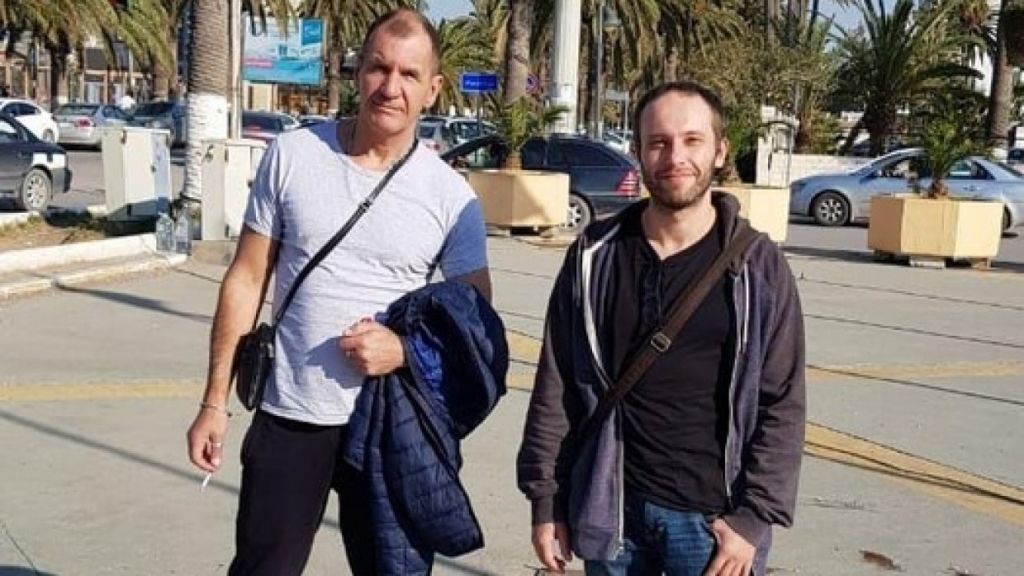
Maxim Shugaley and Aleksandr Prokofiev
Source: VK
Eshul and another “consultant,” Mohamed Treki, it was rumoured, had also been put in prison, Prigozhin’s men said. Eshul’s son, Azil, was put behind bars, but was soon released, said Malkevich, so that he would tell the rest what would happen to each one of them if they collaborated with the Russians; this was also confirmed by the lawyer that Treki’s wife had hired. At least two other Libyans who had been neighbours of the Russians were also supposed to be in jail: the head of a family and one of his household members – so said “Prigozhin’s men”. Other people who had been working with the Russians in Libya also stopped calling them; “we don’t know for sure whether they’ve been arrested or if they’re in hiding”, said Prokofiev.
Mohamed Treki, the son of the former Minister of Foreign Affairs of Libya and Chairman of the UN General Assembly, who had fled to Egypt, consulted with the Russians while they were working in Libya. After Shugaley’s and Sueyfan’s arrest, it was Treki who had led the talks on behalf of their employer and it is supposed that he may have met with the head of the Government of National Accord, al-Sarraj, says Prokofiev. Prigozhin’s associates refuse to reveal the details of the negotiations for their release, explaining that it could harm the process. Publicly at the “Fund for the Protection of National Values” they insist that Libya had demanded from Russia “deliberately unfulfillable conditions;” requests such as “send to Libya a large consignment of arms and convey to the senior officials of the Russian MFA ‘taskings’ with regard to relations with Tripoli on behalf of the leaders of the militants.”
Shugaley shortly before his mission suffered a stroke and came to Libya with a large packet of medication, said someone who worked closely with him – he still has family in Russia. Samer Sueyfan is diabetic. As they said at Prigozhin’s HQ, they are still not allowing him to see a Libyan lawyer.
During the entire period of their detention, the government in Moscow has not made any statement demanding the release of Russian citizens. That said, there have been many attempts at an unofficial level to achieve this end and Deputy Foreign Minister Mikhail Bogdanov has been tasked with this mission, we are told by an interlocutor from “Prigozhin’s men” as well as a source near to the Libyan government. Malkevich speaks of violations of human rights having already been recorded in the prison where the political strategists are being held and the Russians there may have been tortured, he said. In “Mitiga” prison, “it is supposed there are some 2,600 men, women and children who are subjected to torture, refused medical assistance and who are dying in custody”, wrote Foreign Policy in April of this year. Last year’s UN report also spoke of torture and unlawful killings in the same prison. At the beginning of this year an enquiry into violations of human rights in “Mitiga” was initiated by the International Criminal Court.
The press-secretary of the President, Dmitri Peskov, and the Ministry of Foreign Affairs representative, Maria Zakharova, declined to answer questions put by “Proyekt”.
***
Presidential elections in Libya have not yet been called – and will not happen earlier than 2020. Despite the detention of Russians, political and military contacts between Moscow and the various Libyan groups probably continue; it was reported by the French news outlet Maghreb Confidential that Khalifa Haftar was again in Moscow at the end of August.
Two earlier pieces of Proyekt’s series are published in English: