
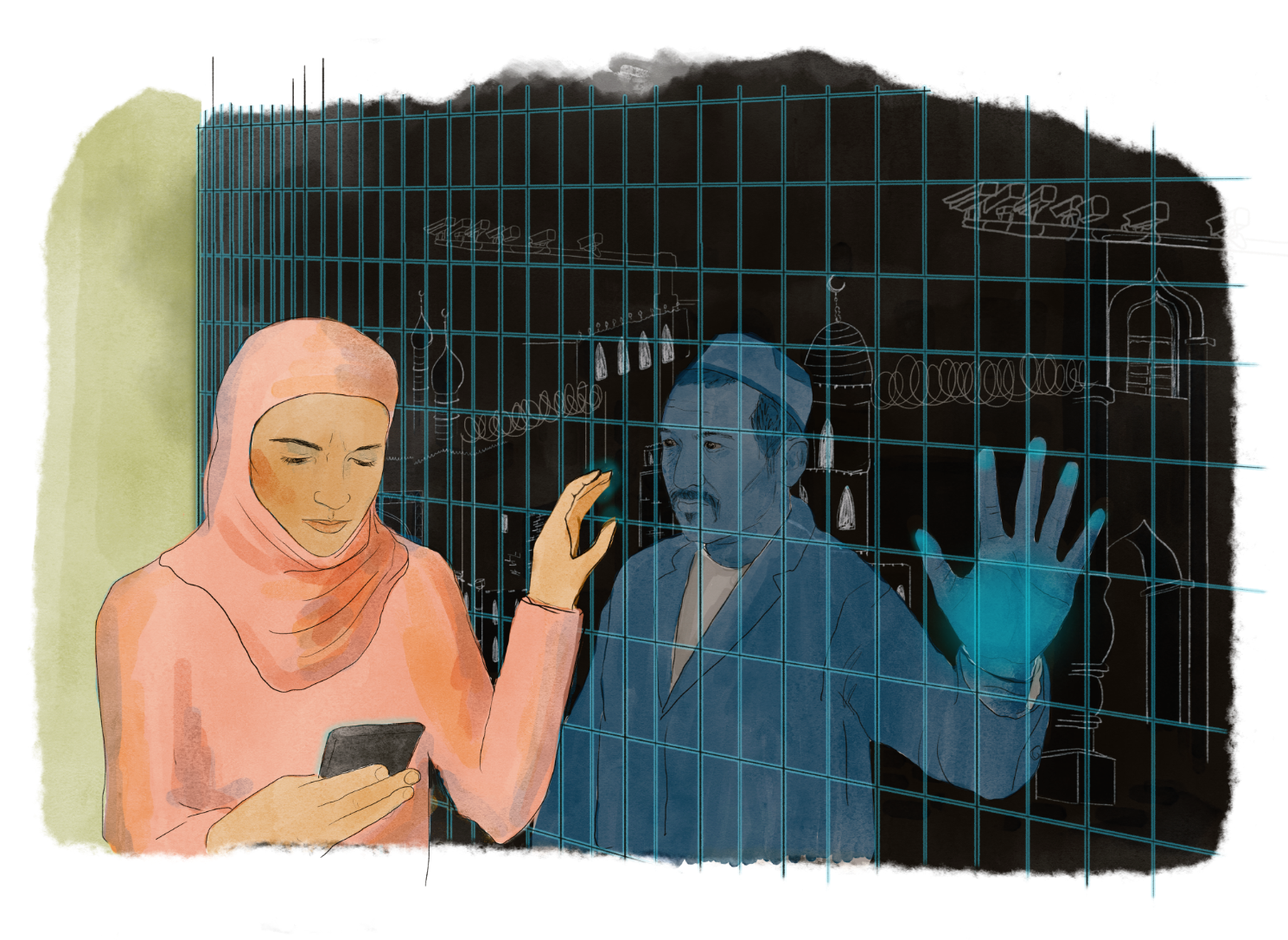
The Uyghur women fighting China’s surveillance state
To view this project on the Coda Story website, click here.
To continue reading the full text on the European Press Prize website, see below:
China is waging a digital war on its Muslim minorities. Xinjiang has become a suffocating information vacuum. But in a small neighborhood in Istanbul, a digital resistance has begun.
Xinjiang, northwest China, is in a state of surveillance lockdown. One million ethnic Uyghurs are now in concentration camps. Every message, word and movement is monitored for its extremist potential. But in Istanbul, 3000 miles away, a community of Uyghur women who have escaped a life of repression are fighting back – via smartphone.
Living outside the Information Vacuum
Nurjamal Atawula remembers the first time she got a smartphone. It was 2011, and she was living in Hotan, an oasis town in Xinjiang, northwest China. She loved to take pictures of her children and exchange strings of emoji with her husband while he was out. In 2013, Atawula downloaded WeChat, the Chinese social messaging app. Not long after, rumors circulated among her friends: the government could track your location through your phone. At first, she didn’t believe them.
In early 2016, police began making routine checks on Atawula’s home. Her husband was regularly called to the police station. The police informed him they were suspicious of his WeChat activity – he regularly spoke to friends in Turkey, which they viewed as potentially extremist behaviour. Atawula’s children began to cower in fear at the sight of a police officer.
The family decided to move to Turkey to escape the oppressive surveillance. Atawula’s husband, worried for her safety if she was also arrested, decided to send her ahead while he stayed in Xinjiang and waited for the children’s passports.
“The day I left, my husband was arrested,” Atawula said. When she arrived in Turkey in June 2016, her phone stopped working – and by the time she had it repaired, all her friends and relatives had deleted her from their WeChat accounts. She was alone in Istanbul and her digital connection with life in Xinjiang was over. Apart from a snatched Skype call with her mother for 11 and a half minutes at the end of December 2016, communication with her relatives has been completely cut. “Sometimes I feel like the days I was with my family are just my dreams, as if I have been lonely all my life – ever since I was born,” she said.
Atawula, 30, now lives alone in Zeytinburnu, a working-class neighborhood in Istanbul. It’s home to Turkey’s largest population of Uyghurs, the mostly Muslim ethnic minority native to Xinjiang, a vast, resource-rich land of deserts and mountains along China’s ancient Silk Road trade route.
Atawula is one of around 34,000 Uyghurs in Turkey. She is unable to contact any of her relatives – via phone, WeChat or any other app. “I feel very sad when I see other people video chatting with their families,” she says. “I think, why can’t we even hear the voice of our children?”.
For Uyghurs in Xinjiang, any kind of contact from a foreign phone number, though not officially illegal, is seen as suspicious, potentially extremist behaviour, and can mean instant arrest. Most Uyghurs in Turkey have been deleted by their families on social media. And many wouldn’t dare try to make contact, for fear Chinese authorities would punish their relatives. It’s just one of the ways Xi Jinping’s government maintains a tightly controlled net of surveillance over the Uyghurs in China, and it has a ripple effect on Uyghurs living all over the world.
Zeytinburnu, the Istanbul suburb where Atawula lives, lies behind the city’s winding expressways, and is dotted with restaurants and cafes serving Uyghur cuisine: wide, slippery noodles, lamb kebabs and green tea. The Uyghur separatist flag – a light blue version of the Turkish flag – is a common sight. It’s a banned image in China, representing East Turkestan: the name for Xinjiang despised by the Chinese government that almost all Uyghurs here give to their homeland.
Xinjiang – meaning “new frontier” in Chinese – was brought under the Communist Party of China’s control in 1949. During the latter half of the twentieth century, Uyghur independence was a threat that loomed over China’s Party agenda. The government tried to stamp out separatism and “assimilate” the Uyghurs by encouraging mass migration of Han Chinese, China’s dominant ethnic group, to Xinjiang.
During the nineties, riots erupted between Uyghurs and Chinese police. In a white paper published in March, the Chinese government defined the riots as “inhuman, anti-social and barbaric acts” perpetrated by separatist groups. Amnesty International, meanwhile, described the 1997 protests in Gulja, Xinjiang, as a peaceful demonstration turned massacre, quoting exiled Uyghur activist Rebiya Kadeer. “I have never seen such viciousness in my life,” she said. “Chinese soldiers were bludgeoning the demonstrators.”
After 9/11, the Chinese government appeared to mimic George Bush’s war on terror by targeting separatist groups in Xinjiang. In 2009, bloody ethnic riots broke out between Uyghurs and Han Chinese in Urumqi, the Xinjiang capital. It became known as “China’s 9/11.” Police put the city on lockdown, enforcing an internet blackout and cutting cellphone service. It was the beginning of a new policy to control the Uyghur population – digitally.
In recent years, China has carried out its crackdown on Islamic extremism via smartphone. In 2011, Chinese IT giant Tencent holdings launched a new app called WeChat – known as “Undidar” in the Uyghur language. It quickly became a vital communication tool across China.
The launch of WeChat was “a moment of huge relief and freedom,” said Aziz Isa, a Uyghur scholar who has studied Uyghur use of WeChat alongside Dr. Rachel Harris at SOAS University of London. “Never before in Uyghur life had we had the opportunity to use social media in this way,” Isa said, describing how Uyghurs across class divides were openly discussing everything from politics to religion to music.
By 2013, around a million Uyghurs were using the app. Harris and Isa observed a steady rise in Islamic content, “most of it apolitical but some of it openly radical and oppositional.” Isa remembers being worried by some of the more nationalist content he saw, though he believes it accounted for less than one percent of all the posts. Most Uyghurs, he said, “didn’t understand the authorities were watching.”
This kind of unrestricted communication on WeChat went on for around a year. But in May 2014, the Chinese government enlisted a taskforce to stamp out “malpractice” on instant messaging apps, in particular “rumors and information leading to violence, terrorism and pornography.” WeChat, alongside its rival apps, were required to let the government monitor the activity of its users.

Miyesser Mijit, whose name has been changed to protect her family, is a Uyghur master’s student in Istanbul who left Xinjiang in 2014, just before the crackdown. During her undergraduate studies in mainland China, she and her Uyghur peers had already learned to use their laptops and phones with caution. They feared they would be expelled from university if they were caught expressing their religion online. Mijit’s brother, who was drafted into the Xinjiang police force in the late 2000s, warned her to watch her language while using technology. “He always told me not to share anything about my religion, and to take care with my words,” Mijit said. She did not take part in the widespread WeChat conversations about religion. If her friends sent her messages about Islam, she would delete them immediately, and performed a factory reset on her phone before coming home to Xinjiang for the university vacation period.
The monitoring of Uyghurs was not limited to their smartphones. Mijit remembers first encountering facial recognition technology the summer of 2013. Her brother came home from the police station carrying a device slightly bigger than a cellphone. He scanned her face and entered her age range as roughly between 20 and 30. The device promptly brought up all her information, including her home address. Her brother warned her this technology would soon be rolled out across Xinjiang. “All your life will be in the record,” he told her.
In May 2014, alongside the WeChat crackdown, China announced a wider “Strike Hard Campaign against Violent Terrorism.” It was a response to several high-profile attacks attributed to Uyghur militants, including a suicide car attack in Tiananmen Square in 2013, and in the spring of 2014, a train station stabbing in Kunming followed by a market bombing in Urumqi. Authorities zeroed in on ethnic Uyghurs, alongside Kazakhs, Kyrgyz and other Turkic minorities in Xinjiang.
After being subjected to daily police checks on her home in Urumqi, Mijit decided to leave Xinjiang for Turkey. When she returned for a vacation in 2015, she saw her brother’s devices every few hundred feet. Her face was scanned the moment she arrived at the city gates. “I got off the bus and everyone was checked one by one,” she said. She would also be scanned every time she entered a supermarket, mall, or hospital.

Amina Abduwayit, 38, a businesswoman from Urumqi who now lives in Zeytinburnu, remembers having her face scanned and inputted into the police database. “It was like a monkey show,” she said. “They would ask you to stare like this and that. They would ask you to laugh, and you laugh, and ask you to glare and you glare.”
Abduwayit was also asked to give DNA and blood samples to the police. This was part of a larger, comprehensive campaign by the Chinese government to build a biometric picture of Xinjiang’s Uyghur population, and help track those deemed non-conformists. “The police station was full of Uyghurs,” Abduwayit says. “All of them were there to give blood samples.”
Finally, Abduwayit was made to give a voice sample to the police. “They gave me a newspaper to read aloud for one minute. It was a story about a traffic accident, and I had to read it three times. They thought I was faking a low voice.”
Chinese artificial intelligence giant iFlytek claims a 70 percent share of China’s speech recognition industry, and has spearheaded development in voice recognition software across Xinjiang. In August 2017, Human Rights Watch found information indicating iFlytek supplied voiceprint technology to police bureaus in Xinjiang province. iFlytek opened an office in Silicon Valley in 2017, and remains open about working “under the guidance of the Ministry of Public Security” to provide “a new experience for public safety and forensic identification,” according to the Chinese version of its website.
Human Rights Watch also believes the company has been piloting a system in collaboration with the Chinese Ministry of Public Security to monitor telephone conversations. “Many party and state leaders including Xi Jinping have inspected and praised the company’s innovative work,” iFlytek’s website reads.
Halmurat Harri, a Finland-based Uyghur activist, visited the city of Turpan in 2016 and was shocked by the psychological impact of near-constant police checks. “You feel like you are under water,” he says. “You cannot breathe. Every breath you take, you’re careful.” He remembers driving out to the desert with a friend, who told him he wanted to watch the sunset. They locked their cellphones in the car and walked away. “My friend said, “tell me what’s happening outside. Do foreign countries know about the Uyghur oppression?” We talked for a couple of hours. He wanted to stay there all night.”
Sometimes, a blackout in communication would be preceded by a frantic series of messages parroting CPC propaganda.
In order to transform Xinjiang into one of the most tightly controlled surveillance states in the world, a vast, grid-like security network had to be created. Over 160,000 cameras were installed in the city of Urumqi by 2016, according to China security and surveillance experts Adrian Zenz and James Leibold.
In order to transform Xinjiang into one of the most tightly controlled surveillance states in the world, a vast, grid-like security network had to be created. Over 160,000 cameras were installed in the city of Urumqi by 2016, according to China security and surveillance experts Adrian Zenz and James Leibold.
In the year following Chen Quanguo’s 2016 appointment as Regional Party secretary, more than 100,000 security-related positions were advertised, while security spending leapt by 92 percent – to a staggering $8.6 billion. It’s part of a wider story of huge domestic security investment across the whole of China, which hit a record $197 billion in 2017. Around 173 million cameras now watch China’s citizens. In the imminent future, the government has laid out plans to achieve 100 percent video coverage of “key public areas”.
“They’d speak in code—if someone was jailed in the camps, they would say they’d been ‘admitted to hospital.'”
For Uyghurs, “the employment situation in Xinjiang is difficult and limited,” said Zenz. A lot of the good jobs require fluent Chinese skills – which many Uyghurs don’t have. Joining the police force is one of the only viable opportunities offered to Uyghurs, who are then tasked with monitoring their own people.
The growth of China’s digital gulags
In August 2018, a United Nations human rights panel said it believed one million Uyghurs were being held in what amounts to a “massive internment camp shrouded in secrecy.” At first, China denied the existence of the camps entirely. But then, in October 2018, the government announced it had launched “a vocational education and training program” and passed a law legitimizing what they termed “training centers.”
In a September 2018 report, Human Rights Watch found human rights violations in Xinjiang to be of a scope and scale not seen since the Cultural Revolution, and that the creation of the camps reflected Beijing’s commitment to “transforming Xinjiang in its own image.”
Gulbahar Jalilova, 54, a Uyghur clothes retailer from Kazakhstan, spent one year, three months and ten days in detention centers and camps in Urumqi. She now lives in Istanbul. According to her arrest warrant in China, issued by the Urumqi Public Security Bureau, she was detained “for her suspicious involvement in terrorist activities in the region.” Police accused her of money laundering via one of her employees in Urumqi, who was also arrested.
“It was like a monkey show. They would ask you to stare like this and that. They would ask you to laugh, and you laugh, and ask you to glare and you glare.”
Jalilova was taken to a kanshousuo, one of the many temporary detention centers in the Xinjiang capital. Over the next 15 months, she was transferred to three different jails and camps in Urumqi. She is precise and exacting in her memory of life in detention: a 10-by-20 foot cell, with up to 50 people sitting in tightly-packed rows, their feet tucked beneath them.
Jalilova, who has struggled with her memory since being released in August 2018, keeps a notebook where she has written down all the names of the women who were in the cell with her. She also notes the reasons for their arrest, which include downloading WhatsApp – a blocked app in China – storing the numbers of prominent Uyghur scholars, and being caught with religious content on their phones.
She remembers how the cell was fitted with cameras on all four sides, with a television mounted above the door. “The leaders in Beijing can see you,” the guards told her. Once a month, Jalilova describes how the guards would play Xi Jinping’s speeches to inmates and make them write letters of remorse. “If you wrote something bad, they would punish you,” Jalilova says. “You could only say ‘Thank you to the Party,’ and ‘I have cleansed myself of this or that,’ and ‘I will be a different person once I am released.’”
She was released in August 2018 and came to Turkey, no longer feeling safe in Kazakhstan, where the government has been accused of deporting Uyghurs back to Xinjiang.
Resilience and resolve
Though no official statistics for the camps exist, the volunteer-run Xinjiang Victims Database has collated more than 3,000 Uyghur, Kazakh and other Muslim minorities’ testimonials for their missing relatives. It shows around 73 percent of those recorded as being in detention are men.
It follows that the majority of people who have escaped Xinjiang for Turkey in recent years are women. Local activists estimate 65 percent of the Uyghur population in Turkey are female, many separated from their husbands.
Some Uyghur women made their clandestine escape from Xinjiang by fleeing overland, through China and Thailand to Malaysia, before flying to Turkey. In Zeytinburnu, they live in a network of shared apartments, making whatever money they can by working undocumented in the local textile industry, as tailors or seamstresses. The women who arrived without their husbands are known among other Uyghurs as “the widows.” Their husbands are trapped in Xinjiang, and they do not know if they are alive, imprisoned, or dead.
Kalbinur Tursun, 35, left Xinjiang in April 2016 with her youngest son Mohamed, the only one of her children who had a passport at the time. She left her other children and husband in Xinjiang. She was pregnant with her seventh child, a daughter called Marziya whom she feared she would be forced to abort, having already had many more children than China’s restrictive family planning policy allows.
When Tursun first arrived in Turkey, she video-called her husband every day over WeChat. Tursun believes Chinese police arrested him on June 13, 2016 – as that was the last time she spoke to him. She was then told by a friend that her husband had been sentenced to ten years in jail as a result of her decision to leave. “I am so afraid my children hate me,” she said.
Turkey is seen as a safer place to go than other Muslim-majority countries, including Pakistan and Saudi Arabia, whose leaders have both recently dismissed the Uyghurs’ plight. Uyghurs have come to Turkey in waves from China since the 1950s. They are not given work permits, and many hope they will eventually find refuge in Europe or the United States.
Though Turkey has traditionally acted as protector for Uyghurs, whom they view as Turkic kin, President Recep Tayyip Erdogan has been reluctant to speak up for the Uyghurs in recent years as trade relations with China have improved. But on February 9 2019, Hami Aksoy, a spokesman for Turkey’s Ministry of Foreign Affairs, broke the diplomatic hush. “It is no longer a secret that more than one million Uyghur Turks incurring arbitrary arrests are subjected to torture and political brainwashing in internment camps and prisons,” Aksoy’s statement read.
Hua Chunying, a spokesperson for China’s foreign ministry, rebuffed these claims two days later, calling the statement “a groundless accusation based on lies.” She highlighted the threat of “three evil forces” – terrorism, extremism and separatism – in China and abroad. As a result of China’s policy in the region, Hua said, Xinjiang residents “now have a stronger sense of security, happiness and fulfillment… the radiant smile on the faces of local people is the most eloquent response to those rumours.” Hua also underlined the terrorist threat Turkey faces as a multi-ethnic country. “If it adopts double standards on counter-terrorism, it will only end up hurting itself as well as others,” she said.
Amina Abduwayit, the businesswoman from Urumqi, was afraid to speak freely when she arrived in Turkey in 2015. For the first two years after she arrived, she did not dare to greet another Uyghur. “Even though I was far away from China, I still lived in fear of their surveillance,” she said. Though she now feels less afraid, she has not opened her WeChat app in a year and a half.
Others tried to use WeChat to contact their families, but the drip-feed of information became steadily slower. In 2016, findings by Citizen Lab at the University of Toronto, a research center that monitors methods of information control, showed how the app was censoring its users by tracking their keyword usage. Among keywords that could flag an account are any words relating to Uyghur issues such as “2009 Urumqi riots,” “2012 Kashgar riots,” and anything to do with Islam.
“When I was writing the letter, I felt I was living in the dark ages.”
In Zeytinburnu, seamstress Tursungul Yusuf, 42, remembers how phone calls and messages from relatives in Xinjiang became increasingly terse as 2017 went on. “When we spoke, they’d keep it brief. They’d say “we’re OK, safe.” They’d speak in code – if someone was jailed in the camps, they would say they’d been “admitted to hospital.” I’d say ‘“understood.” We could not talk freely. My older daughter wrote “I am helpless” on her WeChat status. She then sent me one message, “Assalam”, before deleting me.”
A kind of WeChat code had developed through emoji: a half-fallen rose meant someone had been arrested. A dark moon, they had gone to the camps. A sun emoji – “I am alive.” A flower – “I have been released.”
Messages were becoming more enigmatic by the day. Sometimes, a frantic series of messages parroting CPC propaganda would be followed by a blackout in communication. Washington DC-based Uyghur activist Aydin Anwar recalls that where Uyghurs used to write “inshallah” on social media, they now write “CPC.” On the few occasions she was able to speak with relatives, she said “it sounded like their soul had been taken out of them.” A string of pomegranate images were a common theme: the Party’s symbol of ethnic cohesion, the idea that all minorities and Han Chinese people should live harmoniously alongside one another, “like the seeds of a pomegranate.” By late 2017, most Uyghurs in Turkey had lost contact with their families completely.
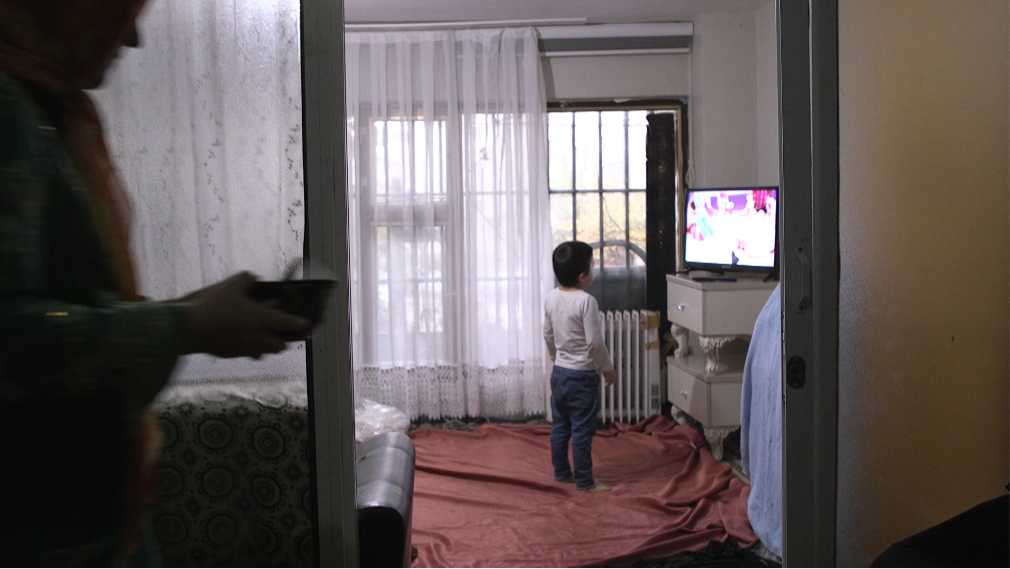
In a book-lined apartment in Zeytinburnu, Abduweli Ayup, a Uyghur activist and poet, coaches Amina Abduwayit, the businesswoman who fled Xinjiang after police took her DNA. They’re filming a video they plan to upload to Facebook. Ayup films her on his smartphone, while she sits at a table and recounts how her home city of Urumqi was a “digital prison.” Abduwayit describes how they were afraid to turn the lights on early in the morning, for fear the police would think they were praying. She then lists all the members of her family whom she believes have been transferred to detention centers. Abuwayit is just one of hundreds of Uyghurs in Turkey – and thousands across the world – who have decided to upload their story to the internet.
Since this time last year, a kind of digital revolution has taken place. The Finland-based Uyghur activist Halmurat Harri believes he was the first person to film a testimonial. “I want freedom for my parents, freedom for Uyghur,” he said in a cell phone video filmed from his bathroom in Helsinki last April, before shaving off his hair in protest. “Then I called people and asked them to make their own testimony videos,” Harri told me.
Videos filmed on smartphones from Uyghur kitchens, living rooms and bedrooms began appearing on YouTube, Facebook and Twitter. Ayup described how at the beginning, people would “cover their faces and were afraid of their voices being recognized,” but as 2018 progressed, people became braver.
Gene Bunin, a scholar based in Central Asia , manages the volunteer-run Xinjiang Victims Database, and has catalogued thousands of testimonials from Uyghurs, Kazakhs, Kyrgyz and other Muslim minorities targeted in Xinjiang.
“There’s evidence the government is willing to make concessions for those whose relatives give video testimonies,” Bunin said. He was told of people being released as little as 24 hours after their relatives posted their testimonies online. “It’s a strong sign the Xinjiang authorities are reacting to these videos,” he said.
China has recently stepped up its defense of practices in Xinjiang, seemingly in response to Western attention. In March, Reuters reported that China would invite European diplomats to visit the region. It followed a statement by Xinjiang governor Shohrat Zakir that the camps were in fact “boarding schools.”
This spring, Harri started a hashtag, #MeTooUyghur, encouraging Uyghurs around the world to demand evidence that their families were alive.
Large WhatsApp news groups, with members from the international Uyghur diaspora, have also been a vital source of solidarity for a community deprived of information.
On December 24, 2018, Kalbinur Tursun – the woman who left five of her children in Xinjiang – was sitting in the ladies’ clothing shop she manages in Zeytinburnu, scrolling through a Uyghur WhatsApp group. She checks it first thing in the morning, last thing at night, and dozens of times throughout the day, as several hundred Uyghur members post near-constant videos and updates on the crisis in Xinjiang.
She tapped on a video of a room full of Uyghur children, playing a game. An off-camera voice shouts “Bizi! Bizi! Bizi!”– Chinese for “Nose! Nose! Nose!” and an excited group of children tap their noses. Tursun was astonished. On the left, she recognized her six-year old-daughter, Aisha. “Her emotion, her laugh… it’s her. It’s like a miracle,” she said. “I see my child so much in my dreams, I never imagined I would see her in real life.” It had been two years since she had last heard her daughter’s voice.
The video appears to come from one of the so-called “Little Angel Schools” in Hotan province, around 300 miles from Tursun’s native Kashgar, where it’s been reported nearly 3,000 Uyghur children are held. Tursun wonders whether her four other children may have been taken even further afield. Speaking to Radio Free Asia, a Communist Party official for the province said the orphanages were patrolled by police to “provide security.”
Unlike almost everyone in the global Uyghur diaspora, Nurjamal Atawula managed to find a way to contact her family after the WeChat blackout. She used one of the oldest means possible: writing a letter. In late 2016, she heard of a woman in Zeytinburnu who regularly traveled back and forth between Turkey and her parents’ village in Xinjiang. She asked the woman to take a letter to her family. The woman agreed. Atawula wrote to her brother and was careful not to include anything border inspection or police might be able to use against him.
“When I was writing the letter, I felt I was living in the dark ages,” Atawula said. She gave it to the woman, along with small presents for her children and money she had saved for her family.
A month later, she got a reply. The Uyghur woman, who she calls “sister”, smuggled a letter from her brother out of China, hidden in a packet of tissues.
Atawula sent a reply with her go-between – but after the third trip, the woman disappeared. Atawula doesn’t know what happened to her. She still writes to her family, but her letters are now kept in a diary, in the hope that one day her children will be able to read them.
It has now been more than two years since Atawula received her brother’s letter. She keeps it carefully folded, still in the tissue it came in. In that time, she has only read the words three times, as if by looking at them too much they will lose their power.
My Beautiful Sister,
How are you? After you left Urumqi we couldn’t contact you, but when we got your letter we were so pleased. I have so many words for you… maybe after we reunite we will be able to say them to one another. You said you miss your children. May Allah give you patience. Mother, me and the relatives all miss you very much. We have so many hopes for you. Please be strong and don’t worry about the children.
Reporting: Isobel Cockerell
Illustrations: Natasha Wigoder
“Living hurts”: Doom and Gloom on a ‘Dry Day’ in Loyev
On March 1 Loyev region saw the first of eight ‘Dry Days’ planned for 2019.

Photo: Roman Protasevich / Euroradio
The sale of spirits was limited in shops from 00:00 to 24:00. The ban was timed to coincide with the ‘International Day Against Drug Abuse’.
Euroradio correspondent Aleksey Karpeka plunged into the epicentre of ‘Dry Days’ to see how the locals of the regional centre were going to cope for a whole day without alcohol.
“All you have to do is drive to the next village – and you can buy all you want”
The first thing you see driving into Loyev are new brick-built three-storey blocks. But as you get further into the town the new buildings disappear and all that remains is the legacy of the Soviet Union, a couple of pre-revolutionary buildings and some private cottages. On the surface, the town gives the impression of being cared for, but a bit empty. The town is situated not so far off from the areas people were evacuated from because of the Chernobyl NPP accident. Loyev was lucky though, the radioactive pollution avoided it.
“They are taking these measures, but at the end of the day they get the opposite result. Because the more you prohibit it, the sweeter the forbidden fruit becomes”, says Ivan, having a smoke by the side of Caterpillar bulldozer. “If it’s one of these ‘Dry Days’, you get more drunks than sober folks. And there’s not even any point in stocking up in advance. All you have to do is drive out of the district to the next village where there’s a shop – and you can buy all you want. They even sell it in the cafes”.
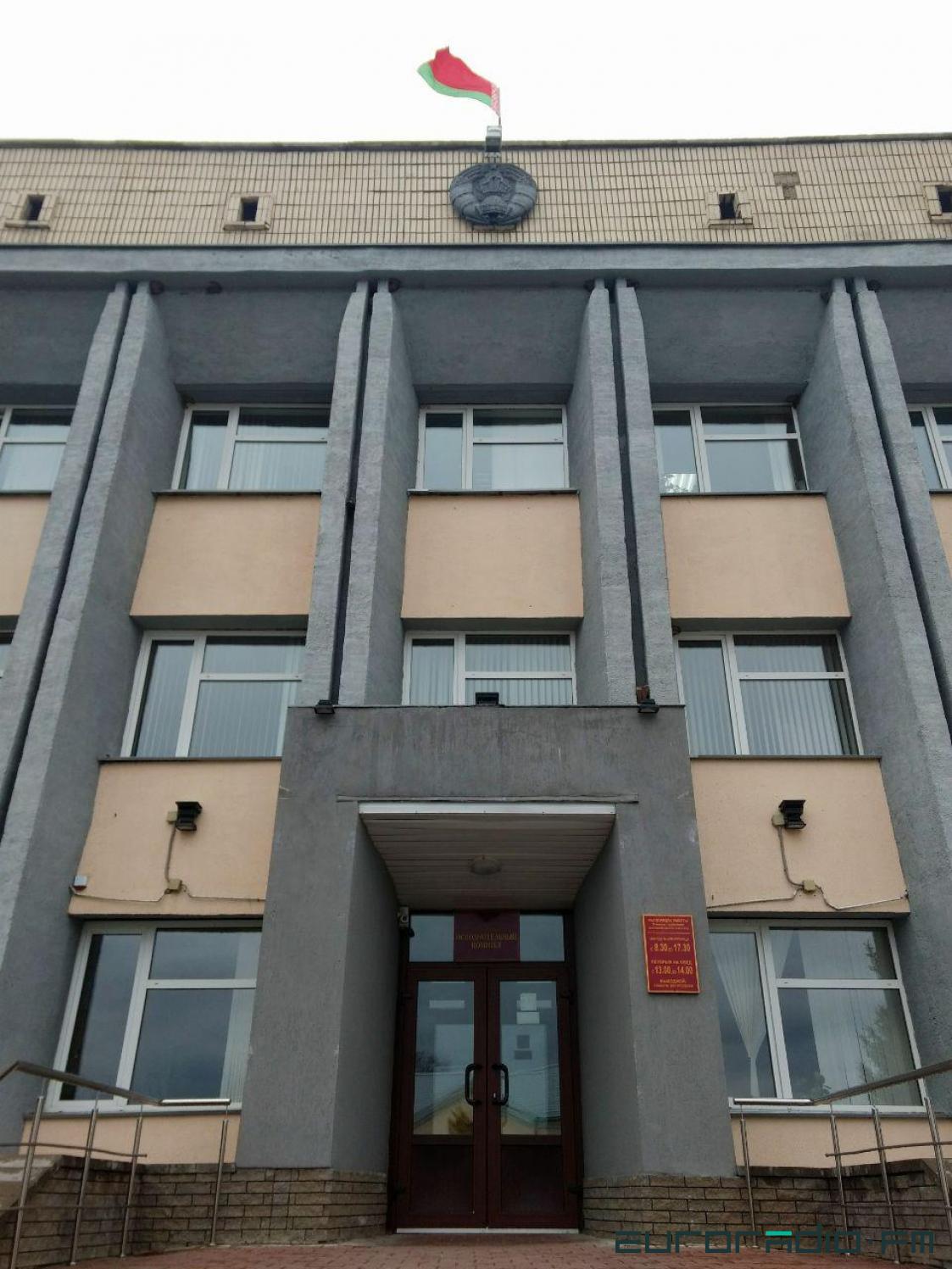
Ivan’s colleagues are assembling a stage in front of the Loyev Regional Executive Committee building on the central square, dragging along flooring and hanging up banners. Tomorrow is Shrovetide. The Dnieper embankment is the traditional place for celebrating it.
According to the WHO, Belarus is one of the stablest top drinking countries of the world. From 2008 to 2014 it even came in at a first place. The Ministry of the Interior on numerous occasions brought up the question of banning the sale of alcohol at night. In 2018 there was yet another attempt to carry out an “experiment” in Minsk and a number of regional towns. But then Alexander Lukashenko demanded that the limitation be abolished; in the end, it lasted less than two days. The night-time boozers were saved.
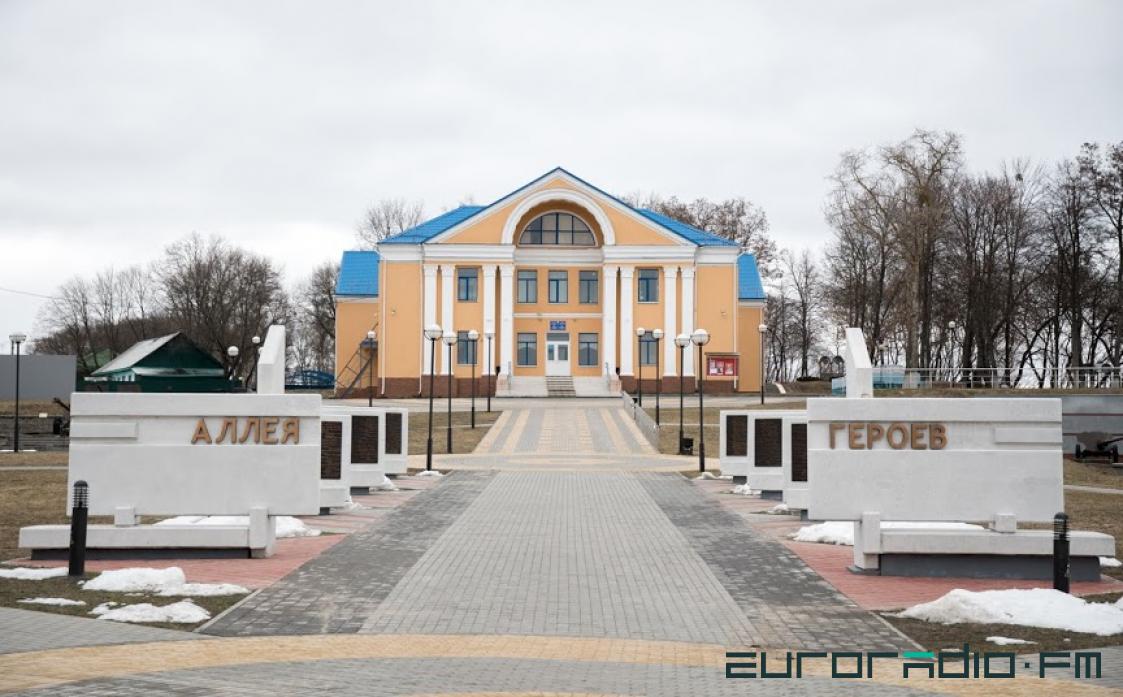
Loyev is a smallish town in the Banks of the Dnieper right opposite the border with Ukraine. Population 6,500. In 2005 they marked 500 years since the first mention of Loyev in the chronicles. 14 years later the stage in the building belonging to the department for educational outreach is still decorated with the banner in honour of the 500 years anniversary.
They light heaving great bonfires of logs on the sandy riverbank. People will come and eat pancakes and drink spirits. The cold spring wind will kindle the flames. The damp heavy sand will stick to your soles and preserve your footprint. That’s all for tomorrow though. But today it’s – ‘Dry Day’.
“The former chief of police was a nasty piece of work, he didn’t even let us have a drink on holidays”
“I’m not drinking today, I have to work again tomorrow” Ivan continues. “But tomorrow will be Shrovetide, so we’ll be able to drink as per normal. Before, though, you couldn’t even celebrate the holiday properly. We used to have a police chief – Vladimir Bukhavtsov was his name – he didn’t even allow drinking on holidays. A nasty piece of work, he were”.

Former Chief of the Loyev ROVD [District Department of the Interior – Trans.] Vladimir Bukhavtsov, was a well-known figure. A zealot when it came to fighting drunkenness. He would drive around town himself with his police officers, patrolling the streets. There was even an article about him on the Bielorus Ministry of Interior website under the title “Lieutenant-Colonel ‘Good Evening’”.
“The main part of crimes committed were thefts. And the principal contingent were the unemployed and chronically drunk. People drink from idleness. They don’t want to work for a firm or for themselves. At Shrovetide they were outraged more than anything else that the police was stopping them drinking on the square. They complain that the drink there is dear. Why drink at all then if it’s dear? Order some tea and have a chat with people”, said Bukhavtsov about the Loyevites who were unhappy with him and the complicated arrangements to do with drinking. Then, there was the case of the patrol stopping a tipsy pensioner in the street and giving him a fine.
Nowadays Vladimir Bukhavtsov is no longer the Chief of the Loyev ROVD – he has been transferred to Chechersky district in the same capacity. We can only speculate as to whether the transfer was for his merits or his failings.
Over the last year 36 out of the 122 recorded crimes – a little over a quarter – were committed in a state of alcoholic inebriation. In terms of statistics for Gomel oblast’, this is an average figure.
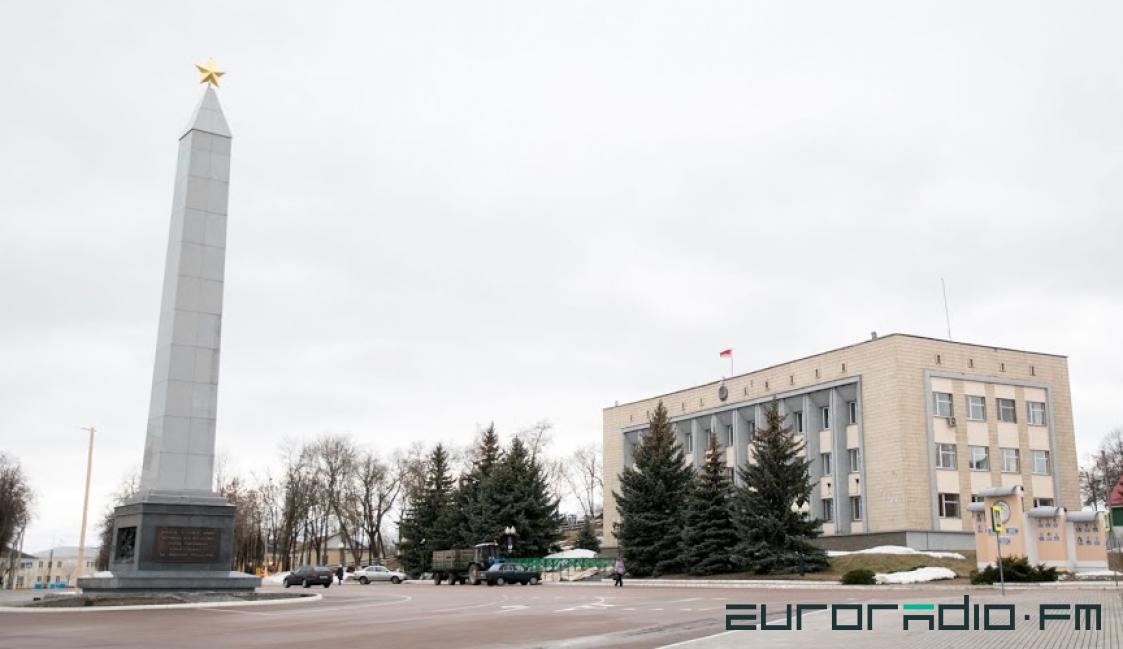
“There are a lot of people who drink, it’s especially the young who are becoming drunkards”
The place where they meet is by the little shop and Canteen No.1 in Loyev. That’s where the inhabitants discuss the latest news. Alexander Lukashenko’s “Serious Talk”, for example. I go up to three women talking amongst themselves and introduce myself. The grey-haired harpies abruptly fall silent and then start angrily bawling at me:
“You’ll go and write something bad about us again. You are the opposition! We know you! Your journalist asked the President questions [the journalist Zmiter Lukashuk put some serious questions to Lukashenko during the “Serious Talk” broadcast]. We’re not going to tell you anything. We don’t drink. But a drunk will always find a drink”.
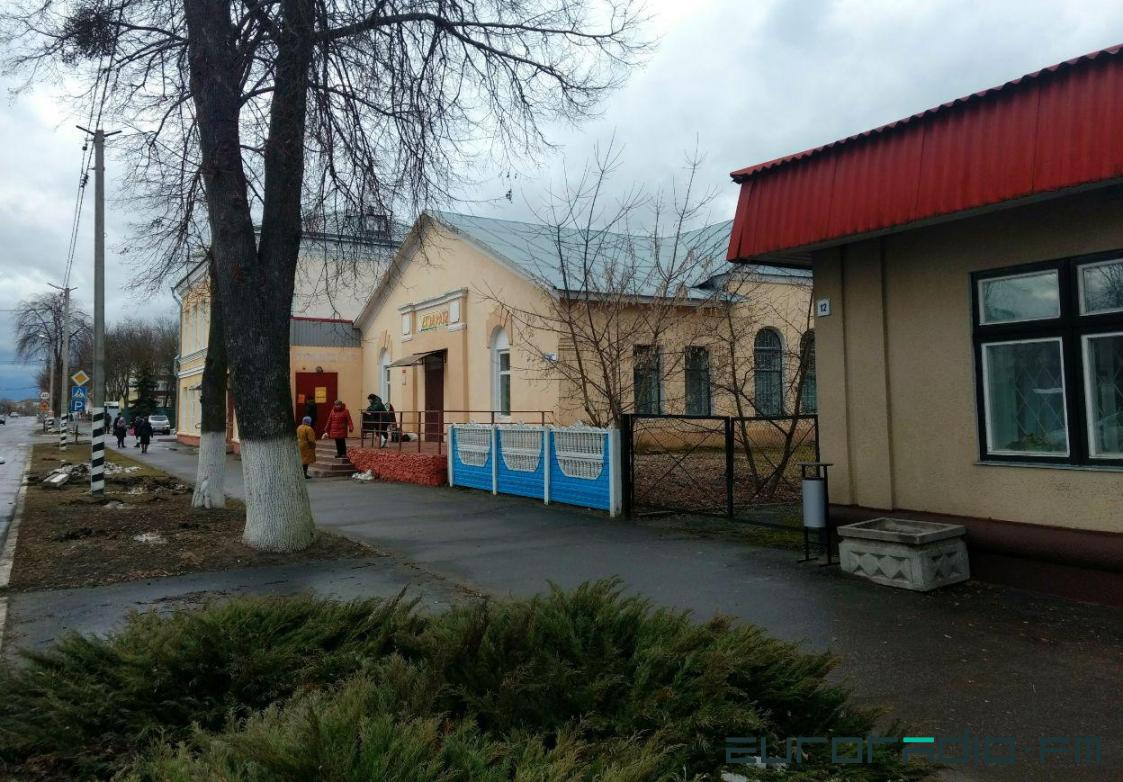
Windswept beige coloured blocks of flats, the windows on the ground floor broken and boarded up. The general store is under repair. Six men, blue with the cold, are raking and sweeping opposite the Belpochta building, mixing the wet earth with snow. The streets are swept clean. Nice and tidy Belarus.
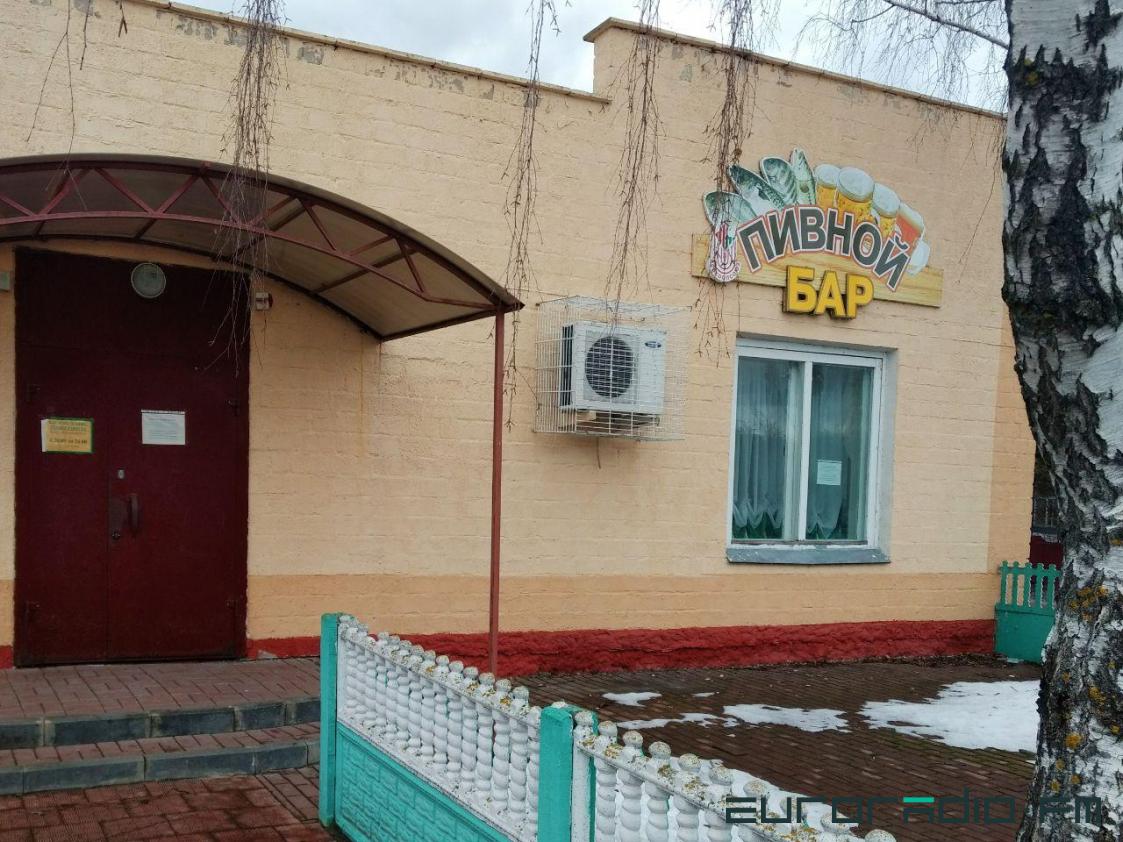
The local market is empty and there is a biting wind. The stalls are empty, chrome taps for bathrooms hanging on hooks. Next door there’s the “Spatkanne” bar, but it’s closed. Working hours: from 8pm -12pm. The bar can be hired for a works party, weddings and other events. The birch trees nearby lash their branches against their trunks.
“These bans on drinking are a good thing. There’s a lot of drinking going on, especially young people. It’s terrible how many there are drinking and smoking. Measures should be brought in. Even harsh ones”, pensioner Viktoriya, a former teacher, opines. “No doubt about it. Especially the young people. They’re ruining themselves with drink. I recently saw a woman with a pushchair with a bottle and a cigarette in her hands. What more can we do about it? Maybe what we need is the kind of ban that will change things. Maybe one day people will sober up?”
“There’s always a steady flow of clients here for liqueurs”
Standing around the pharmacy there is a lone man in a green padded jacket sucking on a bottle of Boyaryshnik, just as if he were nursing from his mother’s breast; he finishes his vodka and then vanishes into the cold air. Strewn over the ground are soft, opened packs of ‘Cordial’. Must be nervous people with cardiac problems that left them there. The pharmacy only sells a maximum of two phials per person.
“There’s no special rush today. Business as normal. And the same faces as usual. There’s a continual demand for nastoiki [infusions]. A knock-down price – 80 kopecks per phial”.
Two little bottles of “Boyaryshnik” contains 70% pure alcohol and is the equivalent of 200 grams of vodka. Not a bad start for the “Dry Day”.

The shops in Loyev are empty and sad-looking. There’s no “ogonyok” warming your hands. What’s interesting though is that even in small shops the shelves are glutted with alcohol. Only two kinds of juice, but when it comes to spirits, there’s something for everyone: Limoncello, Starka, Krupnik and an ocean of various liqueurs and syrups. Alcohol is profitable. People drink when they feel good but the same goes for when they’re down. People drink whatever the circs.
The town is frozen by the spring wind. The thin snow cuts into your face like sand. Everyone one is drinking as per normal. Everyone has some.
The ‘Neptune’ shop with its white-haired god, naked down to the waist. Inside there’s a constant smell of dry-cured and smoked fish. The saleswoman in a blue apron is embarrassed to say that yesterday, that is on the eve of the “Dry Day”, people were buying “as normal”.
“I didn’t notice any special rush. They bought everything: brandy, vodka, wine, berry liqueurs, infusions. Each according to his taste, and what they could afford. People drink a lot. But show me the place where they don’t”.

There’s a problem with the shops in Loyev. “Rodny kut” has closed down, its empty shelves are scary. They promised to open “Evro-opt” soon and even took on staff. But so far there are only privateers there.
“It’s all a load of b*lls, one day – that’s no time at all”
In the provinces there’s no money. But a rouble or two will always be found “for a booze up”. there’s no work and the young are leaving. The old stay behind and struggle on – where would they go anyway?
An elderly man in a grey jacket, angry and sober, hobbles along past the shops. There’s a notice on all the doors saying that today alcohol is not sold. He answers questions angrily, the wind breaking up his speech. His nose and eyes trickle.
It’s all a load of b*lls, one day is no time at all. I can’t buy drink today. And the bar’s expensive. But do you think that’s going to stop me? I’ll get myself invited somewhere”.
The dark, bare trees are swollen from the frost and damp. Wind-swept, they stand there silent, swaying the stumps of their branches and look forlornly at the sky. In towns like these the loneliness of humans is akin to the loneliness of the tree that the bird has just forsaken.

“It hurts when I drink. It hurts when I smoke. Living hurts”
In the district consumer society canteen the radio is relaying a speech by Lukashenko – that “Serious Talk” that lasted 7 hours 25 minutes:
“…even in terms of people’s incomes we’re worried less by Minsk and the oblast centres or even the raion centres (where one way or another we will solve the problems), as by the big towns of 100,000, where heaps of problems have piled up and we supposedly haven’t noticed it. How can these people cope? They need helping. So I decided to set up a project taking Orsha – a typical average town – as a basis…”
Inside they pour drinks – the “Dry Day” doesn’t affect canteens. The clients drink. It’s a bit like a wake. A man in a grey woollen jumper goes outside for a smoke. His name is Vladimir. He’s hurting.
“You’ve got to understand, Lyuda. It hurts when I drink. It hurts when I smoke. Living hurts”, he tells the canteen girl. Lyuda nods in silence. Vladimir draws on his cigarette.
He knows about the “Dry Day” – and sees no sense in it.
“I’ve been drinking for two days now, but I’ve got a reason. My mother died. People in Loyev drink, they drink heavily. The young people are leaving for Russia. And the old folks here are just surviving. These bans on alcohol are rubbish. But drunkenness and alcohol is a scourge. We need to try something different, we have to motivate people not to drink”.
The majority of the inhabitants of Loyev don’t even notice the “Dry Day”. They’re not interested, they see the notice on the door and walk by. Albeit with a sad look. They’re serving it in bars and for those who can’t afford it, there’s always the consolation: “A thirsty man will always find drink”.
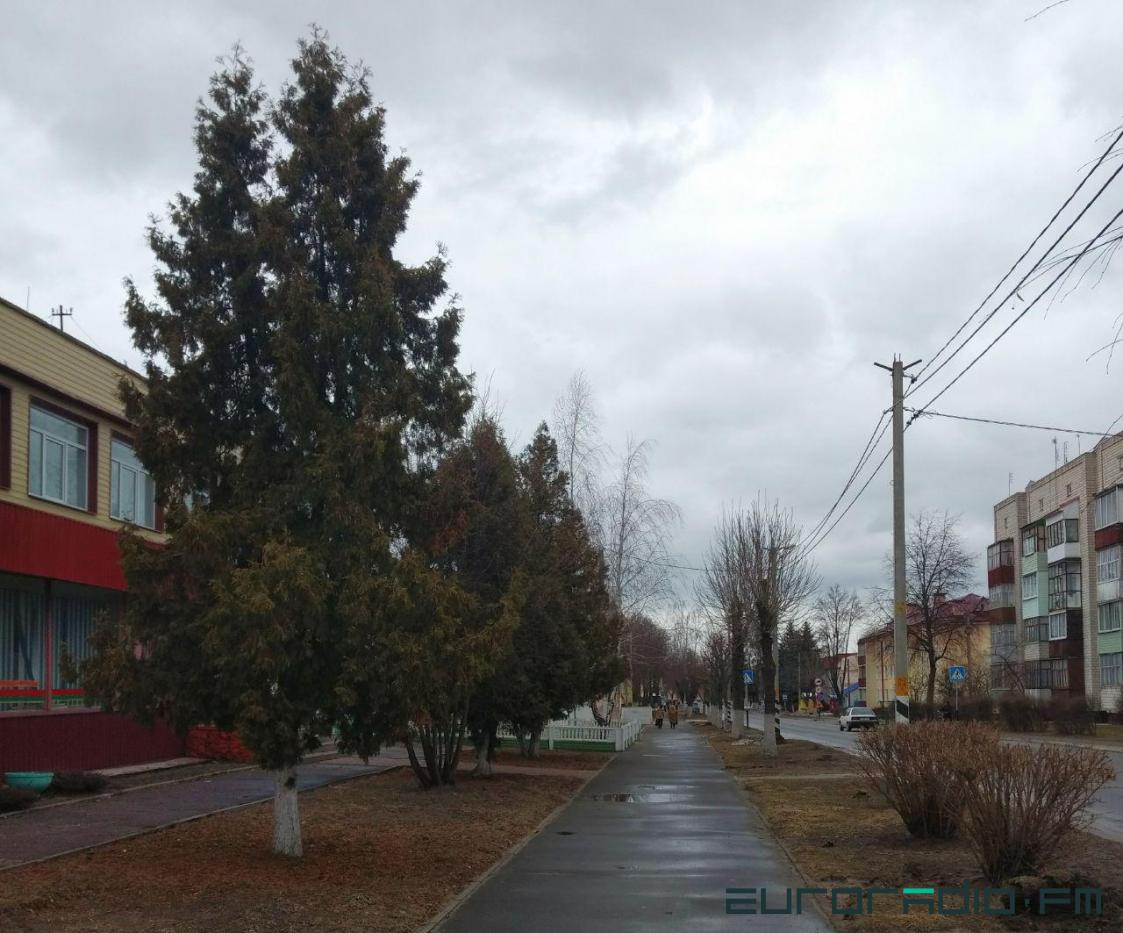
The workers are finishing the stage. Today is the official “Dry Day”, tomorrow the official start of spring. Folk dancers will be performing and local officials will be giving speeches on the stage. And just across the road, next to the Avenue of Glory to Fallen Heroes, the locals will be feasting on hot pancakes washed down by a ‘miniature’ bottle of vodka.
Shrovetide is older than the government represented by these officials. Older than their bans. Older than the Soviet system that reared them. Shrovetide, bonfires on the banks of the Dnieper, pancakes and setting fire to the symbols of winter – all of that is much older than even Loyev itself.
The gloomy banks of the Dnieper on the first day of March. The ice on the river hasn’t yet completely melted. Tomorrow, the bonfires, flaming skywards, sparks flying and hissing with tar, will accomplish their fate. And paganness along with drunken stupor will triumph. And in the hazy white sun or under the moonless dark sky jollity blurred by alcohol will seize hold of all and sundry.
They’ll be frying pancakes, the bonfires will burning away and the vodka-glasses will be filled. And winter will come to an end.