
If We Were Roma, We Would Not Come Back from Britain
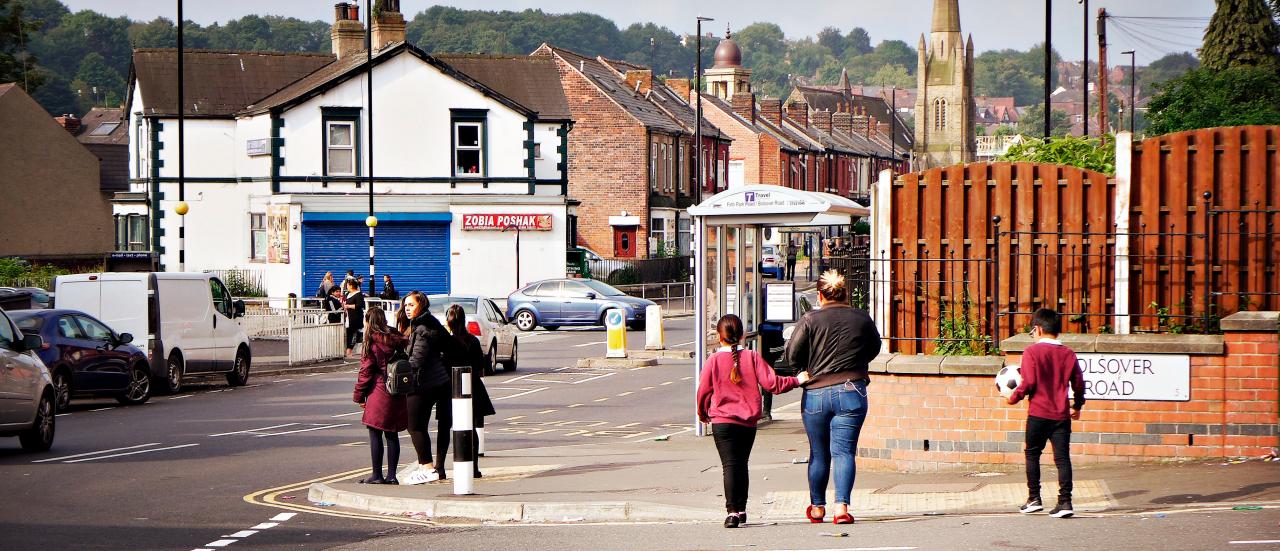
Photo by Filip Olšovský
There is a brown brick block in the front, such a typical scenery for the whole of England. In the background there is a concrete chimney, a distinguishing mark of Tinsley, a district in the city of Sheffield. In one of these houses, an important day is just starting to take shape. It is the first day in a new kindergarten for 4-year-old Galina. Her parents dressed her in her most beautiful coat and the whole day is going to be filmed by Slovak documentarian Hannah Skrinar
At first, Galina is nervous and hides behind every corner. However, after few hours she plucks up her courage and during the time a song about a small rabbit is being sung, she is already one of the liveliest children in the class. Despite the fact that even much more experienced English-speakers would have trouble understanding the accent of her teacher. Galina is from the Roma community. At home she speaks almost only Romani and barely understands any Slovak or English. With such language skills, she would not last in the Slovak education system for long. Sooner or later, probably during the first four years of her primary education, she would be sent to a special school. However, here in Britain, in a group full of Pakistani, Bangladeshi and Somalian children her language barrier is of almost no concern to anyone. She does not speak English? We will teach her.
“The school immediately told his parents it would be best if Ondrej’s brother switched to a special school.”
Karol Bobek is in the tenth grade. Next year he will sit an important test, which will influence his future career. In Slovakia, he would not be able to sit such test at all. According to his teachers back in Slovakia, Karol is “stupid”. Yet after he moved to Leicester with his parents, the English school found out that Karol is not stupid. He only has a visual impairment that restrains him from reading small letters and seeing the blackboard. Although the English school is helping him in every way possible, not everything can be set right. Due to a lack of care in Slovakia, Karol is going to lose his sight completely in the next couple of years.
However, you will not see any sadness coming from Karol. On the contrary, he almost constantly smiles and speaks about his future as a businessman – he likes maths. He admits it was tough at the beginning. He did not know a single English word and was sometimes reduced to tears. Later he discovered his father’s dictionary and decided to learn five new English words every day. Now he is able to engage in any conversation within the class.
A huge amount of support for Karol comes from the school. If there is a book with numbers too small for Karol to read, the teachers make them larger or send Karol and his teaching assistant to a library, where “there’s a light under which he puts the book and sees it better”. Today, Karol made a PowerPoint presentation about Spanish footballer Sergio Ramos with such help. Because, one should not forget, Leicester is still a city full of football mania and only a couple of days are left until the World Cup begins. And, as another Slovak Roma boy in the class wittily remarks, Ramos is also a “gypsy” so it’s obvious Karol chose him.
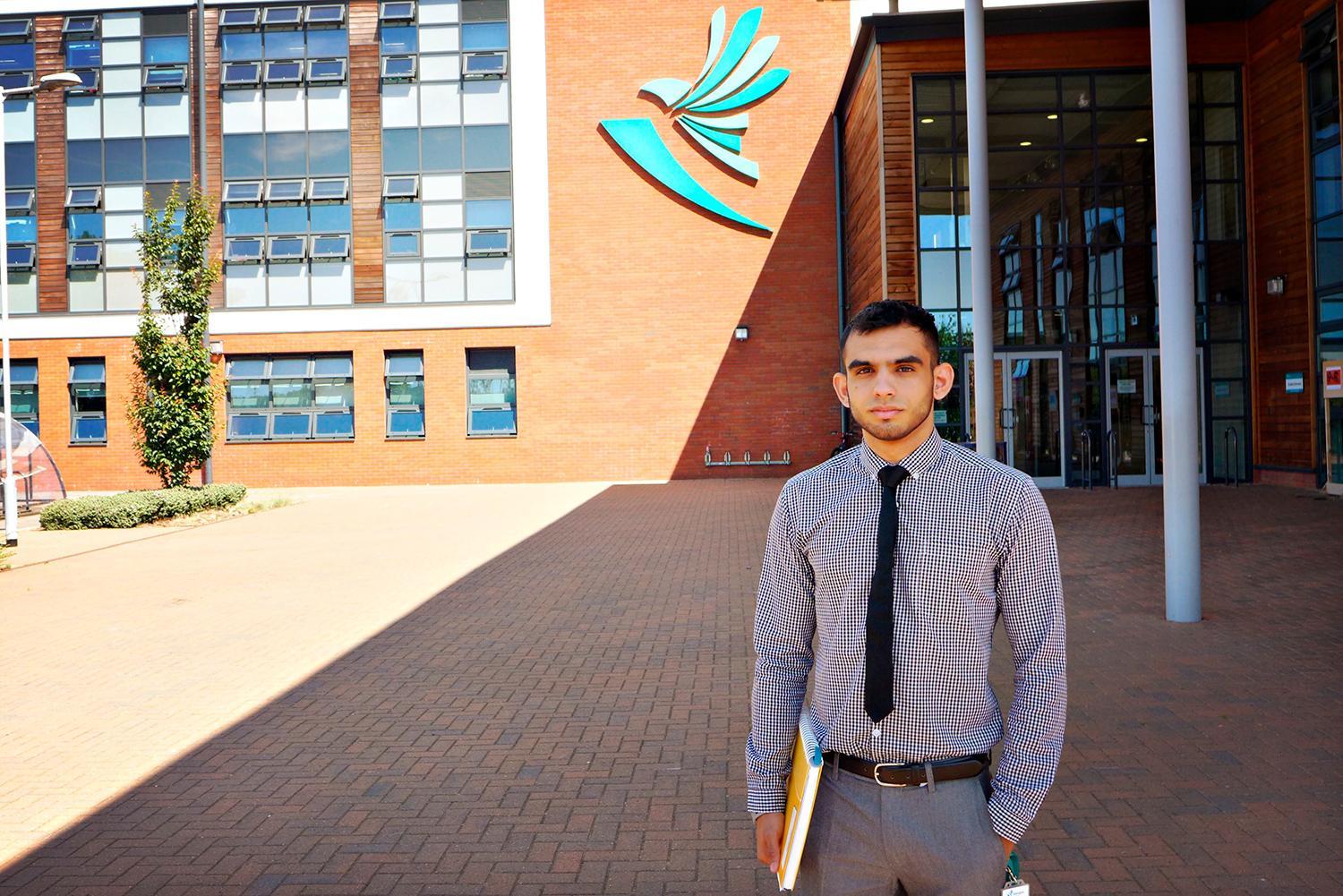
Ondrej Oláh works as a teaching assistant at Babington Academy in Leicester.
Photo by Filip Olšovský
The other Roma child in the class is Ondrej Oláh. In the short collection of stories about Slovak Roma people in English, his story is probably the most emblematic. Ondrej came to England with his parents and siblings when he was eleven. In Slovakia, he attended primary school near Rimavská Sobota. At this school, Ondrej’s brother failed his class. The school immediately told his parents it would be best if Ondrej’s brother switched to a special school. And not only that – his brother Ondrej should go with him. “I wasn’t the best student but at least I knew what I was doing in the school, I spoke Slovak and didn’t have any trouble with learning. It made no sense,” said Ondrej, recalling a situation from eight years ago. At that point Ondrej’s father made a final call: It can’t go on like this. We are moving to England.
Like the majority of others, Ondrej barely spoke any English. It became clear during the entrance exams – he did badly in English but was good in maths. That is why only a couple of months later the school moved him to a group of the best mathematicians where he was also practicing his English. After several years Ondrej became one of the best students and passed the feared GCSE test with nine A grades, one B and one C from French. His school advised him to go to a college and then to a university.
British teachers are surprised how many Slovak students with similar stories to Ondrej’s are arriving at their doors. Organization Equality did a survey among 61 Slovak and Czech students in British schools and came up with shameful results – 85 percent of the children attended special school in their home country. Only four percent of these children were placed in a special school in Britain.
Today, Ondrej is nineteen and guides visitors from Slovakia around his school in Leicester. He translates from English to Slovak, sometimes also to Romani. If needed, he can also translate to Hungarian and French. Furthermore, he works as a teaching assistant and in cooperation with The Council of Europe he is starting a major project focused on inclusive education in Slovakia, Hungary and Czech Republic. And after the summer comes another huge moment for Ondrej – his first year at university. Ondrej is going to study psychology although he still dreams of being a pilot. But that can wait. When he visited Slovakia a couple of weeks ago and walked around his primary school where he was told he had to go to a special school, he realized how far he has already come.
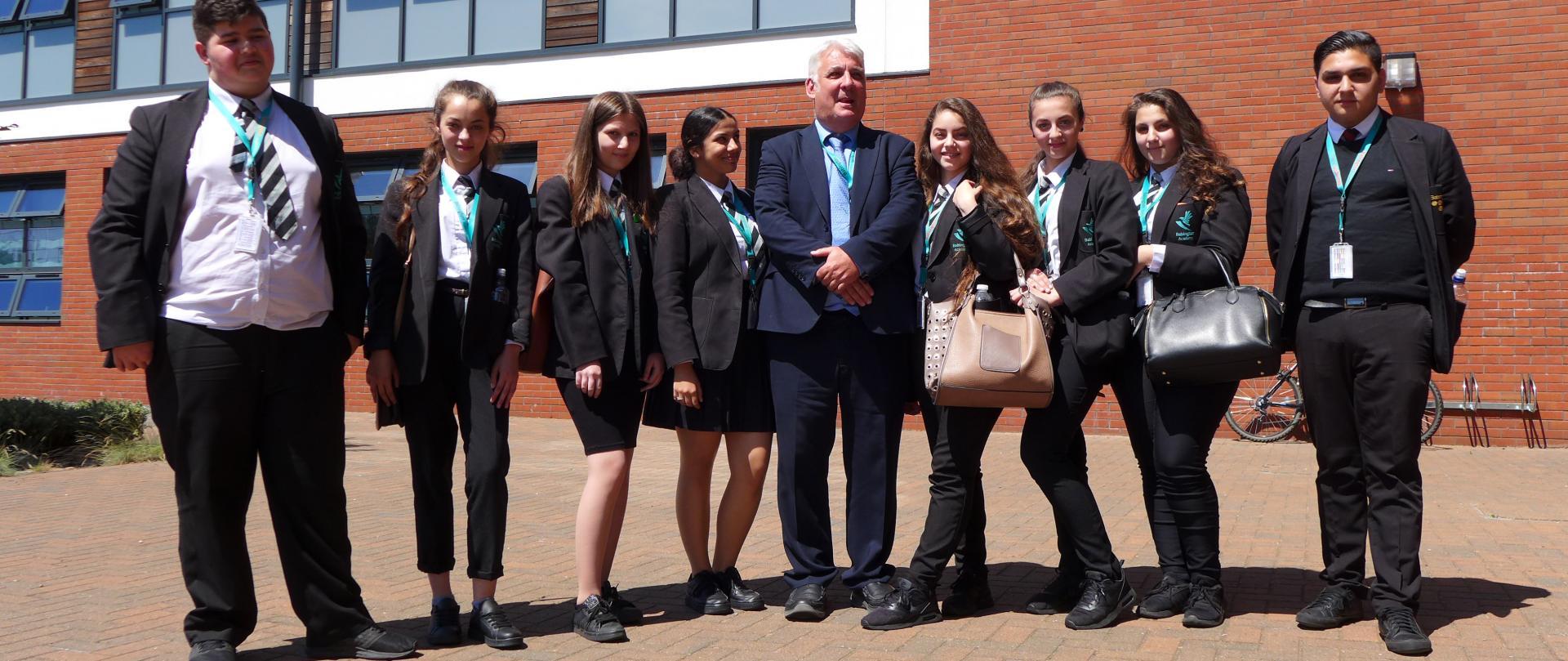
Slovak pupils from Babington Academy together with Mark Penfold.
Photo by Filip Olšovský
Me, My Brother and Then My Cousin
There are thousands of other stories of Slovak Roma children in Britain similar to Galina’s, Karol’s and Ondrej’s. Some of them arrived in England in 2004 when the British labour market opened and the first wave of current Roma migration started to take shape.
A couple of months before this movement happened, Czech sociologist Markéta Hajská conducted research in the Roma community near the Slovak city of Prešov. Based on several rigorous interviews she came to a conclusion that soon turned out to be wrong – there is no sign of Roma people moving to England. Hajská did not find any interest in moving to Britain among the people in this community. On the contrary, she came across a huge language and financial barrier standing in the way of any travel abroad. “We have absolutely underestimated the large amount of spontaneity in Roma migration as well as their ability to react quickly and organize a migration process on the level of family networks,” concludes Hajská in her work published in 2017.
Only couple of months later, after the accession to the European Union in the summer of 2004, the first pioneers decided to overcome the language barrier. Those who were able to find a job and rent a house in Britain paid for travel for their brother or cousin and accommodated them until they found their own house. Such duty was implied for all and therefore it is almost impossible to trace back who was the first brave soul to make their way to England. Everyone has their own answer and the truth becomes a sort of legend. One can only assume the first opportunities to settle down in England came from Roma people that migrated in the 1990’s to countries like Belgium and were able to establish themselves in Britain as well. Or maybe it was those who migrated to Britain as asylum seekers in the 1990’s or even before The Velvet Revolution of 1989.
Miloslav is already in his sixties and has a similar experience. Coming from Bystrany, a small village in eastern Slovakia, he also decided to travel to England in 2004. His aunt had lived there since the early 90’s. At first, he arrived in Peterborough but was not able to find a job there. Later, he came across a Pakistani employer, who was picking up men in Peterborough and driving them to work in a minibus. The city he was driving them to was Sheffield. The city Miloslav and his family later moved to.
Miloslav worked in a local factory for many years – just like many other Slovak Roma scattered around Britain in cities like Sheffield, Leicester, Peterborough, Leeds, Glasgow and Manchester. In some areas a majority of Roma come from Romania, although somewhere their origins trace back to Czechia. In Sheffield – thanks to so-called chain migration – a majority of Roma come from Slovak villages Bystrany and Žehra. The exact amount is unknown but is estimated at 6,000.
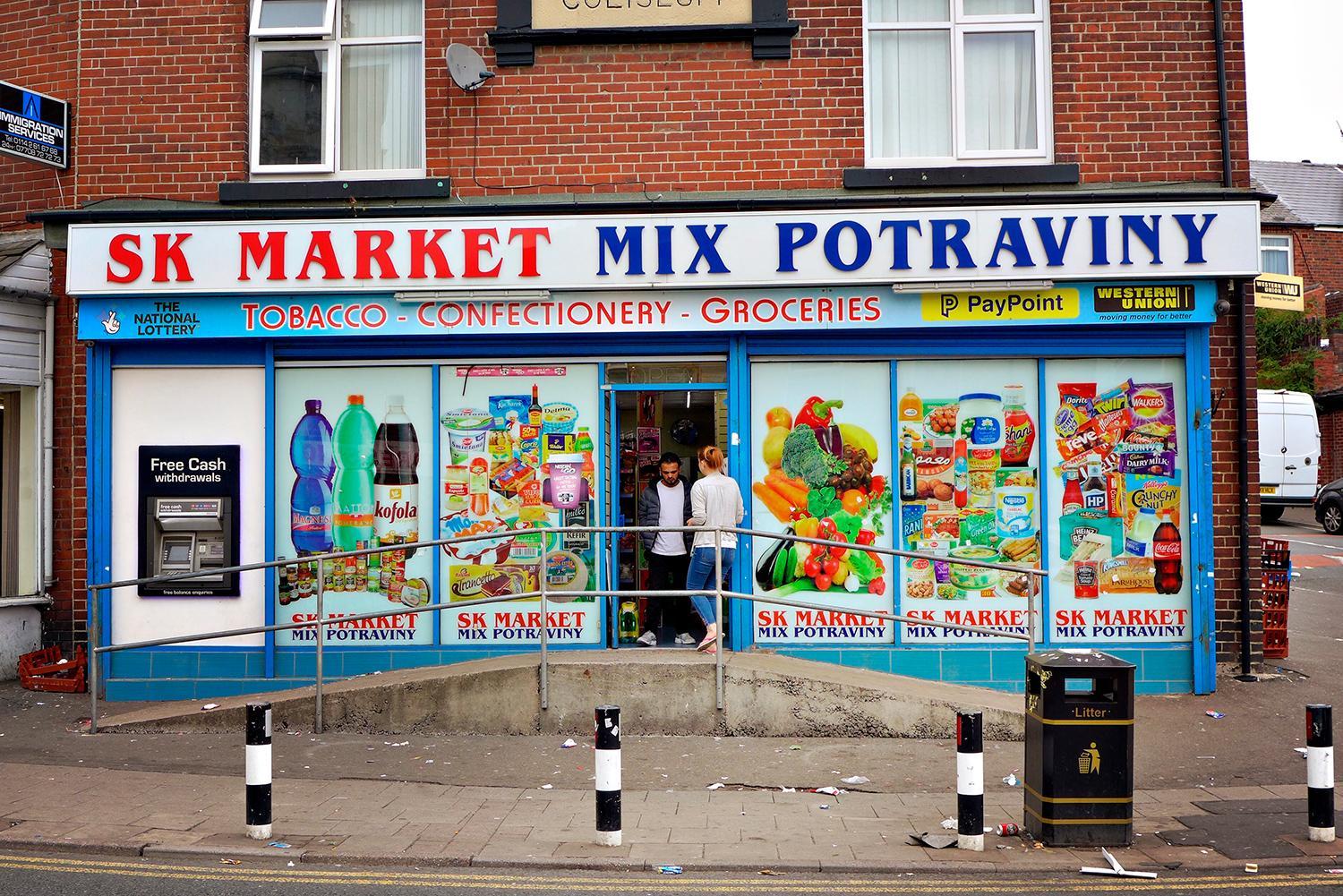
A grocery shop with Slovak products in the heart of Page Hall area in Sheffield.
Photo by Filip Olšovský
After the arrival of Slovak Roma, the British authorities, teachers and doctors, already used to migrants from Africa or Europe, experienced a culture shock. “At first, I thought they were Pakistani or Indian. Later, one school heard they are coming from Eastern Europe so they hired a Polish translator. Because Eastern Europe still means Poland to majority of people in England. You can imagine how wasted the money was,” smiles Mark Payne, a professor at the University of Sheffield who trains future teachers.
It was Mark’s students who first told him about a strange new group of pupils coming to schools in Sheffield. They were not Polish and were different from English Roma. They did not behave like Pakistanis or people from the Caribbean, who migrated to Britain after the Second World War. Payne stresses one important factor – this later wave of migrants was literally slower. People were arriving on boats, in smaller groups and were mainly men who were only later followed by their families. The speed and efficiency of the Slovak Roma chain migration was astonishing, even for the Brits.
The first mediators who connected British services with Roma people were translators, usually coming from Slovakia at the same time. Often, they were pursuing their studies at Sheffield University and were looking for any part-time job. Both communities were therefore given another chance to help each other – this time in a foreign land.
Filipa Donaldson worked as a translator from 2008 when she began her political science studies at Sheffield University. She was there during the initial contact of Slovak Roma with the British system – applying for their National Insurance Number. Filipa was translating during the interviews and when filling in their forms. “The English couldn’t understand them. The Roma people were supposed to specify who brought them to England and what their relationship with this person is. And they always said the same thing – my cousin,” says Filipa. She often observed a situation in which dozens of Slovak Roma came with a short note in hand stating the same permanent address in Sheffield. “The English were immediately worried the Roma are the victims of human trafficking,” describes Filipa.
Two years later, in 2010, Petra Schwarczová came to Sheffield. Working as a translator, she shared the same feelings as Filipa – that the communities on both sides were tapping their foreheads. “We know them and we are used to them standing out on the streets during the evening and talking to each other. The English were frightened by the big men standing outside their windows. They considered it antisocial behaviour,” says Petra.
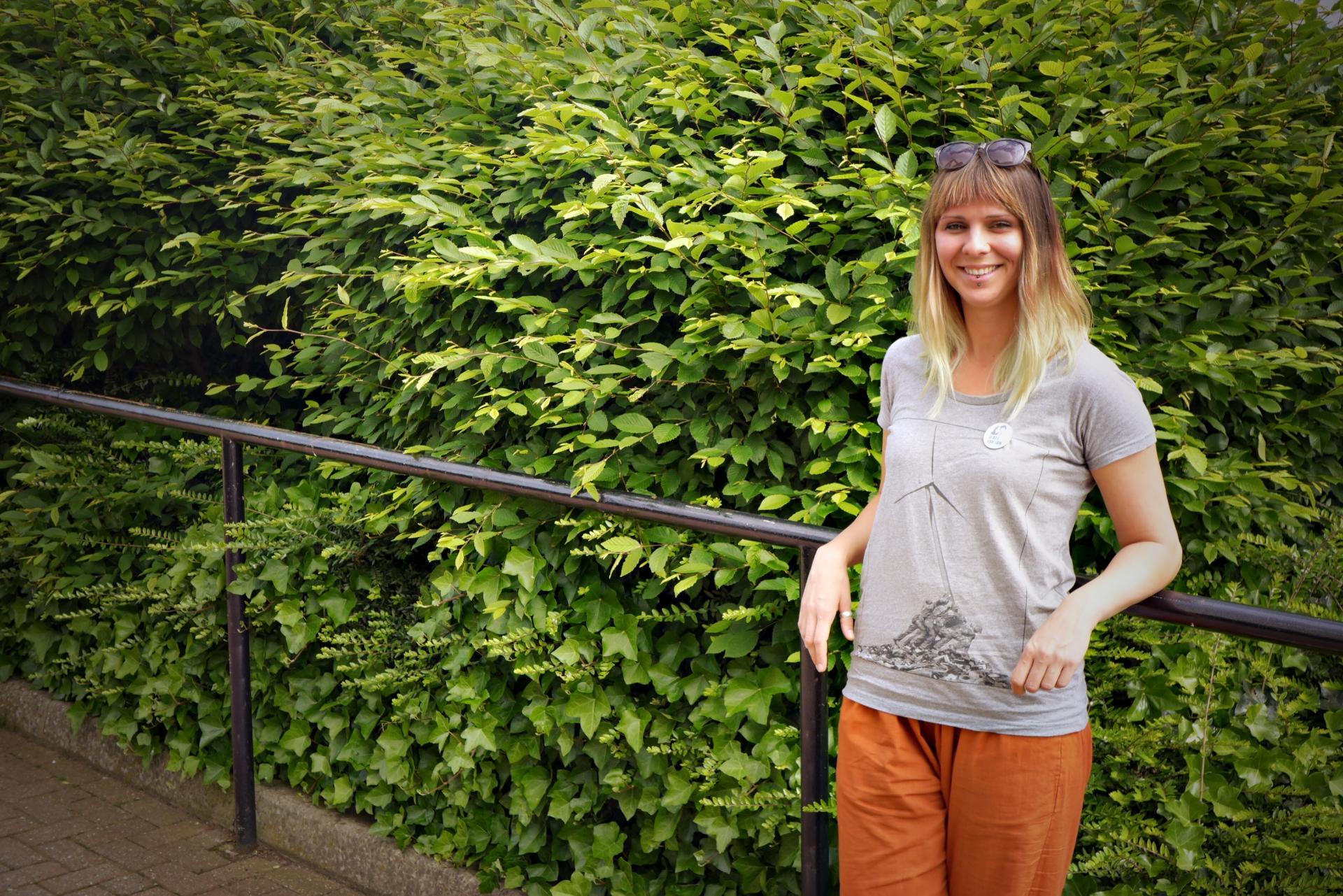
Petra Schwarczová worked as a translator for Slovak Roma community in Sheffield.
Photo by Filip Olšovský
It was this term – antisocial behaviour – that led to an increased number of visits from the city police in Page Hall, the part of Sheffield where a big portion of Slovak Roma settled. Local residents were not used to seeing children running on the streets and playing football on the roads. People were irritated by opened doors, litter on the streets and fast cars driving with loud music on. Locals could not understand why a Roma family does not invite their visitors inside instead of talking to them loudly on the street. The answer to this, as Petra Schwarczová points out, might be the houses. Slovak Roma rented them from Pakistani landlords, who did not care about their properties.
Just as there is no real answer to the question why Slovak Roma picked Sheffield, there is no predominant reason why they chose Page Hall. It is a small neighbourhood in the north of the city, made up of several streets creating a small grid. “Even before the Roma came here, this neighbourhood was not the nicest one. The north has always been poorer. First it was the Pakistanis that forced the English out of here, now it is the Roma forcing out the Pakistanis,” explains Petra.
Since there are almost no white British left in Page Hall, anti-social behaviour became a concern mainly for the Pakistani communities. The clash with such a restrained Muslim culture was even bigger than with the white British. The first years of Slovak Roma in Sheffield were therefore marked by perpetual conflicts such as fights in the streets and schools. “The cultural differences persisted until today. The Muslims visit mosques, don’t go to pubs, don’t drink and their attitude towards women is very different. One of the challenges that sometimes causes problems with Roma is lots of street drinking late into the night. Not necessary aggressive, but it is there and they are loud and noisy,” explains Clive Betts, the MP for Sheffield South East.
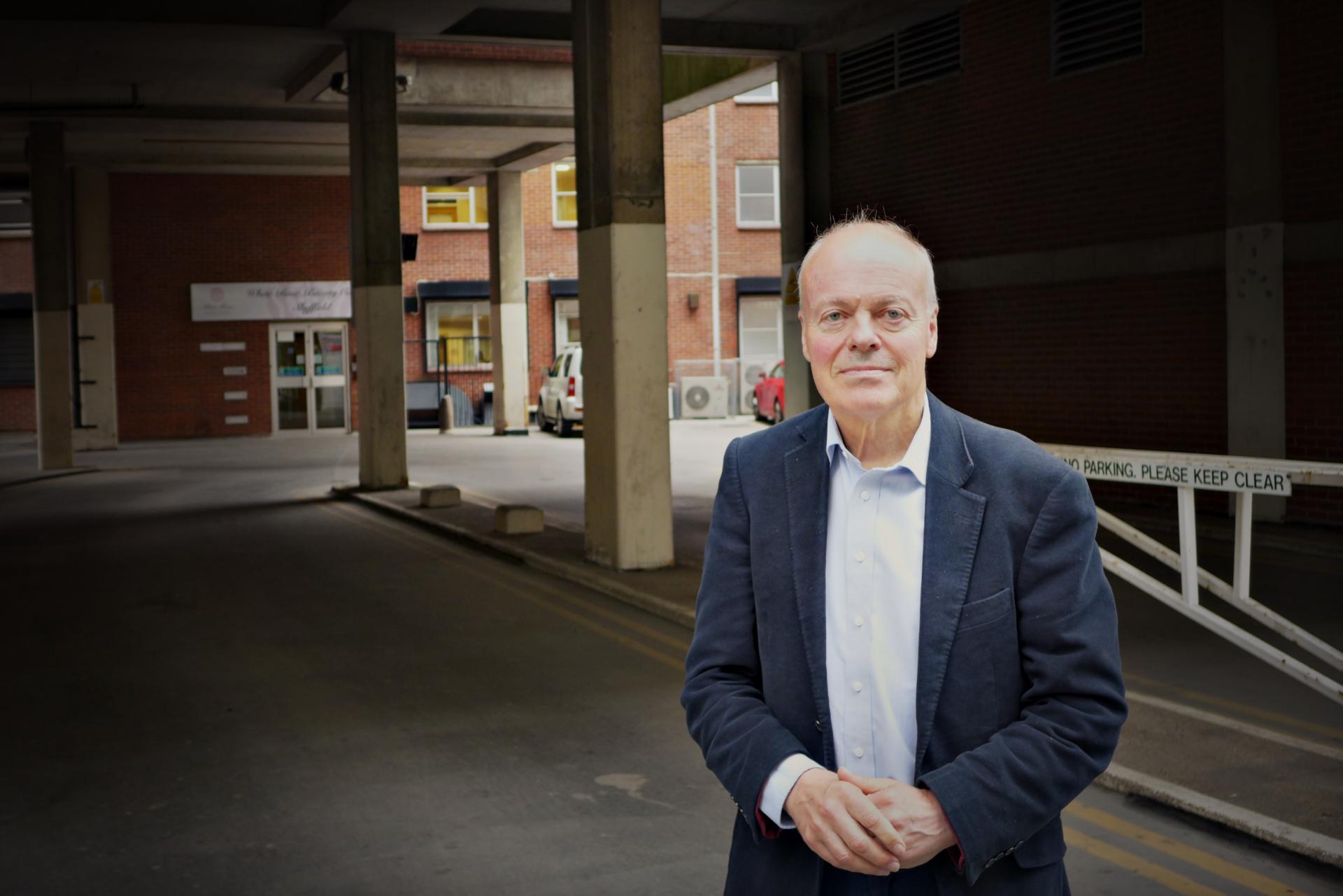
Clive Betts has spent more than 26 years as an MP for different districts of Sheffield.
Photo by Filip Olšovský
Betts says out loud what we are told by many government officers: The Roma people do not engage. That is the reason why it took British authorities so long to understand the community and enter into some form of a contact. “I don’t think I’ve ever had anyone of the Slovak Roma community come to me as an MP and say: I have a problem, can you help me? I regularly get people coming from the Pakistani, Bangladeshi or Somali community. I’ve been to events where they’ve been present at and they are very, very suspicious of officials in general,” explains Betts. Then he adds a thought that sticks in our minds: “Perhaps the problem might be in the way they’ve been treated in Slovakia. They come here from a situation where they are a minority and feel very separate within Slovakia. So they move here and they continue to be separate and don’t find it as natural to involve in any way.”
“Perhaps the problem might be in the way they’ve been treated in Slovakia. They come here from a situation where they are a minority and feel very separate within Slovakia. So they move here and they continue to be separate and don’t find it as natural to involve in any way.”
It took a longer time for the British system to understand that if it wants to integrate Roma people, it has to make the first step. Betts says this step was taken by the women, who were never afraid to see things with their own eyes – the health visitors. They spread the message of a new community living in Page Hall – a community so different from any other.
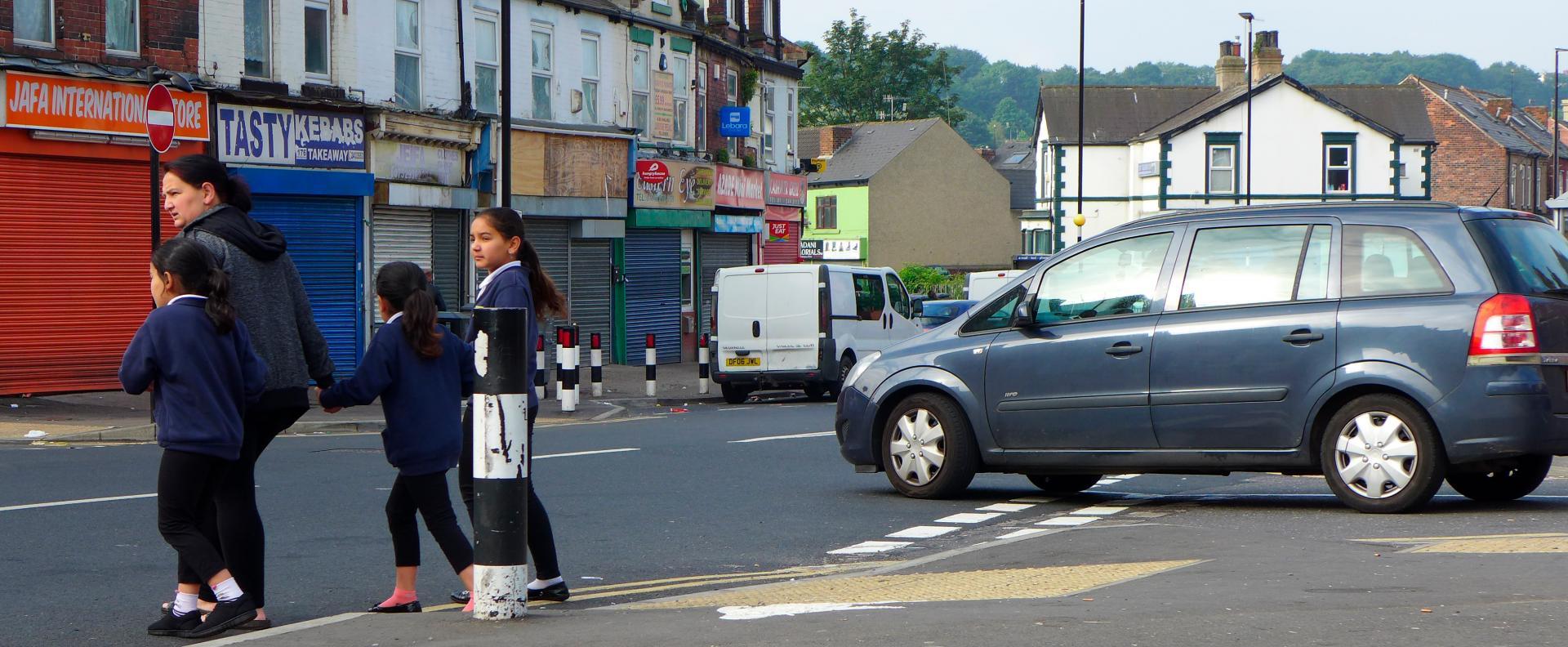
Photo by Filip Olšovský
Difference no. 1: Send a Nurse into Every Household
If we stick to the main question – what is so different about the English approach – the whole system of health visitors is the first of three most significant answers. It was the health visitors of Sheffield’s districts of Tinsley and Ivy Lodge who first came across a new community of people who were hanging around the streets until late hours, listening to loud music and were excessively suspicious towards any authorities. That included the health visitors, from whom they hid inside their houses.
Although the beginnings were tough for health visitors, today they sing the praises of Slovak Roma. “We’ve liked working with this community the most. It’s very rewarding. The families are very child-focused and there are many positives about their family structure. They help each other in the community. If someone new comes they don’t place them at risk. We think it’s us who should learn something from them,” say the health visitors from Ivy Lodge, a district with the biggest community of Slovak Roma people in Sheffield.
“Something that most of us would give up on is being done routinely by the Sheffield health visitors over several years.”
According to the health visitors, the key was to set priorities. The nurses quickly found out there is no point in forcing through their own agenda. On the contrary, they had to learn to listen and understand the mind-set of Roma people arriving from Slovakia. “For example, they weren’t used to using bottled milk. They didn’t know much about sterilization. That’s why we make sure they understand the instructions when they use baby formula since probably no-one in their family have used it before. We don’t want to judge them, just help them,” say the health visitors.
Another big topic among the health visitors is the so-called perinka – a thick blanket commonly used in Slovakia with small toddlers. For the English, used to lower temperatures, such thing is a complete mystery. They even do not have a specific word for it: perinka is perinka, with a stronger accent on the “r”. It took longer even for the health visitors to understand this habit. Nowadays, instead of restrictions, they only explain to the parents it is not the best idea to dress the toddler into another layer of clothes under the perinka.
“I don’t think we do anything differently,” answers Clare Hawes when we keep asking her how it is possible that the English system works so well compared to the Slovak. Clare works as a health visitor in Darnall, another Sheffield district with a Slovak Roma community. She has been working with Slovak Roma people for a couple of years and has the same answer as her colleagues: One should listen to their needs and slowly raise their expectations. “And besides that, we are patient. Very patient. For example when I remind them they should come for a check-up. I call it the Roma time. Because there’s the normal time and then there’s Roma time. They suddenly appear in my office at four and shout: ‘We’re here!’ and I say – that’s great but you were supposed to come at one,” laughs Clare.
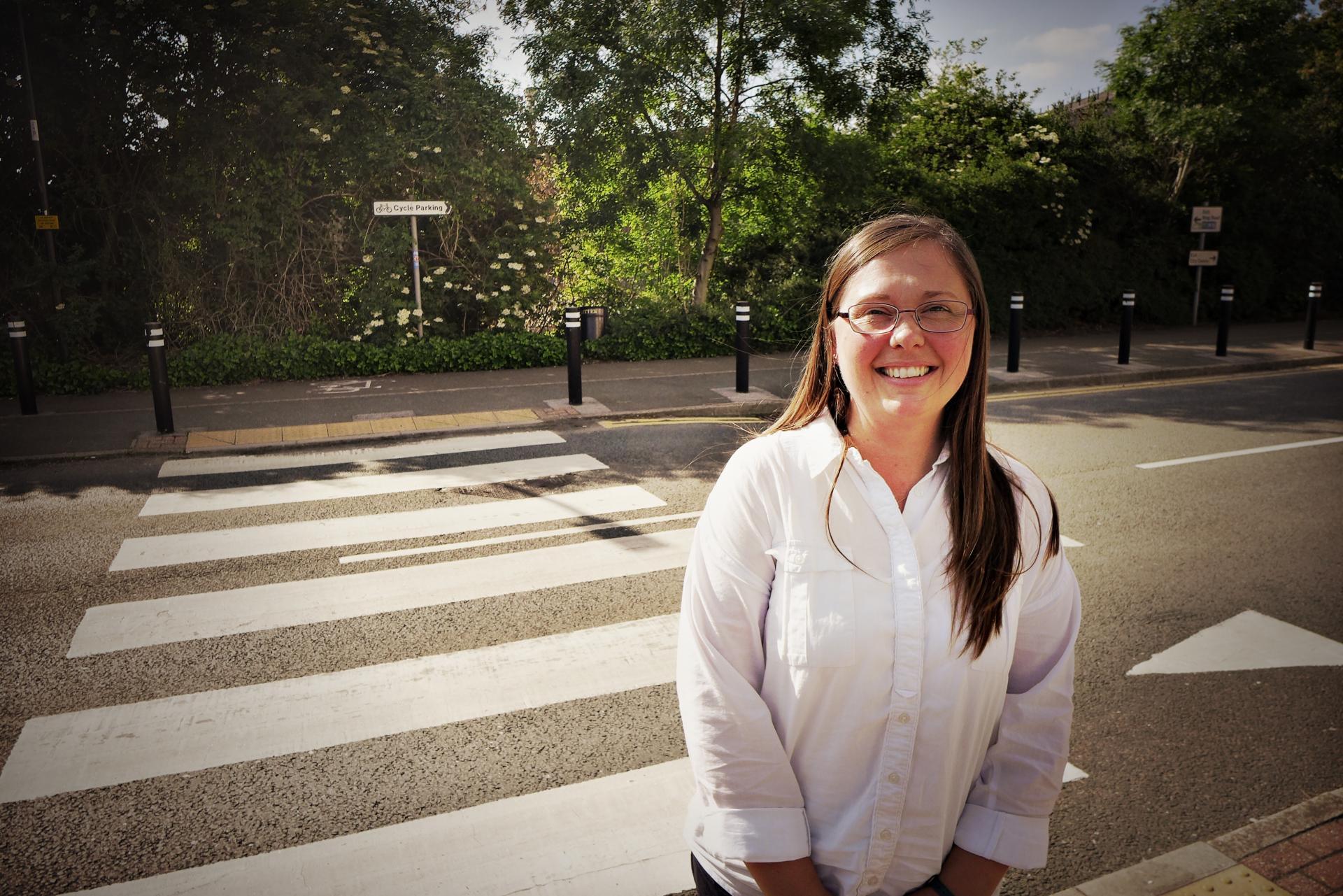
Clare Hawes works as a health visitor in areas with a proportion of Slovak Roma.
Photo by Filip Olšovský
That is probably the biggest difference. Something that most of us would give up on is being done routinely by the Sheffield health visitors over several years. At first they just tried to get inside the households and gain a basic trust of the suspicious patients. Later they worked on their language (“When I spoke to them about the relationship between the mother and her child I was using a vocabulary full of words describing emotions. Only later I found out there are no such words in Romani. Therefore I changed the way I talk to them so they could understand me,” says Clare). Just do not ask her where she gets the energy for that. Just like the other health visitors she would only uncomprehendingly reply it is her job.
That job follows lengthy manuals, which the experienced health visitors know almost by heart. The key part is called the Common Assessment Framework and Clare Hawes describes it as a triangle. In the centre there is the child surrounded by questions divided into three sets: Are the parents able to parent the child? Do they have the knowledge? Is their mental health good? How’s their housing? Is the mother well-supported by her family? And this is definitely not just formal paperwork.
“After so many years my brain works as a filter. I am always scanning, looking around. I am speaking to the mother and at the same time I am watching her body language and other people in the house. If the woman says the man who abused her no longer lives with her, I ask her about the shoes in the hallway. Whose are those? Why is there a vodka bottle under the sofa?” says Clare Hawes, describing her almost detective-like daily routine. Each new-born child is visited five times by a health visitor. They can therefore observe problems that remain hidden from nurses and doctors in Slovakia. If there is a substantial suspicion that the life of the child or the parent might be in danger, the health visitors can pass their findings further – to the social services or the police.
English nurses, after almost fifteen years of experience with Slovak Roma people, still have to deal with some basic problems, like vaccination. The Roma remember they were vaccinated back in Slovakia, they just have no idea against which kind of disease. The health visitors then only guess or type random letters into Google Translate they find on pieces of paper only vaguely resembling vaccination cards. Each child in England has their so-called red book which contains all the important information. The parents receive it right after their baby is born. The problem is the doctors in Slovakia have no idea about its existence.
That does not mean the English side had no connection with their Slovak counterparts. On the contrary, the first channels of communication were established soon after 2004. And these channels are the second significant answer to the question, what is it that the English do differently.
Difference no. 2: Find Out About Slovak Roma Settlements
Every new health visitor is being shown the same presentation in Ivy Lodge Clinic. It was created ten years ago by a woman called Gillian Gill – a health visitor who was the first to come up with the idea of traveling to Slovakia and finding out more about the conditions Roma people come from. She made her first journey in 2004. She met with mayors in Eastern Slovakia, saw Roma settlements with her own eyes and came back astounded at what she saw.
Gill created a document based on several journeys she made to Slovakia. It described four main factors that have the biggest impact on the health conditions of Roma people in Slovakia – poverty, bad housing, inadequate access to health services and insufficient care about mothers and their children. The document is still often being quoted by various health visitors who follow it in their practice.
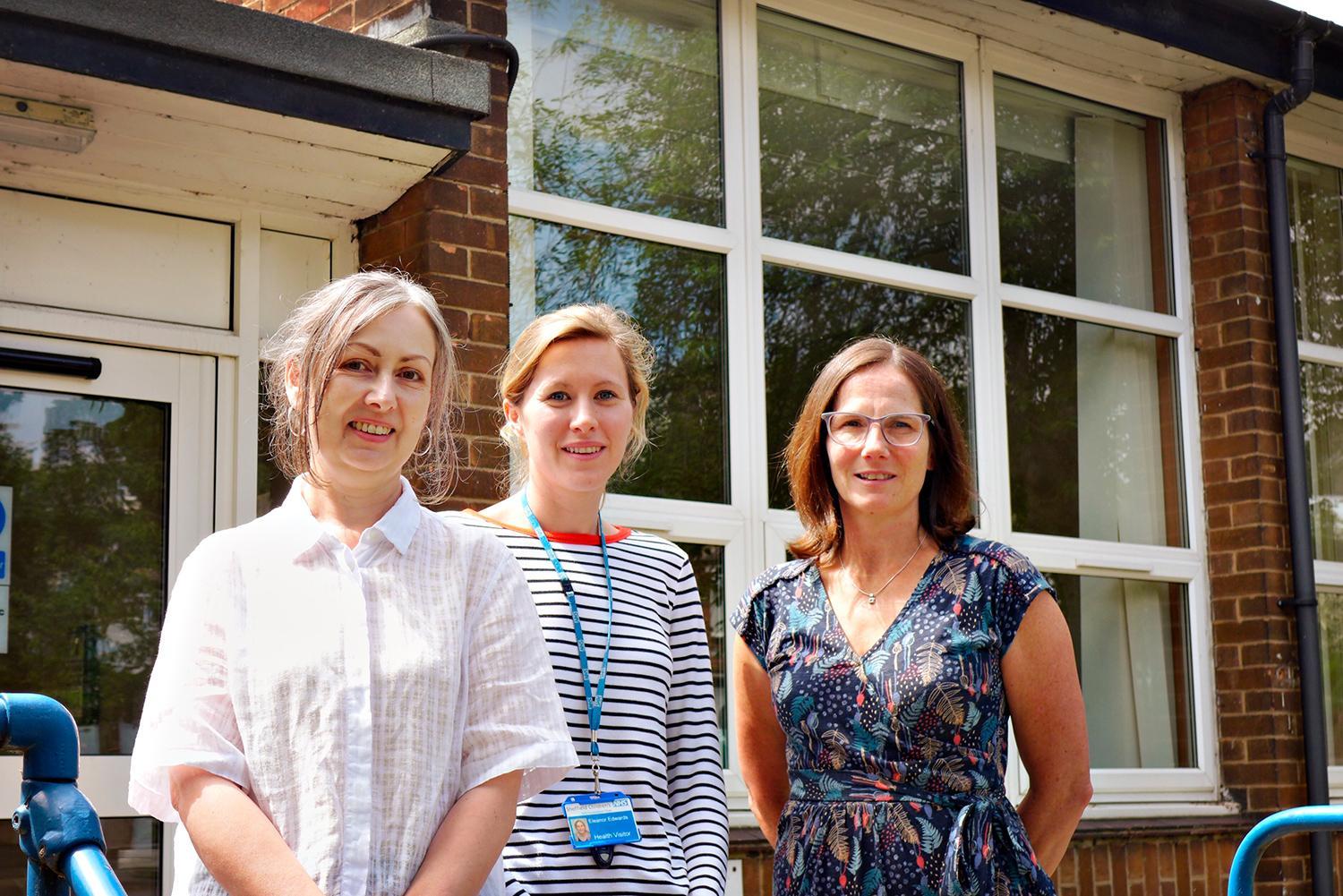
Health visitors from Ivy Lodge Clinic, which operates in the area of Page Hall.
Photo by Filip Olšovský
However, it is not only the nurses or the health system as such that tries to understand the conditions in Slovakia. It is also individuals like Mark Payne, the earlier mentioned professor from Sheffield University, who travels to Slovakia every year. Although he initially worked as a language teacher and was never really interested in anthropology or Roma studies, the topic of Slovak Roma enthused him immediately. Firstly, he started to visit the Slovak Roma community in Sheffield. Whenever he asked where the people were coming from, he got the same answer and wrote to Prešov University. Since then he spends eight weeks every year in Eastern Slovakia and works on a long-term project – comparing the children from Bystrany and Žehra. Why do so many more children from Bystrany go to school? How is the money earned in Britain helping the villages in Slovakia? And are there any lessons that teachers in Sheffield can learn?
Similar journeys to Slovakia were also organized by schools. For example, the Queen Katharina Academy in Peterborough sent their teachers to Slovakia with the help of the Erasmus Programme and one active teacher who wanted to know more about a country that was sending more and more children to her classes.
“I was shocked. I mean, we also have homeless and poor people in England, but this? I saw wooden cottages and small girls with bare feet walking around the settlement.”
“I was shocked. I mean, we also have homeless and poor people in England, but this? I saw wooden cottages and small girls with bare feet walking around the settlement,” said Jane Driver, Assistant Principal at Queen Katharina Academy, describing her impressions of a Roma settlement in the Slovak village of Jarovnice.
Another big discovery for the British delegation was the omnipresent unemployment – a term that is of almost non-resonance in their country. “People kept telling us: Of what use is any education to us if no-one gives us a job?” says Jane, repeating a question we are pretty familiar with in Slovakia. For the English, however, it was a new piece of information which influenced their attitude towards children coming from Slovakia. They realized they have to present Roma children with role-models – Roma people with interesting life stories they do not necessarily come across in their community.
“When Jane and her colleagues returned from Slovakia, they brought with them a lot of useful information. We have to take them into consideration when we work with them and build relationships,” admits the Principal of Queen Katharina Academy. When asked if such journeys to foreign countries are common in England, he answers in a calm voice: “Yes.” However, it is not a centralized programme but, just like in the case of the health visitors, a willingness of an individual to understand more.
A similar journey took place in all of the three schools we visited in England. Even Sheffield City Council sent their delegation to Slovakia a couple of years ago. And after a simple question, why they all do it, we are given the same uncomprehending answer – because they want to know how to be of a bigger help to this new and still a bit exotic community.
Difference no. 3: At Least Come to School
If you ask Roma adults in Britain if they want to come back to Slovakia, they would almost definitely nod in agreement. Slovakia is where they were born, where their family is and, despite the racism they had to suffer, where their home is. However, try asking their children. And, firstly, do it in English or Romani since they no longer understand Slovak. You will find out that an overwhelming majority of them do not want to come back. And if they do, then only for a couple of weeks for a holiday. The generation of Roma people growing up in Britain is completely different from their parents. A huge share of responsibility lies with British schools, which are able to pursue what the schools in Slovakia cannot – inclusion.
We visited three schools with a high proportion of Slovak Roma pupils. That is where we found the third and probably the most significant answer to our question, what is it that the English do differently. Actually, there were several answers. But if we were to pick one that amazed us the most, it was their focus on attendance.
The British government expects a school attendance of at least ninety percent from each school and each pupil. There is a logic behind this strict rule. As the teachers and headmasters often emphasized: Why would you invest money in a school without any pupils? This rule is supported by a strong and strict system. A pupil can skip school only under special circumstances. A spontaneous decision of a parent definitely does not fit into this category. If the child cannot give a reason for their absence, the fine can reach sixty pounds for each day and for each parent. The overall fine can reach up to £2,500 or even worse – the situation in the family can be questioned by the social services.
Schools know that strict rules without a purpose is not the answer. Before they address any other authority they focus on their own methods to motivate a pupil to attend the school. Even in Slovakia too many missed classes can be considered a criminal act and the school is obliged to inform the municipal authority. However, in Britain the school inspection authority Ofsted did its best to make school attendance one of the main factors in evaluating the school. Only a school with an attendance of more than 95-percent can be given a high score. Therefore every school in Britain tries really hard to draw its pupils into the classes.
“He says seven years ago the school attendance rate was at the level of sixty percent. Now, as he proudly claims, it is around 91 percent.”
“Excuse me, it’s a parent,” says Emil for at least a third time. His phone is ringing all morning. In his hands, Emil is holding his main work tool – a name sheet of all the school’s pupils. Emil works in Sheffield’s Hinde House School as an attendance officer. His responsibility is to make sure all the pupils arrive at school before half past eight, even though the school begins at nine. Each school uses this half-hour in their own way. They check the school uniforms, deliver notices about school trips or they organize larger meetings of the teaching staff. For Emil, the time between 8.30 and nine is the time of calling the parents of pupils that did not show up in the school. And if it is necessary, also the time of getting into a car and driving these pupils into the school himself.
An important thing is that Emil is Roma. He comes directly from Bystrany and lives near Page Hall. He knows everyone in the community, has the trust of the parents and can explain the importance of sending a child into school. He says seven years ago the school attendance rate was at the level of sixty percent. Now, as he proudly claims, it is around 91 percent. Anne Robson, the deputy head teacher of Hinde House School, confirms Emil’s words. “I support the parents to always come to school and meet us. There is always someone here who speaks Slovak. And this job never ends with the last class. Emil and Miro work in the evening and even during weekends when they speak to the families. Therefore they also have an image of the family situation of our pupils,” explains Anne Robson.
Miro, Miroslav Šándor in full name, is another Roma from Slovakia employed by the Hinde House School. Although he works as a teaching assistant for the Roma community, sometimes he also works as a driver of a school minivan. It is quarter past eight in the morning when Miroslav parks in the centre of Page Hall. There is already a small group of 11th graders standing on the corner, looking pretty apathetic. It is their GCSEs today. That is one of the reasons Miroslav came to drive them to school in person – so that everyone arrives in time. He will wait for five more minutes and when the last one does not appear, he decides to knock on his door.
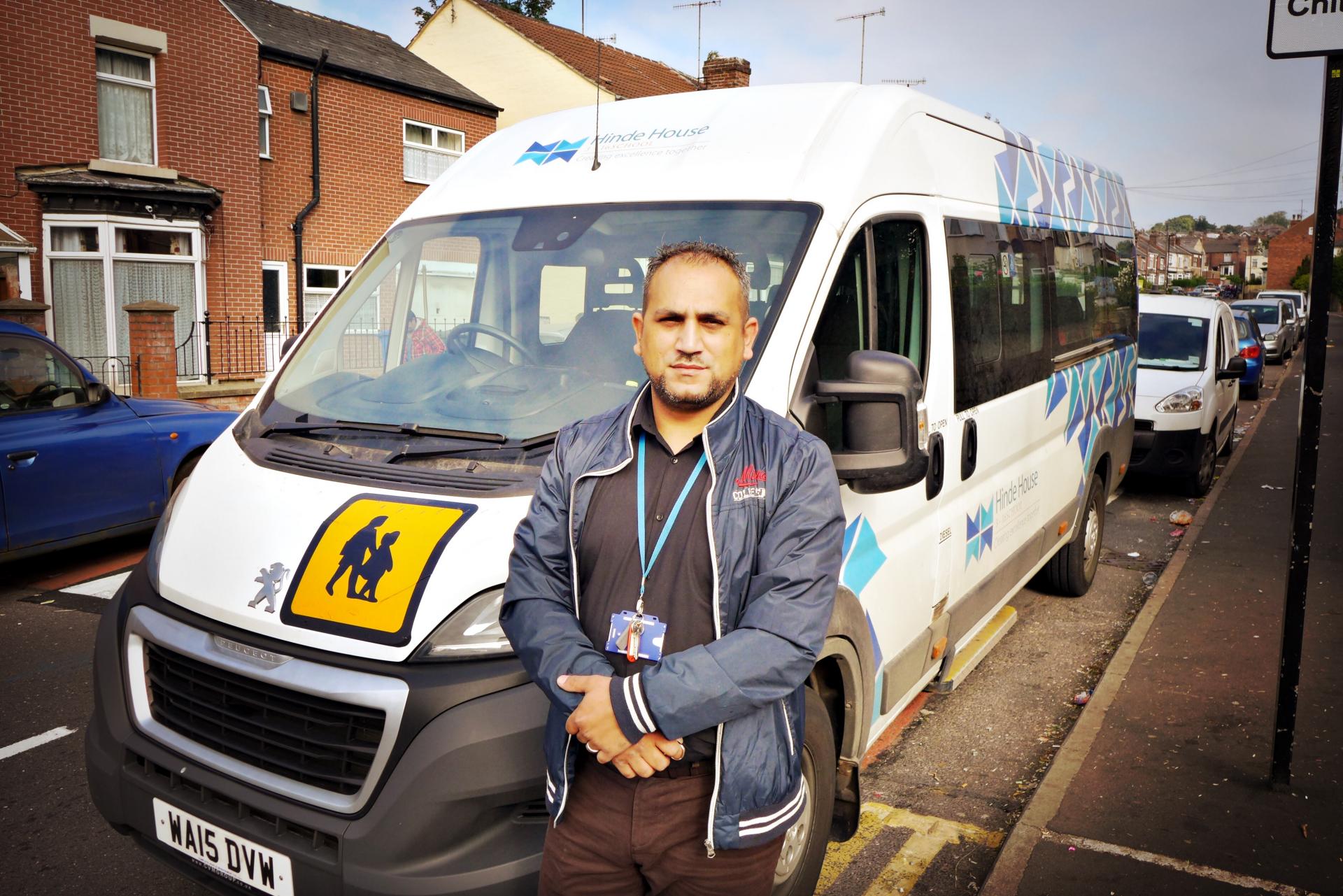
Miroslav Šándor works as a TA but from time to time he also rides a minivan.
Photo by Filip Olšovský
There is a similar school attendance “policeman” in Leicester’s Babington Academy. Besides this the school tries to come up with other original ways of getting its pupils into the school. Mark Penfold, a teacher responsible for inclusive education explains some of them. For example, girls with 100 percent attendance can attend a beauty session each Friday after school. For boys there was a football session – but, again, only for those with 100 percent attendance during the previous week.
When the problem with the attendance of Slovak Roma was at its peak, Mark Penfold decided to make postcards with religious pictures from the Museum of Romani Culture in Brno. If a pupil had a 100 percent attendance during the previous week, Mark would send a postcard to the parents. Each one with a similar text: “Dear parents, Diana had a 100 percent attendance. Thank you very much for your support.” In the beginning, Mark was writing approximately thirty such postcards each week. Later the number increased to sixty. When he started to get tired of writing such a huge number of postcards each Friday after work, one visit in a Roma family convinced him to persevere. He found dozens of his postcards displayed pride of place in the living room.
Mark Penfold is pretty much in the picture with the Slovak school system. He visited Slovakia several times during different projects, trying to improve the level of inclusion in Slovak schools. Every time he speaks of Slovakia, he quickly loses his temper and begins to talk about the country with a culture of excuses. “I remember one school inspector in Slovakia showing me statistics of the low school attendance rate of Roma pupils. He asked me: How do you want to work with them when they don’t come to school? I told him: If we had such data in our country, we would have a think. What should we change so that the children would come to school? Because when they don’t go to your school, it’s your responsibility. Adjust the school in a way they would come,” Penfold says angrily.
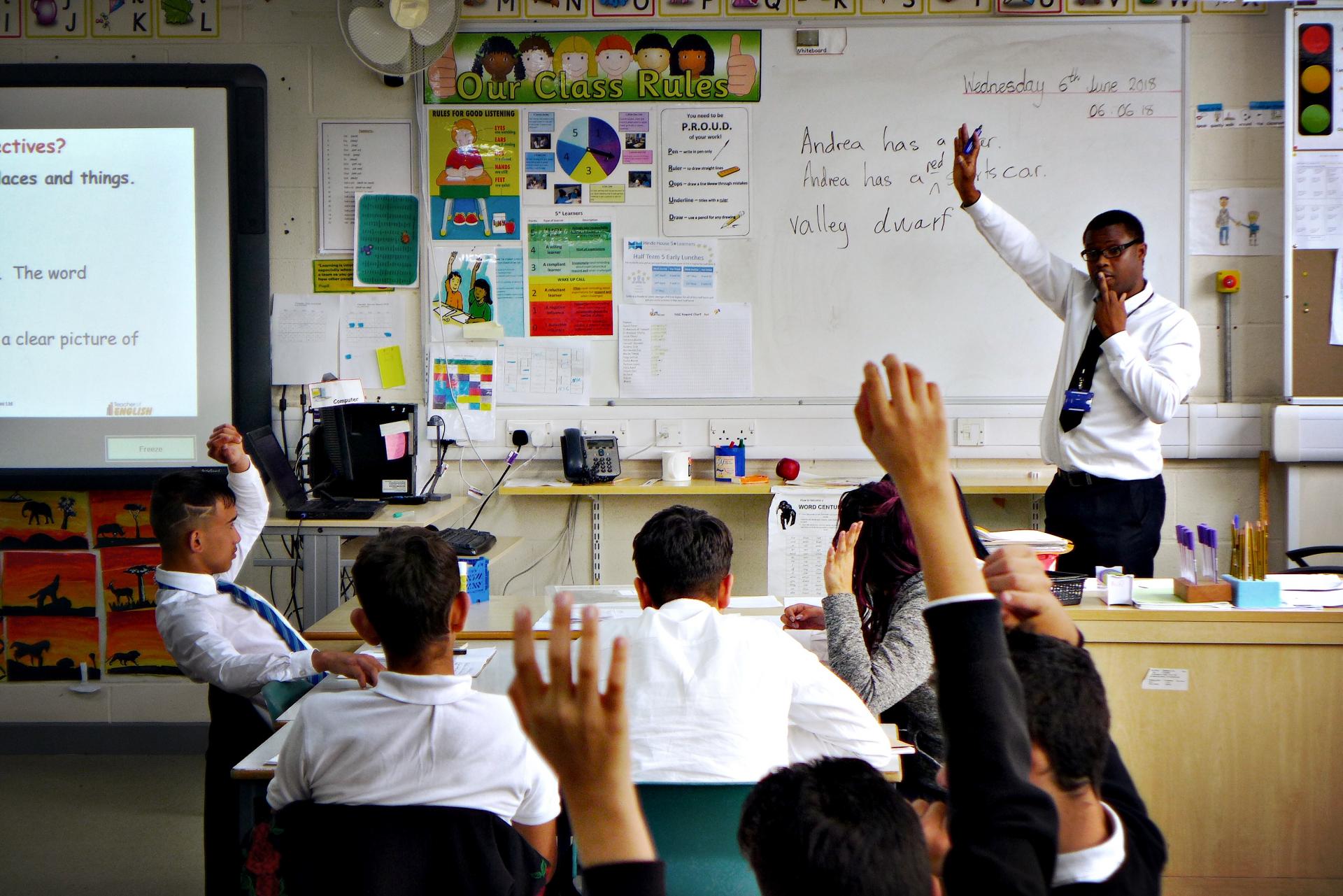
Peter (left) during his class in the New Start Centre in Hinde House School.
Photo by Filip Olšovský
British schools are able to get the majority of children to school. But what next? There is another policy that might be of interest for a Slovak reader. It is the attitude towards the children of migrants who spend their first days in school with a fear in their eyes similar to Galina’s from the beginning of this article.
In each one of the three schools we visited in Britain the majority of pupils come from abroad. They are called EAL (English As an Additional Language). The school gets enough support for such students from the government and even the school inspections are much more considerate towards these children. Such a system of integrating children that don’t speak the primary language can be of great inspiration for schools in Slovakia. As we all know, a large number of Roma children arrive at schools in Slovakia with a similar problem – Slovak is not their first language.
Peter is also an EAL student. He is in the eighth grade at Hinde House School in Sheffield. It’s been only couple of weeks since he and his mother moved to Sheffield from Trebišov. Peter did not speak any English. Now he is sitting in a class called The New Start Centre. With another twenty pupils he learns some basic English vocabulary and pronunciation.
“There are two key things: keywords and visual tools.”
The New Start Centre is also the main territory for Miroslav Šándor. Besides working as a minibus driver he is a teaching assistant. He helps the pupils understand English words. Each pupil gradually leaves this class and joins their classmates in regular classes. It will take a couple of more weeks of intensive English for Peter but at least he has already found some friends. “He’s popular. He brought a speaker to the class and played some music during the break. Some three hundred children danced around it,” says Miroslav and Peter reacts with a sly smile.
Even after Peter will be able to understand some English, he will not be able to understand the specific vocabulary in subjects like chemistry or physics. Therefore The Hinde House School has a special class with a focus on the English language. Lucy Fox is a science teacher with a specialization in EAL students. She says there are two key things: keywords and visual tools. Each specific term has to be described or translated into mother tongue. “I always repeat to myself that EAL students have to translate my English sentences into their own language. That is another process going through their heads. It’s like they are doing two classes at the same time,” explains Fox.
A similar system, named accelerated curriculum, is used by Queen Katharine Academy in Peterborough. An EAL student divides their first months in school into two parts. Fifteen classes are spent in normal classes, fifteen in classes with a focus on English. “We have come up with this system only recently. We used to integrate children into normal classes right away, which was sometimes hard for them. This works better, the children learn English faster and are more active in the classes,” says Jane Driver.
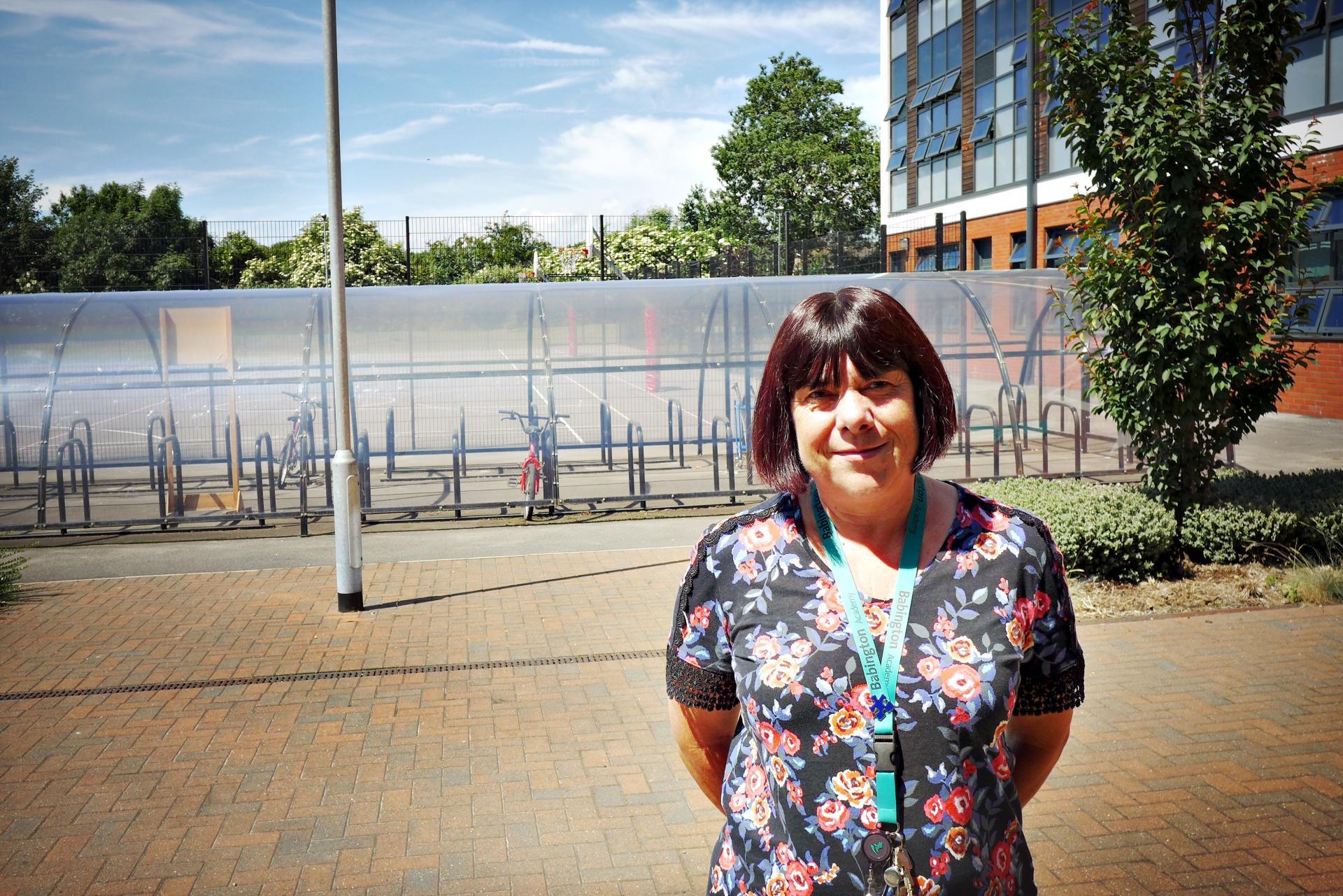
Debbie Harris welcomes new children into the Babington Academy.
Photo by Filip Olšovský
Babington Academy in Leicester chose a different approach. Just ask Debbie Harris, or, as everyone calls her, Miss Debbie. “It was the Roma children who started to call me like this. Debbie was much easier for them to pronounce than Miss Harris,” smiles Debbie, a teacher whose main responsibility is to welcome new children into the school. She spends three or four days with every newcomer, mainly by talking. She not only examines the level of English but also the level of knowledge of different subjects. When the right class is chosen for the pupil, Debbie shows them around and explains the rules of Babington. After these few days, the child goes directly into the normal class, usually accompanied by a teaching assistant. There is one more helping hand ready for each newcomer – a network called guardian angels, originally established by Debbie. It is a group of pupils that help every new pupil in their class. “Fortunately, I no longer have to choose them. The children already know they have to take care of a newbie. The whole guardian angels thing grew into a large network of pupils,” says Debbie.
Difference no. 4: Provide Role Models. Real Role Models
The fourth formula for working with the Roma community is well known to us in Slovakia. However, it usually starts and ends with Rytmus, a popular Slovak hip-hopper with Roma ancestry. It is a well-known fact that young Roma should be given successful role models from the Roma community. These role models should show them – but mainly their parents – that it is possible to live in a different way and that a good life is not necessary connected to earning money as soon after school as possible.
It is a problem the young Roma come across pretty often. Going to high school or university is too “gadža” (un-Roma) and it makes no sense. There is no income for going to school. Ondrej Oláh confirms this reality. Although he was one of the happier ones – at least his father understood the importance of education. His mother, however, finished only her primary education and did not understand why her son keeps on talking about universities instead of factories in which to find a job. She understood only after Mark Penfold came to their house and patiently explained to the parents how much more Ondrej can earn once he finishes university.
Olga Fuseini has similar stories to tell. Being Roma, she had to explain to her mother why she did not go straight into work after she finished high school. Olga even got the taste of this attitude from the other side. While working as a volunteer in Sheffield and helping Roma people with translation and official duties she often came across a similar situation: young Roma boys with their priorities set straight – money, cars and girls. “So I asked one of them: How are you going to get all of that? He said: I am going to find a job and earn money. What kind of job are you going to find? Doesn’t matter, I’ll find something. What does your father do? He works in a factory. And does he have money, cars and girls? After that they stay silent and think about it for a while,” says Olga, describing a typical conversation with young Roma.
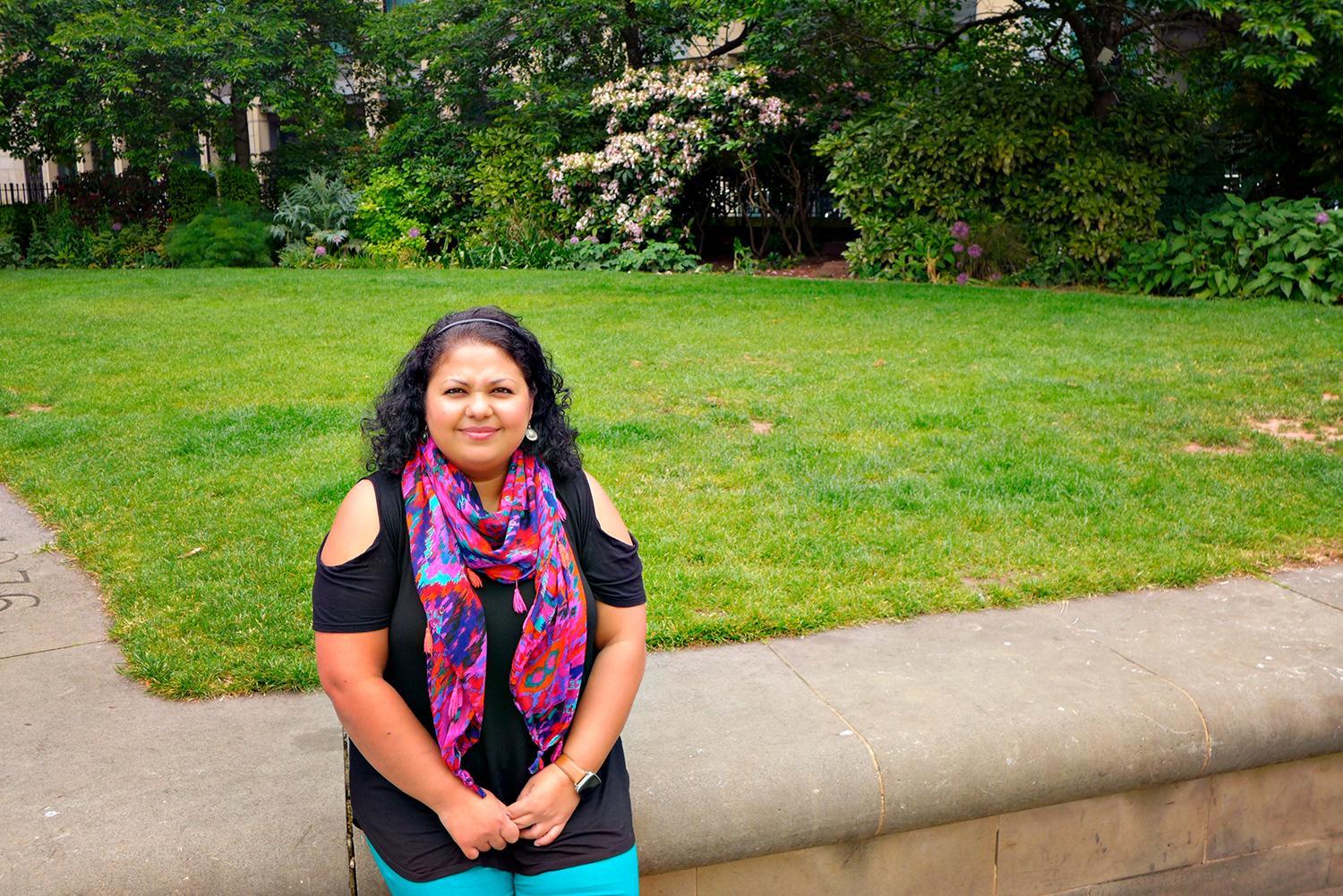
Olga Fuseini has just successfully passed her undergraduate year at Sheffield University.
Photo by Filip Olšovský
She fought this battle herself and with a great deal of stubbornness. Although she only finished a vocational school back in the Czech Republic, she has just successfully passed her undergraduate year at Sheffield University. Her mother keeps on asking her if it is not only some kind of a workshop she goes to but Olga replies each time with the same sentence – No, mom, I really became a university student in England. Alongside her stubbornness there is one more important thing that helped her achieve that – the attitude of the university which seems completely beyond belief for every Slovak.
“I visited the university’s open day and they were literally fighting for me. They’ve never had a Roma student before. The message even returned to me via my friends: Have you heard there was some Roma girl at the university today?” laughs Olga Fuseini. It was a prestige for the university and a useful demonstration of what role models really mean.
You will not find a bigger celebrity in the community of Czech and Slovak Roma people in England than Petr Torák. For his work as a policeman in Peterborough, he was honoured with an OBE from Queen Elizabeth II. The bigger the surprise is when you meet him in person – thanks to his mischievous eyes and unbelievably calm presence he looks like the complete opposite of policemen you are used to from Slovakia. But one should not be mistaken – it is him, the person who once proclaimed he wants to be a Czech president and has pursued this target ever since.
“It was shortly after his father was threatened and later his mother and brother were attacked by skinheads.”
Petr Torák came to England in 1999. It was shortly after his father was threatened and later his mother and brother were attacked by skinheads. Torák was fresh out of high school and already wanted to be a policeman. However, when he came to the police station to report his assault and the local policemen picked on him, he changed his mind. Not about his future occupation – the image of being a superhero was settled deep in his mind. He only changed his mind about the country in which he was going to pursue his dream. He decided to move to England along with his family.
It was 2002 when he first visited the police station in Peterborough. Unfortunately, he was given incorrect information by the receptionist – she said in order to be a policeman he needs to be British. Torák therefore changed his plan and decided to try politics. In 2006 he finished third in local elections and besides useful know-how he also got a life-changing piece of advice. A friend of his told him that the police in Peterborough was looking for new officers and they definitely did not need to be British. So Torák tried and quickly became a policeman.
He built himself a great reputation in Peterborough. Torák was mainly focusing on networks of human-traffickers who were also present in the Roma community. As he points out, at least in one way human-trafficking is similar to drug-trafficking – you catch one dealer and two others will come up. And although he managed to clean Peterborough of almost all human-traffickers he recently decided to leave his job in the police. “I feel that if I really wanted to stay here I would be able to gradually move towards being the MP for Peterborough. But I feel the time is coming for me to return to the Czech Republic,” says Torák with a mix of self-confidence and humility. Recently he has been elected a member of The Human Rights Council in the Czech Republic and focuses more and more on the politics in his home country. Fortunately, this does not mean his story would lose any of its appeal to the Roma community in Britain.
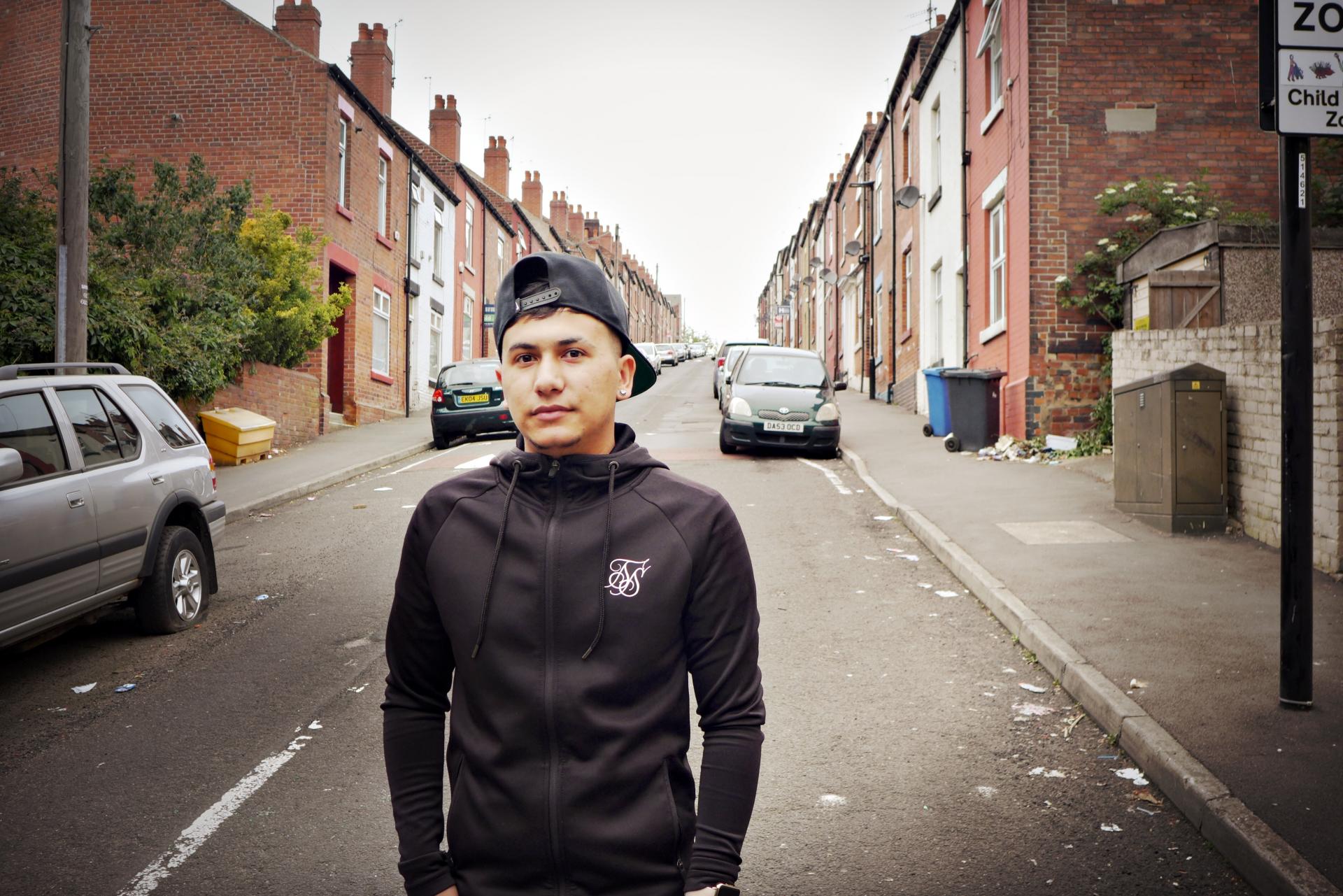
Peter Pačan is about to become a policeman in England.
Photo by Filip Olšovský
We come across our next respondent in front of his house in Sheffield’s Page Hall. In contrast to other teenagers around he seems much calmer and the awkward silence is broken only after we mention we are going to visit Petr Torák next week. That piece of information immediately attracts his interest. Because, as Peter Pačan later confirms, he also wants to be a policeman. Partly because he once heard there is a Czech Roma policeman somewhere in Peterborough.
Peter Pačan is eighteen. He moved to England in 2004. He understands a bit of Slovak but speaks only English with the most authentic Yorkshire accent around. It is hard for him to even recall anything from Slovakia – only brief memories of summer trips that he had to go to with parents although he did not want to. But this summer is going to be different – he will not have to travel to Slovakia. He will be serving as a voluntary police cadet and earning some money in a PC company. The test that will bring him nearer to the police job costs 200 pounds and the driver’s certificate is even more expensive. But Peter is certain he will do it this summer. Then he will pass the 100-question test and he will finally be able to become a member of Sheffield Police.
The times of endless tests and demanding internships are finally over for Denisa Gannon. In the meantime, she has become a sort of a celebrity in the Roma community. Not to the level of Petr Torák, but that might be about to change in a short time. The city of Leicester has already promised to give her premises in the centre of the town when she returns from her maternity leave so that she can be closer to her clients. Those clients usually come from socially weaker conditions and seek legal advice. Often they are – just like Denisa Gannon – Roma.
Denisa Gannon arrived in England as a single mother with a 4-year-old son. She was not able to find a job back in the Czech Republic, although she had successfully finished high school. In England she quickly found a job as a cleaner in a restaurant. Later she also worked as a waitress. Soon she realized that if she did not improve her education she would get stuck in a vicious circle of zero-hour contracts. That is why in 2009 she decided to go to university.
She decided to study law, since she already had experience with how hard a life in a new country can be without any knowledge of one’s rights. “They throw you out of the house and take your money without any reason. England really is about money. It’s not a country you can just live in without knowing what you are doing,” says Denisa, recalling her main motivation to pursue the demanding law studies.
“For locals, Slovak Roma and other Eastern Europeans serve as a symbol of something they do not want to deal with.”
During her studies she worked as a teaching assistant at Babington Academy and from time to time even drove the van picking up pupils that had decided not to come to school on time. She successfully passed her university course and got a two-year internship after which she could finally become a lawyer. “Today, for example, I met a guy who was working and then fell ill. Since he was on a zero-hour contract, he had to ask for a special social benefit. However, the office decided he couldn’t claim it, so I was helping with the appeal,” says Gannon, explaining her ordinary working day.
At the same time she swears this was her last day in work before her maternity leave. She’s expecting her baby in a couple of weeks and she wants to enjoy it. She feels like this time, in a peaceful marriage and with a stable job, it might be nicer than when she became a mother for the first time.
Very British Problems
When speaking about the main differences between the British and Slovak systems, there are two more things to take into consideration besides the four major factors mentioned earlier. The first one is best described by Andy Shallice, a policy and information worker of a charity called Roma Support Group. This thing, however, has nothing to do with Roma people.
“On September 11, 2001 I was handing out flyers on a street in Sheffield. Just when I discovered what had happened, a woman walked by. She leant towards me and said: it’s good news. There will be a World War III and steel will once again be in demand,” recalls Shallice. This may sound a bit absurd to a Slovak reader but in a steel city like Sheffield, which is still proud of its heritage, such story sounds pretty ordinary.
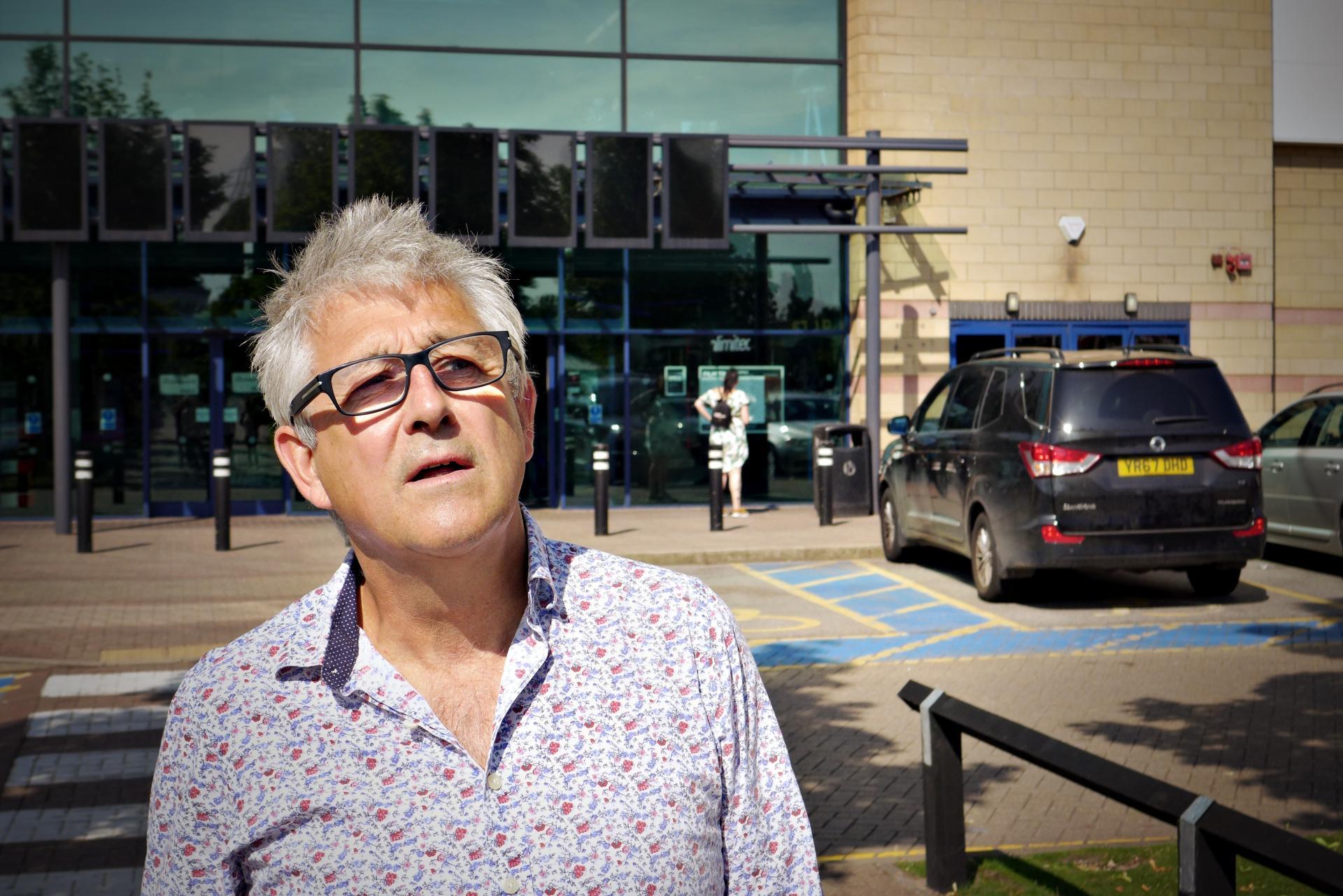
Andy Shallice works as a policy and information worker at Roma Support Group.
Photo by Filip Olšovský
A problem – from the perspective of the people in Sheffield – arose when World War III did not come. The decay of the city could not be stopped. It only gave ground to the type of environment that in the end influenced the Brexit decision. At that time, it really was not the ideal atmosphere for Slovak Roma to try they luck in Sheffield and its neighbourhood.
“By around 2006-2007 the level of resentment against migration started growing quite significantly. We were getting a significant backlash against Eastern Europeans. The perception grew that the Poles, the Romanians and the Slovak Roma were taking British worker’s jobs,” says Angela Smith, an MP for Sheffield’s district Stocksbridge. Although there are almost no Slovak Roma in Stocksbridge they still influence the politics in this district.
For locals, mainly the older white British voters, Slovak Roma and other Eastern Europeans serve as a symbol of something they do not want to deal with. “They want to live in areas that resemble much more the kinds of areas that they grew up in. Very white, with a very certain type of culture. And this is a district they move to, to run from these changing demographics in the city,” admits Angela Smith, although she does not seem thrilled about it.
A much bigger concern for her is the second thing. The thing that is present in any story about British integration. Budget cuts. A term you sooner or later come across in every conversation – whether you are in Sheffield, Leicester or Peterborough.
“When he began as a policeman, he had enough time for community policing. After the budget cuts such approach was no longer possible.”
If there ever was a city that Margaret Thatcher hated, it was working-class Sheffield. Since the times of The Iron Lady, the chance of being elected is pretty low for every representative of the Conservative Party. Again, it is not much different in Leicester or Peterborough. Now put such an environment together with the fact that since 2010 the UK has been ruled only by the Conservatives (with a short period of help from the Liberal Democrats) and you’ll come to know that as far as integration is concerned, England is, in fact, doing disastrously.
Sheffield’s council has lost forty percent of its budget in the last eight years. The constituency of Angela Smith has no warranted officers. If there is an incident like the armed robbery that took place last week, the police have to travel from outside of the constituency.
Petr Torák says the budget cuts were one of the reasons he decided to leave the police corps. When he began as a policeman, he had enough time for community policing – walking around his area and talking to people. After the budget cuts such approach was no longer possible. “I’ve not finished one job and I was sent to do another one. I was sitting with a victim of domestic violence and wasn’t even in the middle of the testimony when I got a phone call asking where I was. For such testimony you need time. However, I had people shouting in my ear they need back-up because there’s been a burglar locked inside some shop for twenty minutes already,” says Torák.
Colin Havard speaks in a similar tone. He works for Sheffield City Council as a community development co-ordinator and operates mainly in Page Hall. He admits Roma people have problems with understanding the British system, but he also speaks of the responsibility of the other side. “Our system is simply not flexible enough. We used to be better when we had people coming in previous migration waves. Now everything is about not having enough money. And although as a society we like to claim prevention is better than cure, we don’t act like that,” says Colin.
Specific implications can be seen in various fields. There should be more teaching assistants, more leisure centres and more legal advisors. However, there is one sphere where the lack of funding is the most obvious, at least according to people we spoke to in England – the school system.
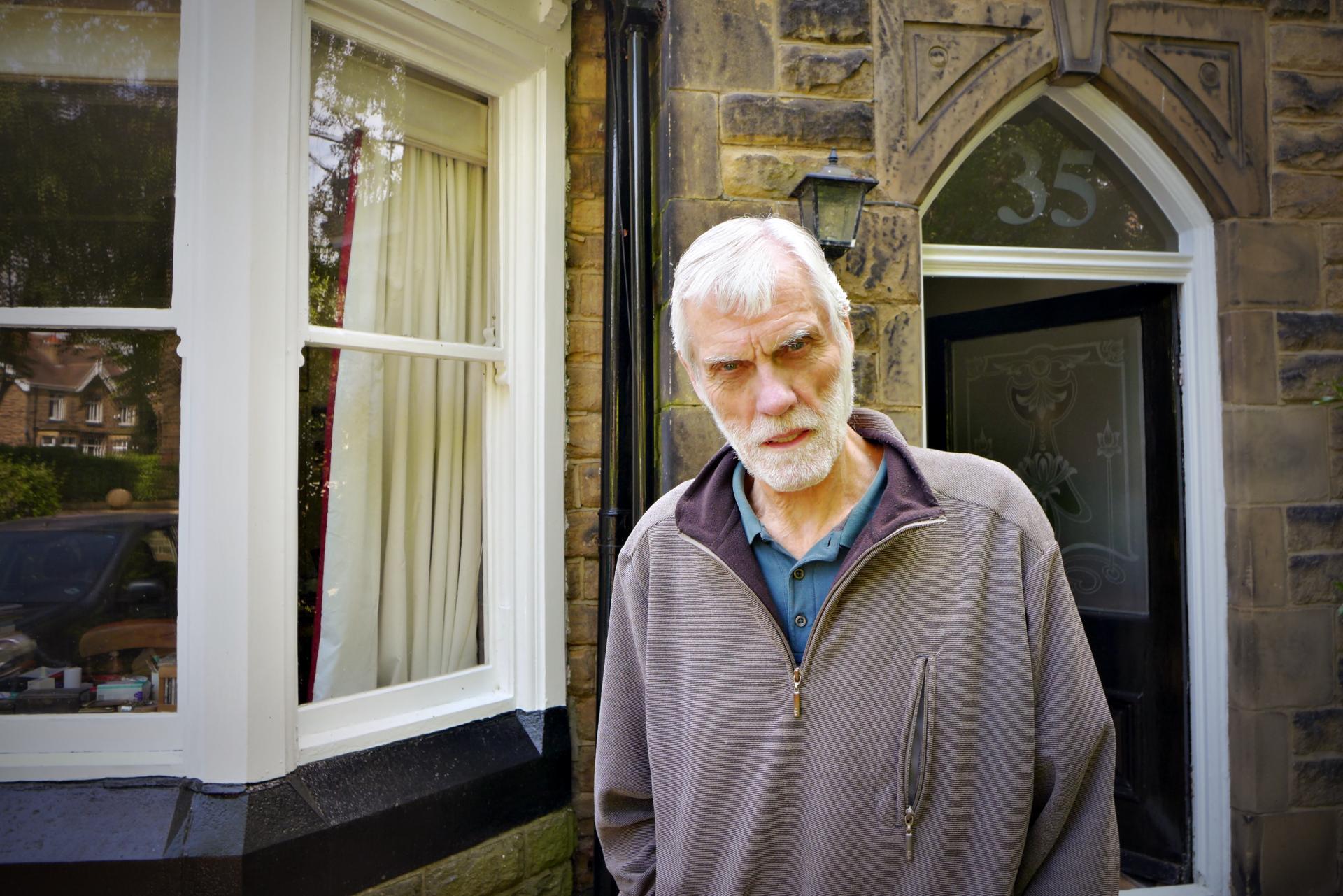
Chris Searle was the headteacher of Page Hall’s Earl Marshal School in the eighties.
Photo by Filip Olšovský
Chris Searle likes to call himself an old geezer. He used to teach children in Africa, Mozambique, Canada and even in Grenada during the revolution. What is more important is that during the late eighties he became the head teacher of Earl Marshal School, the biggest school in Page Hall. At that time no one had even heard of Slovak Roma. Nevertheless, the school was already full of migrants – mainly Pakistani and children from the Caribbean.
When he arrived at the school, Chris Searle came across a big problem. The poorest children were often excluded and sent into the so-called inclusion centres. They were still learning but considerably less than in normal school. The aim was to “make these kids better” and send them back to normal schools. However, often this was not the case. Usually a child would be stuck in the inclusion centre until the end of their school days. When they left the centre, they did not have enough education to find a proper job.
That is why Chris Searle decided to ban any exclusions from Earl Marshal School. He was trying to keep even the naughtiest children inside the school. His ambition was successful and was even backed by the local police that appreciated it is the school, not the street that works with the children. The main factor behind Searle’s success, were, however, the funds. “There was a special law providing extra money for each working place created for people working with the new minorities. If the local government hired one person to work with them, central government would pay for another three,” explains Searle.
“Not so long ago the group that topped every statistic about school exclusions was the Slovak Roma.”
Over the course of years, this law has changed. There was not enough money for new minorities and their inclusion is therefore significantly slower and more difficult. The most visible factor supporting this is the rate of school exclusions. Not so long ago the group that topped every statistic about school exclusions was the Slovak Roma.
“It was around 2014 or 2015 when I read about the mass exclusion of Slovak Roma children from schools in Sheffield. I went to take a look to one of the inclusion centres near Page Hall that is run by the Yemenis. And there they were – around thirty children and all of them Slovak Roma. Has it not been for the Yemenis, they would just stroll around the town without any education. It was sort of an apartheid,” says Searle quite sharply.
It is a strange feeling. Sitting in front a man that compares the English inclusion system to apartheid. It is hard to oppose him but it is even harder to nod in approval. Mainly, when he asks if we do not mind all of this is happening to our people. Of course we do mind. However, it is hard to explain the Slovak reality to a seventy-year-old with a completely different set of experiences. How to draw at least a draft of what we are comparing the English system to? How to explain him the system he criticizes so much is at least a thousand times better than what we have in Slovakia? We have no idea. Until the opportunity to illustrate this gap suddenly appears completely out of the blue.
Why Are They Better Off Here?
During our stay in Leicester a delegation from the Slovak Ministry of Education paid a visit to Babington Academy. The delegation included the headteacher of a primary school in Rožňava, a Slovak delegate in the Roma and Travellers Team of the Council of Europe, as well as the Secretary of state for Education Peter Krajňák. They accepted the invitation from Mark Penfold after Krajňák saw Penfold’s lecture in Prešov.
Mark Penfold is the right person to explain the differences between the British and Slovak mentality regarding inclusion. He spent several months in Slovakia and was even helping one school with the implementation of their inclusion system. Today, Mark Penfold does not want to name the school. “We were successful. More and more Roma children started to go to school. But one day the head teacher came to me and told me we’re done with the project. Why? Because the parents began taking their white children out of the school. It is a big issue in Slovakia,” says Penfold bitterly.
He admits there are racists in England as well – Brexit is a good example. However, the level of racism he came across in Slovakia shocked him. “We were in a restaurant in Slovakia. Me and my colleague were served by the waitress. Right next to us sat a group of Roma people and the waitress just shouted at them to get their food from the counter. When they left she started spraying the place with an air freshener. And then she threw the glasses they drank from into the bin,” says Penfold. He has a whole collection of such stories that make us look away in shame.
In the end, Penfold adds an observation that irritates him the most when he is talking to Slovak or Czech teachers. “In 2012 some of them were telling me: Mr. Penfold, you have to understand the Roma have lower IQ, they’re susceptible to mental retardation and have serious problems with hygiene. There is nothing we can do for them,” says Penfold outrageously. “I remember something broke inside me. I was really angry. I told them: Come to my school and try saying that to my Roma pupils face to face.”
The Slovak delegation was greeted at Babington Academy not only by Mark Penfold but also by the headteacher. However, the main speaker was Denise Newsome, the Chief Executive Officer of Babington and the woman, who was in charge of the school for almost ten years. It was her who managed to turn the school with bad reputation into one of the best schools in Britain. “We found out Roma pupils are among the brightest ones. They are the ones wearing uniforms and being all dressed up,” explains Newsome in a presentation for the Slovak visit.
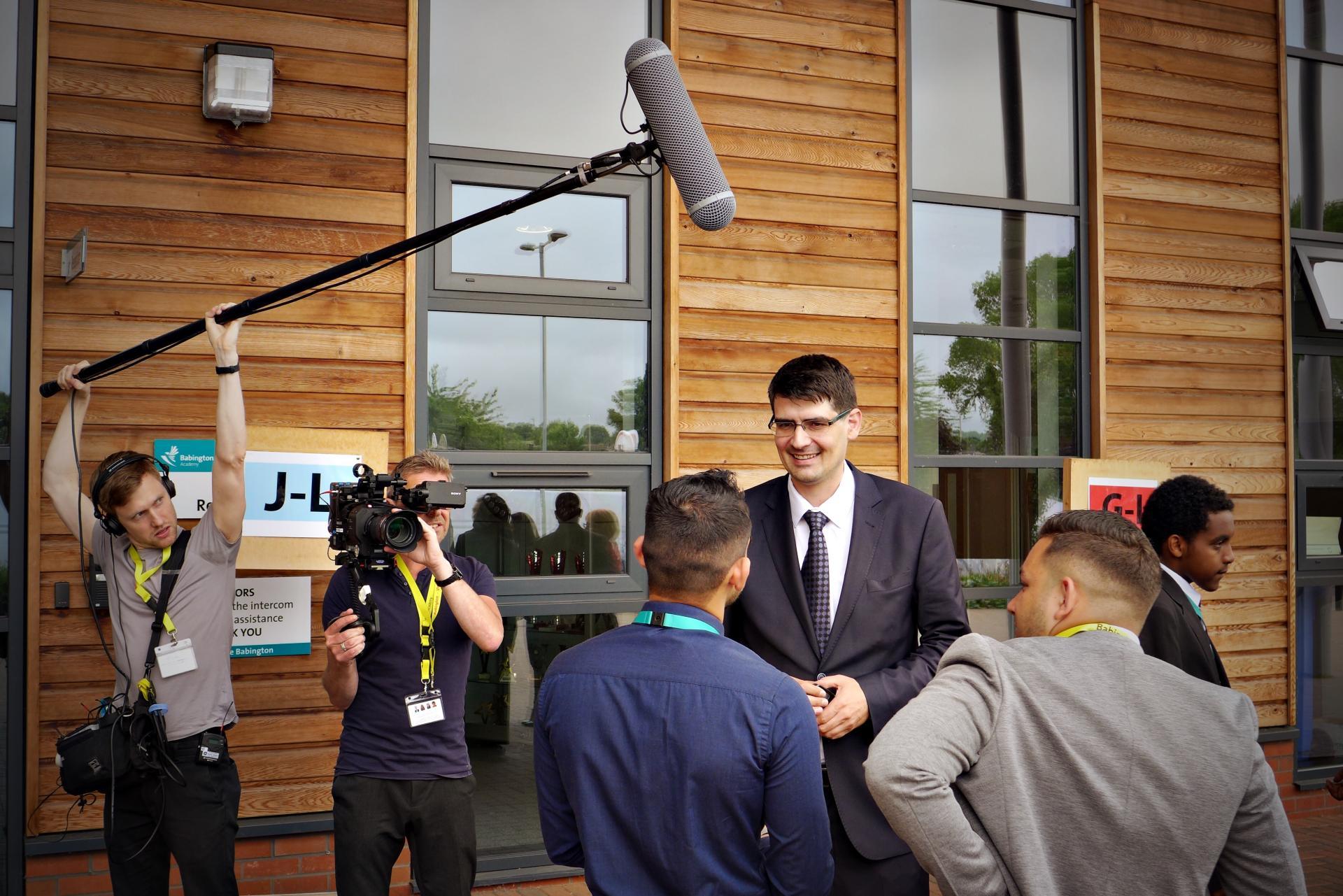
The Secretary of State for Education is being welcomed to the Babington Academy.
Photo by Filip Olšovský
After a short introduction of Babington there is time for Krajňák’s questions. “In Slovakia, we have a problem with special schools. They are attended by six percent of pupils. What is the percentage in Britain?” he asks. The answer is – one percent. Newsome explains the decision to establish such a school is for the city. There used to be more pupils in special schools in Leicester in the past, so the city diverted the money into normal schools to create places for children with special needs. At Babington, they used to have ten such children. Nowadays, they have approximately forty. One of them is a Slovak Roma girl with cerebral palsy. She also went to school back in Slovakia but only for one lesson a week. When she came to Babington she was expecting a similar timetable. Not a chance – she was put into a normal class with a normal timetable, accompanied by a teaching assistant.
Mr. Krajňák has some more questions. He wants to know why the majority of Roma pupils back in Slovakia do badly in school, whereas they are much better off in England. “The first things is we expect them to have good results. Why do you think they cannot learn?” asks Newsome with a rhetorical question. Finally, Krajňák poses his third and most important question: How is it possible your attendance is so good? Newsome answers: we are looking for barriers that keep children from attending school and we are trying to get rid of them. Is the bus to school too expensive? We bought a thousand bus tickets, got a bulk discount and sold them to the children at half price. Do they stay at home in winter because they cannot afford a coat? “Compare the money you spend on keeping the school running and on buying one coat. Then buy the coat,” explains Babington’s Chief Executive Officer.
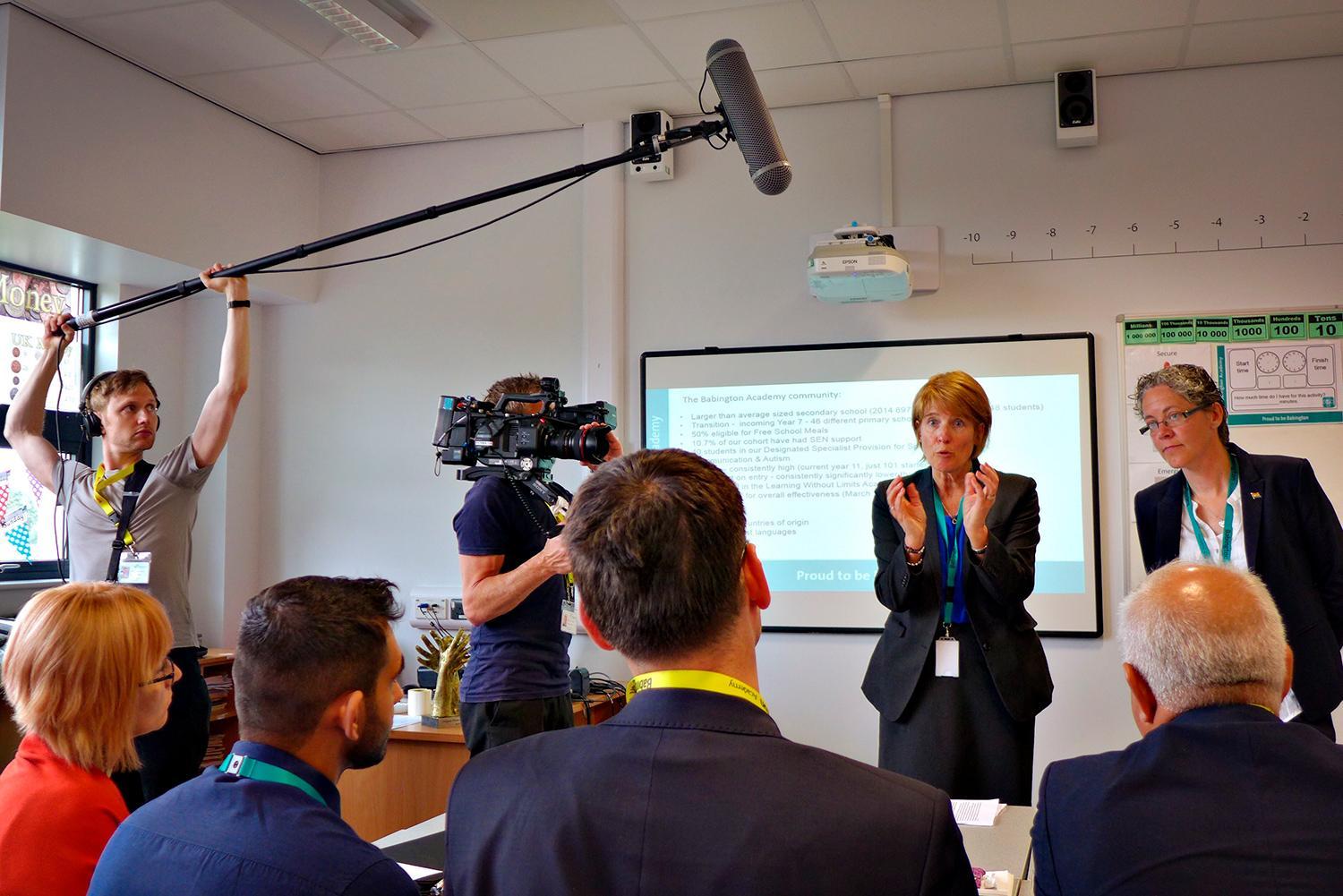
The Chief Executive Officer of Babington, in discussion with the Slovak delegation.
Photo by Filip Olšovský
During the tour around the classes, Mark Penfold whispers something in our ears: “When we were in Prešov, I told your Secretary of state and his colleagues he would not be able to tell which students are Roma and which are not. Now watch him.” And he was right. During the maths class one member of the delegation asks Penfold why there is only one Roma pupil in the classroom. Penfold tells him the truth – there are seven of them, you just cannot recognize them. Partly owning to the fact they wear uniforms and partly because of the multi-ethnic nature of the school. Only when the teacher pronounces a Slovak name like „Simonka” we are able to tell where the girl comes from.
After a couple of weeks we meet Krajňák again, this time in his office at the Slovak Ministry of Education. The experience at Babington only confirmed to him that the migration of Slovak Roma to Britain can no longer be ignored. He says the primary goal should be to revise the system for children coming back to Slovakia after years spent in the British school system. “For example, when refugees from Syria arrive in Slovakia, they are immediately enrolled on a language course. However, when our children return from abroad, we send them directly to school. We must be able to provide language courses for them as well,” says Krajňák.
He also admits there is a problem with attendance in Slovakia. However, he cannot imagine a solution as strict as in the UK. “They have a strong, repressive system. No one has regard for not coming to school. They will simply cut your social benefits. This is the point where the Slovak system fails,” he admits. However, as Krajňák adds, we should not be too harsh on ourselves. Slovakia is not a developing country and thanks to a pretty dense network of schools each child has the right to attend a school. The weak attendance is, according to Krajňák, mainly the result of poverty which is significantly lower in Britain where Slovak Roma have more opportunities to find a job.
“The head teacher of primary school in Bystrany insists we tell ‘her’ Roma in England they should not come back.”
“After the visit to Britain, I feel much more reassured that all the Roma kids in England come from considerably better families. I have to stress that the families moving abroad are mainly young parents coming from cities. There are no poor children coming from settlements without any running water and with lice in British schools,” says Krajňák with confidence. Maybe he is right – he knows quite a lot about the reality of Slovak Roma settlements and their citizens. However, if you stroll around Page Hall you will come across Roma that are not only from Prešov but also from settlements in Bystrany. Unfortunately, there are no statistics supporting either side of the argument. Let’s admit that it is only the Roma with better backgrounds moving to Britain, but the key question remains unanswered – why? Because, if we are not able to provide help for the “better ones” and we send their children into special schools, it only makes the shame more unbearable.
Let us paint the last picture symbolizing the state of things in Slovakia. It begins with Júlia Čurillová, the head teacher of primary school in Bystrany shouting at us from the drive-way. She insists we tell “her” Roma in England they should not come back. Although such claim might look pretty bad on paper, she does not mean it that way. She only wants us tell the parents of Roma pupils studying in Britain they should do everything that is in their power for their children to pursue their education in Britain. Nothing good awaits them at home even if the head teacher tries her best – and, believe us, she does.
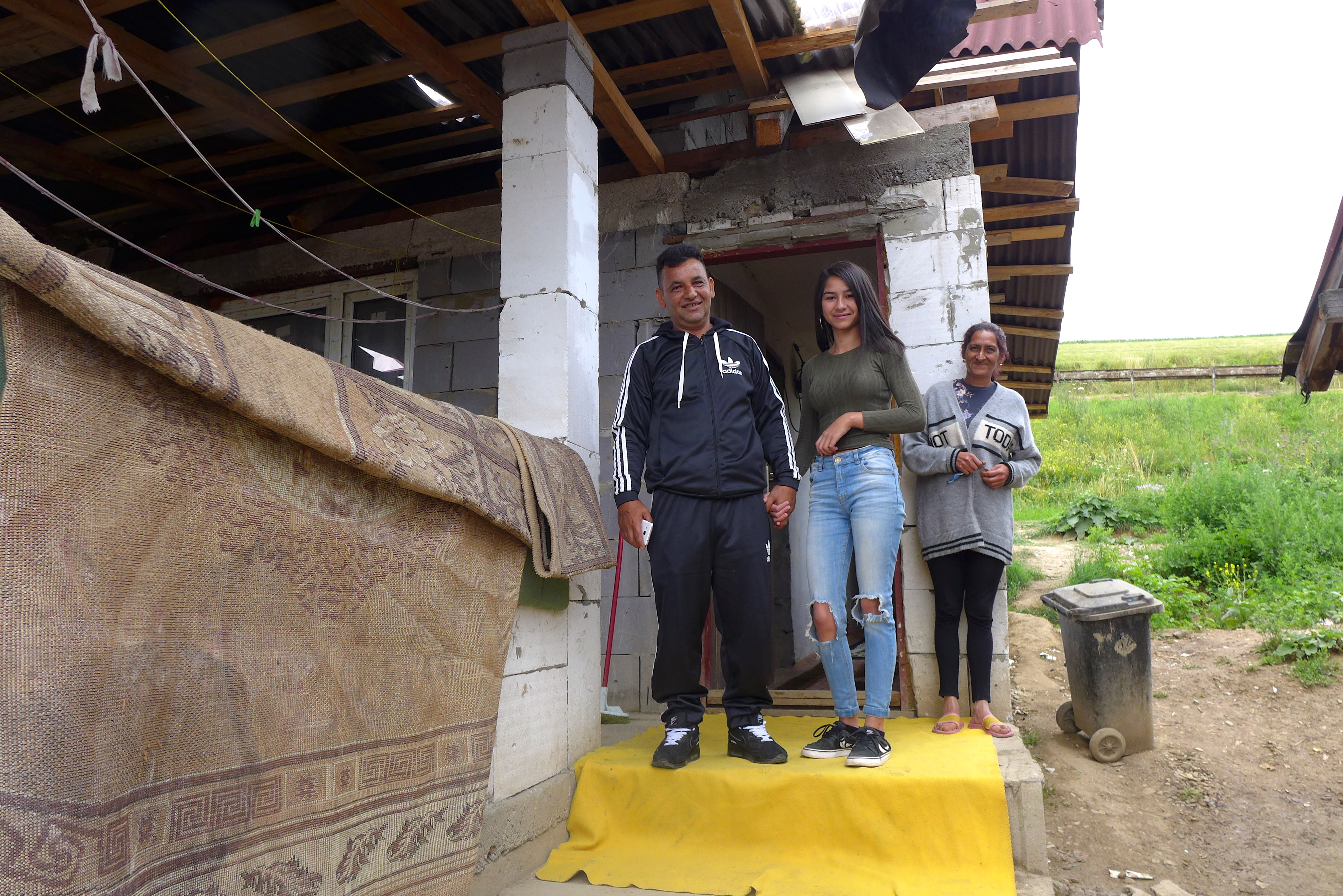
Photo by Filip Olšovský
Galina
It’s June 2018 and there is a family of four waiting for us in front of the church in Bystrany. Without much hesitation they get into the car and direct us towards their humble house in the middle of the Roma settlement in Bystrany. Firstly, they ask if we have the movie. The one Slovak documentary maker Hannah Skrinar shot ten years ago. We find it online and instead of talking we spend the first ten minutes of our visit watching. There is the brown brick block, then the concrete chimney and then there’s the scene with four-year-old Galina preparing for her first day in kindergarten.
Fourteen-year-old Galina smiles. She does not remember much from that day. Only her parents told her some Slovak documentary maker filmed her that day and later presented the movie at the Sheffield Doc/Fest.
When the movie ends, Galina’s father Roman starts to talk. They returned from England only a couple of weeks ago. There was not enough work in Sheffield. The family is worried – they would rather stay in England and they are already thinking where to go next. They definitely do not want to stay in the settlement. It is noisy, dirty and there is no work.
Galina was in the ninth grade. She would have been choosing her GCSE subjects next year. She wanted to become a nurse. Her father says she had the grades to pursue that dream – she had an excellent attendance and the parents got a number of congratulatory letters from the school. However, unlike her peers, she had no one to stay with in Sheffield. She had to come back with her parents.
Galina came to school in Bystrany but did not pass the so-called differential exams. She does not speak much Slovak and you cannot do those tests in English or Romani. So now Galina is in the fifth grade (the equivalent of Year 7 in Britain) with children that are two or three years younger. If she stays in Bystrany, she will probably not be able to finish her primary education. She will not become a nurse in Slovakia.
Ewa Wołkanowska-Kołodziej
Ewa Wołkanowska-Kołodziej was selected for the 2019 European Press Prize shortlist with ‘Prisoners of the fourth floor‘