

One day in Gaza
12:00 a.m.
In the first minutes of the new day, Bashar Khattab arrives at his destination. The 18-year-old electrician has been walking through the darkness for two hours; now he reaches the bridge near the small town of Nuseirat, in the middle of the Gaza Strip, and sits down. A few hundred metres away, behind a checkpoint of the Israeli army, is a food distribution centre that will open in nine hours. Bashar hopes to get food for himself and his family there. He is not the first to wait; hundreds of people are already huddled along the embankment at the foot of the bridge, and hundreds more are still to come. The people have piled up a sand wall for protection, behind which they hide. They are repeatedly fired upon from the checkpoint. Strictly speaking, no one is allowed to stay here. But Bashar has learned from experience that only the fastest get any food. And from here, he doesn’t have far to go when the centre opens. Bashar will later send Die Zeit video footage of the waiting crowd. He will say that he leaned his back against the sand wall and tried to doze off a little.
2:00 a.m.
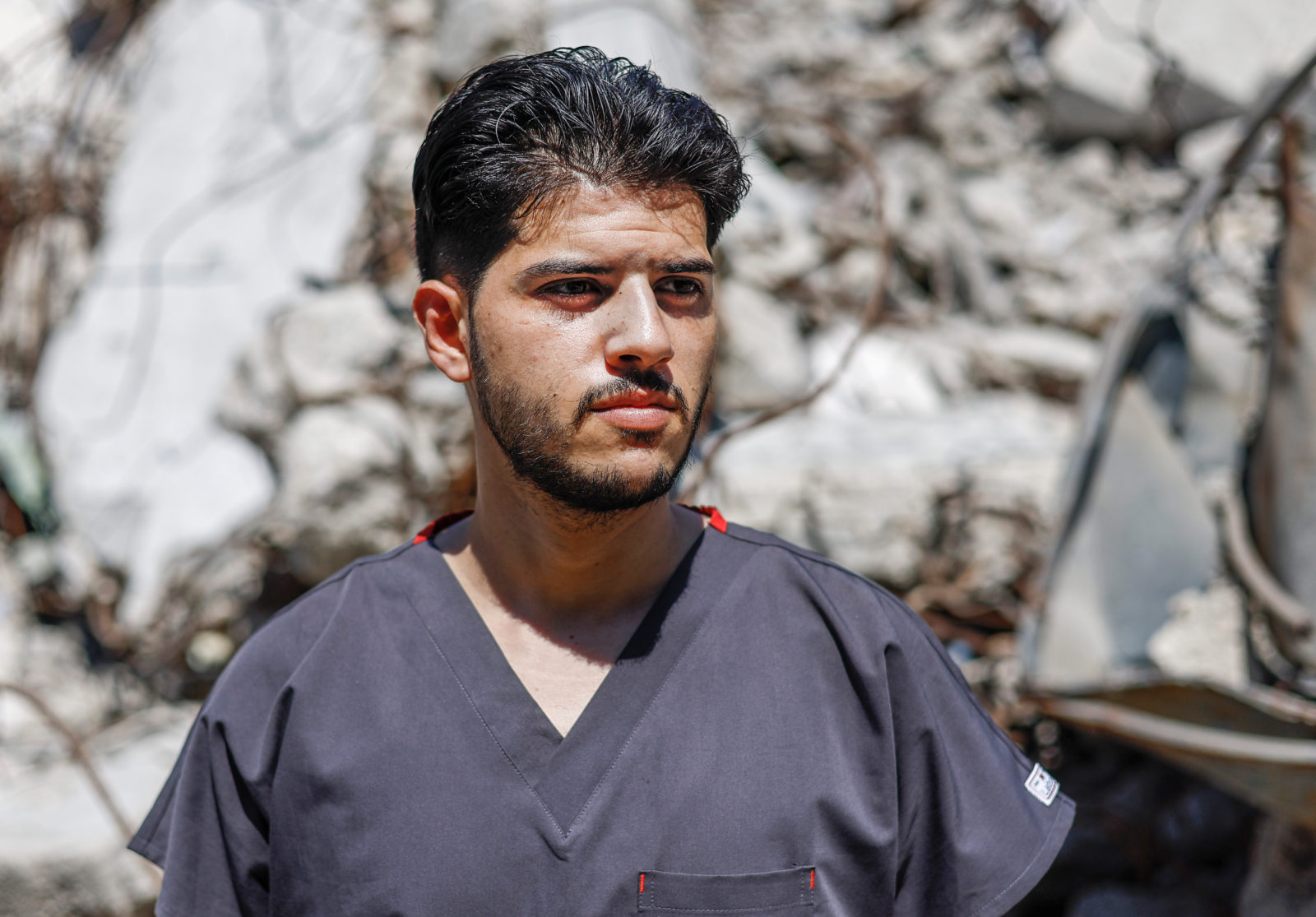
About three kilometres away, on the second floor of a house in Bureij, the town next to Nuseirat, an explosion rouses 23-year-old Jamil Mahmoud from his sleep. After a moment of disorientation, he stumbles outside, together with his sister and her two children. From the street, they see that the fifth, top floor of their house has been destroyed. That is where Jamil’s cousin and uncle live.
©Mahmoud Issa
Jamil Mahmoud will later tell Die Zeit that he immediately ran back into the house, up the stairs, smoke rushing toward him. He sees collapsed walls, smashed furniture, what he believes to be parts of a rocket. Then he finds his uncle, trapped under the bed, which was apparently knocked over by the blast wave from the explosion. His uncle is conscious but bleeding from a head wound. Jamil bandages it with a T-shirt lying on the floor. A little later, someone films his uncle being led out of the house in a daze, supported by several people. His upper body is bare; he has a cloth wrapped around his waist. Jamil Mahmoud stays upstairs on the fifth floor. He goes into the next room and sees a lifeless body. It is his cousin. He was 25 years old and due to get married next week.
5:00 a.m.
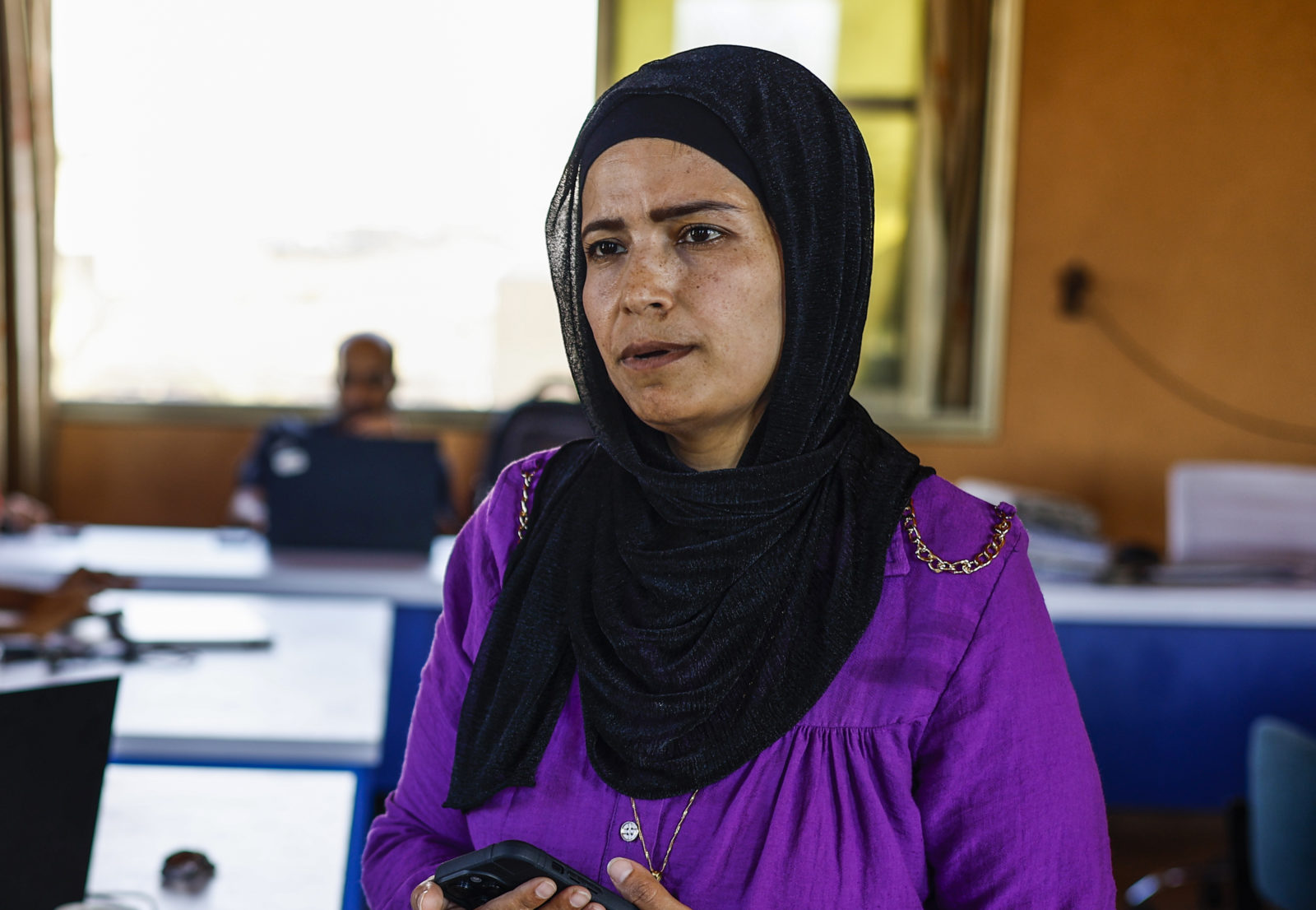
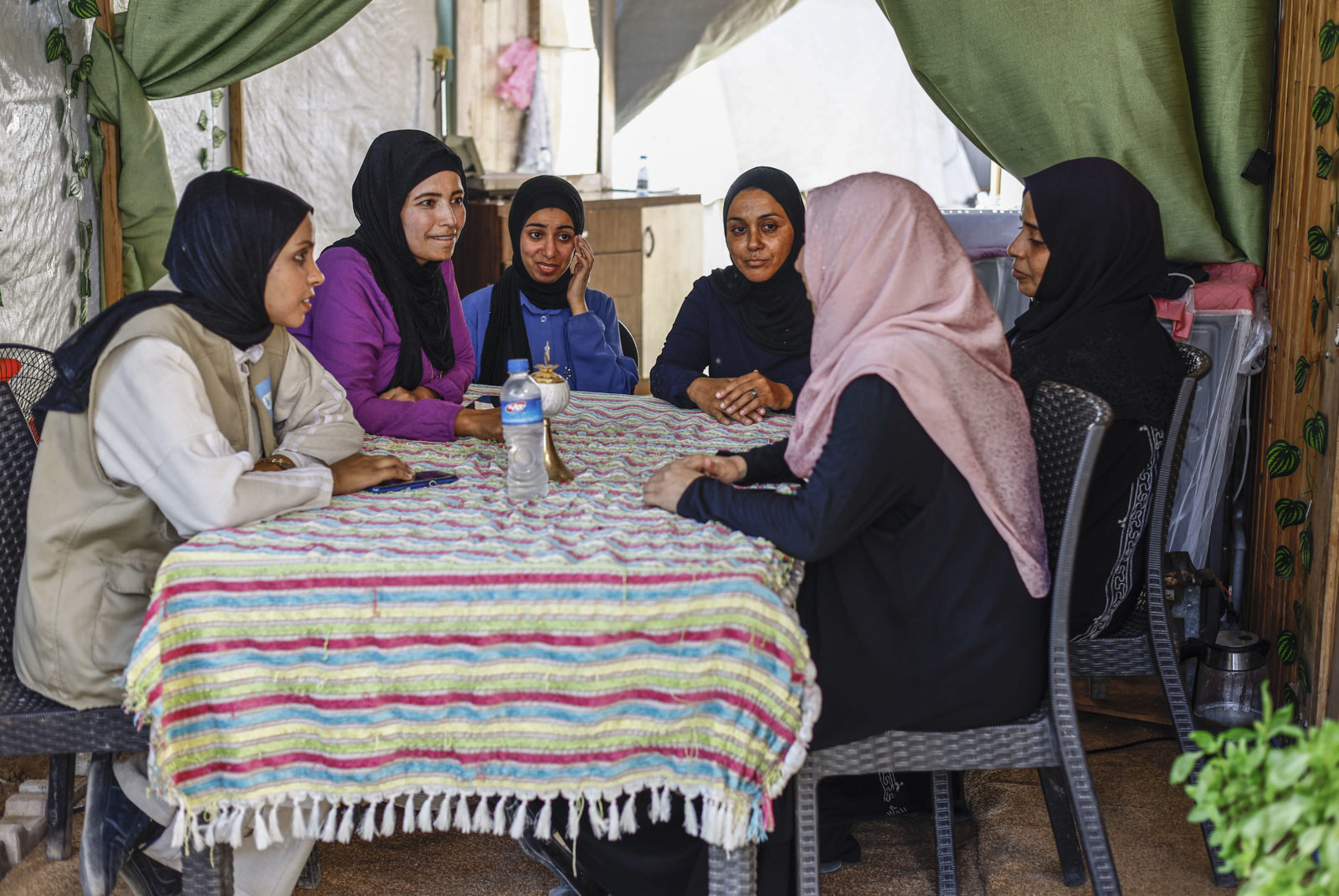
In Al-Mawasi, a small town in the south of the Gaza Strip, Reem Alreqeb, 37, steps out into the darkness. She lives in a fenced and guarded camp made up of tents and wooden trailers. This is where SOS Children’s Village has found a temporary refuge. It was originally located in Rafah, on the border with Egypt, but the town was almost completely destroyed by the Israeli army last year. Reem Alreqeb is the director of the village. Together with her team, she looks after sixty children and young people, most of them war orphans.
©Mahmoud Issa
This morning, they are saying goodbye to four girls and four boys between the ages of 16 and 18 who had been staying with them temporarily. Today, they are to be given the opportunity to do something almost impossible: leave the Gaza Strip. The teenagers have received scholarships for boarding schools in Bosnia, Tanzania, and South Africa. UNICEF vehicles will take them to Jordan, from where they will continue their journey. Reem Alreqeb hugs the girls goodbye and shakes hands with the boys. “As soon as they are in Jordan,” Reem Alreqeb will say later, “we will hopefully hear from them.”
©Mahmoud Issa
This dossier recounts the events of 10 September in the Gaza Strip, a completely normal, randomly chosen day in this war, described from the perspective of ordinary people: small business owners, students, mothers, pensioners.
Israel does not allow journalists to enter the Gaza Strip, at least not for independent reporting. It was therefore impossible for the authors of Die Zeit to get a picture of the situation on the ground. Instead, months ago they began establishing contact with people in the Gaza Strip. They accompanied these people remotely through 10 September by means of phone calls, video calls, text messages and voice notes.
Wherever possible, Die Zeit verified their accounts by making inquiries with the Israeli army and the Palestinian Red Crescent, conducting interviews with other eyewitnesses, reviewing photos and videos, and with the help of the Palestinian photographer Mahmoud Issa, who works for renowned agencies and visited some of the people featured here.
6:00 a.m.
In her flat in Gaza City, Alaa Albana, 33, has got up early, quietly so as not to wake her husband and their five children. The whole family sleeps in one room. Now Alaa Albana is mixing wheat flour, yeast, salt, and water into bread dough in the kitchen. There are no more bakeries in this part of town. Her son will take the dough outside in a moment. Some neighbours have built homemade clay ovens in which they bake bread over an open fire and earn a little money that way.
For several days now, since the bombing has become so intense, Alaa Albana says she has been unable to shake a thought: What if I am killed? That is why she is trying to teach her eldest daughter, Tala, everything she needs to know so that, in case of emergency, she can look after her younger siblings. Tala is twelve, and the day before yesterday she did homework for the first time on her own with her seven-year-old sister and her nine-year-old brother. She washed the youngest sibling, a three-year-old girl. Today, Alaa Albana has decided to show Tala the most important things in the household.
7:00 a.m.
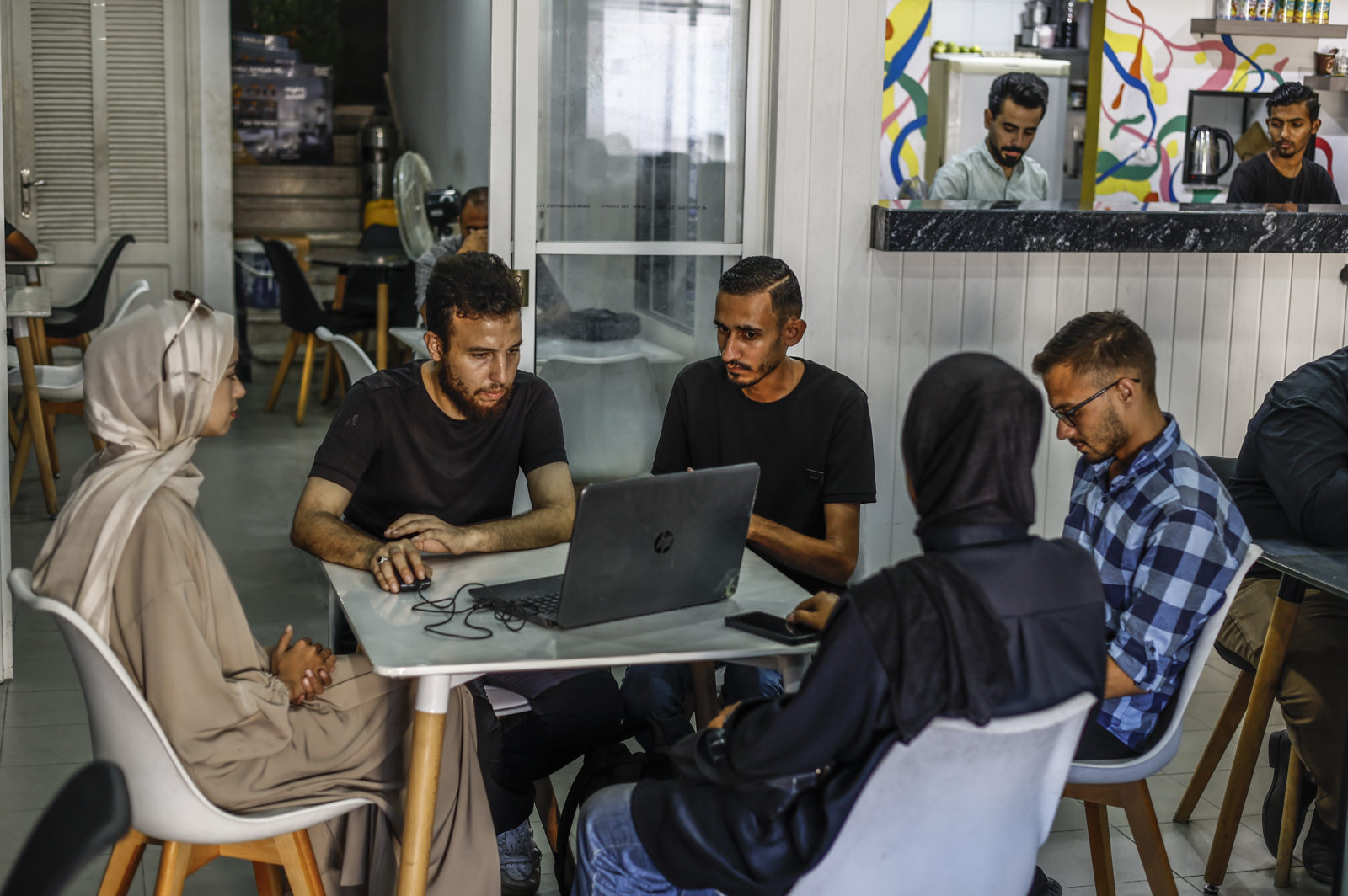
On Rimal Street in the centre of Gaza City, Rami Bolbol, 28, rolls up his mattress and unlocks the door to his internet café, where he also lives. It’s called Techno Time; he only opened it at the beginning of the year, during the brief ceasefire between Israel and Hamas. Bolbol says he put all his savings into the project. Through his phone camera, he shows Die Zeit the interior of the café: a large room with desks, walls painted in bright colours, a spotless floor, and a few potted plants.
©Mahmoud Issa
Rami Bolbol’s wife fled to Egypt at the beginning of the war. He wanted to follow her, but then the border was closed. When the power supply in Gaza City collapsed and almost no one had stable internet at home anymore, Rami Bolbol decided to open the café. Here, petrol-powered generators run all day. Bolbol charges the equivalent of two dollars per hour for internet use. Today, he already knows, it will be busy.
10 September, which was supposed to be a normal day, happened to be the day after the largest evacuation order of the war. On 9 September, the Israeli army dropped thousands of leaflets over Gaza City, where one million people live. They read: “To all residents of Gaza City. The Israeli forces are determined to destroy Hamas and will act with great severity in the Gaza City area, as they have already done in other parts of the Gaza Strip. For your safety, proceed immediately to the humanitarian zone in Al-Mawasi. It is extremely dangerous to remain in this area.”
8:00 a.m.
In their flat in Gaza City, Shorouq Elgherbawi, 32, and her husband have already begun packing. Early tomorrow morning, a lorry will come to take them and their three children to the south of the Gaza Strip, to Al-Mawasi, as ordered by the Israeli army. Shorouq Elgherbawi and her husband have the possibility of renting a tiny plot of land there. But they still need a tent to live in, which they plan to get today. Now they are filming themselves dismantling their furniture. The video shows cupboard panels, drawers and doors lying scattered on the floor.
They chop up the furniture that doesn’t fit on the truck bed into firewood, which they will also take with them. Their one-and-a-half-year-old daughter toddles across the screen in a watermelon dress. The three-year-old throws a board onto a pile of wood. The five-year-old bangs on a piece of wood with a hammer. Behind him, you can see down to the street; the outer wall is missing.
The five-year-old: “Are we leaving Gaza City?”
The mother: “Yes, we’re leaving.”
The five-year-old: “Why?”
The mother: “Because it’s become dangerous, there is bombing. Didn’t you hear today how much bombing there was? We’re going somewhere far away.”
The three-year-old: “There’s the sea.”
The mother: “Do you want to stay here in Gaza City?”
The three-year-old: “Yes.”
The mother: “Hopefully we’ll come back. Say: ‘Hopefully we’ll come back!’”
The three-year-old: “Hopefully we’ll come back!”
9:00 a.m.
Bashar Khattab has been sitting under the bridge for nine hours now. Suddenly there is a loud bang, the signal for those waiting: the distribution centre has opened. Hundreds of people start running up the embankment and onto the street. They stream into the fenced-off area, whose gate is now open. Behind it are packages. People rush over, tear them open, and take whatever they can carry. Bashar grabs something from the ground. Three packs of lentils, three packs of macaroni, five packs of flour. With the parcels in his arms, he runs back.
Fifteen kilometres away, in Rami Bolbol’s internet café in Gaza City, around the same time about fifty schoolgirls and female students arrive. They sit down at the tables, some open their laptops, others connect their cell phones to the Wi-Fi. Some are taking their high school exams; others their university exams.
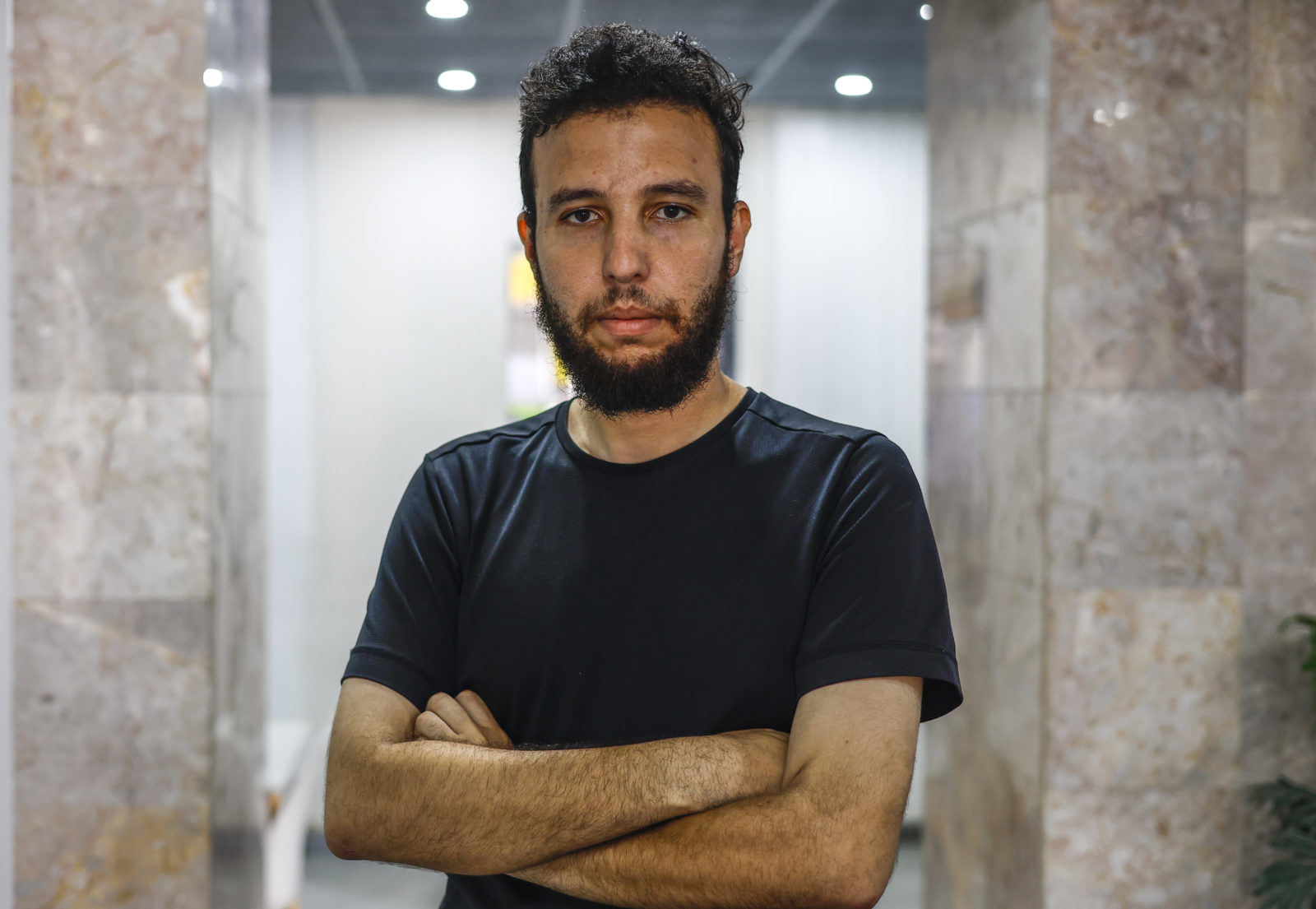
Rami Bolbol decided long ago to allow exclusively girls and women into his café. With men, he says, you never know whether the Israeli army might accuse them of having ties to Hamas. He hopes this will reduce the risk of an attack.
Bolbol has actually agreed with his wife in Cairo that he will leave the city as soon as the Israeli army asks him to. The income from his café affords him privileges that few people in Gaza City have. As a precaution, Bolbol has rented a basement in the south of the Gaza Strip where he can store the tables, chairs, and cabinets from the café. He has also arranged two lorries for the move. Now that the leaflets have been dropped, he should really call the drivers. But he doesn’t. At least today, he wants to stay and keep the café open. How else are the schoolgirls and students who are now sitting at their laptops supposed to take their exams?
For the young women, today will determine whether they are allowed to study or admitted to the next academic year. It is the first time since the beginning of the war that exams are being held again. This time digitally, as most schools have been destroyed. Classes have also been held online in recent months. Rami Bolbol will later say that many of the women were visibly nervous. Bolbol checks the internet connection and makes sure the generators are running.
10:00 a.m.
The 23-year-old medical student Nour Nofal is standing in operating room 6 of Nasser Hospital in the city of Khan Yunis, the largest clinic in the southern Gaza Strip. Nour is in her sixth year of study and today she is assisting the surgeon. Nour Nofal later reports that a large man was lying on his stomach on the operating table. She estimates him to be around his mid-thirties. The man has a gunshot wound to his lower back. Nour Nofal cannot say exactly where the injury came from, but as she understands it, he was shot a few days ago while queuing for food. The bullet pierced two lumbar vertebrae. Nour Nofal hands the surgeon the instruments; she is the only woman in the operating room. Today, she is also allowed to insert a screw, which she is doing for only the second time. Later, she says that during the operation a fly landed on the surgeon’s glove. “A fly in the operating room – that’s not acceptable!”
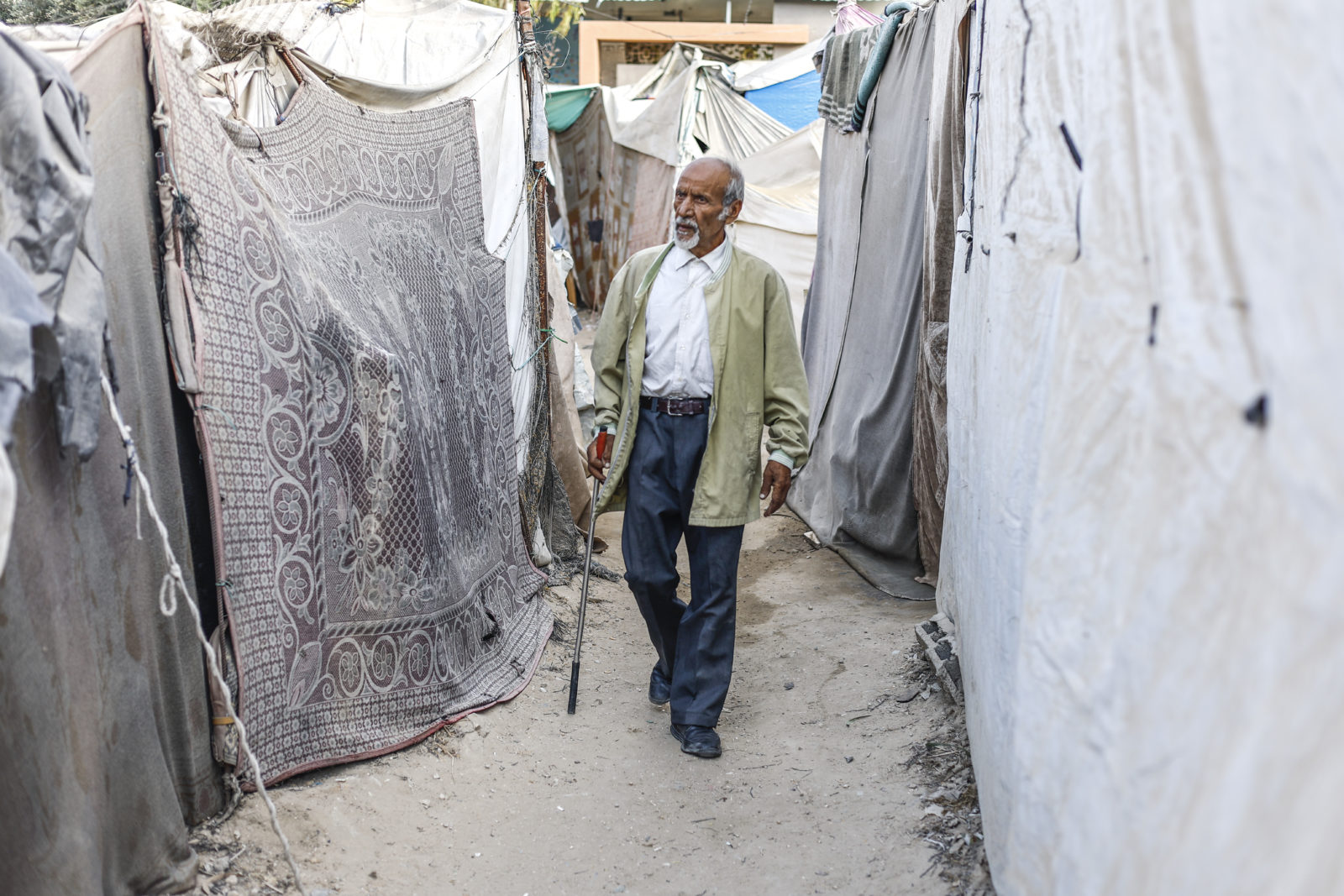
While Nour Nofal is operating in Khan Yunis, twenty kilometres to the north, near the small town of Nuseirat, Mohammed Khattab is standing on the street. He is wearing a light blue shirt, has a Palestinian scarf wrapped around his head, and is leaning on a crutch.
Khattab is 80 years old and has a grey beard. He is the father of Bashar Khattab, who waited under the bridge for nine hours that night until the distribution centre opened. The father is not sure whether his son was there, but he suspects so – and he is angry. Bashar had already been to the distribution centre the day before and came back completely distraught. He said he had been robbed and that one of his best friends had been shot and killed.
Mohammed Khattab forbade his son from going back to the food distribution centre. Apparently, Bashar did not obey. Now the father has come to a street corner to look for his son. Bashar should pass by here on his way back from the distribution centre. Mohammed Khattab is with one of his daughters, 21 years old, who is filming him standing on the street. In the video, he calls the food distribution centre the “death distribution centre.”
©Mahmoud Issa
Bashar’s friend is not the only person to have been killed while waiting for food. On 10 September alone, at least nine people are reported to have been killed near the distribution centres in the Gaza Strip, as the Palestinian Ministry of Health was later to report. According to UN figures, between the end of May and the beginning of August 860 Palestinians were killed while searching for food.
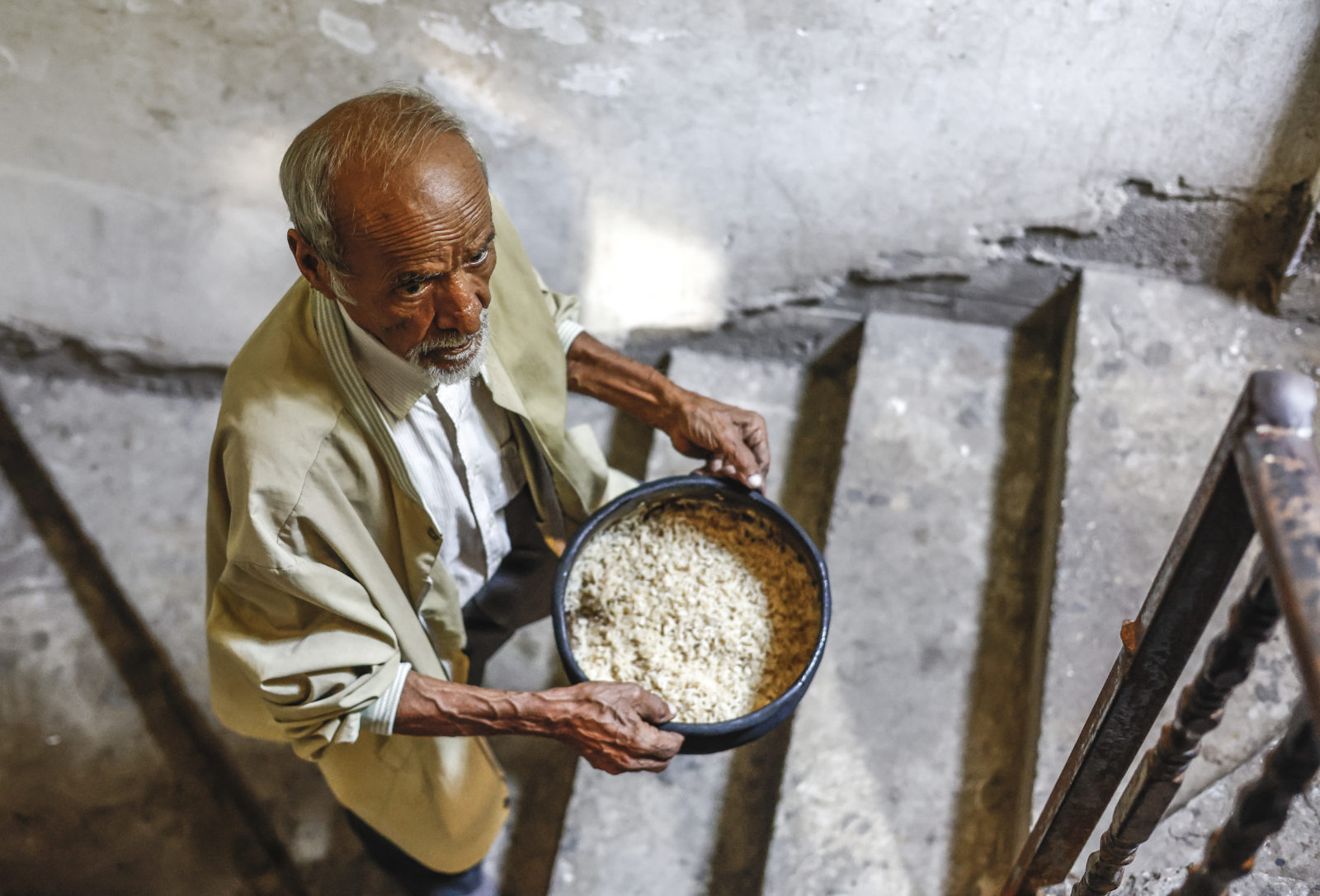
Mohammed Khattab sees people returning from the distribution centre with large white sacks. Most are walking, some are sitting on carts pulled by donkeys. Some of the passers-by greet him; Mohammed Khattab is a well-known man in this area. He is a professor of medicine who studied and worked in Germany, in Düsseldorf and Bochum. He has been back in the Gaza Strip since 1995. He does not see his son Bashar.
A few kilometres away, a body is being carried through the streets of Bureij, wrapped in a white cloth. It is the body of Jamil Mahmoud’s cousin, who was killed early in the morning on the fifth floor of his house. Family, friends, and neighbours have gathered; dozens of people sing and shout “Allahu Akbar.” Jamil’s uncle, the father of the deceased, is also there. In videos of the funeral procession, he can be seen with crutches and a bandage around his head.
The cemetery, located just outside the city, is in a so-called “red zone,” a restricted area controlled by the Israeli army. Anyone who enters such a zone risks being shot without warning. Most of the people in the funeral procession stay behind, but Jamil Mahmoud and about twenty others continue on. They bury the cousin next to an oleander bush. Later, Jamil will send a photo of the grave and say that after the funeral he told his dead cousin: “Go to my brother and tell him that Jamil misses him.” His brother was killed in June last year, says Jamil Mahmoud, also in an attack by the Israeli army. At the funeral, his cousin was still standing next to him.
11:00 a.m.
In Rami Bolbol’s internet café, Malak Lafi, 19, is sitting her final exam for her first year at university. Multimedia Studies. Actually, she will say later, this is how she imagined studying would be: first a coffee in the morning, then taking the bus to class. But there is no longer a lecture hall; the university has been destroyed. Malak studies at home or in the internet café, watching videos that her professors send her – recordings in which you can sometimes hear a bomb going off in the background. Or she experiences moments like this: “You’re watching a lecture, you think the professor is great, you love the course, and then you get a message that she was killed in an Israeli attack.” Malak Lafi has studied a lot in the past few weeks; her exam will last three hours. She is due to receive the results later today.

©private
In Al-Mawasi, Mahmoud al-Shaer, 35, watches the long line of refugees. Al-Shaer is a writer. Before the war, he ran two cultural centres, one in Rafah and one in Gaza City, both of which have been destroyed. Now he lives in Al-Mawasi, in the south of the Gaza Strip. This is where, according to the leaflets distributed by the Israeli army, people from the north are supposed to flee to. Al-Shaer sees the road clogged with lorries, cars, and donkey carts. In a video call, he says that friends from Gaza City have been calling him all morning, asking if he can help them find a place to stay. He starts making phone calls.
12:00 p.m.
Mohammed Khattab, Bashar Khattab’s elderly father, has been waiting in vain at the street corner for two hours. Now he comes home and sees packs of lentils, macaroni, and flour on the table. Bashar is back, then – he must have taken a different route home. The father finds his son asleep on a mattress. “I can’t describe how relieved I was that nothing had happened to him,” the father says on the phone in German. “I tell my children that they mustn’t go there anymore. It is completely forbidden.”
©Mahmoud Issa
In the internet café, Rami Bolbol is on the phone with his business partner. They are discussing whether they should close the café and flee. They wonder if they will ever be able to return to Gaza City. Gaza City is Rami’s home. This internet café, he later tells Die Zeit, is his workplace, his source of income, his creation. Bolbol says he has hardly left the café in three months. “I wouldn’t just be leaving my dream behind. I would be leaving Rami behind,” he says.
On the call, Bolbol and his partner settle on a compromise. The day after tomorrow, they plan to move half of the furniture to the basement in the south that Bolbol has rented. For the time being, they themselves will remain in Gaza City with the rest of the furnishings.
After three hours, medical student Nour Nofal leaves the operating room in Khan Yunis. In the end, she was even allowed to suture the wound. The patient survived, but he will never be able to walk again. Now, during her lunch break, she says on the phone that during the operation she forgot the worries with which the day had begun. Nour Nofal lives with her family in a tent not far from the clinic. The tent belongs to a man from Gaza City. This man wrote to her saying that he might have to follow the Israeli army’s orders and leave the city. In that case, he would need the tent for himself.
If that happens, Nour Nofal would have to find new accommodation for herself, her parents, and her three sisters with their children. She plans to call the man after work.
1:00 p.m.
Alaa Albana, the mother who is trying to prepare her twelve-year-old daughter Tala to take care of the family in an emergency, is standing on the roof of her house in Gaza City. She is cooking lunch on an open fire. Tala helps her, adding wood and seasoning the soup with salt, onion powder, and chili. She sets the table.
Jamil Mahmoud’s family has returned from his cousin’s funeral. While his mother makes coffee for the mourners in the kitchen, Jamil sits in the bedroom and says on the phone that the funeral was difficult to bear. Just two days ago, he had talked to his cousin about his planned wedding. His cousin had been very excited and joked, “Jamil, don’t make any other plans for that day.”
After the phone call, Jamil’s mother comes into the room and asks him to fetch some firewood so she can cook lunch. Later, Jamil Mahmoud sends a video showing him chopping the family’s old red-and-gold lacquered television cabinet into small, burnable pieces with an axe. His mother cooks a stew for the mourners.
2:00 p.m.
In the internet café in Gaza City, it is very quiet. Everyone is concentrating on their exams. Suddenly, there is a loud bang and the walls shake; a rocket has struck somewhere nearby. The students stand up and go to the window. Rami Bolbol later finds a photo of the impact on social media. It shows a column of black smoke about 500 metres from his café. The young women sit back down at their tables. “It doesn’t affect us anymore. We’ve lost that feeling,” Bolbol says on the phone.
©Mahmoud Issa
Malak Lafi finishes her exam. Despite the generators, the internet went briefly down twice, but she was able to complete all the tasks. Now she is waiting for the results.
3:00 p.m.
In Gaza City, Ali al-Joujou, 39, sits in the place where he says he can still be himself. A photo shows him in a small room lined with chipboard. It is the warehouse of a music store. Guitars and Arabic string instruments hang on the walls. In the middle is a keyboard with a laptop on top.
Ali al-Joujou is a music producer. Before the war, he wrote music for films and commercials in the United Arab Emirates and Jordan. He had a studio and his own equipment. He says it has all been destroyed.
Since then, he has been recording music in this room. Last night, for example, he recorded a song he wrote, sung by a friend. Now he is busy mixing it on his laptop. Al-Joujou says he just needs to open his laptop, plug in the sound card, and he feels better. “When I’m working, I’m happy for a moment. The rest of the time, I’m like a zombie.”
In his song, Ali al-Joujou wrote:
“I am in pain, even though the tears have dried.
The pain is still there.
Longing burns in my heart.
I wait for the morning to break.”
4:00 p.m.
Jamil Mahmoud’s father complains of chest pains. Jamil sees that he is sweating profusely. He asks his father if he has taken his blood pressure medication. His father says no, he hasn’t, because of the chaos in the morning, the rocket strike, the funeral. So Jamil Mahmoud goes to the pharmacy to buy Concor, a medication that slows the heartbeat and lowers blood pressure. It is not in stock in Bureij. Jamil later says that he then walked on to a neighbouring district, where he was able to get it, for 60 shekels – about 18 dollars.
5:00 p.m.
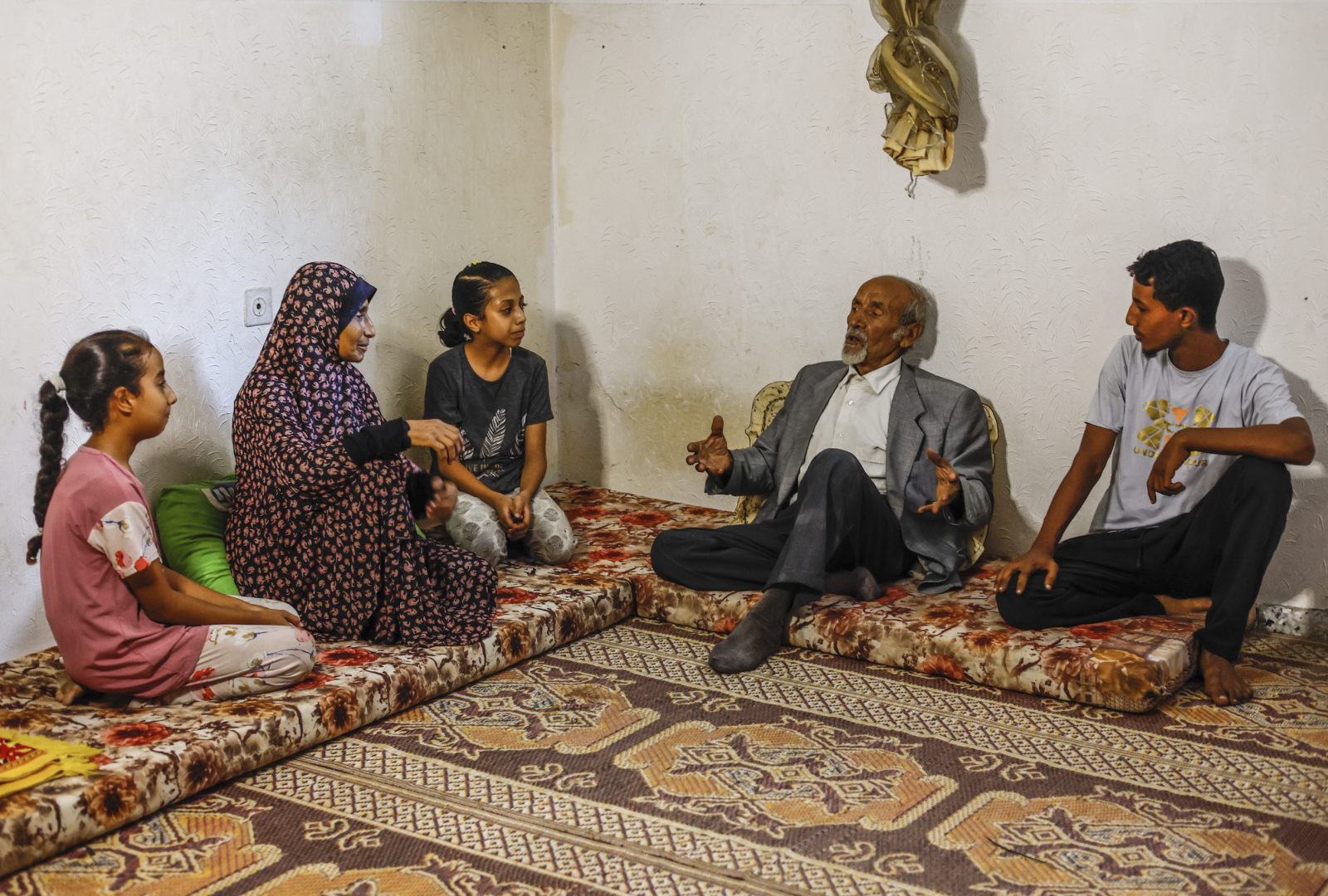
Mohammed Khattab, the elderly professor, sits with his six children drinking tea – they talk about the day, about the situation at the food distribution centre. His daughter writes down what he says: “As we walked down the street toward the death distribution centre, I kept telling my daughter to walk to my left. That way, if a bullet came from the east, I would be hit and not her. My daughter cried when she saw tens of thousands of young people forced to go to the death distribution centre just to get a little food. The scene was shocking and extremely sad.”
©Mahmoud Issa
Malak Lafi receives an email. She passed the exam at the internet café with 92 out of 100 points and has been admitted to the next academic year.
It is the third phone call that day with Rami Bolbol, the internet café owner. The schoolgirls and students have left. Only now does he mention that today is his birthday. He is turning 28. Two of his friends are still there; he now tells them as well that it is his birthday. Jokingly, he asks them: “Will you bring me something sweet?”
6:00 p.m.
Alaa Albana’s twelve-year-old daughter bakes bread on her own for the first time. Tala kneads the dough, shapes the loaves, and fills them with cheese. Then she goes down on her own to the neighbours with the makeshift clay oven.
7:00 p.m.
After finishing her shift at the hospital, the medical student Nour Nofal calls the man from Gaza City whose tent she is sharing with her family. He reassures her, saying that he will not come immediately to take back the tent for himself, but probably in about ten days. Nour Nofal goes home and tells her parents and three sisters about this. One of her sisters says she has a camping tent; it is too small, but in the worst case, they could use it.
8:00 p.m.
In Gaza City, Shorouq Elgherbawi, who is preparing to flee with her family, has returned home after a day of packing and running errands. Her husband has bought wood, nails, and tarpaulins to build two tents for the family in the south – one for sleeping, one as a bathroom. Buying ready-made tents was too expensive, with one currently costing at least 1,000 dollars.
A lorry has been ordered for the next morning to take them all south to Al-Mawasi. They have prepared mattresses, water tanks, toilet bowls, the toddler’s cot, and the chopped-up furniture.
Shorouq Elgherbawi sends a voice message: “I just want this day to end. I want us to be able to sleep peacefully, just sleep, like human beings. And wake up like human beings. And I want us to just drive south and be safe there. It’s such a terrible feeling to leave your own home, even if it’s half destroyed. To move into a tent. Then we’ll be living on the street.”
In Bureij, in the middle of the Gaza Strip, Jamil Mahmoud’s family is trying to find some peace. The fourth and fifth floors of the house are uninhabitable. Jamil’s injured uncle will stay with a brother that night. His father is doing a little better after his heart problems. Jamil writes: “I’m trying to lift the family’s spirits, but I have nothing to lift my own. I’m completely exhausted. Now I’m trying to sleep.”
Die Zeit asked the Israeli army why Jamil’s family’s house was bombed. As of the editorial deadline on Tuesday evening, there had been no response.
9:00 p.m.
In Al-Mawasi, the writer Mahmoud al-Shaer sits in the dark in front of his computer. The light from his phone’s flashlight falls on his face. He says he called about fifty people in the area today, asking if they have land or an apartment for his friends from Gaza City. No luck. No one has room. He sends photos showing tents lined up close together. “There are already so many people here. I just can’t imagine how they plan to accommodate another million.” Reem Alreqeb, the director of the SOS Children’s Village, which is also located in Al-Mawasi, confirms this.
Al-Shaer says that rents here in the south have also risen dramatically. His uncle is currently living in a building shell, without electricity or water. Previously he paid 800 dollars a month; now the landlord wants 2,000. His uncle will move out at the end of the month.
10:00 p.m.
Rami Bolbol and his two friends, who will be staying with him overnight in the internet café, have laid mattresses on the floor. They talk, all of them glancing at their phones from time to time. They ate crêpes that evening. Rami Bolbol got them at a café next door. It was the only sweet treat they could find at short notice. A few days earlier, he had already bought a jar of Nutella, he said, for 100 dollars. The three men eat the whole jar.
11:00 p.m.
Alaa Albana lies in bed and cannot sleep. Through the window she sees flares lighting up the sky, fired by the Israeli army. Albana says that the flares are often followed by bombs. And indeed, she now hears explosions from the neighbouring district.
Albana wonders whether it is right to stay in Gaza City. Her sister-in-law decided to leave today, taking her five children and her sick father-in-law. Of the 25 people in Albana’s apartment, seven will probably soon be gone. Her daughter wants to organise a farewell party for her cousins. Outside, Albana hears the sounds of lorries and cars. It is almost midnight, but the streets are full of people fleeing. The next morning, she says she lay there for a while and wondered: Shouldn’t we leave after all?
Six days have passed between 10 September and the editorial deadline for this issue. During this time, Reem Alreqeb has learned that the eight teenagers from the SOS Children’s Village have arrived safely in Jordan. They have since travelled on to their respective countries.
Bashar Khattab defied his father’s ban again on 11 September. His brother sent Die Zeit a photo of the food Bashar brought back. He wanted to sell some of it on the street.
Jamil Mahmoud’s injured uncle is now living with him on the second floor of the damaged house.
Shorouq Elgherbawi and her family fled Gaza City in a lorry on 11 September as planned.
Rami Bolbol has stored not only half of the furniture from his internet café, but almost everything. In a few days, he plans to move to the south himself.
Nour Nofal and her family unexpectedly had to vacate the tent belonging to the man from Gaza City on 11 September. Since then, she has been sleeping in the small camping tent with her mother, her three sisters, and niece. The men sleep outside on the sand.
Alaa Albana and her family are still in Gaza City. Two of her brothers were injured in a bombing on 14 September, and one is in critical condition.
Malak Lafi has not been reachable by phone since the day of her exam.
On the night of 15–16 September, Israeli forces intensified their attacks, with tanks advancing into Gaza City. An army spokesperson said that more than forty percent of the city’s residents had left.
Musician Ali al-Joujou was at home on Sunday when an explosion shook the building where he lives. He was thrown from the second floor onto the street. He survived, but his right wrist and all the fingers on his right hand are broken. On the phone, his wife says that he will probably never be able to play the piano again.
Dying for gold: Who killed the miners of Buffelsfontein?
The miners had known hunger before, but never like this. Afterwards they would talk of cracked skin, sores that would not heal, an emptiness that stopped you from sleeping or ever being fully awake. George and Alfred called it “the grief of hunger”, a numbness that engulfed you from within. Once they didn’t eat for 18 days. Although what was a “day” anyway, when they had not seen sunlight for months?
Their job was to sit in one of the middle tiers of the 37-level Buffelsfontein gold mine, about a kilometre underground, collecting the food that was lowered through the concrete shaft on a rope, then sending it on to the levels below. In the good times, the miners could get almost anything they desired, albeit at inflated prices: maize porridge, pilchards, biltong, milk, biscuits, mayonnaise, Coca-Cola, beer, whisky, cigarettes, even buckets of chicken from the local KFC.
As well as food, the rope carried humans in and out. The elevator cage had stopped working when Buffels, as everyone called it, had closed down in 2013. So had the ventilation fans and cooling system. At the mine’s deepest point, 3km underground, the natural temperature of the rock was 58.6°C. Not for nothing were the men who dug illegally in the labyrinth of abandoned tunnels known as “zama-zamas”, the ones who “try their luck”.
Much of what the zama-zamas mined was sold to licensed dealers, pawnbrokers or even to small mining companies. Its illicit origins erased, the gold percolated into global markets, eventually making its way into wedding rings and bullion vaults. The higher the gold price soared, the deeper the miners went. In 2015 a troy ounce of gold had cost just over $1,000. In late 2024 it was nearing $3,000 for the first time in history.
But the world of commerce meant little to the men who were trapped underground, slowly starving to death. One day in August 2024, George and Alfred (not their real names) waited for the rope to descend, but it never did. It didn’t come the next day, either. At first the zama-zamas weren’t especially concerned – the food deliveries had paused before. But this time the days turned into weeks, then months. Even with strict rationing, their reserves were getting alarmingly low.
“Being in jail is much better than being in this jail of the mine.”
With no mobile-phone signal, the men were cut off from the outside world. In November a fellow zama-zama entered the mine on a rope and told them that the South African police were camped at the top of the shaft and had taken control of what went in and who came out. By cutting off supplies, the police hoped to force the miners to the surface. But they had also blocked access to the clandestine rope crews that the men relied on to pull them out.
The police said the miners could walk underground to another shaft, where it was possible to leave, and that they were refusing to come out because they feared arrest. The miners said the other shaft was unreachable – a claim supported by the mine’s owners – and that they were desperate to reach the surface. “Everyone wanted to come out,” Alfred said later. “They were like, ‘Being in jail is much better than being in this jail of the mine.’”
Later in November the police finally let residents from a nearby township send a rope down. It took 20 men about 40 minutes to haul up one miner; in the summer heat they could retrieve just a few a day. They also lowered modest amounts of porridge and mageu, a drink made from maize.
But the supplies were too sparse, the rescue too slow. Underground the men fought each other for food, tumbling to the floor, scooping up anything that spilled. They were dying: some from hunger, some from sickness, some from falling after trying to climb to safety. George and Alfred said that a number of the miners started eating the dead, trading three grams of gold for a piece of flesh. One miner, who had already taken his ration of porridge, begged his bosses for another cup, but they refused. Half an hour later, he was dead.
Most of the miners were migrants from Mozambique, Lesotho or Zimbabwe, but George and Alfred were South Africans. All along they had consoled themselves that their government would never kill them. Now they were not so sure. Peering down the endless concrete shaft,
Alfred wondered why he should endure a prolonged death from starvation when he could simply jump.
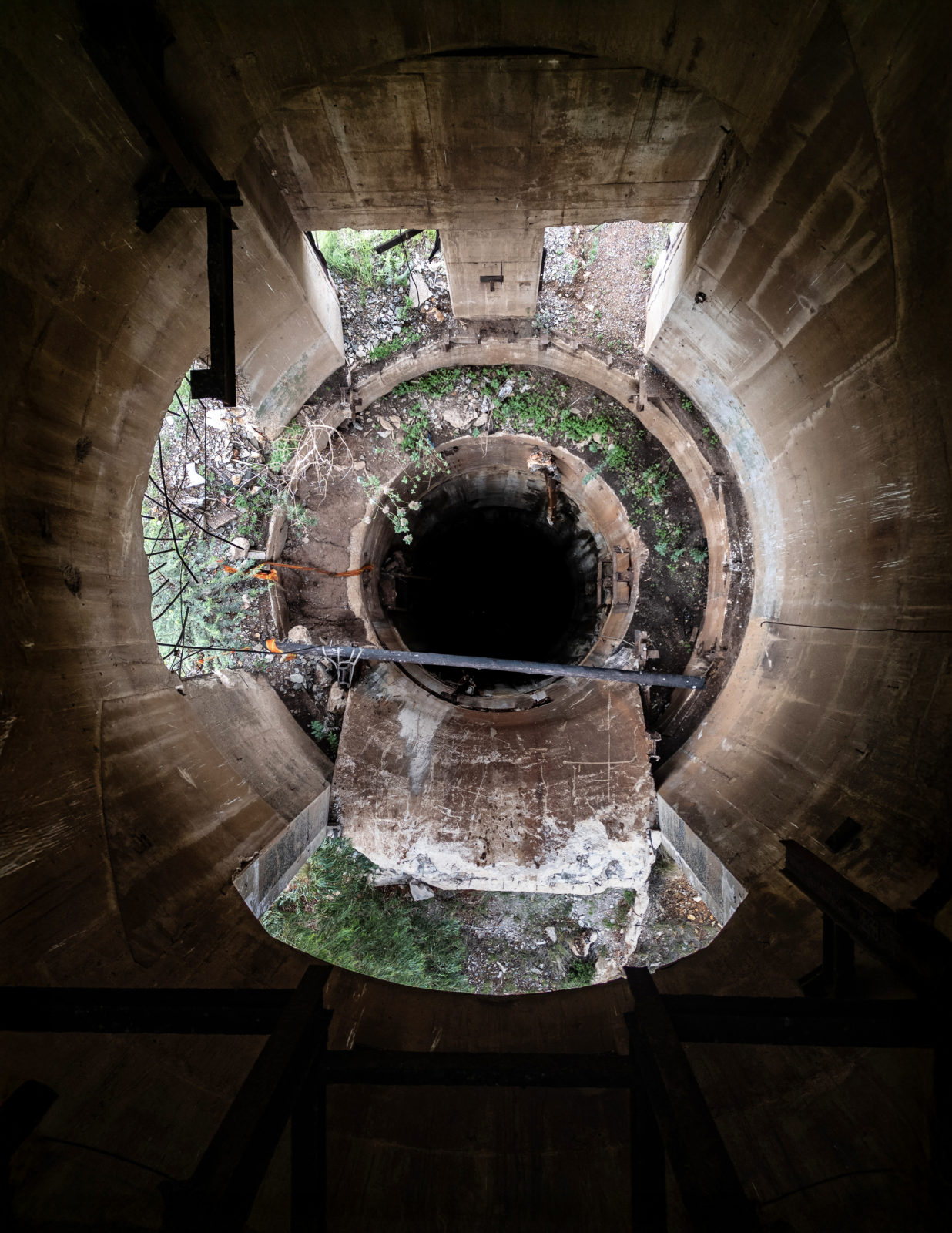
Credit: Tommy Trenchard
When gold was discovered in 1886 on the Witwatersrand, a ridge of rocky hills on the high-veld above what is now Johannesburg, the biggest problem was finding people to dig it up. Working in a mine was poorly paid, physically gruelling and dangerous: miners faced a high risk of dying in an accident or from lung diseases such as pneumonia or silicosis. White politicians, under pressure from the mine-owners, decided that the solution to this labour shortage was to force black Africans off their farms and underground. The mining companies also recruited workers from neighbouring countries, housing them in prison-like compounds near the shafts. In Lesotho, a mountain kingdom from which huge numbers of men migrated to work in South Africa, singer-poets described the train to the mines as a millipede, carrying labourers across “the wilderness of the republic…where people live through unceasing work”.
In the compounds and townships of Johannesburg, the “city of gold”, a rough-and-ready culture took root. The migrants developed a genre of music that combined poetic lyrics with concertinas, accordions and homemade drums fashioned from car tyres and paraffin tins. Women danced alluringly as they played, and the music became known as “famo”, from the Sesotho phrase ho re famo, which means “to lift up the skirts”.
Gold-mining was deeply exploitative and highly productive: by some estimates, South Africa has contributed 40% of the gold ever mined. Buffels, which opened in 1953, was one of several mines clustered around the small city of Klerksdorp, a two-hour drive south-west from Johannesburg. In its six decades of operation it produced 2,200 tonnes of gold.
A corporate brochure for Buffels published in 1983 celebrates an operation that was both a feat of engineering and an entire social world. Each month the mine consumed 93m kilowatt hours of power, 600 tonnes of food and enough water to fill 4,000 swimming pools. Nearly 18,000 people were employed there. The black workers played in 40 different football teams. The white ones joined the golf club.
But the boom times couldn’t last. In 1985 South Africa’s gold mines employed more than 500,000 people. By 2022 that figure had fallen below 90,000. The decline had many causes, one of which was that the gold was getting harder to reach. When Buffels closed in 2013 its owners said it still had 54 tonnes of reserves – worth $5.8bn at today’s prices – but it was not profitable enough to extract them. The deposits were so far from the shafts that it took miners hours of their shift just to reach them.
This didn’t put off the zama-zamas, who were prepared to live underground for months at a time. They moved in as soon as the mining companies moved out. Security footage released in 2015 shows scores of men, some carrying machineguns, ransacking buildings at Buffels for scrap metal. At some point they took over the tunnels. It was not hard to do, if you had a very long rope and a head for heights. Some of the shafts had been capped with concrete slabs, which could be blasted away; others were still open to the sky.
Some of the men were familiar with the maze of tunnels because they and their forefathers had helped to dig them. “Nobody today knows the mine better than the miners who built it,” said a police officer who requested anonymity. “If we try to chase them underground they literally disappear.”
Statistics about informal mining are guesswork. In 2019 the Global Initiative against Transnational Organised Crime, an NGO, estimated that there were 30,000 illegal miners in South Africa extracting about $1bn’ worth of gold annually. Gwede Mantashe, the government minister responsible for mines, has said that illicit trade in precious metals was worth 60bn rand ($3.3bn) last year. Many zama-zamas are unlawful migrants, often working under violent gangs from nearby countries who control access to the shafts.
The gangs force miners to pay exorbitant prices for food, equipment and sometimes even entry to the mine. In some cases the gangs refuse to hoist a miner to the surface until he has found enough gold to pay off his debts. Three teenage zama-zamas told journalists last year that they were given false promises of work, then forced into Buffels at gunpoint. Other miners interviewed by police said that the going rate to be pulled out was 25 grams of gold, worth about 25,000 rand ($1,400) at black-market prices.
Khuma, a township near Buffels, was ruled by a faction of Terene (the Train), one of the most feared gangs in Lesotho. Terene, like the other gangs from Lesotho that control the mines, is ostensibly a syndicate of famo musicians. In the old days the famo singers serenaded the gangsters. But over the years, the gangsters and their troubadours became more closely entwined. “You can’t differentiate the famo gangs and the illegal miners. They are working together now,” explained Lesotho’s deputy police commissioner, Moqhebi Likhama. There’s a widespread assumption in Khuma that the gangs have bought off and intimidated police officers, security guards and magistrates.
Rival famo gangs insult each other in song and kill each other on the streets, pursuing vendettas and fighting over the mineshafts. The mob in Khuma was in a turf war with another in Kanana, a township about 20km away. Last year a group of men walked into a tavern there, asked for “the Basotho” (as people from Lesotho are known), and shot eight people dead. There are stories of grotesque violence: murders celebrated like a football triumph, corpses found with severed genitals, tunnels booby-trapped with explosives. “These are not Robin Hoods trying to help the community,” said a mining engineer from Klerksdorp who used to work on Buffels. “They are vicious fucking murderers.”
George and Alfred entered the mine on separate nights in July 2024, the hole merging with the winter sky. They told me little about how they were recruited. George mentioned a chance encounter on a football pitch with a man who offered to take him underground, “so you can put something on your table for your kids”.
The two old friends lived in Khuma and were in their 30s. They were both fathers, and mindful of their responsibilities. “As we all know in South Africa there are no jobs,” said George. He used to work at a slime dump, a site where waste from gold extraction is disposed of, but had been laid off. George wanted to buy satchels and school uniforms for his children. Alfred was already worrying about Christmas. They could make 9,000 rand ($500) a month working the ropes underground – three times as much as they would get frying fish in the local shopping mall. They wouldn’t have to do it for long. The entrance to the shaft was just across a river from their homes; the tunnels probably lay beneath their feet.
There were a dozen shafts in the area, many of them used by zama-zamas. Hundreds of kilometres of tunnels ran off from the shafts, like the roots from a tree trunk. George and Alfred would be working in shaft 10. They dropped into it on a rope, trying not to think about the 17 seconds they would fall if the rope snapped. Below them, at a depth of 1,500 metres, an old rail track led laterally to shaft 11, about 3km away. These two shafts, as far as they knew, were cut off from the rest.
From then on, the details of their story are hard to verify. Almost all the surviving miners were migrants who were kept in police custody. Only a few South Africans, such as George and Alfred, have been released on bail. The picture they paint of the conditions they endured is consistent with accounts from mines elsewhere. The men lived shirtless in the heat, their way lit by head lamps, their beds fashioned from discarded rope. One abandoned tunnel was designated as a toilet. Another was used to wash in. It was never hard to find water, which flowed everywhere, even when it was not raining above ground.
For the first few months, before the police came, George and Alfred worked the ropes for up to six hours a night. It was not arduous, they said. There was time to talk about music, family, the things they would do when they got out: get a driving licence, perhaps, or take their kids to McDonald’s. They did not dig, but others did, with hammers, chisels and explosives in the levels below. Those were dangerous places, where the rock could give way unpredictably and bury a man alive.
The miners were forbidden from fighting, stealing or even moving without a torch. Their bosses collected fines in gold, the currency of the underworld, measured out in bottle caps. Zama-zamas compared their lives to soldiers, moulded by discipline. “If we had to live by those rules here on the surface it would be a perfect world,” said a miner who had been down a different shaft. Another told me how an ill-fated experiment to bring sex workers into a mine was abandoned when men started fighting each other out of jealousy. This harsh regime could easily slide into abuse. Police would later accuse one of the underground gangsters, nicknamed “Tiger”, of assault, torture and murder, based on testimony from survivors.
Each shaft had a “shop”, run by the gang that controlled the mine, in which miners could buy food, alcohol and medicine. The shop at shaft 10 was a few hundred metres below where George and Alfred worked, in a cavernous space as big as a church. At these depths, a sixpack of Heineken went for the equivalent in gold of 800 rand ($40). The miners were partial to BronCleer, a cough syrup containing codeine. “You just black out and sleep like a baby,” said George.
Twice a month everyone would gather at the shop for a meeting, where they aired grievances and received instructions. It was also a social occasion, when the men would feast on fried chicken, hook up speakers to a generator, and dance to the beats of Makhadzi, a singer from Limpopo. There was a television, on which they watched pirated copies of “Outlaws”, a drama about two feuding families in the Lesotho borderlands. On those days, the mine almost felt like home.
Those who knew the old Buffels regarded zama-zamas like George and Alfred with a mixture of horror and awe. The mining engineer from Klerksdorp described the conditions as “Dante’s inferno, two kilometres underground”. When I called Bernard Swanepoel, a former boss of Village Main Reef, the company that owned the mine when it closed, he was astonished that anyone was there at all. “I’ve worked on mines all my life,” he said. “If you told me that you could swing someone down a kilometre on a rope I’d have told you exactly how mad you are.”
The sheer danger of mine shafts is one reason why the law mandates them to be “rehabilitated” after they close. The headframe at the top should be demolished, the metal sold for scrap, the rubble pushed down the hole. Finally a concrete plug should be set into the top of the shaft, ideally to a depth of ten metres or more. That is enough, in theory, to stop anyone from getting back in.
That work was never completed at Buffels. The mine changed hands four times after 1997, bundled together with other assets, until it was acquired in 2015 by a Chinese-backed firm, Heaven-Sent Gold. The new buyers were interested in another mine that came as part of the package, which was still operational, but grudgingly took on the defunct shafts as well. They later blamed the delay in rehabilitation on rising costs, illegal mining and the “inconsistent flow of funds” from the government, which they said had not released 48m rand ($2.7m) from a fund set aside for the purpose.
This story was not unusual: mines had been closed in lackadaisical fashion all over South Africa. Roads in Johannesburg were sinking into the ground, as the city of gold was literally undermined by zama-zamas in tunnels below.
South Africa’s government worried that its authority was being undermined too. Cyril Ramaphosa, the president, who first rose to prominence as the leader of a mining union, wrote last November that illicit mining cost the economy billions of rands in “export income, royalties and taxes”. That might have been true where zama-zamas were stealing gold from operational mines, bribing or tunnelling their way in, but was less so at Buffels, where no company was interested in digging. The president also condemned the criminality associated with illicit mining. He alluded to a notorious incident at a mine dump in Krugersdorp, where eight women were gang-raped after going to shoot a music video; furious locals had stoned and beaten the zama-zamas they deemed responsible.
In December 2023 the government launched a nationwide crackdown, calling it Vala Umgodi, or “Close the Hole”. The idea was to force the miners to surface by cutting off their supplies – to “smoke them out”, as one minister put it. The police considered this the only way to clear the tunnels without engaging armed miners in dangerous battles underground.
When I arrived at Buffels in early December the operation had settled into a sullen siege. Dozens of police officers sat beneath gazebos at the top of shaft 11. Occasionally, as if to break the monotony, they patrolled the area on horseback. The hole itself – technically a ventilation shaft – was an unfenced void, ringed by rubble. It was hard to get a sense of its scale, because sunbeams did not reach far down its sheer concrete walls. Peering over its lip induced none of the vertigo of a cliff edge, only the blackness of invisible depth, like the sea.
Beneath some trees, across a silent road, young men in bucket hats passed round a joint. One of them picked through nearby stones, wetting them with saliva, searching for a glint of gold. The others were watching a video of a politician who said that Nelson Mandela had sold out to white capitalists. As far as they were concerned, South African mining had been one long larceny, from start to finish.
Most of these men had worked as zama-zamas before, although some disliked the term, with its whiff of criminality. Now they had come from Khuma to pull out miners. Helping to mobilise the rescuers was Mandla Charles, who had emerged from another shaft in October and said he could not leave his comrades to die. Another organiser was Mzwandile Mkwayi, known as Shasha, a burly ex-convict who had served time for robbery and wanted to prove he had changed.
The homespun mission had been funded by neighbours, charities and online well-wishers. The police grudgingly let it proceed, on orders from the courts, while complaining that sending supplies to the miners “defeats the purpose of our ongoing operations”. In December a professional rescue service had given a quote of 11.3m rand ($620,000) to pull the men out using a mobile mechanical cage. But the government and the mine-owners were bickering about who should pay for it.
The police also said that miners could resurface at another shaft called Margaret, about 7km north as the crow flies, where there was still a working lift. Hundreds of zama-zamas had done so since the start of the operation, walking underground from other tunnels. But it appears this option was not available to those in shafts 10 and 11. An affidavit filed in December by Harmony Gold, which part-owns Margaret shaft, said that the connecting tunnels had collapsed and flooded, making it “impossible” for the miners to get there. Those who tried had turned back.
For now, the only lifeline was the rope. The rescuers from Khuma looped it through a pulley which was suspended over the shaft, then ran it around a pipe held fast with rubble. Under the watchful eyes of the police they lowered down packets of maize porridge, bundled in plastic wrap. Then they began to pull something up. A dozen men hauled at a time, vigorously at first, then slower, their shouts and chatter sapped by the heat.
The coils of dead rope piled higher as they worked. Only when the heap reached waist height, after 40 minutes of toil, did we glimpse a gaunt figure dangling from the other end, a Mozambican in a yellow raincoat, blinking in the sun. On his face was a look of astonishment – or was it fear? – and for some reason I thought of a newborn pulled from the womb into a world of dazzling light. The police chased me and another journalist away, as though embarrassed by the scene. They arrested the man while paramedics hooked him up to a drip. The rescuers were relieved: on some days, they had pulled out corpses.
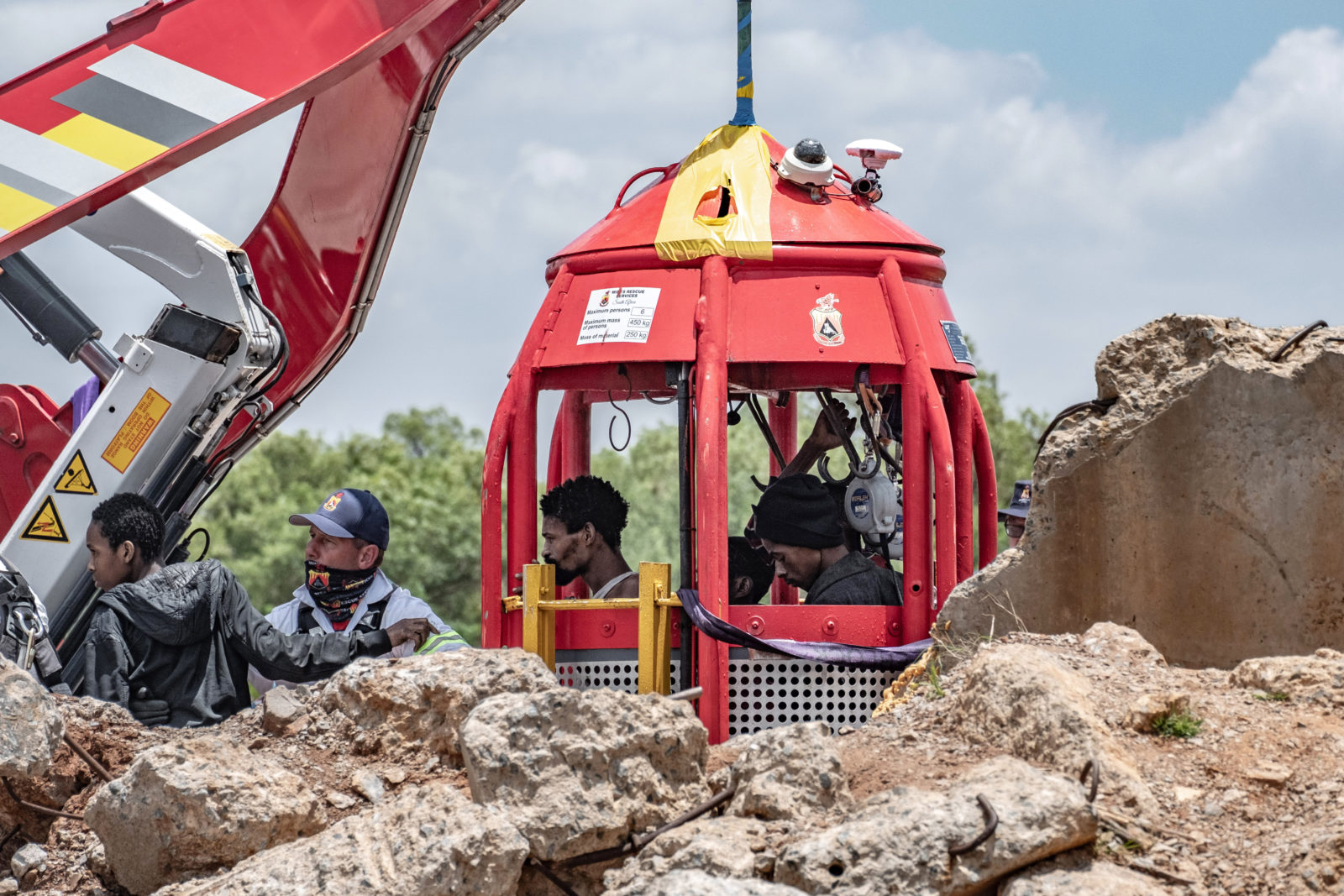
Gold miners are hauled to the surface during a rescue operation at Stilfontein, South Africa. The men had been trapped underground for months during a police operation targetting illegal mining.
Photo: Tommy Trenchard
As this drama unfolded George and Alfred were still underground, a mile beneath our feet. Like most of the other miners they had come to shaft 11, which was the only place where rescuers were sending down food. They had walked for hours to get there, balancing on top of a pipe in the flooded tunnel where locomotives once ran. Now they shared a plate, a blanket and a bed.
When the makeshift rescue began a letter was sent down saying that the dead, the sick and South Africans would be pulled out first. A man from Mozambique told George and Alfred not to go, because when the last South African left nobody would care anymore and the rest would be abandoned to die. One day in December it was Alfred’s turn. He could already imagine himself outside, in the sunlight, but could not show his joy to George, who would remain behind.
George watched him go, thinking his turn would come soon. But as the days passed his hopes dwindled. “I said, ‘God, please help me, I’m not going to die here, my grave’s not going to be here.’” If the rope would not come for him, he would have to escape himself.
There was another way out, so perilous that only a starving man would risk it. Back in shaft 10 were the remains of the metal frame which had once carried a mechanical cage. It might just be possible to climb up the rusted ruins, a vertical ascent of more than a kilometre. George had seen other men try it, tying loops of rope into dangling steps. He had also heard some of them fall.
Fourteen men began the journey with him. In George’s telling, they climbed short sections at a time, resting in alcoves that had once housed electrical transformers. In one they found a soggy packet of potato crisps, which they dried on a fire of burnt rope. Otherwise they consumed nothing but water and a little salt. They slept when their watches told them it was night. The next morning they stood in a circle and prayed, before setting off again.
On the first day one of the men fell. In the darkness, the others could not see what became of him. As they climbed they passed the bodies of nine men who had tried this way before, only to slip or succumb to exhaustion: a tangle of rope and metal and bones, suspended above the void. George whispered to the spirits of the dead men as he passed. “Please guys, we are not the one that caused this,” he said. “We are not responsible for your death, but if your spirit catches us, guide us to the surface so that we can tell what is happening in here.”
On the fifth day, George said, he and his 13 surviving comrades reached the surface. Their limbs were scratched and bruised. Their hands were rigid with cramp. A waiting policeman pointed a gun at them, even though they had no strength to run. “The miners possess the means to exit independently”, said a police statement, “as demonstrated by those who have surfaced in recent days.”
On Christmas Eve the rescuers from Khuma sent down a final package of food. Their funds were running out. Three days later the mine-owners levelled the ground around the shaft, in
anticipation of professional rescue equipment arriving, although that would not happen for weeks. In the process they removed the boulders that secured the rudimentary pulley mechanism.
Nothing more would be heard from the men underground until January 9th. That day, after receiving some more donations and rebuilding the pulley system, the men from Khuma lowered a rope. A letter came back, written in neat Sesotho: “There are 109 corpses in here and people are dying every hour…We are weak and have no energy left.” A man who was pulled out had videos on a phone, showing scores of bodies, shrouded in plastic and bound with rope. In Pretoria, where the High Court was deliberating over what should be done, a judge warned that the crisis could become “the darkest point in our history”.
Only now did the government contract Mines Rescue Services, a specialist company, after agreeing to split the cost with the mining industry. Mannas Fourie, who led the operation, told me later that saving people from abandoned shafts is “one of the most extreme rescues or
recoveries that one can go into”. His team was working blind, because detailed plans of the shaft had been lost. They would drive a 45-tonne mechanical winder onto the site, but they could not even be sure that the ground by the hole would support it.
On January 13th the team used the winder to lower a cage. Nobody from the police or Mines Rescue wanted to go down, fearing the miners were armed, so Shasha and Mandla, the rescuers from Khuma, volunteered to go instead. They were greeted like gods, said Mandla later, although his overriding memory was the stench of the corpses on his hands. The cage would normally hold six people, but the survivors were so thin that 13 could fit at a time. Even so, it would take days to get everyone out.
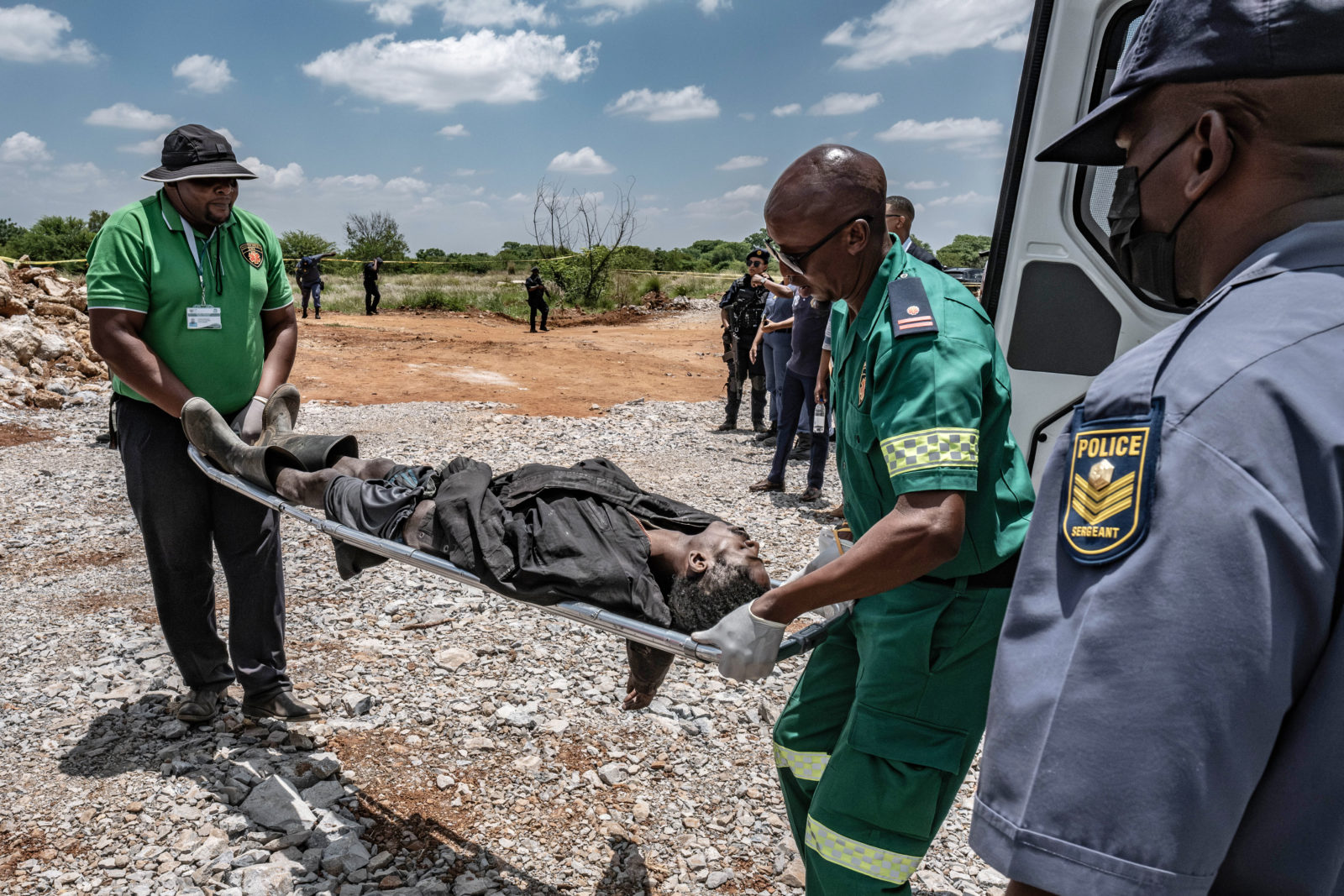
A man is carried by paramedics to a waiting ambulance after being rescued from a disused mineshaft in Stilfontein, South Africa. A police operation to combat illegal mining aimed to force zama zamas to the surface to face arrest, but resulted in dozens starving to death underground.
Photo: Tommy Trenchard
On the second day, a team of officials arrived to address the media. “A train is coming, you step on the rail line, and a train runs over you…is that a humanitarian issue?” asked Gwede Mantashe, the minister. Most people involved in illegal mining were not South Africans, he continued. “It’s a criminal activity, it’s an attack on our economy by foreign nationals.” As he spoke the cage was still clanking up and down, a yo-yo in the void.
Then the officials climbed back into their cars without talking to anyone from Khuma. A few people shouted in frustration at their black windows. I caught sight of George watching from beneath the shade of a tree. “Why are they here?” he asked. “Are they only here to greet the dead bodies?”
By the third day there was nobody left to rescue. Of the 246 survivors, 128 were from Mozambique, 80 from Lesotho, 33 from Zimbabwe and just five from South Africa. They were detained and charged with crimes including mining without permits and entering the country illegally. Four of them died in hospital. The cage also retrieved 78 decomposing bodies. Others will never be recovered, like the corpses that George passed on his escape.
Who killed Supang and the 90 other men who are known to have died in Buffels? The famo gangs took the shafts by force. The mine-owners did not do enough to seal the holes. The government dallied over a rescue. The police knowingly starved the miners and suggested, falsely, that they could easily come out if they chose. The economy offered few other opportunities for the “ones who tried their luck”.
The South African Human Rights Commission has launched an inquiry into what happened, although a date for the hearings has not been set. A coalition of civil-society groups is calling for criminal charges against the officials they consider responsible for the “mass murder” of the miners. But there is little public outrage; on social media some suggested the miners got what they deserved. Ramaphosa has said nothing about the deaths.
As for George and Alfred, their days of going underground are done. “I’ve seen all these things, they’re all in my head,” said George, while the laughter of his daughter tinkled through the window. Here at his modest home in Khuma is where he wanted to be now, with his mother’s pot plants and his children’s school certificates and the Orlando Pirates playing football on television. He has since been convicted of illegal mining and spent four days in prison before gathering the money to pay a 7,000 rand ($400) fine. Alfred’s case is ongoing.
Sometimes, in my conversations with them, the two old friends spoke of ubuntu, a traditional African philosophy that encourages people to find their humanity through helping others. They did not deny that they had broken the law. But they wondered what ubuntu meant to the ministers and the police, who had punished those crimes with a de facto death sentence. “I’m not going to lie,” said Alfred, as though ushering up the voices of the dead. “They killed us.”
Photographer: Tommy Trenchard