

Unhappy, lonely, and unable to talk about it: Why men are losing friends
It took me a long time to admit to myself that I was lonely. I was always surrounded by people – friends, acquaintances, colleagues. What’s more, my work as a journalist gives me plenty of opportunities to meet and talk to people. It didn’t seem like loneliness, of all things, should ever be a threat to me. But it was.
Over time, I realised that it wasn’t the quantity of contacts that I was missing, but their quality. I missed something that had been completely normal while growing up.
I spent my childhood in a housing estate in the city of Martin, in Slovakia, and I was lucky to have a great group of guys around me. There were six of us and we would hang out almost every day. We could sit for hours on the stairs or in our basement gym, which also served as our clubhouse. We played hockey and basketball together in the parking lot, which was almost empty at the time. Today, there are so many cars there that you couldn’t even play hacky-sack or pogs.
We were also passionate about computer games, and even before the internet became a common feature in households, we connected our computers with cables so that we could communicate and play together. Some of the cables were stretched along lightning rods, so whenever a storm was approaching, we would disconnect them from our computers. It was silly and irresponsible – exactly the kind of thing teenagers do.
We built absolute trust and understanding between us. We no longer have to pretend in front of each other. We know how awkward we were in our youth and what blunders we made. We share a huge amount of private humour and funny memories, which we always recall when we meet and laugh about all over again.
Sadly, we almost completely stopped seeing each other.
Our story is not really original, and many people know it well. We scattered to different colleges and jobs, moved to different cities. Add to that the pandemic, our own families, health problems, the hustle and bustle of everyday life – and it’s understandable that old friends began to drift apart.
Of course, people find new friends, but some relationships cannot be easily replaced.
However, this article will not be just about loneliness. That was the starting point, but exploring it led me to other unpleasant discoveries. The result is a new perspective on the past and a reevaluation of priorities. I also gained a keen sensitivity to male weaknesses that I had completely overlooked in the past.
Illustration 2. Author – Midjourney, Filip Struhárik
Loneliness is as harmful as smoking
According to surveys, one in four people in Slovakia experience significant feelings of loneliness. This means that hundreds of thousands of people in our country alone are burdened by this feeling. We used to associate loneliness mainly with older people, but today it also affects younger ones.
A US study from last year showed that only 26 percent of men have six or more close friends, compared to 55 percent of men in 1990. In addition, up to 17 percent of men said they had no close friends – in 1990, it was only three percent.
Young men in the US spend almost 60 percent of their free time alone, which is more than retirees.
The loneliness epidemic has been the subject of public debate for some time. In 2023, US Surgeon General Vivek Murthy published a major study on the subject. In it, he warned that the negative effects of loneliness are comparable to those of tobacco or obesity.
The problem is also recognised elsewhere; the United Kingdom and Japan, for example, already have their own Ministers for loneliness.
Solitude and loneliness are not synonymous. A person can be surrounded by people and still feel lonely. On the other hand, someone can spend a lot of time alone and feel content.
The bottom line is that virtually all research shows that friends and healthy social relationships are one of the most important factors in happiness and health. Let’s mention at least a few of them:
- Loneliness is strongly associated with an increased risk of depression and anxiety.
- People experiencing chronic loneliness show increased levels of stress hormones, which can disrupt brain function and contribute to the development of mental disorders.
- A Swedish study from the 1990s already pointed out that strong social ties contribute to a reduced risk of heart attack or fatal ischemic heart disease.
- A large meta-analysis has shown that loneliness and social isolation are associated with a higher risk of mortality.
- In addition, loneliness significantly increases the risk of dementia to a degree comparable to physical inactivity or smoking.
- Lonely people also have a weaker immune response and greater inflammation compared to those who do not feel lonely.
- A lack of social contact can have as negative an impact on health as smoking 15 cigarettes a day.
In short, the more isolated and lonely you are, the unhappier you are and the more likely you are to die earlier.
Perhaps during check-ups doctors should not only ask patients whether they exercise, eat healthily, smoke, or drink alcohol, but also inquire about the quality of their social network.
Illustration 3. Author – Midjourney, Filip Struhárik
The feminist who kicked me into action
At a time when I was beginning to realise my own loneliness, books by feminists helped me the most. Thanks to them, I understood some important things. For example, that my own loneliness is not just a personal failure, but may have deeper roots in how society shapes men.
Experts – or rather, female experts – warn that boys are raised differently than girls. “It starts when we equate emotion with weakness and direct boys to display strength no matter what. It shows up in the way we expect and encourage girls to show their true emotions while we demand that boys hide them from us. It reveals itself in the way we’re more comfortable with the image of a boy playing with a toy gun rather than a boy playing with a toy doll,” writes feminist and activist Liz Plank. Her book For the Love of Men became a gateway for me to topics and reflections I had completely missed until then.
Plank claims that we teach boys stoicism instead of authenticity and dominance instead of empathy. “Boys become fluent in emotional self-censorship. They become anaesthetised to feelings to avoid getting caught having any,” she writes.
Author and feminist bell hooks saw things similarly when she wrote The Will to Change: Men, Masculinity, and Love twenty years ago. In it, she claims that only one emotion is valued in men, and that is anger. “Real men get mad. And their madness, no matter how violent or violating, is deemed natural – a positive expression of patriarchal masculinity. Anger is the best hiding place for anybody seeking to conceal pain or anguish of spirit.”
One could argue that today’s parents instil different values in their children, but bell hooks is convinced that everything changes as soon as children start school. “Those rare boys who happen to live in anti-patriarchal homes learn early to lead a double life: at home they can feel and express and be; outside the home they must conform to the role of patriarchal boy. Patriarchal boys, like their adult counterparts, know the rules: they know they must not express feelings, with the exception of anger; that they must not do anything considered feminine or womanly,” hooks argues.
Professor of developmental psychology Niobe Way, who has been studying teenagers for almost 40 years, has come to similar conclusions. In her latest book, Rebels with a Cause, she describes how younger adolescents are not shy about talking about the need for close friends they love and with whom they can share their secrets. Boys also understand that close friendships are important for their mental health. They talk openly about the potential problems that could arise if they did not have such friendships.
However, as they get older, this changes, and boys begin to have difficulty finding and maintaining close friendships with men. “As the boys in my longitudinal studies became men, they began to sound like masculine stereotypes with their ‘I don’t care’ and ‘whatever’ responses to the very same questions concerning friendships about which only a year earlier they had cared deeply,” writes Way.
“As the boys in my studies reached middle to late adolescence, their language in their interviews began to shift from love and desire to frustration, anger, sadness, and/or simply indifference,” she adds in her book.
When talking about their friends, the boys also emphasise to researchers that it’s all “no homo”, because they fear that someone might label them as gay. They understand that in our society, close male friendships and displays of affection are often misinterpreted as signs of homosexuality.
Way writes that boys quickly recognise the cultural pressure to “act like a man” and not to behave in ways that others might consider “girlie and gay”.
One of the saddest moments when reading her book was when she quoted seventh grader Mark. When asked what was good about being a girl, he replied, “Maybe hanging out with your mum more.”
These words reveal the tragedy of traditional masculinity. A child of only 12 or 13 years old understood the unwritten rule that “real men” keep an emotional distance from their mothers, whom they still need very much.
Already as children, we learned to pretend that we don’t need each other. The saddest thing is that many of us believed it. We can’t even imagine how much we are losing.
Illustration 4. Author – Midjourney, Filip Struhárik
Loneliness as a male problem
These thoughts prompted me to analyse my own friendships. I won’t engage in public therapy here and describe the conclusions I came to. It will be more interesting if each reader reflects on their own and answers questions such as:
What did you talk about most with your friends? Could you talk about really important things together? What topics were taboo among your friends? What did you never talk about, even though it was important? Who could you talk to about your real feelings? Did you even have anyone like that? Do you remember ever crying in front of your mates? Was it okay to show such emotions in the group? Do you have someone to call in case of a crisis? Are there men in your life with whom you share your feelings?
Our daily experience and data show that female and male friendships are different. Almost half of women (48%) and less than a third of men (30%) had a private conversation with a friend in the past week during which they shared personal feelings, according to a 2021 American Perspectives Survey. In addition, men are much less likely to receive emotional support from friends. As many as 41 percent of women said they had received it in the past week, compared to only 21 percent of men.
Women are also more likely to tell their loved ones that they love them. Over the past week, 49 percent of women and 25 percent of men expressed such feelings. Men who also have female friends have an advantage. They are more likely to receive emotional support and share their personal feelings more often.
We teach women to be more caring and more relationship-oriented. We lead men in a different direction and then wonder why they lack certain skills in life.
“Men have fewer friends and less in-depth friendships and become increasingly isolated with age. Loneliness is a disproportionately male problem,” warns Liz Plank.
According to her, it is also risky for men to have a close relationship only with their partner, because this puts enormous pressure on them. “Sure, your partner should be a source of support, but if they are your exclusive source of assistance it can be problematic.”
This was well illustrated by a sketch from a 2021 Saturday Night Live comedy show, which depicted women taking their partners to a “man park” so they could meet other men. “It’s like a dog park, but for guys in relationships, so they can make friends and have an outlet besides their girlfriends and wives,” the video says. The absurd sketch became popular also because it was painfully true.
For some men, their partners have become their only emotional confidants. Often, they even take on all the social work in the relationship – organising meetings with loved ones, maintaining contact with family, planning social activities, and ensuring that their man does not end up completely isolated.
This is not just the case with our fathers’ generation. I myself have been in situations where women planned time for their partners and children. They organised for fathers to get moving and take their children to some activity together. Even in those rare moments when mothers could have time to themselves, they worked on the well-being of their partners and children.
This imbalance puts pressure on women, who, in addition to their own emotional needs, also have to deal with their partners’. This can lead to exhaustion and frustration. For men, this means that in the event of a relationship crisis or breakup, they suddenly lose their entire emotional support network, which further deepens their loneliness and vulnerability.
It appears that breakups can indeed have much greater consequences for men than for women. “While the woman may have other relationships she can rely on for support, her partner has often lost the sole source of support he had. Although the stereotype is that men take breakups much more lightly, men are more likely to suffer both physical and mental health issues and have suicidal thoughts than women after a breakup,” explains Plank.
We are reading ever more articles in the media about how many women have decided to be single by choice. Thanks to their greater independence, they no longer have to tolerate relationships that do not meet their needs. Moreover, according to a recent study by the University of Toronto, single women feel greater satisfaction with life than single men.
A recipe for disaster
I once heard this joke: Are men okay? You’ll probably never know, because they’ll never tell you.
Liz Plank is convinced that some men suffer from mental illness but are completely unaware of it. According to her, we teach men not to be emotional, not to feel anything, and to deal with everything on their own. But then we can’t be surprised when they can’t cope with something they’re not even supposed to feel. They can’t even understand or name it.
“The way we raise boys and men is a recipe for disaster. And a disaster it has become,” claims Plank.
We don’t have to be experts on gender issues to see that women have devoted a lot of time and intellectual effort to understanding how gender affects their lives. Men have clearly never been that concerned with this issue.
For a long time, we ignored the harmful impact of stereotypical masculinity on men themselves. There was no reason to worry – after all, men were promised that patriarchy would ensure their dominance. But they also dominate the statistics on loneliness, depression, and suicide.
However, it does not end there. Boys lag behind girls at school and are in the minority at universities. They face new obstacles in the labour market because it has changed, and typical male jobs are taking one hit after another. Men feel a cultural change that challenges their status, but they don’t know what to do about it.
Elites and politicians offer men no new agenda. The loudest voices are those promising a return to the good old days when men ruled everything. Toxic influencers and representatives of the manosphere promote such a plan – and they are very popular because many boys and men are truly suffering and desperately seeking guidance on how to move forward.
But the solutions to these challenges are not to be found in the past. It does not help to tell boys and men to “man up” or “toughen up”. On the contrary, such advice clearly harms them even more – or hurts the people around them.
“All this time we’ve focused on the changing role of women inside the workplace and inside the home, not realising that this would also shift men’s. We updated what it means to be a woman, but we didn’t update what it meant to be a man. We’ve had articles, books, entire conferences, dedicated to helping women navigate these new shifting roles while expecting men to figure it out all on their own,” writes Liz Plank.
According to her, the solution may lie in mindful masculinity. In practice, this means that men should discover what makes them good people. And they should get rid of harmful ideas about what it means to be a “real man”.
Research shows us that some male behaviours are not innate and immutable, but learned and changeable. The concept of mindful masculinity is about taking back control of ourselves. It is not about rejecting masculinity, but about expanding and enriching it with the full range of human possibilities.
According to bell hooks, feminism can help in the crisis of masculinity. “There needs to be more feminist work that specifically addresses males. They need feminist blueprints for change,” she wrote in her book. Men cannot change if they do not know how to do so.
The obstacle is that many men think feminism is irrelevant to them, if not even harmful. Since they only know it through media caricatures and extreme examples, they perceive it as something that labels them as “bad”. They have no idea how much some feminist ideas could help them.
The search for a new model of masculinity is not about men giving up their worldview. But when we see that they are no longer doing well in several senses, we must start looking for ways to improve their lives.
The troubles men face today were not caused by feminists, progressives, or some kind of insidious “woke movement”. All evidence suggests that they are caused by a culture that differentiates human abilities, interests, and behaviour based on gender and sexual orientation. The problems are caused by a society in which important human values and competencies are labelled as women’s issues that men do not need to concern themselves with.
Psychologist Niobe Way criticises the fact that today we mainly treat symptoms such as loneliness or mental illness, but we do not address the root cause. “Thus our solutions are not as effective as they could be if we focused on changing the culture rather than simply changing the individual,” she wrote in her book.
Illustration 5. Author – Midjourney, Filip Struhárik
It’s high time we talked about it
Feelings of loneliness have sometimes led me to question the quality of my friendships. After all, they don’t even text me to ask how I am. When they’re around, they don’t come to see me. When we finally meet after a year, we kill half an hour debating which Fast and Furious movie was the best (I had no idea there were so many).
I didn’t want to admit that I wasn’t the perfect friend either. I also didn’t get in touch very often; I didn’t show enough interest in their lives – and, most importantly, I didn’t tell them how I felt and didn’t try to revive our fading relationships.
It took me a long time to realise that I am the only one responsible for my needs, and therefore I cannot wait for someone else to take care of them. That friendship is not something you have, but something you do.
I remember writing to my childhood friends about how much it bothered me that we weren’t as close any more. It didn’t yield a miraculous turnaround for the better, but I now meet up with some of them regularly, and we have interesting and deep conversations again.
At the same time, I have developed other friendships, and today I realise that even short encounters with loved ones are often the best moments of the day.
I used to think that my problem was loneliness. Today, I am convinced that it is the way we learn to be men.
It is high time we talked more about this.
Not again!
The man I believed to be a former member of the AfD (Alternative für Deutschland) sat in a café on the square in front of the train station in Erfurt. Klaus Stöber had brought an envelope full of documents he wanted to give me. They concerned the far-right AfD leader in Thuringia, Björn Höcke. Shortly before, Stöber had publicly called on the AfD’s federal executive board to expel Höcke from the party. That did not happen.
That was in September 2024. At that time, Stöber had been a member of the AfD for nine years and a member of the German Bundestag for three, but now he seemed to have broken with his party.
Klaus Stöber is 63, born and raised in Thuringia. He joined the SPD (Social Democratic Party) right after the fall of the Berlin Wall, later even running for them in district council elections. In 2010 he left the SPD because he felt it had moved too close to The Left, but to this day he describes former federal chancellor Helmut Schmidt as his political role model. There is even a portrait of him hanging in Stöber’s parliamentary office in Berlin. Stöber was active in the support association of his daughter’s school; he is chairman of the tennis club in the neighbouring town, and sometimes he drives the team to away matches on weekends.
Klaus Stöber is a tax consultant; it was one of his clients who brought him to the AfD. A new party, grassroots democratic, economically liberal, and socially conservative—that appealed to him, he says. Unlike what the AfD has written into its electoral programme, Stöber is against leaving the European Union. Nearly a third of the clients of his tax office, he says, are Vietnamese and Turks, all small business owners; he also advises a few Afghans. Without migrants, Stöber says, Germany cannot solve its shortage of skilled workers.
I thought this man had now realised that the AfD was no longer what he once saw in it. I thought he would leave the party.
Instead, Klaus Stöber told me on the station square that he had no intention of leaving the AfD. Yes, he is against Höcke, but even if Höcke stays in the party, the AfD is still his political home.
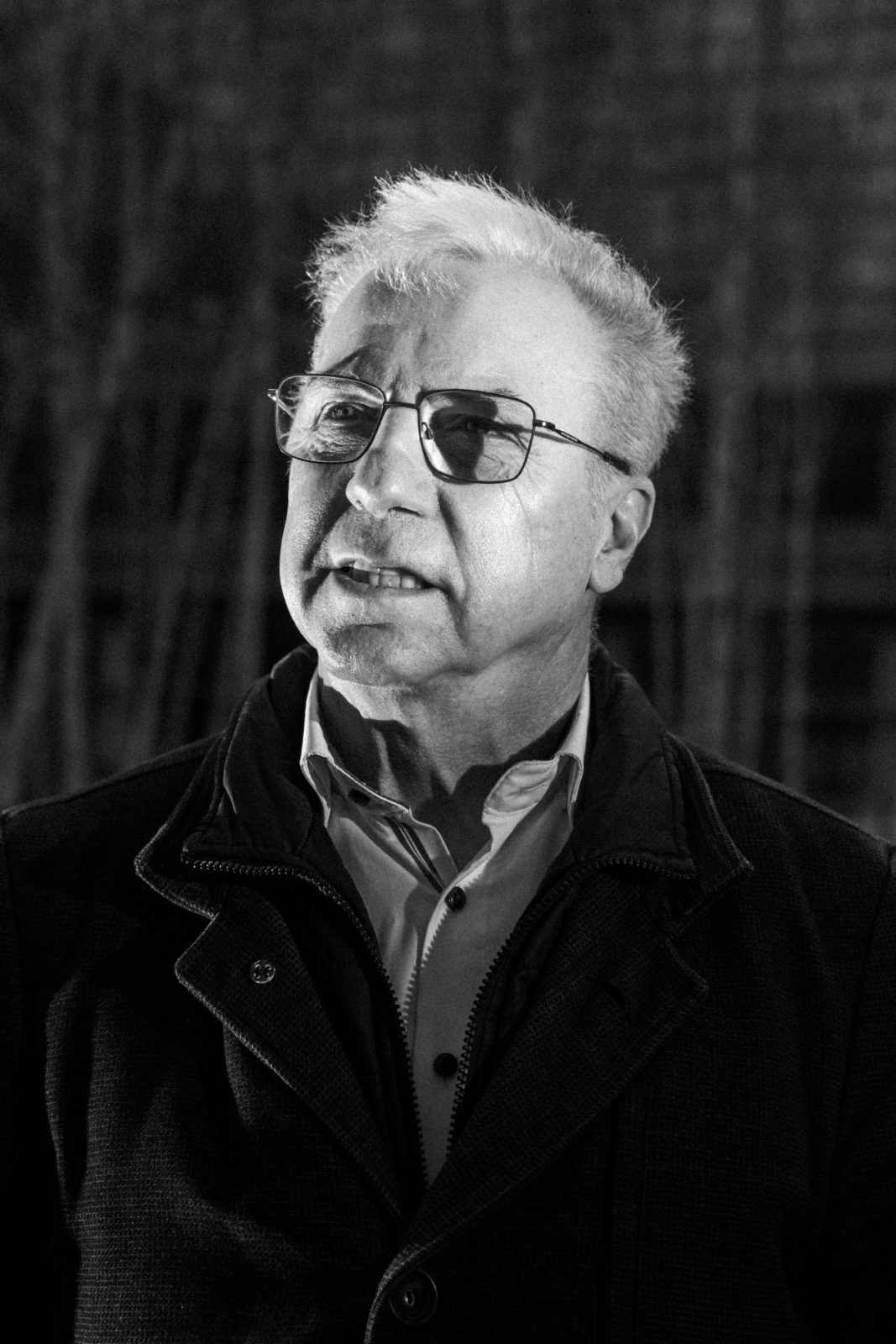
Klaus Stöber
Photo: Hannes Jung
On my way home after our conversation, I was feeling puzzled. How did it all fit together? Then it occurred to me: I know people like Klaus Stöber—I know them from the US.
I reported from the United States for seven years for Die Zeit. During those years, I witnessed the rise of Donald Trump and repeatedly met people who, like Stöber, were involved in their communities—people who would immediately rush to help their neighbour if there was a problem.
And yet, they were enthusiastic about Donald Trump, a man who railed against minorities and, on 6 January 2021, after losing to Joe Biden, incited thousands to storm the American parliament and hunt down politicians there.
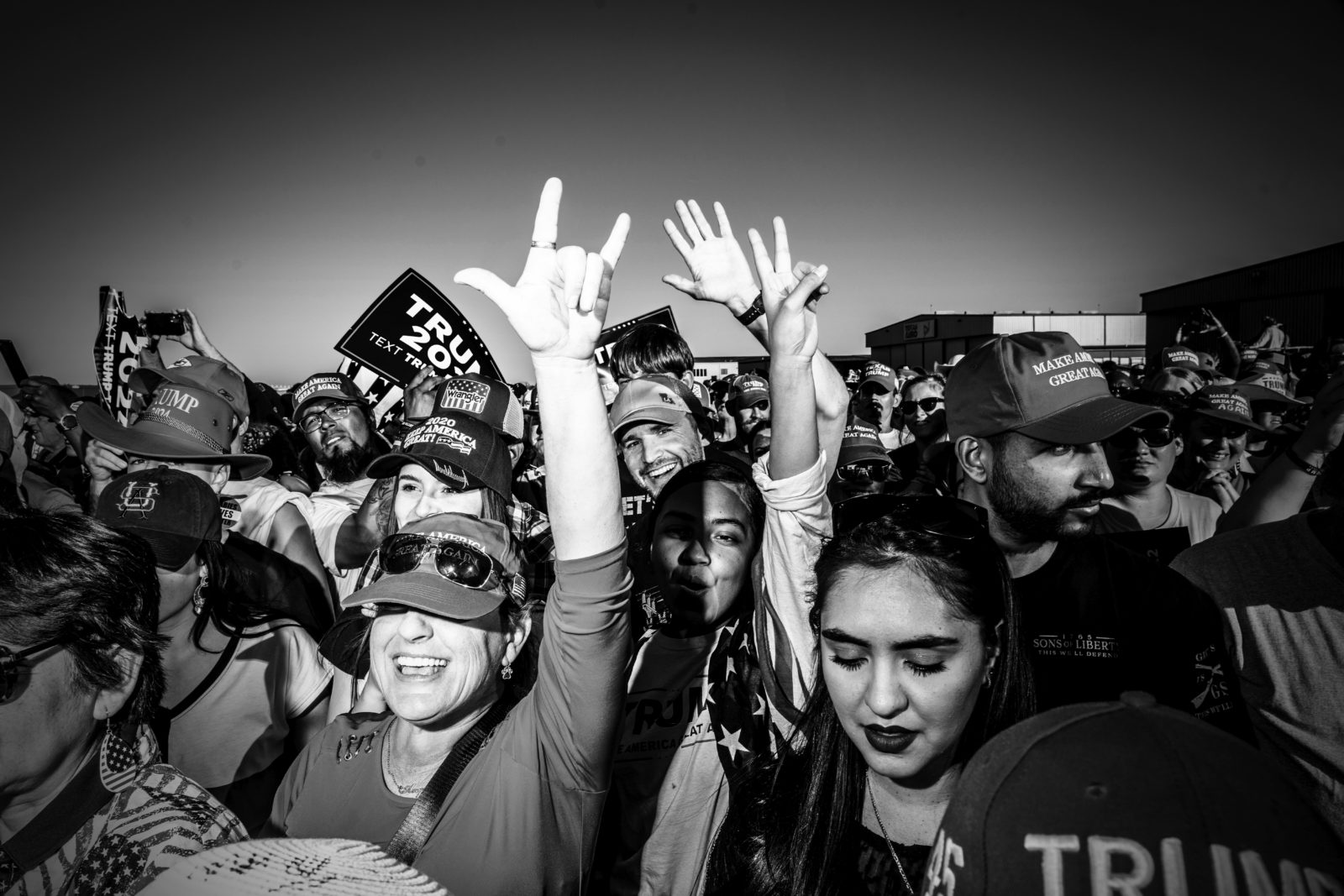
Thousands of supporters at a rally held by former President Donald Trump in Waco, Texas on March 25, 2023.
Photo: Mark Peterson
Over the past eighty years, looking from Germany to America was often like looking into the future. America brought us supermarkets and fast-food restaurants, rock music and skateboards, cable TV and the internet, the women’s and peace movements. The Americans led the way; the Germans followed.
For a long time, I thought the rise of right-wing populists would be different. That this phenomenon could not be transferred to Germany, if only because of Germany’s past. But after meeting Klaus Stöber, I sat on the train feeling like I had experienced all of this before. Here was a man who felt more at home in the largely far-right AfD than in the Christian Democratic Union or the Free Democratic Party, even though he agrees with those parties on many policy issues. I had observed exactly the same thing with many traditional Republicans in the US. They no longer trusted the established candidates of their party. Instead, they supported Donald Trump, even though they criticised much about him.
There are countless explanations for Trump’s success, but they all boil down to the same thing: Donald Trump became so powerful because groups of people supported him whom you wouldn’t expect. If he only appealed to racists, nationalists, and democracy-haters, he wouldn’t even have won the primaries. In the US, moderate conservatives, migrants, trade unionists, and young academics have also long been drawn to right-wing populism.
I now fear that the very same thing could happen in Germany.
Cemal Can is a restaurateur in Hanover. I meet him at one of his two restaurants on the banks of the Leine, near the Lower Saxony State Parliament. Outside, surfers struggle in the drizzle on the Leinewelle, an artificial rapid. Inside, cosy warmth fills the room. Cemal Can, 57, is the son of Turkish guest workers and has been a German citizen for a long time. With his bald head and distinctive glasses, Can reminds me of the actor Telly Savalas, who played the TV detective Kojak. Not a bad look for a restaurateur. Can’s parents came to the Federal Republic in 1968. His mother found work at a manufacturer of radio equipment; his father maintained the city’s sports fields.
Young Cemal trained as a pipe layer and worked in construction. Then, in his early twenties, he and his older brother took over their first restaurant; later a second followed, the one where we are now sitting. Can gestures around the dining room. He did all the remodelling and renovation himself back then. The floor—beautiful, grained wooden planks. “From Belgium,” he says. The ceiling is also made of wood. “From a castle in Saxony.” A wrought-iron spiral staircase leads down to the cellar, which Can converted into a wine cellar. “The largest in Lower Saxony—30,000 bottles,” he says. Today, Cemal Can has twenty employees and a holiday home in Spain.
In the US, there’s the idea that anyone can achieve prosperity through their own efforts. The name for this is the American Dream. If there’s such a thing as a German Dream, I’d say that, for Cemal Can, it has come true. Twelve hours a day in the restaurant, six days a week.
“If you didn’t work, you didn’t earn a thing,” says Can, shrugging. “That’s how it was back then. That was the deal.”
That’s Cemal Can’s story of upward mobility. And now he sits across from me and says he’s still not sure who he’ll vote for, but “Alice Weidel is a good politician.” She has exactly the right topics: asylum policy, citizens’ allowance.
Cemal Can, who himself immigrated to Germany, says there are now too many migrants. He points to his face: olive skin, dark eyes. “On the outside, I’m a foreigner,” he says. Then he taps his heart. “Inside, I’m German.” But he fears Germans no longer recognise that. That they hold him partly responsible for murders like those in Solingen, Magdeburg, and Aschaffenburg. That they no longer distinguish between migrants who commit crimes and him, the hard worker.
Speaking of work, he can hardly find employees anymore, Can says. Because hardly anyone is willing to really roll up their sleeves. Because Germany has become a country that punishes work and rewards laziness. He pronounces the word Bürgergeld—citizens’ allowance—as if it were something indecent. He says he no longer understands this country. The policies of the Merkel government? The policies of the Scholz government? “A disaster,” says Cemal Can.
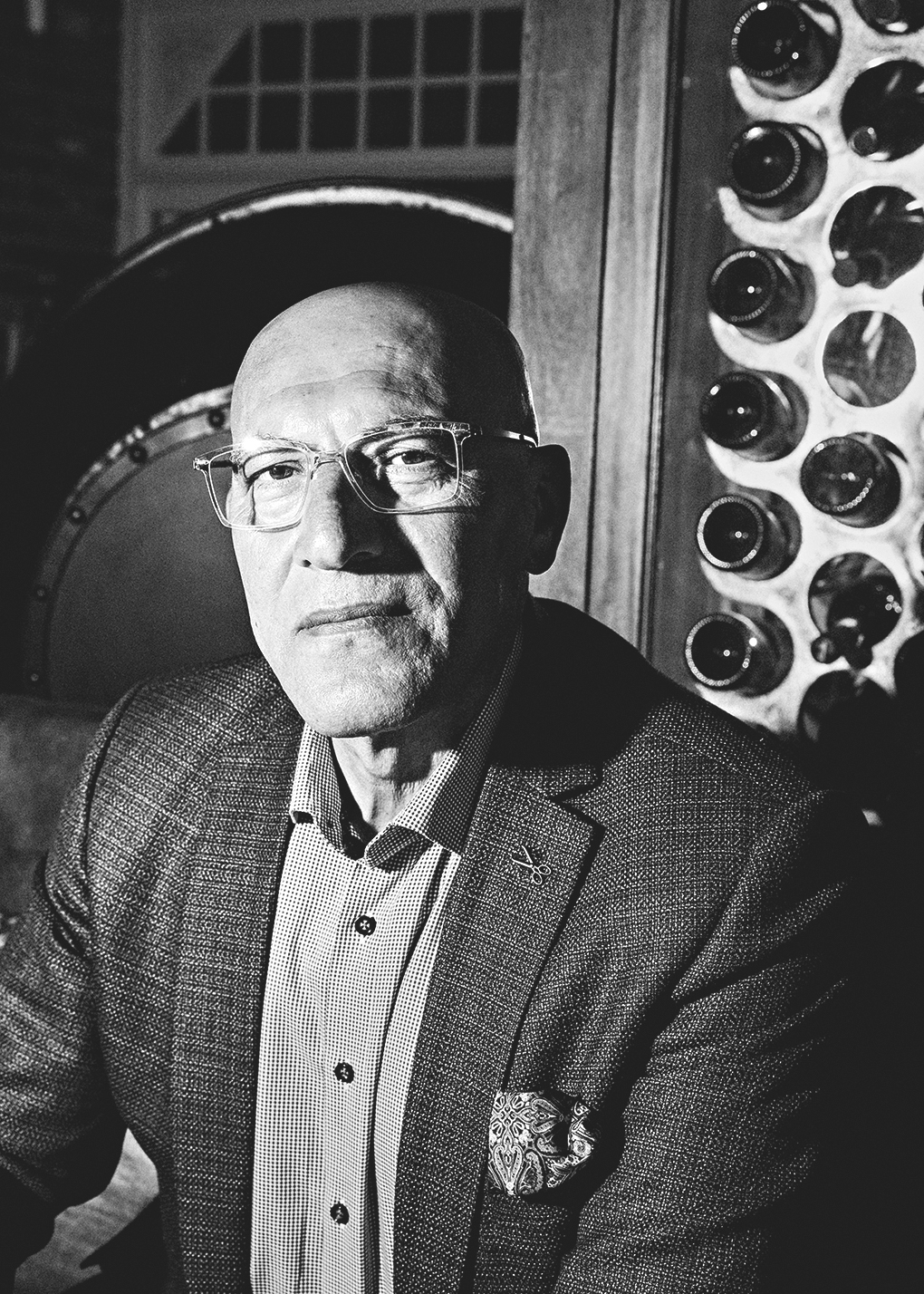
Cemal Can
Photo: Jana Mai
As I listen to him, it feels like another man is talking to me. A man who doesn’t speak German but English, who isn’t called Cemal Can but Abel Ornelas, and who doesn’t live in Lower Saxony but in Iowa, in a small town called Denison.
I met Abel Ornelas in 2016. He’s from Mexico, and came to America illegally as a teenager with his brothers. For years, he toiled in a meat factory, worked double shifts, and lived in a trailer. Today, he rents out apartments, owns a big house, and has an American passport.
Abel Ornelas voted for Donald Trump. But Ornelas doesn’t see that as a contradiction. Just as Cemal Can in Germany, Abel Ornelas in America has managed to rise to the middle class. And now he sees Donald Trump not as the man who calls Latin Americans rapists, but as the man who helps him defend the prosperity he worked so hard to achieve.
Besides, Ornelas told me, he is not even sure whether there might indeed be many criminals among the immigrants. And Ornelas pointed to President Joe Biden, who generously granted residence permits to immigrants from Haiti, Venezuela, and Honduras. Ornelas found that unfair, since he himself had to struggle for years without papers.
Just as Cemal Can in Hanover today is bewildered by citizens’ allowance, Abel Ornelas was bewildered by the help given to more recent migrants.
Traditionally, Latinos in the United States voted for the Democrats, so at first I thought the Trump-voter Abel Ornelas was an exception. Yet that’s no longer the case. In 2016, 28 percent of Latinos voted for Trump. In 2020, it was 32 percent, and in the elections last autumn it was as much as 46 percent. There was an interesting difference: Latinos who had arrived only recently still voted for the Democrats. Those who had lived in the US for a long time, instead, mostly voted for Donald Trump.
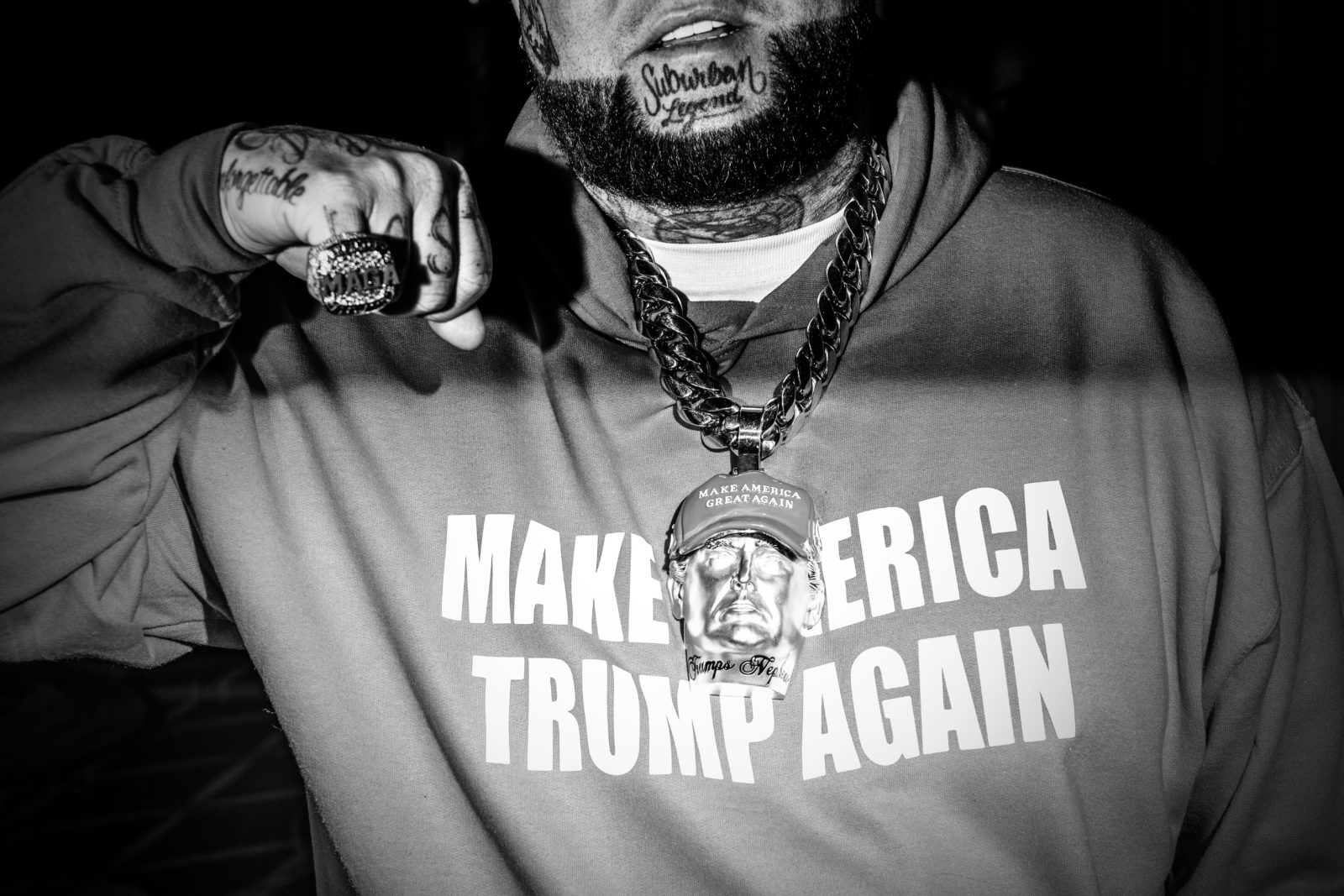
The Conservative Action Political Committee (CPAC) convention at National Harbor, Maryland near Washington DC, February 23, 2024. Rapper and Trump supporter Forgiato Blow.
Photo: Mark Peterson
Unlike in the US, there is hardly any data in Germany about the voting behaviour of people with a migration background. That’s because origin isn’t as routinely recorded as it is in the immigrant country of America. One thing, however, can be inferred from the few German surveys: the further people with a migration background work their way into the mainstream of society, the further to the right they move politically—just like in the US—and the more their voting behaviour resembles that of people without a migration background. Cemal Can seems to be a good example of this.
Besides migrants, there’s another group in the US that reliably voted for the Democrats for decades and has now largely sided with Donald Trump: workers and trade unionists. Ever since the political distinction between left and right has existed, they have always stood on the left, but now they are shifting to the right. In America, they vote for Donald Trump.
And in Germany?
Dirk Rothe, 47, looks a little as if he were on his way to a mountain hike, with his wool cap and fleece shirt. Rothe is an industrial mechanic at the DMK dairy cooperative in Thuringia, where he maintains the machines. Seven years ago, his colleagues elected him to the nine-member works council for the first time. Apparently, he did a good job, because at the next election they voted for him again in large numbers. “Second best result,” he says proudly.
All these years, Rothe was a member of the Food, Beverages and Catering Union (NGG). With its support, the works council at the dairy secured higher wages, now almost on par with comparable companies in the West. “The union does good work,” says Rothe.
And yet, a year ago, on 1 February, 2024, Rothe sat down at his computer and opened his email programme. Then he typed a message to the union. “Subject: Resignation.”
Before that, as he did almost every day, he had looked at the NGG’s Facebook page. And as always, almost every post contained a hashtag like #noafd, #keinFußbreitan-Faschisten, or headlines like “NGG stands up against AfD.” When Rothe saw that, he wondered whether the NGG had any idea what was actually happening in companies—for example at their own workplace, DMK.
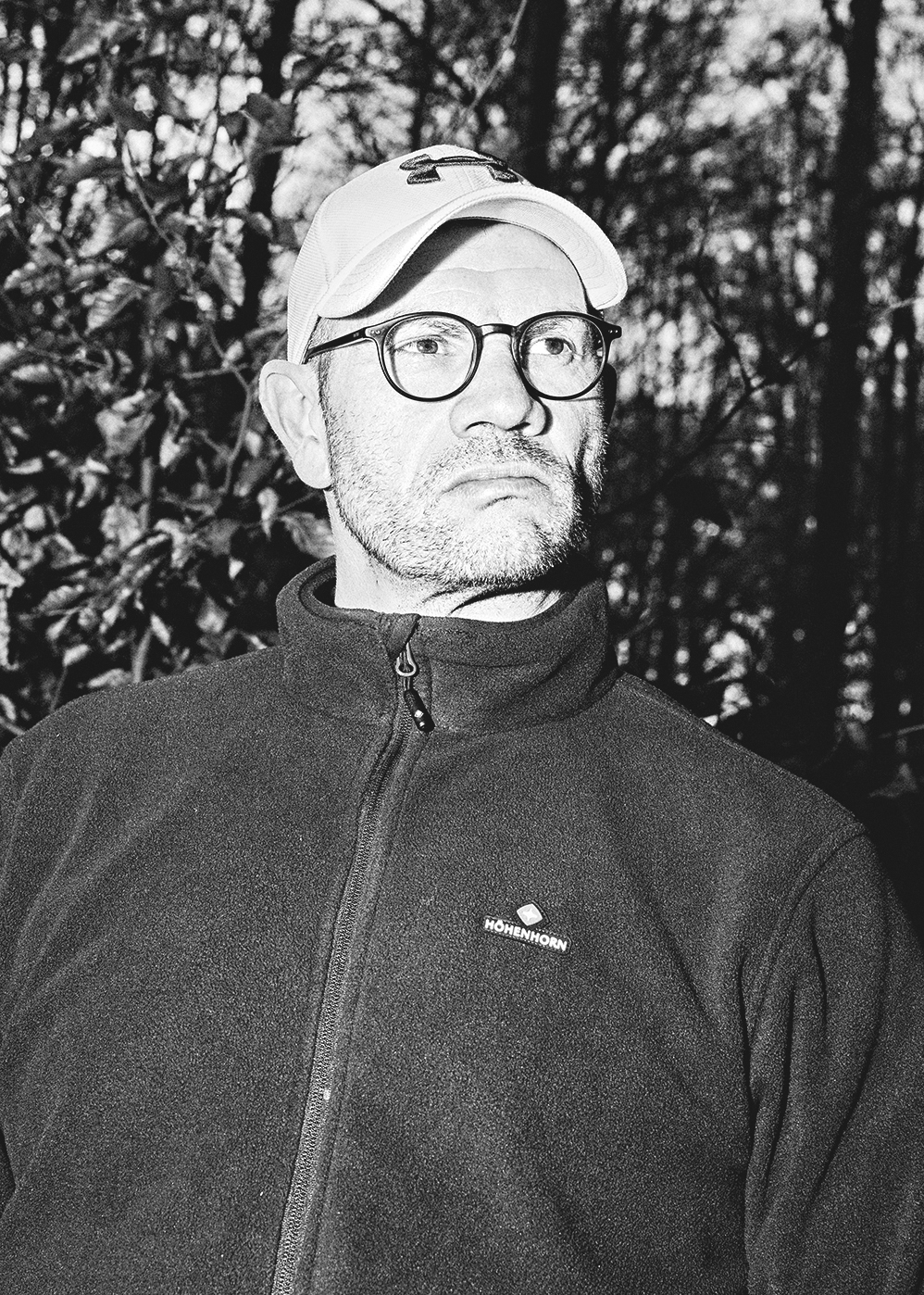
Dirk Rothe
Photo: Jana Mai
At the last works council meeting there, a union official had spoken to the 320 employees, as usual. And as usual, he had told them that in the next elections they should under no circumstances vote for the far-right AfD. But this time, Rothe says, the workers did not simply accept it. Many stood up and left. Twelve later cancelled their membership. And Rothe says he can understand them. He knows these people; he works with them, eats and drinks with them in the break room, discusses things with them—politics included.
In recent years, Dirk Rothe says, many things have built up, even for him. But none of it is reflected on the union’s Facebook page.
That’s why Rothe sat at his computer that day in February and wrote: “I simply don’t support the political agenda you stand for at the moment, because many things are being presented to the people in the wrong way … I vote neither red nor green! That block had its chance and blew it!”
“I was already pretty fed up by then,” he says today.
At the end of our meeting, Rothe gets into his car—he has to go to work. He’s had a few jobs in his life, he says. Rothe was a temp worker and moonlighted as a bouncer. He was on assignment in China and Bavaria, and he’s proud that he was able to buy a house in a village near Erfurt. That he made something of himself in the end. To make ends meet, he now works three shifts at DMK: early, late, and night. He hasn’t voted for The Left for a long time.
When it became clear who in the US was voting for Donald Trump, I still thought: right-wing workers, that only exists in America, a deeply capitalist and individualistic country. But now Dirk Rothe sounded very much like the Trump fans in the factories of the Rust Belt, the industrial region in the north-east United States.
Someone who knows a lot about the thinking of German workers is sociologist Klaus Dörre, who was a professor at the University of Jena until his retirement. For decades, Dörre has repeatedly asked workers in German industrial plants about their opinions and beliefs. In doing so, he noticed something: many workers, Dörre says, have lost faith in social redistribution. Not because they think it’s fair that managers earn 40 or 50 times as much as they do. But because they’ve given up hope that any meaningful redistribution will ever take place. For decades, successive governments have said they would stand up for them. But what has actually happened?
In the past thirty years, median net household incomes have risen only half as much as those of the top ten percent.
Sociologist Klaus Dörre says many workers now feel that nothing more can be expected from the government. Even the traditional mobilisation theme of the left—those at the bottom against those at the top—no longer works. Instead, workers only want to rely on one thing: themselves. The state should just leave them alone.
After turning away from left-wing parties, industrial mechanic Dirk Rothe first voted for the FDP. That was in autumn 2019, at the state elections. In February 2020, FDP politician Thomas Kemmerich was elected prime minister with AfD votes. Numerous federal politicians criticised this. Kemmerich resigned. Yet, says Rothe, he had been democratically elected. Back then, he wondered: “Are they kidding us?”
And then came COVID.
At the dairy, there were many employees who didn’t want to get vaccinated. So the workforce was divided into two groups: vaccinated and unvaccinated. The vaccinated could enter at the front, the unvaccinated had to use the back entrance. “Something broke there,” says Rothe. “Now there were the good ones and the bad ones.”
Dirk Rothe himself did not get vaccinated. Why? It had all happened too quickly for him, he says. A vaccine that had only just been developed, administered in huge vaccination centres where he did not know the doctors. He said this openly at work. “Then I was the troublemaker.”
When the first COVID bonus at the dairy was paid out only to the vaccinated, Rothe filed a lawsuit—and lost. He marched in demonstrations against the COVID measures and found “There were completely normal people there.” Not just about COVID, but also about “New German,” as Rothe calls it. Gender-inclusive language. Union officials have also been using it for some time. When the dairy’s works council negotiated a new pay agreement with management and sent the draft to the union, it came back with a note to please use gender-neutral language.
Dirk Rothe says that in the next federal election he will vote for the AfD—like roughly half of his colleagues at the dairy, he estimates.
I call sociologist Klaus Dörre again. I want to know if the high number of AfD supporters among workers is an East German phenomenon. “No,” Dörre answers. The only difference is that workers in the East speak more openly about their sympathy for the AfD—like Dirk Rothe. In Hesse as well, in the state elections a little over a year ago, almost thirty percent of workers voted for the AfD.
Outside the dairy, Rothe parks his car, puts on his yellow safety vest, and heads for the factory gate. “Milk is more colourful than you think,” is written next to the entrance.
In the end, he didn’t leave the union. After the email, the official talked to him for a long time and asked him to stay. Rothe agreed. In return, the official refrained from warning against the AfD at the next works meeting.
Just like Cemal Can, and just like many Trump voters I’ve met, Dirk Rothe doesn’t seem like a racist to me. But one thing strikes me. During our conversation, Rothe told me about an Afghan colleague. The man works flawlessly, speaks German, is fully integrated, yet still doesn’t have a permanent residence permit. Rothe says he can’t understand it. But when I ask him what he thinks about migration in general, he suddenly speaks about the “flooding” of Germany with foreigners, and says that nowadays only “scum” are coming into the country.
Flooding. Scum. Suddenly, Dirk Rothe sounds just like the AfD—just like Donald Trump.
I ask him why he uses those words. Isn’t that somewhat dehumanising? Rothe thinks for a moment. “Yes, you’re probably right,” he says. “But what else can you say?” Then he adds that he could of course say “criminals” instead of “scum”. He means, for example, those who kill people at Christmas markets. But in his environment, everyone uses these words: flooding, scum.
I noticed something similar with Klaus Stöber. Shortly after the AfD won the state elections in Thuringia last autumn, I went with him to an election party. Lots of greetings, a great atmosphere, strong blue punch. And suddenly there’s this song by Italian DJ Gigi D’Agostino. It was once a harmless party song called L’amour toujours. But last year, a video spread of young people on Sylt singing the song with a changed refrain: “Germany for the Germans, foreigners out!”
Since then, the song has become a kind of anthem for right-wing extremism. Even at the election party in Thuringia, they start it—not the lyrics, just the melody. “Döp dö dö dööp, döp dö dö dööp.” That’s enough by now, it’s clear what it means. Klaus Stöber doesn’t sing along. He sits quietly in the middle of it.
When I ask him afterward whether that moment made him uncomfortable, he says it was no big deal. Just a bit of ironic teasing aimed at the left, which always immediately labels AfD supporters as Nazis.
Political culture often changes when the media changes. The invention of radio enabled propaganda on an unprecedented scale. Television turned half the world into entertainment and, especially in the US, created politicians who are also charismatic entertainers.
And the internet? Many experts believed that social media, which allows everyone to express themselves publicly, would create a society that is smarter, kinder, and less prejudiced. A professor at MIT in Boston even predicted that the internet would bring about world peace and the end of nationalism. Instead, it turned out that the spirit of social media is very different. With their algorithms, they reward anything that attracts attention— and nothing attracts attention like anger. The type of politician who has the greatest impact on social media is the aggressive demagogue.
In Hanover, at the end of our conversation, restaurateur Cemal Can introduced me to his daughter, who has now joined the business. Sara, 24, is a tax specialist and handles all the numbers in the restaurants. She said politics comes to her mainly through one channel: the video platform TikTok.
Sara took her phone, opened the app, and said every third video she sees comes from the AfD. That doesn’t bother her—on the contrary. She could well imagine voting for the party. Sara said she no longer feels safe as a woman in Hanover; she is constantly harassed by young refugees, and the government hands out German passports to foreigners as if they were movie tickets.
After that, I also spent several evenings on TikTok—and discovered it is indeed difficult to escape the AfD and its lead candidate Alice Weidel. She has long since broken through the barrier of attention. As soon as you watch a few of her videos for longer, the algorithm assumes you’re interested. From then on, you get more and more. Alice Weidel on a talk show. Alice Weidel in the Bundestag. Alice Weidel speaking directly to the camera.
Again, I feel like I’ve seen all this before. Weidel has almost exactly adopted Donald Trump’s communication strategy. Like Trump, she has started telling a story about herself.
Donald Trump has always portrayed himself as a successful businessman who closes deals no one else can. Alice Weidel now presents herself as a lesbian woman fighting for the freedom that Arab migrants supposedly want to take away from Germans. A clip of her enthusiastically singing along in a car with her wife went viral on TikTok. In a podcast, she described how uncomfortable she had felt as a blonde girl in a pool surrounded by many young migrants. She pairs this with insults, aggression, and above all Trump’s doomsday rhetoric.
For Alice Weidel, Germany is a broken, ruined country, a sham-democracy. Just like Trump, she paints a picture in her videos made of truth and lies. And just like Trump, Weidel promises to make the country what it supposedly once was. “Make America great again!” is the phrase Trump kept shouting into microphones. Alice Weidel has recently begun saying: “Make Germany great again!”
In the US, alongside Donald Trump’s rise, a whole internet ecosystem of right-wing conservative platforms and websites emerged. Breitbart News, Info Wars, The Daily Caller, The Daily Wire, The Blaze, The Gateway Pundit, and of course the platform of the right-wing TV channel Fox News. They all portray the world as Donald Trump sees it. Would he have become president without them? I don’t think so. These new internet media helped turn Trump the entertainer into Trump the demagogue.
A similar ecosystem is now emerging in Germany. It is still small and still at an early stage, but the outlines are already visible—for example, at the Berlin-based internet platform Apollo News.
The nameplate on the mailbox of the Treptow studio building has been torn off, and on the wall leading to the elevators someone has written in large letters: “right-wing.” The people here don’t seem happy about their new neighbours.
Upstairs, on the second-to-last floor, Max Mannhart, 22, opens the door, wearing a suit and turtleneck. The Apollo News office loft is large and empty; six white desks stand in the middle.
Mannhart invites me into his office. An old typewriter sits on an empty shelf. He founded the platform only last summer; it now has twelve employees, all about his age. Most previously wrote for new-right online magazines like Tichys Einblick, Die Achse des Guten, and Nius—other, somewhat larger parts of the new ecosystem.
Apollo News is aimed primarily at young people. For a long time, being young was synonymous with being left-wing. That was true in America, and in Germany as well. And being left-wing meant questioning the existing system. Today, system criticism often comes from the right. In last November’s US election, almost half of 18- to 29-year-olds voted for Donald Trump.
I first thought that something similar might also be possible in Germany when I looked last spring at the website for the Girls’ and Boys’ Day programme in Berlin, a kind of one-day internship for school students.
In Berlin, the factions in the Bundestag also offered places for that day. The SPD and the Greens had very few, not even ten, and some were still open. The AfD, on the other hand, gave 40 students the chance to get to know the party, and most spots were already taken. A little later, the 16-year-old son of a relative from Rhineland-Palatinate told me that his teacher had conducted an election poll in his high school class. The result: 25 percent would vote for the AfD, and 20 percent for the Greens; the other parties were far behind.
In the autumn came the state elections in Saxony, Thuringia, and Brandenburg. In all three federal states, the AfD was the strongest party among young voters.
In the Apollo News studio in Berlin, Max Mannhart tells me that, as a journalist, he wants to put his finger where it hurts; he wants to criticise the established media, parties, and politics. “It has to be tough sometimes,” he says, sounding a little like a protester from the 1968 generation.
Max Mannhart grew up in Berlin, first in Kreuzberg, then in Friedrichshain. His parents are psychologists—a “bourgeois-left milieu,” says Mannhart. From an early age, he was annoyed that everyone in his circle showed boundless understanding for every problem, that everything was excused. The drugs, the squats, the talk from classmates who adhered to radical Islam.
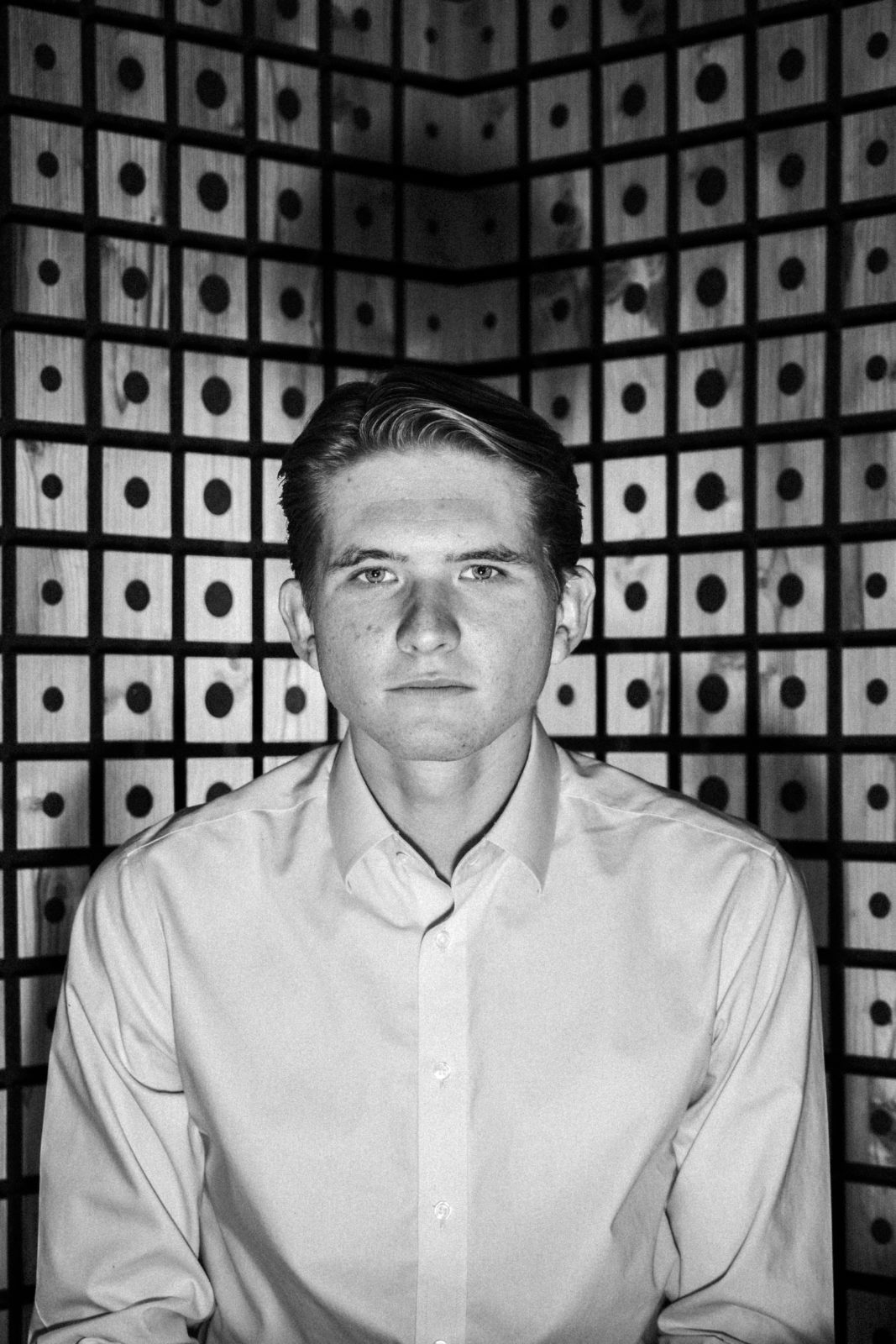
Max Mannhart
Photo: Hannes Jung
No one shouts on Apollo News. There’s no ranting, no hate. The tone is bourgeois and calm, but the range of topics is limited. It’s about Trump, the Greens, mistakes of public broadcasting. Above all, there’s a lot about what the AfD likes to talk about: refugees, crime—and refugee crime. The authors are not only young but also educated; they studied business informatics, law, politics, psychology.
The day I talk to him, Max Mannhart is working on an article about Stephan Kramer, the head of the domestic intelligence service in Thuringia. Mannhart spoke with two former employees of the agency; the text later appears on Apollo News under the headline “The Kramer Complex: Inside the Domestic Intelligence Service—How the Secret Service Became a Political Machine.” Kramer considers the AfD in Thuringia to be confirmed right-wing extremist and supports banning the party. “In the past, the left accused the intelligence service of labelling everything anti-capitalist as anti-democratic,” says Mannhart. Today, he says, it labels everything right-wing as anti-democratic.
The Kramer investigation is a great success. The main article is viewed 113,000 times on the homepage, and the accompanying YouTube documentary is watched 180,000 times. Through donations and YouTube, Apollo News now earns enough money for Mannhart to pay not only the rent for the loft but also his employees’ salaries, which range from 2,000 to 6,000 euros. Apollo News averages seven million page views per month. The comments under the articles clearly show where the readers politically lean: toward the AfD.
If it really is the case that Germany is currently undergoing a development that America has already gone through, then, for all its disadvantages, it would also have one advantage: Germany could learn from America’s mistakes.
The Democrats lost the election to Donald Trump by a surprisingly wide margin. Everything they tried to push back right-wing populism didn’t work.
They called Donald Trump an enemy of democracy, a racist and agitator. That’s not wrong, but it made little impression on his supporters.
They avoided the favourite topics of right-wing populists—migration and crime—and instead tried to score with their own issues: abortion rights, climate change, the situation of the LGBTQ community. Without success.
And they did everything they could to counter the dark picture painted by US right-wing populists with facts. “The country isn’t doing so badly, and we can prove it”—that was the story the Democrats told over and over. But that didn’t work either. Not even with my neighbours in New York.
They had always voted Democratic, and had lived in the city for decades, but now they were considering moving away because they felt increasingly unsafe. This was despite the fact that Democratic politicians emphasised every day that the murder rate in New York had not risen in recent years. Those politicians were right; the murder rate had not increased, the facts were correct. But it was also true that, for example, shoplifting had gone up, as had minor offences, the dirt in the subway and the mess in public parks.
Compared to murders, these are small things. Yet all these small things gave my neighbours the feeling that this was no longer their city—the city where the state maintains order. Where there was trust, mistrust spread. In the presidential election last autumn, the Democrats in traditionally left-wing New York got a million fewer votes than four years earlier.
Insecurity, mistrust, fear—these are the feelings described by Sara, the daughter of restaurateur Can in Hanover. After several break-ins, they have now installed a surveillance camera at the restaurant.
American President Joe Biden had the numbers on his side. He managed to curb inflation, boost the economy, and expand renewable energy. You could say the numbers proved he governed well. But people didn’t really feel the good numbers. They still couldn’t find affordable homes, eggs were still more expensive than five years ago, and in supermarkets, goods were now locked up like cigarettes to prevent theft. All of this made people feel increasingly uncomfortable.
You can brush aside feelings, try to refute them with numbers. The Democrats did that. And they lost the election.
I think this is perhaps the most important lesson from recent American history: the democratic centre must urgently find an answer to the question of how to win elections in a world where small feelings sometimes weigh more than big facts.
PS: Incidentally, the AfD in Thuringia has initiated proceedings to expel Klaus Stöber from the party. He was deemed not loyal enough. He is now running in the election as an independent candidate. Should he be re-elected to the Bundestag, Stöber intends to continue voting in line with the AfD parliamentary group.
Editor: Wolfgang Uchatius