

Michael O’Farrell
Michael O’Farrell won the 2026 Investigative Reporting Award with The Brother D conspirancy.
Michael O’Farrell is the Investigations Editor for the Irish Mail on Sunday newspaper in Dublin. He is also a best-selling author and an award-winning TV documentary producer. A journalist for more than two decades, Michael has been repeatedly honoured in Ireland for his public interest journalism. Amongst other things, his work has contributed to successful prosecutions against former Government Ministers, forced the resignation of State officials, resulted in changed legislation, helped migrant workers recover millions from their employers, spawned Revenue Investigations of tax fraudsters, resulted in police investigations into bribery and forced the closure of dangerous medical facilities. The investigation presented for this award entry involves a decade of campaigning journalism, printed year after year in countless newspaper editions. This reporting exposed an international child abuse cover-up by the Church and has now resulted in the successful prosecution of a serial abuser. It has also secured millions in compensation for victims.
The Brother D conspiracy – Exposing an international child abuse cover-up that left children in Africa exposed to a predator for decades
A LIFELONG predatory paedophile was left free to prey on children in Africa for decades as his superiors in Ireland covered up his crimes back home, an Irish Mail on Sunday investigation reveals.
Brother Aidan Clohessy, 85, was described by a judge this week as ‘an ogre’ who ‘secretly carried out atrocities’ in Ireland while being sentenced to more than five years in prison.
In mitigation, lawyers for the former school principal told Dublin Central Criminal Court that Clohessy led a mission in Malawi to develop ‘mental health services’.
However, the MOS can reveal that, in the lead-up to his prosecution, Clohessy’s superiors in the St John of God order spent more than €3million on settling civil cases.
These cases involve ex-pupils of Clohessy in Dublin and former street children in Malawi in southeastern Africa.
Up to 20 cases from Malawi have been settled and a similar amount are pending. All settlements were made without any admission of liability.
Some of those who received civil compensation from the St John of God order still had to go through the trauma of testifying in court because Clohessy pleaded not guilty.
Clohessy, who was the principal of St Augustine’s in Blackrock, Co. Dublin, from the early 1970s until 1993, was jailed for a total of five years and four months this week after he convicted of sexually abusing six Irish boys at the special needs school between 1969 and 1989.
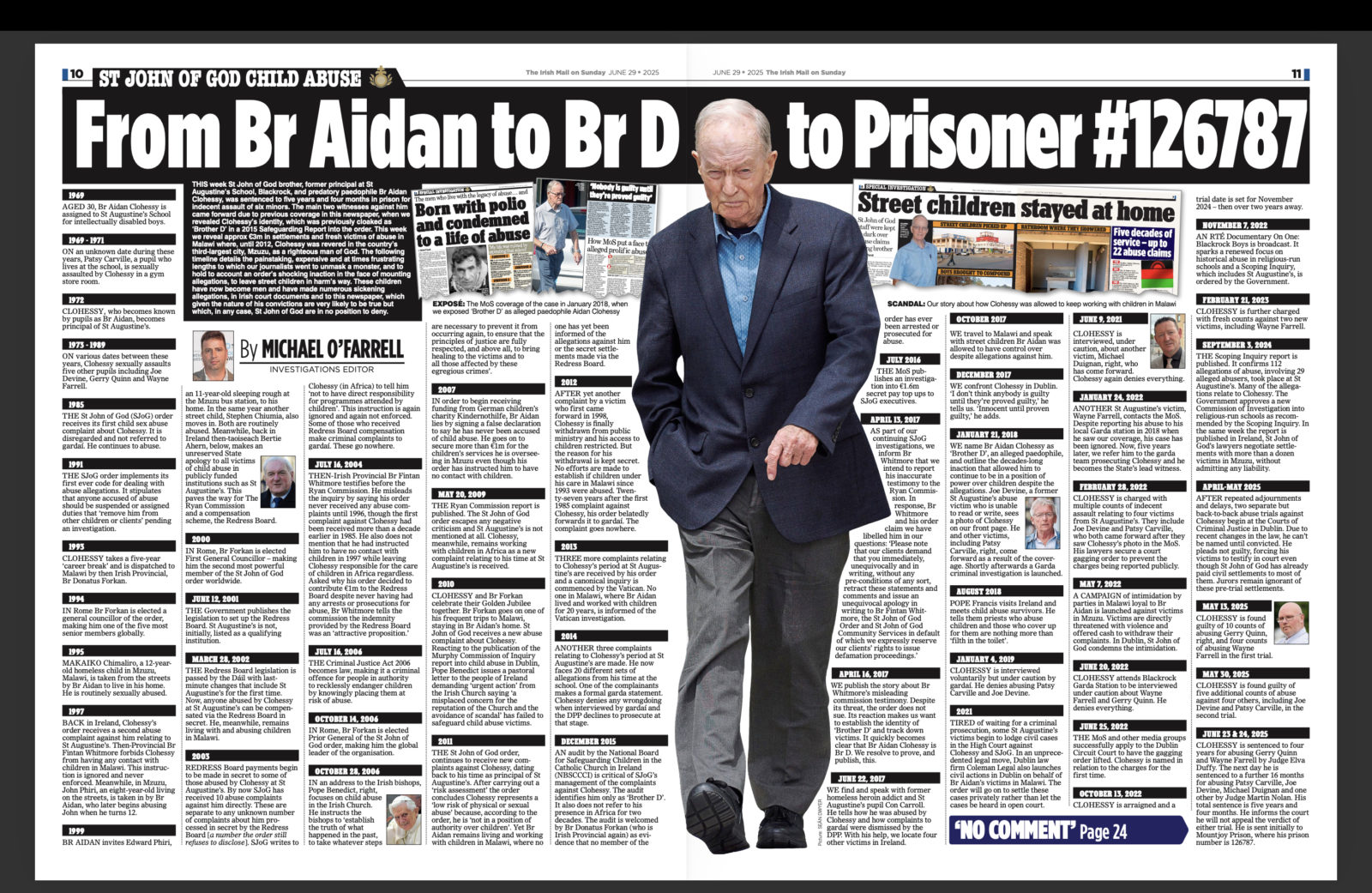
Irish Mail on Sunday – June 29, 2025
Before Clohessy’s trials in Dublin, the MoS travelled to Malawi to speak with victims there, who detailed horrific abuse they suffered at the hands of the now-convicted paedophile.
‘Sometimes he raped us, sometimes he played with our private parts, sometimes he beat us,’ Stephen Chiumia said.
‘Most of the things he was doing, he was doing when we went to the bathroom. He would take us to the bathroom, one after the other.’
Mr Chiumia was one of many street children Clohessy brought to live in his home in Malawi.
At the time, Clohessy’s superiors in Ireland were reassuring the authorities here that he had no access to children.
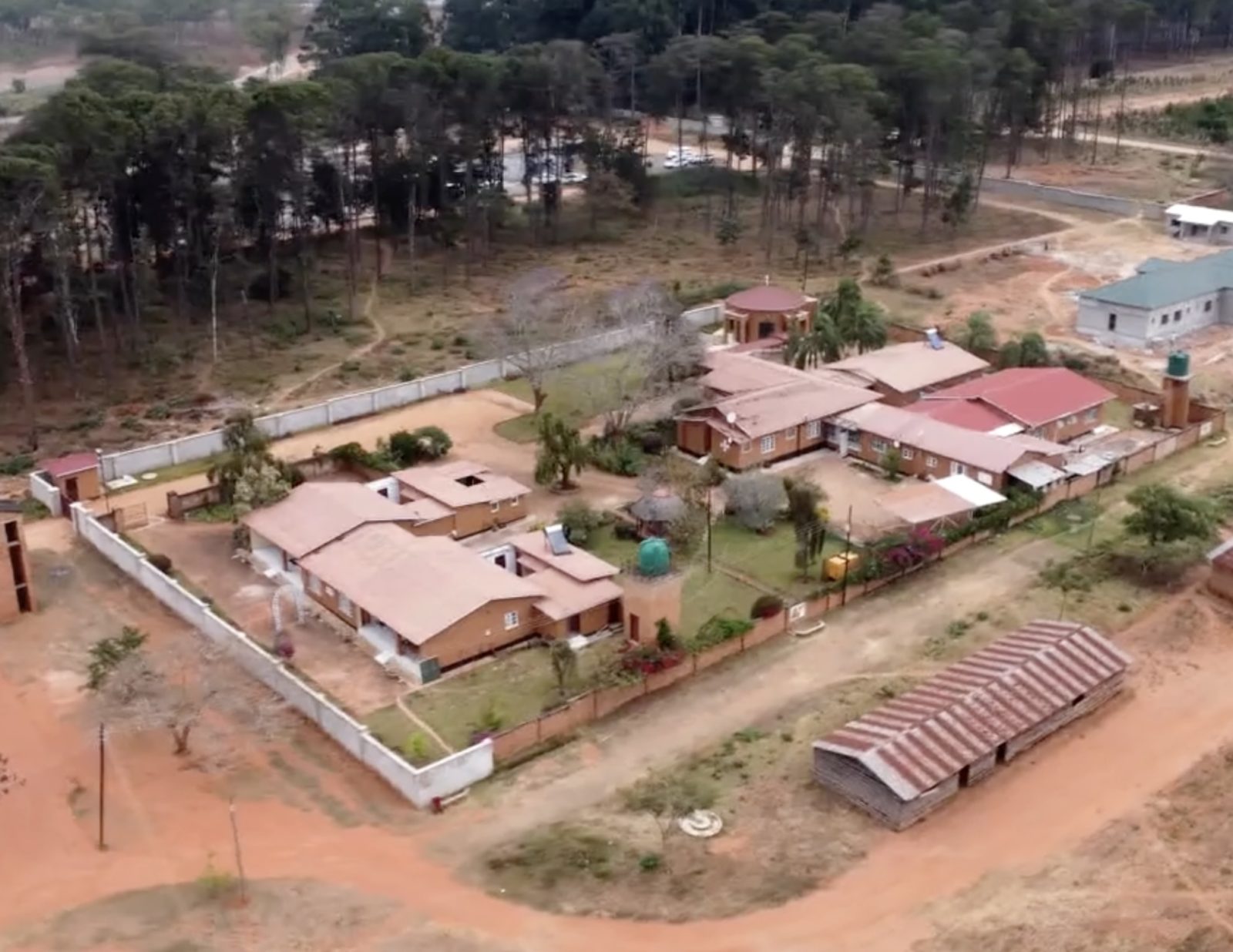
The St John of God compound in Mzuzu, Malawi where Br Aidan Clohessy lived with children.
Another alleged victim who lived with Clohessy in Malawi, Makaiko Banda Chimaliro, told the MoS: ‘What makes me angry is the fact that someone in Ireland knew that he was a risk to us and they still decided to send him to Malawi to do the same work where he was exposed to more kids.
‘Sometimes I even feel like I would have been better off as a street kid compared to the way I was abused.’
Clohessy remained in Malawi from 1993 until 2012 when he was withdrawn overnight amid a Vatican investigation, called a Canonical inquiry.
The Vatican and Clohessy’s order have refused to comment about this inquiry.
No one at St John of God’s services in Malawi was told why Clohessy was suddenly recalled without notice.
‘There wasn’t even a single rumour,’ St John of God’s then clinical director, Harrison Chilale, told the MoS in 2017.
No effort was made to trace those put at risk in Malawi – until the MoS tracked them down.
The cover-up of Clohessy’s past by his order was so successful he was able to lie to international funders, telling them he had never been accused of abuse, securing more than €1m in funding for St John of God’s children’s projects in Malawi run by Clohessy.
In 2010, Clohessy’s work with children in Malawi was the subject of a documentary called The Warm Heart of Africa (Croi Te Na hAfraice) which aired on TG4.
‘There was a time when everywhere you went you were meeting children who were begging.
You could see that they were suffering,’ Clohessy told the programme.
‘We decided that St John of God should take leadership. People literally went out onto the streets to identify the children and then they’d invite them to come back to hear their story.’
Even as this programme aired on TV, St John of God was still receiving new abuse complaints about Clohessy from his former Irish pupils at St Augustine’s, but these were kept under wraps, and he was left unsupervised to continue living and working with children in Malawi.
Clohessy sought to use his time in Malawi to seek a lower sentence in mitigation.
Outlining his role in establishing a mission in Malawi, his barrister Ronan Kennedy told the court his client ‘devoted a lot of his life to serving others’.
‘He is a person who has, despite his failings, made some contribution to society,’ Mr Kennedy said.
He added that Clohessy lived a ‘humble and quiet existence’ and still ‘lives in service of others’ by tending to the 11 elderly members of the St John of God order resident in Stillorgan.
Mr Kennedy also sought leniency on the basis that his client had been ‘subject to significant adverse publicity in the national media’.
‘In many respects he was already condemned and judged in the court of public opinion before he was ever tried in this court,’ he said.
Mr Kennedy also pointed to the fact that his client ‘didn’t stand in the way’ of the civil cases being ‘dealt with’.
Clohessy, with an address at the Hospitaller Order of St John of God, Granada, Stillorgan, Co. Dublin, was convicted of 19 counts of indecent assault following two back-to-back trials held behind closed doors last month.
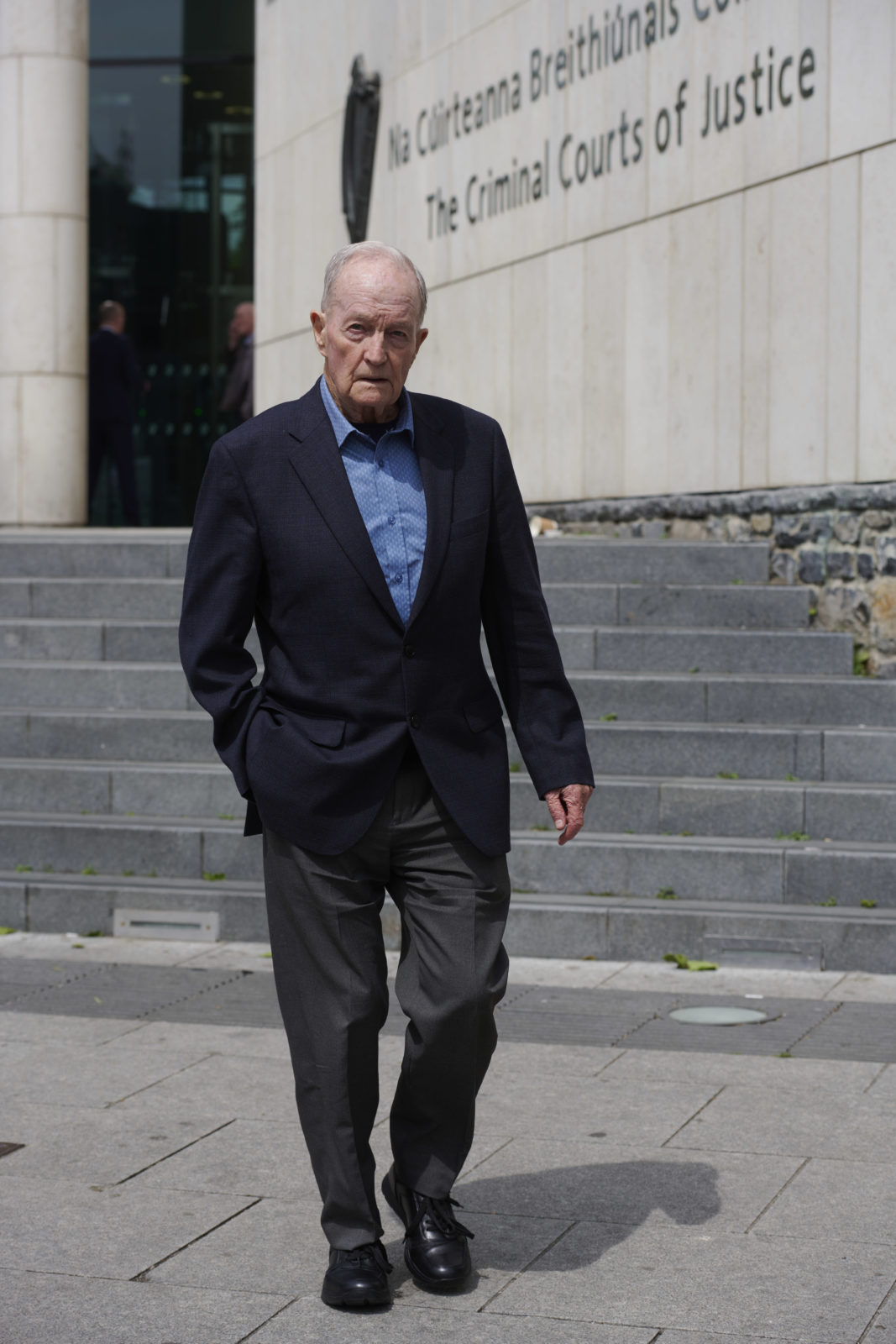
Brother Aidan Clohessy leaving the Court of Criminal Justice, Park Gate Street, Dublin, today at lunch time.
Photos by Seán Dwyer 20/05/25
At his sentencing hearings this week, Clohessy’s barrister told the court his client would not be appealing the verdicts.
Mr Kennedy said this would ‘bring some closure’ to the victims.
But Clohessy has never apologised or expressed any remorse for his actions.
The historical case against the former school principal – one of the oldest to ever be prosecuted in Ireland – followed a near-decadelong campaign by this newspaper.
Our investigation, the first part of which was published in 2018, tracked down new victims in Ireland and spoke with street children in Africa who told us that the brother frequently watched them bathe in a purpose-built shower block.
This coverage prompted more victims to come forward and ultimately led to the successful Garda investigation and State prosecution that concluded this week.
But the jailing of Clohessy is only part of a much wider, international cover-up that can now be told in full for the first time.
During Clohessy’s trials, jury members remained ignorant of the cover-up of the risk he posed for decades in Africa by his superiors.
Their actions in keeping a lid on the danger Clohessy posed to children enabled him to remain living with minors in Malawi.
The court was also unaware that, in the lead-up to his trial, St John of God spent millions settling dozens of civil cases against Clohessy and the order.
The cases being taken by Dublin law firm Coleman Legal are unprecedented in that no African abuse victim had ever before sought recompense for abuse in an Irish court.
These civil cases are also being taken against the leader of St John of God in Ireland, Br Donatus Forkan, who dispatched Clohessy to Africa after he abused children here.
He frequently visited Clohessy in Malawi, where he was known widely simply as BrAidan, as secret settlements were paid out to victims here.
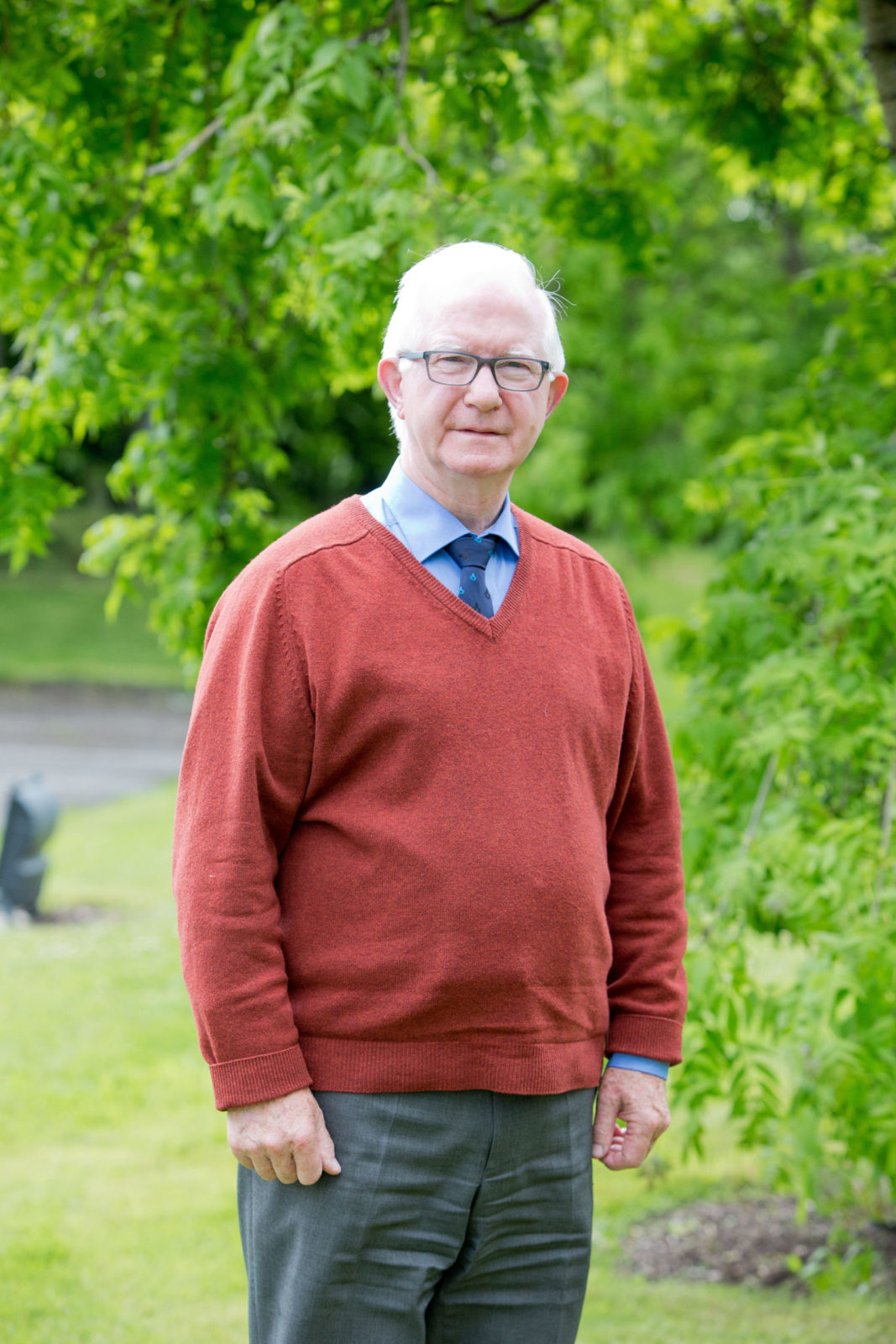
Provincial Brother Donatus Forkan, St John of Gods in Dublin, Ireland.
The MoS has confirmed the St John of God group signed annual compliance statements, declaring compliance with public sector remuneration rules, in 2013, 2014 and 2015.
These were signed by the chairman of the St John of God group, Brother Donatus Forkan. He is the Provincial of the Saint John of God Order.
Pic Tom Honan.
Unusually, Clohessy – whose top criminal defence team was privately funded – took the stand himself. Clohessy denied each charge, often with two-word answers, delivered with a shrug.
‘That’s incorrect,’ he said repeatedly. ‘Didn’t happen.’
At times he chuckled as if he found some questions ridiculous, and he was frequently heard humming to himself in court.
This confident performance was in marked contrast to the testimony of victims. Describing the abuse they suffered, they broke down emotionally, cowering from the nearby presence of their tormentor.
One of them, Kildare man Joe Devine, suffered a panic attack and collapsed to the floor under cross-examination by Clohessy’s defence, requiring an ambulance.
The episode delayed proceedings for several days and could have jeopardised the entire trial if the key witness had not been able to resume his evidence.
When the MoS first confronted Clohessy in January 2018 he denied any wrongdoing, although he acknowledged his order had made settlements to his former pupils.
‘I don’t think anybody is guilty until they’re proved guilty,’ he said at the time. ‘Innocent until proven guilty.’
Now, after decades of silence, those abused by Clohessy can finally speak freely. They include Wayne Farrell, a former pupil of St Augustine’s school in Dublin where Clohessy was principal until he was sent to Malawi in 1993.
‘Life will never be the same. The memories are always there, and the damage can never be repaired,’ he told the MoS.
Mr Farrell said he was appalled to learn Clohessy had been sent to Malawi after abusing him here.
‘I was in shock when I heard about Africa. He’s a predator. He picked on weak people. Frail people,’ he added.
The St John of God order refused to respond to detailed queries about the number of alleged abuse cases involving Clohessy or how much it has paid out in settlements to victims.
‘There is no comment,’ a spokesman said.
‘I feel like I was robbed of my future. It hurts me so much…’
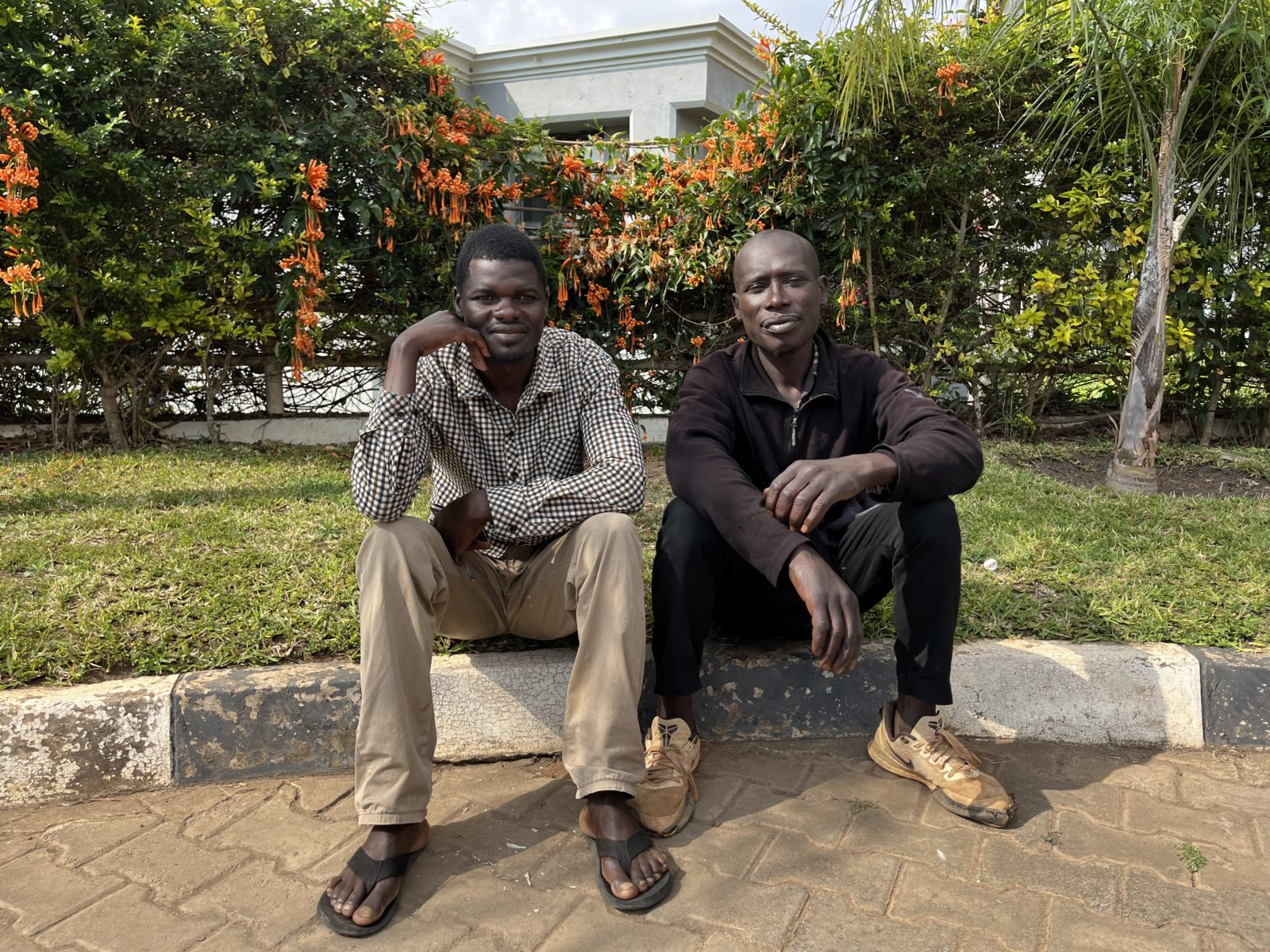
Edward Phiri and Makaiko Banda Chamaliro in Mzuzu, Malawi in September 2024.
Photo Michael O’Farrell
EDWARD PHIRI is 37, He is a father of four young children aged between four and eight.
He lives in a one-room, mud brick home in Mzuzu, Malawi, and supports his family by selling potions in the local market that his wife makes from herbs.
As a child, although Edward had parents, he often slept rough at the bus depot in the centre of Mzuzu.
In 1999, at age 11, Brother Aidan invited Edward home to wash his clothes and bathe.
Then the abuse started.
‘He used to wash my penis. Of course I was young. I didn’t know what was happening but most of the time when I took my bath he would come and take my penis – – touch my penis. Now, as I am mature, I can say he was doing it like masturbation. But I was young, and didn’t understand.’
Edward was also physically punished, accused by Brother Aidan of stealing wine. The abuse and punishment led him to consider suicide.
‘During my time, I used to even think to hang myself,’ he told the MoS.
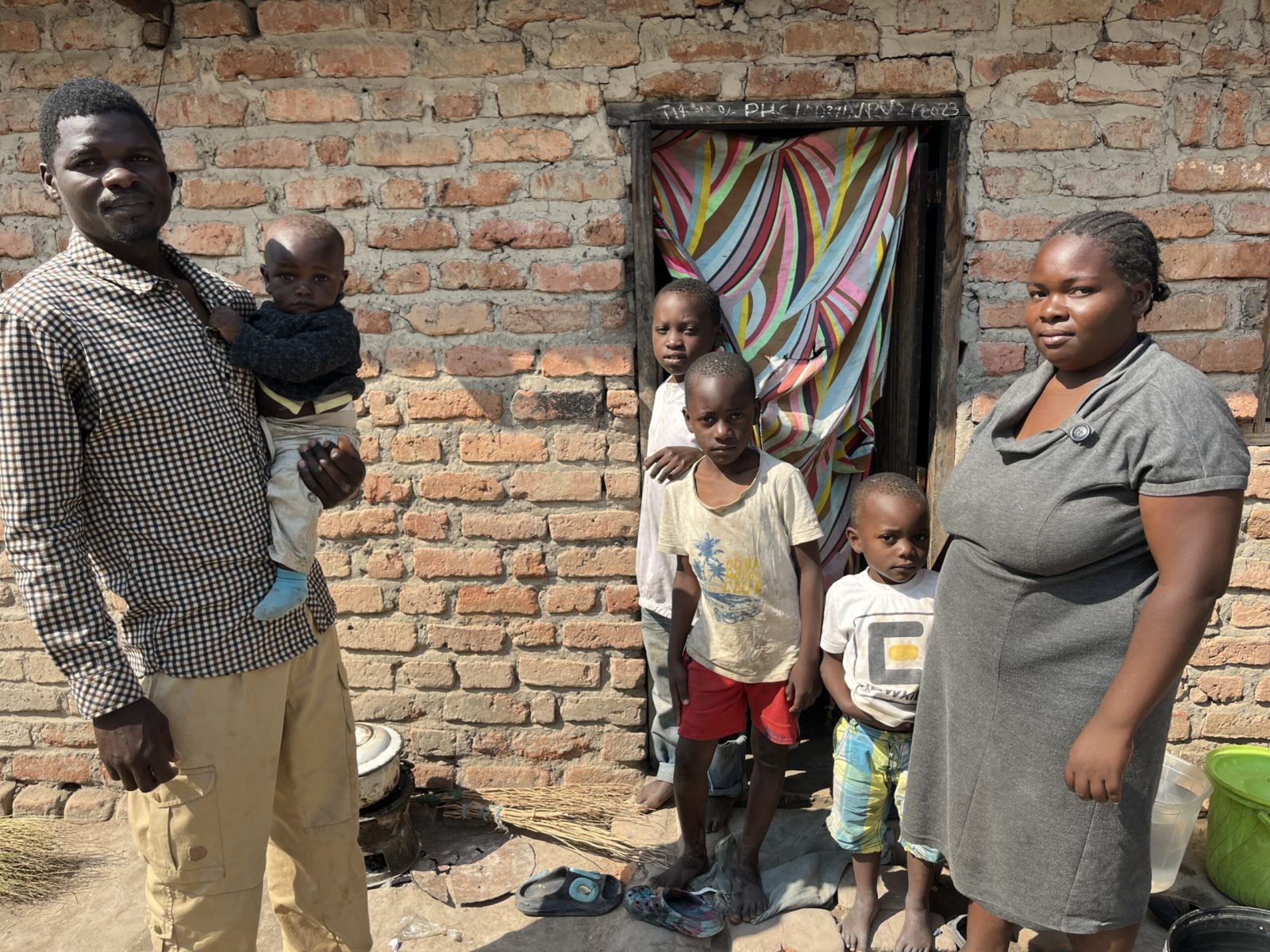
Edward Phiri and his family at their home in Mzuzu, Malawi in September 2024. Photo Michael O’Farrell
I went home and I take strings. I even put strings up in the house to kill myself, but some neighbour passing by took me from those strings.’
Today, despite Edward’s experiences with St John of God, he is dedicated to religion, working with a local pastor.
‘Brother Aidan, yeah, he was a man of God but you know sometimes the devil uses such people,’ he said.
Edward told us he is happy to speak out as he hopes that this will encourage others to come forward. In 2022, Edward sued Brother Aidan and the head of the St John of God order. The order ultimately settled for a lifechanging but confidential sum, without admitting liability.
Looking to the future, Edward is planning to buy a farm and a house for his family.
‘I think there is hope that somehow, something might change in my life,’ he said.
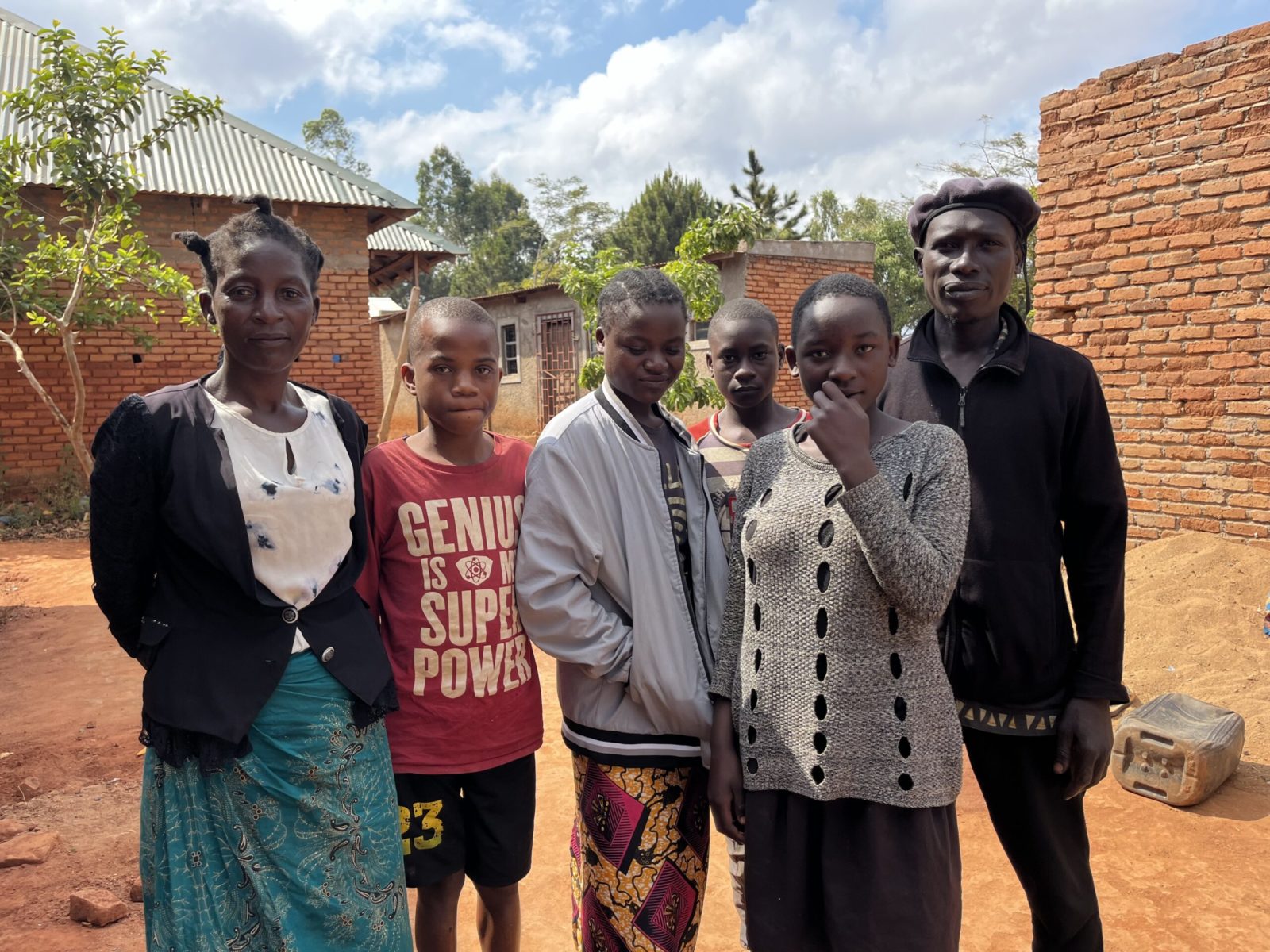
Makaiko Banda Chimaliro and his family at their home in Mzuzu, Malawi in September 2024. Photo Michael O’Farrell
MAKAIKO BANDA CHIMALIRO is a 42-year-old gardener and father of five children aged between eight and 22.
Makaiko and his wife and family live in a shed-like home made from mud bricks on the outskirts of Mzuzu.
He met Brother Aidan on the streets of Mzuzu in January 1995, when he was 12.
‘He was in the company of some black men,’ Makaiko told the MoS. ‘They approached us, and they said to us that the man worked for St John of God and he wanted to help us – – to remove us from the streets because the streets are dangerous and we could easily be killed.
‘We were happy that this white man was going to take care of us.’
Makaiko recalled being bathed by Brother Aidan.
He also spoke of beatings: ‘If we didn’t go to school he would ask you to take off all your clothes and then lie down. Then he would whip you naked.’
Describing other abuse, he added: ‘There were two bathrooms in Brother Aidan’s yard – – outside and in the house. When he tells you to go and bathe in the bathroom in the house, he would come there and then start having you to help him masturbate.’
Makaiko remembers there were ‘about 15’ other boys living at Brother Aidan’s compound.
He said the boys slept inside Brother Aidan’s house but knew not to go inside when there were visitors or until the cook left each evening.
‘The cook would leave and then we were able to go into the house at around 7.30 but whenever the cook was in the house, we would never enter the house,’ he recalled.
Makaiko said that he is angry at those who sent Brother Aidan to Malawi.
‘What makes me angry is the fact that someone in Ireland knew that he was a risk to us, and they still decided to send him to Malawi to do the same work where he was exposed to more kids. That makes me disappointed and angry at the authorities for doing that.’
In 2023, Makaiko sued Brother Aidan and the head of the St John of God order.
The order settled for a lifechanging but confidential sum, without admitting liability.
But Makaiko said: ‘No matter how much compensation we get, it’s not enough because the pain and the hurt goes deep. It’s beyond compensation. There is no amount of money that can make up for the shame and the pain that we’ve gone through.’
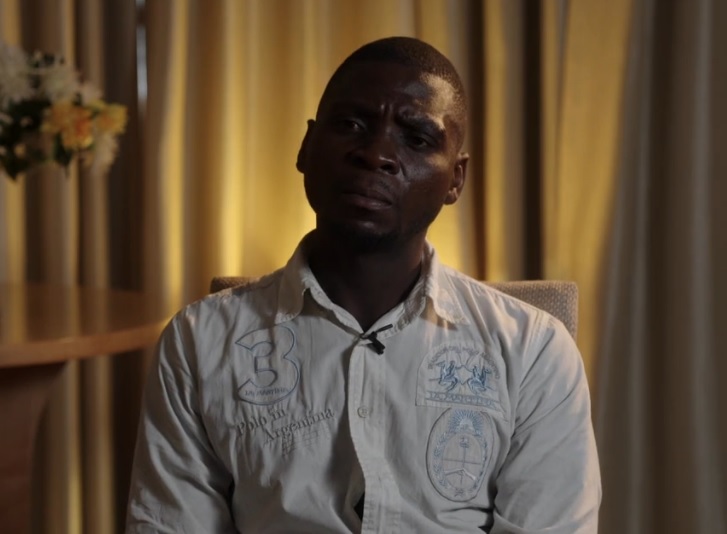
John Phiri
JOHN PHIRI is 36 years old and has never had a home or a steady job.
He met Brother Aidan when he was just eight, living at the bus depot in Mzuzu, where street children slept.
He then went to live with Brother Aidan, where at first things were good.
‘After four years, he began to treat us badly,’ John told the Irish Mail on Sunday.
‘He used to abuse us in different ways. He used to touch our buttocks.
‘One day he gave me a soft drink and in two minutes I fell down. I was knocked out. I didn’t know what happened for some time.
‘But when I got up I realised my buttocks were hurting.
‘I didn’t know what was causing the pain until I went to the toilet. Then I realised something was wrong. The pain lasted for a whole four days.’
John went to hospital, where he was told: ‘You’ve been raped.’
‘I couldn’t do anything because I was so young and I did not know what to do,’ he recalled.
‘It hurts me so much. How could a man have sex with me? I feel like I was robbed of my future. It hurts me. Sometimes I even want to kill myself.’
John said he wants those who put him at risk to face justice.
‘The fact they knew he was a threat to kids here in Africa shows they are very bad people. What I want to say is I wish they would get arrested. I would be very happy to see that.’
Last year, John sued Brother Aidan and the head of the St John of God order, Donatus Forkan.
The order settled for a life changing but confidential sum, without admitting liability.
‘I will try to start a business, to multiply that money and make life better,’ John said.
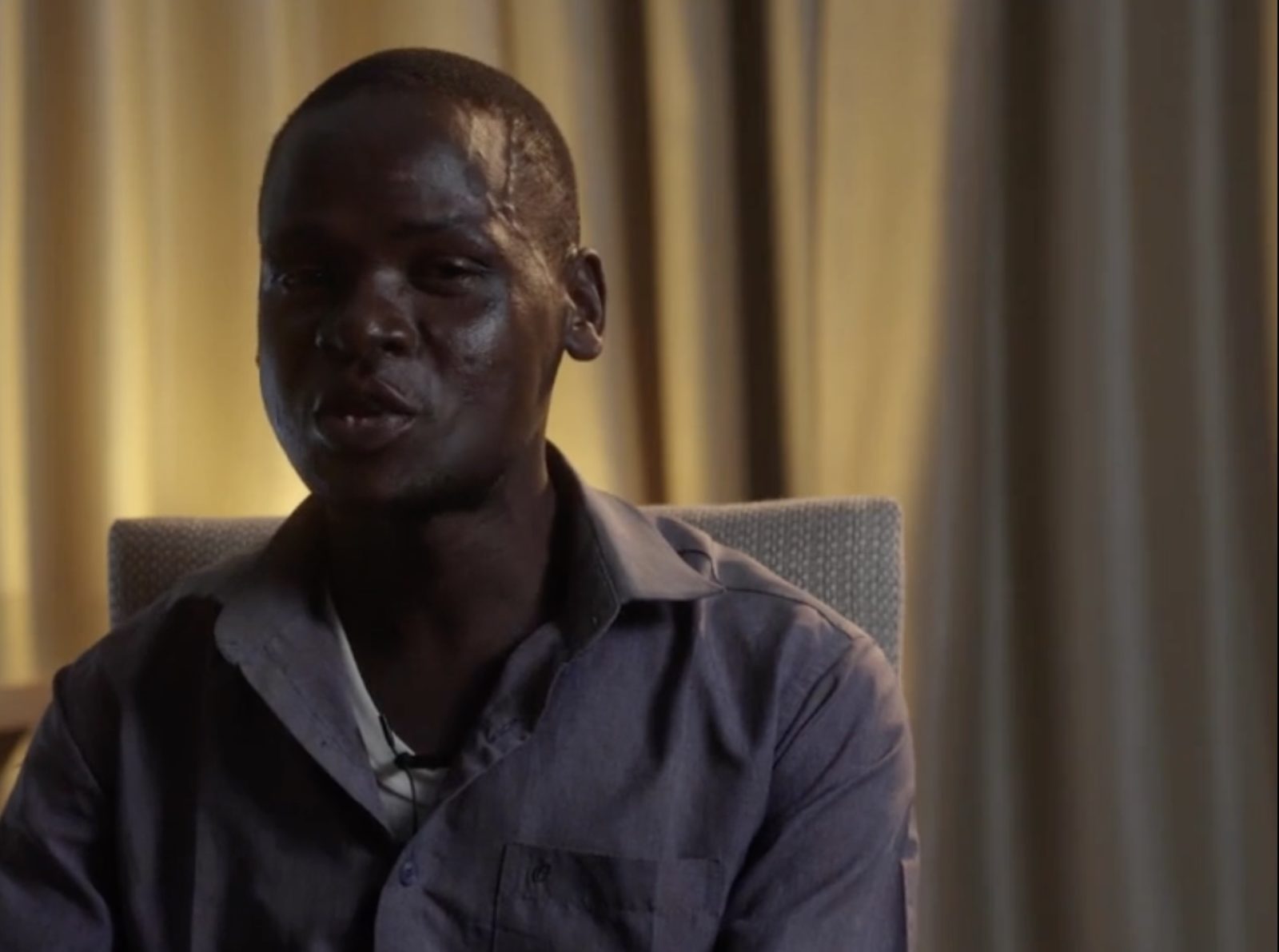
Stephen Chiumia
STEPHEN CHIUMIA is a 33-year-old carpenter from Mzuzu. He was orphaned as a child and grew up in the streets of the city, moving around daily to find shelter and food.
In 1999, when he was aged 11, he met Brother Aidan.
‘Brother Aidan said he could help us,’ Stephen told the MoS when we met him in Mzuzu.
‘He picked us up and took us to St John of God.’
Stephen then lived in Brother Aidan’s walled compound, on the outskirts of Mzuzu, for five years, until he was 16.
Being bathed by Brother Aidan was a routine that took place two or three times a week.
‘Sometimes he raped us, sometimes he played with our private parts, sometimes he beat us,’ he recalled.
‘Most of the things he was doing, he was doing when we went to the bathroom. He would take us to the bathroom, one after the other.’
Stephen, right, and other boys living in Brother Aidan’s house felt imprisoned with no escape.
‘We could not get out because there was a guard. The guard did not let us get out. His orders were not to let us get out.’
Stephen said he is still affected by the abuse he suffered.
‘It hurts me that he did this to me. I can tell you if I met him today, things would not end well.’
In 2024, Stephen sued Brother Aidan and the head of the St John of God order. The order settled for a life-changing but confidential sum, without admitting liability.
But no one apologised, something Stephen mentioned that he would like. Instead, he said, ‘They just gave me money’.
He would put his arm on my shoulder and say, ‘Son, no words’

WAYNE FARRELL was sitting at home on the couch when he casually picked up a copy of the Irish Mail on Sunday.
It was January 28, 2018. Wayne cannot read or write but as he flicked through the pages, a picture of an old man caught his eye. The photo was of Brother Aidan Clohessy. It was then that something in Wayne snapped.
‘That’s when it happened,’ Wayne recalls. ‘I just broke down, sitting on the sofa and I threw it [the paper] on the ground.’
Suddenly, Wayne was full of rage. He was crying uncontrollably too.
‘What’s wrong?’ asked his sister Michelle, seeing his distress.
For the first time in his life, Wayne – who was then 44 – told her about St Augustine’s.
Wayne was eight when he was transferred there after his First Holy Communion.
Prior to that he’d been attending ‘Benincasa School for slow learners’ run by the Dominican order in Blackrock, south Dublin.
St Augustine’s, on nearby Carysfort Avenue, run by the St John of God order, was a school for the mildly intellectually disabled.
Brother Aidan Clohessy was the school principal at St Augustine’s from the early 1970s until 1993.

29/04/2025
Wayne Farrell photographed in Bullock Harbou, Dalkey, Co Dublin
Pic:Tom Honan
Within a year of arriving at the school, Wayne was targeted.
The abuse could happen anywhere – at the pool, in the gym and often in the principal’s office.
‘He was watching all the time.
And he’d just stand there, staring.
You just knew he was coming for ‘You just knew he was coming for you’
you,’ Wayne recalls. ‘He’d touch me on the shoulder, and I’d look around and he’d say: “Come with me son.” You knew you were in trouble then.’
Each day, as he got off the bus at the school gates, Wayne faced a new nightmare.
Walking into the building, he’d watch for any tell-tale sign of trouble from Brother Aidan.
‘He’d be standing at the double doors with his hands in his pockets. As soon as he’d seen you, he’d have the comb over the hair, and you f***ing knew you were going to get done that day. You knew it. You would feel it.’
Brother Aidan’s office was through the school’s main double doors and up the corridor, on the right-hand side.
There was then one step up into the room.
Inside, Wayne remembers a religious statue, a sink, a desk to the left, chairs and a window opposite the door. Through the window, a pond outside was visible.
The first time Brother Aidan called Wayne to his office, he had no idea what was in store.
Removing a key from his pocket, Brother Aidan locked the door from the inside and returned the key to his trousers.
No escape was possible. Then it began.
‘Take off your clothes,’ Brother Aidan ordered.
At first, Wayne refused. ‘No.’
Then Brother Aidan reached for his cane and drew his belt from around his waist.
‘What do you want?’ he asked, threatening Wayne with a beating, a frequent occurrence for students at St Augustine’s.
‘I don’t want anything,’ answered Wayne, confused.
Brother Aidan grabbed Wayne by the ear and lifted him up.
‘Son, you listen and do what I tell you,’ he warned.
Eventually, Wayne gave in. ‘I stripped off and he sat in front of me naked. He came around behind me. He would always put his arm on my shoulder, and he’d say: “Son, no words.” Then he started rubbing his penis up and down me backside.’
Over the years that phrase – ‘son, no words’ – was replaced with a menacing gesture that haunts Wayne to this day.
Every time Brother Aidan placed his forefinger over his lips in a shushing motion, Wayne knew what was about to happen.
He still remembers the gold ring on Brother Aidan’s hand, with an embedded red gemstone, and the way he kept twisting it.
Once, Wayne ran for the window to escape. But it was hopeless.
‘I tried to get out of it one day because he had me naked. He gave me such a whack that I just [fell over] backwards.’
Wayne travelled to school on the bus, but sometimes he’d be called to the office after school. When that happened, he’d miss the bus and have to walk home afterwards.
The walk, down Carysfort Avenue into Blackrock and back to Dún Laoghaire, took an hour.
‘It was eating away at me all the time’
‘In winter it was horrible,’ he recalls, breaking into tears.

29/04/2025
Wayne Farrell photographed in Bullock Harbour, Dalkey, Co
Pic: Tom Honan
After several years, Wayne’s mother pulled him from St Augustine’s. She never said why. She must have seen the bruises from the beatings. She couldn’t possibly have imagined the rest.
Wayne never spoke about the abuse until 2018 when he saw this newspaper, when he finally opened up to his sister.
Wayne’s dream was to be a fireman or a policeman, but he’d never learned to read or write in St Augustine’s. Just how to be afraid.
He was a champion swimmer, though, and from the age of 18 he volunteered with the Dún Laoghaire lifeboat crew.
Wayne would go on to save many lives and win bravery awards for dramatic and selfless rescues at sea. He also often worked as a diver, recovering submerged bodies for the emergency services.
But since he suffered three minor strokes in recent years,
Wayne has been unable to volunteer any more. His beloved daily swims in Dublin Bay have ceased.
For work, Wayne served time on fishing trawlers, helped at a funeral home and even had a stint as a Dublin Bus driver on the famous 46A route.
He always tried to keep busy, to run ahead of the memories that chased him. But it never worked.
‘I tried to put it behind me, but it was eating away at me all the time When you get time to think about these things it just comes back. It never goes,’ he says.
Meanwhile, Wayne never felt he could tell anyone.
‘Imagine going home to your friends or relatives to tell them that had happened to you. Them days they wouldn’t believe you because of the Catholic religion. That was God. And that was it.’
At night, he medicates to keep the memories and emotions at bay.
‘I take sleeping tables at nighttime to make me sleep because I wake up so angry. If I knew where he was, I’d go after him.’
Today, Wayne feels let down by ‘He stole everything I wanted in life’
the State authorities responsible for St Augustine’s.
‘When I was young, I was in the care of the State because I’m a slow learner. I was f***ing abused under their watch.
‘I’d love to meet the Minister for Justice and say it to them – how do you think I feel? Has it ever happened to you? Yet you let him [Brother Aidan] walk around.’
Unable to read or write, Wayne never even knew that the Redress Board existed.
Set up in 2002 in the wake of the Ryan Commission into abuse at religious-run schools, the board ran a now-closed compensation scheme.
But he doesn’t care. For Wayne it was never about the money. He only ever wanted justice for what Brother Aidan did to him.
‘He has stolen everything I wanted in life,’ he told the MoS in the days before Brother Aidan’s trial began this month. ‘I want justice done. I hope justice is done.
‘I’m not afraid of him. I’m a big guy now. What he did is a crime – if I did what he did, I’d be in jail. So what’s the difference with him?
‘I want to go into court. I want to be there to tell the judge what he’s done. That’s all I want, for him to get put away, even for a month, because at the moment, he’s walking around. I want that f***er in jail. I don’t care if he’s 101. I’ll wheel him to jail. I’ll put him in a wheelchair to jail.’
This week Wayne finally got his wish as his abuser, now 85, was convicted of 19 counts of indecent assault following two separate trials at Dublin Circuit Criminal Court last month, and sentenced to a total of five years and four months in prison.
But the trial almost never happened, and Wayne was very nearly not involved in it.
Numerous victims from St Augustine’s came forward to the Redress Board two decades ago and their cases were settled in secret.
No prosecution resulted, and Brother Aidan remained free.
Then in 2018, the Irish Mail on Sunday tracked down former St Augustine’s pupils who had never been before the Redress Board and published their statements. A week after he saw Brother Aidan’s face in that newspaper coverage, Wayne walked up to the counter in his local Garda station.
‘I want to report an incident of sexual assault that happened at school,’ he told the officer at the front desk.
‘When did it happen?’ he was asked by the garda.
‘When I was young,’ he answered. ‘I was sexually assaulted in school – what do I do?
Through the hatch, Wayne was asked to provide his name and number on a blank sheet of paper.
‘I’ll arrange for you to come in,’
he was told. ‘We’ll be in touch.’
Wayne walked back out the door ‘I don’t socialise really because I fear people’
that day thinking that he’d made a giant personal leap. But nothing ever happened. No one called. The bravery he had shown in coming forward, after years of silence and shame, had all been for nothing.
‘I felt I was getting somewhere but I was let down by the State again,’ he says.
Five years later, in 2022, Wayne called this reporter for the first time. He had nowhere left to turn.
The day after his call, I sat down with Wayne on a bench at Bulloch Harbour, overlooking Dublin Bay, and he told me his story.
The harbour, where his family run a small lobster business, is a special place for Wayne.
‘I come down here out of the way of everyone,’ he says. ‘I don’t socialise, really, because I fear people. I’m down here out of the way of everything.’
Aidan Clohessy had, at this point, been charged with the abuse of the other St Augustine’s pupils that our 2018 investigation had been able to track down. But the Garda team responsible were unaware of Wayne – despite his visit to his local station to report his abuse, years beforehand.
That was corrected only when we provided Wayne with the details of the team that was prosecuting Brother Aidan.
This week, after many let-downs and many years, Wayne finally got his chance to tell the court what Brother Aidan did to him and to see his abuser get justice.
You were a child. The shame is not yours.

25/1/2018
Joe Devine.
Pic: Tom Honan
FOR 35 years − until he saw the front page of the newspaper on January 21, 2018 − Joe Devine never
told anyone about being abused.
Joe cannot read but he knew what the story in the Irish Mail on Sunday was about.
‘That’s Brother Aidan,’ he told his wife Sally as he broke down.
‘Did he do those things to you?’
‘Yes,’ said Joe.
The floodgates opened and Joe began the first steps of unburdening himself of a load that he had long been shouldering.
‘Why didn’t you tell me?’ Sally asked her husband of many years.
‘It was the shame,’ Joe told her.‘You might not have married me.’
Sally took a deep breath, relieved after all this time that the source of her husband’s anger − an anger that had almost torn them apart − was at last becoming clear.
But beyond the relief there was a stronger feeling − she felt so sorry for the child that Joe had been, for the childhood he’d been robbed of
‘Do you remember our shed was burgled?’ she asked him. ‘That’s a crime that someone committed − it’s no one’s fault but the thief’s.’
‘You were a child,’ she told her husband. She explained to him that ‘the shame is not yours. You did nothing wrong’.
Joe understood and, with the help of this newspaper, he made a statement to gardaí. This week, Joe saw his childhood tormentor jailed for abusing him and others.Among them were Patsy Carville and Wayne Farrell who both came forward for the first time after seeing the newspaper that day.
Further Credits:
- Conor O’Donnell – Group Editor in Chief, Irish Mail Newspapers.
- Robert Cox – Editor, The Irish Mail on Sunday.
- Shane Doran – News Editor, The Irish Mail on Sunday.
- Photographers – Sean Dwyer, Tom Honan & Michael Chester