

My parents, my heroes
On April 30, 1975, almost exactly 50 years ago, the Vietnam War ended — with a traumatic defeat for the United States and a triumph for the Communists. The international protest movement of 1968 finally achieved its goal: peace through the withdrawal of the United States.
But for those in Vietnam who had believed in the US, in a democratic country, it was far from over. They suffered under the repression of the new regime, leading miserable lives in a country devastated by decades of war. Many fled. So did my family.
I wasn’t there — I was the seventh and last child, born only later in Austria. But of course, I have known my family’s escape story for as long as I can remember. It begins as early as 1954. That year, the war between the Vietnamese independence movement and the colonial power of France ended, with France withdrawing. The country was divided: in the north, the Communist part supported by China and the Soviet Union; in the south, the counterpart backed by the US. The Cold War at its purest.
My mother, still a child at the time, fled from the north to the south with her parents and siblings to escape Communist control. These were dark times, and soon the Vietnam War plunged the country back into violence. They settled on the coast in Phan Thiết and tried to build a new life. As best as they could.
The heavy fighting of 1968
The year 1968 stands out vividly in her memory. While people in Western countries tend to associate that year with Flower Power and student protests, in Vietnam the fighting was especially fierce then. To this day, when my mother sees something about war on the news, she is usually reminded of 1968.
She met and fell in love with my father while still in school — he was from the small fishing village of Phan Rí Cửa. They married and had children, but then he was drafted, and in 1972 was sent to fight in Phù Cát, in central Vietnam.
“The soldiers around me died one after another,” he would recall later. So, after two months, he deserted. He hid for two weeks on a ship that took him back home. There, he remained undiscovered until the end of the war.
In 1975, the Communist north triumphed, the US left the country. Those with good connections or financial means were flown out. The rest were left behind, with their dreams shattered — left in hunger and poverty, while the new regime sent hundreds of thousands to re-education camps where torture and death awaited.
Fear of another war
At that time, my father was a fisherman. He owned a boat with a crew of ten. My mother sold the fish at the village market; they managed to get by reasonably well. But fear was ever-present. What new repressions might come and strike them? And when would the next war begin, perhaps one in which their sons would be sent to fight? (In 1978 the Cambodian–Vietnamese War began, followed a year later by the Sino–Vietnamese War.)
Like many others, my family decided to flee. Escaping by land was hardly possible, so they tried by sea. In 1977 my father made a first attempt. The plan was that he would bring the family over later. But he was caught, and spent six months in prison. When asked what it was like there, he remains tight-lipped. Perhaps I do not really want to know.
The most stubborn man I know
My father is a stubborn man — perhaps the most stubborn person I know. In May 1979, a favorable opportunity arose and he tried again, this time with the entire family. With his boat and crew he waited near Saigon, which the Communists had by then renamed Ho Chi Minh City. We Hoangs still say Saigon, like many others.
The rest of the family — my mother and five children — took a bus from Phan Rí Cửa to Saigon. Relatives and friends came along as well. But at the agreed meeting point on the shore that night, there were far more people waiting than planned. Word of the escape had spread. My father tried to fit as many as possible aboard his ten- to twelve-meter fishing boat. He knew all too well that anyone caught would end up in prison.
In the end there were 138 people on board, including three pregnant women — one of them my mother. There wasn’t nearly enough space.
All those aboard thus became part of the so-called “Boat People” fleeing Vietnam by sea. In total, around 800,000 would reach another country; some estimates put the number at 1.5 million or even more. Another 200,000 to 600,000, the UN Refugee Agency (UNHCR) would later roughly estimate, did not survive the journey.
Without wanting to downplay anything — just for context: in the Mediterranean, which for years has been considered one of the world’s deadliest escape routes, the death rate has never even come close to that of the Boat People. No matter which numbers you consider.
Day five: everyone still alive
My family almost didn’t make it either. My mother, heavily pregnant with my youngest sister, was constantly nauseous. She could only lie down and could hardly eat the rice — the only food on board. On the second or third day, the other two pregnant women gave birth. Two healthy boys, who would later live in the US.
Then the Thai pirates came for the first time. They waited in the South China Sea for easy prey: the many Boat People who had taken their valuables with them. Armed with knives and rifles, they searched everything and took the little money, jewelry, and watches.
Only my mother was left alone. Attacking a pregnant woman is said to bring bad luck. My mother knew this, and was able to hide at least a little money under her clothes. It was also lucky, she says, that there were few women on board — it was said that pirates often abducted them.
When my mother talks about the escape, she usually does so in a matter-of-fact, almost emotionless manner. Perhaps that’s the only way; otherwise, it would overwhelm her. Since the escape 46 years ago, she hasn’t slept through a single night.
Thoughts of death during a typhoon
Day four at sea was particularly terrible: a huge typhoon approached. On board, says my devout mother, everyone prayed together — Christians, Buddhists, it didn’t matter. They cried a lot, thinking they would all end up dead in the sea.
On day five everyone was still alive, and a ship approached. They assumed help was coming and deliberately damaged their own boat so that the ship would have to rescue them and take them to a refugee camp. That’s what they’d been instructed to do before fleeing.
But it was Thai pirates again. Finding little to steal, they quickly moved on, leaving the now 140 people behind.
Now water was seeping into the boat through the hole they had made themselves. At the same time, the engine broke down, and another storm arose — though not as bad as the day before. Panic spread. Once again they saw themselves as corpses at the bottom of the sea. But my father and his crew calmed everyone down, patched the hole, and repaired the engine.
The boat must be destroyed
On the seventh day, at six in the morning, they spotted many lights in the distance: a refugee camp in Malaysia. At last, their destination. Two men swam ashore. There they were told that no more refugees could be taken in — they were already over capacity. They would have to sail on. Other refugees, also from Phan Rí Cửa, gave them a tip: destroy the boat. Then no one could send them away. And that’s exactly what they did.
At that time, the Boat People were already unwelcome in the countries of the region — there were simply too many of them. Pulau Bidong, where my family arrived, is a small island of about two and a half square kilometers off Malaysia’s east coast. At its peak, including in 1979, around 40,000 refugees lived there — though it was designed for 4,500. I once read somewhere that, at the time, it was the most densely populated place on earth. That’s where my youngest sister was born, perfectly healthy. To this day I still find that hard to comprehend.
Shortly after their arrival in Pulau Bidong in July 1979, the UNHCR organized a conference in Geneva. The aim was to coordinate an international effort to care for the many Vietnamese Boat People. There was no question that they all had reasons for fleeing their country. The United States and other Western countries finally agreed to accept refugees for resettlement as part of the Orderly Departure Program (ODP).
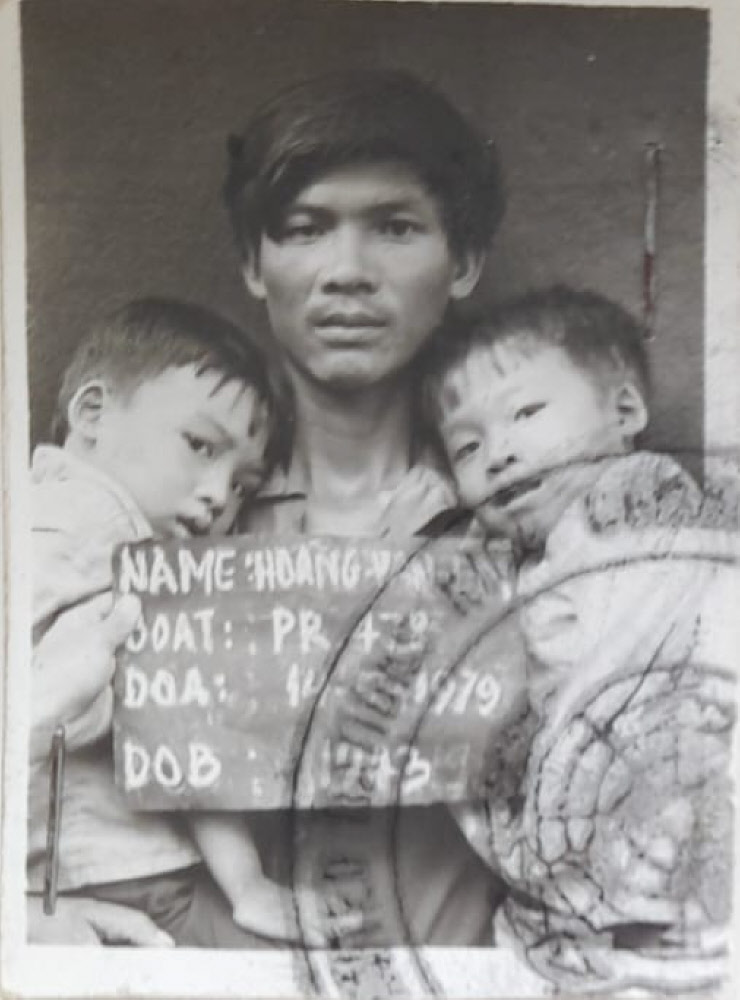
Credit: Hoang
The “Hell Island” of Pulau Bidong
The conditions on Pulau Bidong were dreadful; residents called it “Hell Island.” Many babies and small children died, my mother says. She was terribly worried about my newborn sister and wanted to leave as quickly as possible.
Loudspeakers on the island constantly announced when resettlement places became available. Five spots for the US. Seven for Australia. Twelve for France. It sounded like a bizarre lottery.
My parents were asked where they wanted to go. They said Austria, because they had relatives already living there. My uncle and his family drew Switzerland. Other relatives ended up in the United States, in Arizona. Getting everyone into the same country was simply not possible on short notice.
After about four months on Pulau Bidong, in September 1979, it was finally time. At Kuala Lumpur airport, they waited for their flight to Vienna. There, a woman asked my mother, in full seriousness, whether she could buy the baby in her arms — my sister. You can imagine the answer.
In Austria, their first stop was the refugee camp Thalham, in St. Georgen im Attergau, Upper Austria. Then, parish communities across the country took care of the new arrivals, with help from Caritas as well. In my family’s case, it was the parish of Niederalm near Salzburg. Above all, it was the Novy family who remained at the side of the traumatized and utterly exhausted Hoangs.
Added to this was the culture shock, which of course also had its amusing sides. Among other things, my family wondered: that white stuff on the mountains — is it salt, or do Austrians wash their mountains with soap?
No Krampus — just to be safe
The Novys and other families arranged housing for my family and visited them in Thalham to get to know them better and to tell them they’d soon have a new home. But conditions in the camp were so dreadful that they spontaneously packed all eight Hoangs and two Vietnamese friends into their car and took them to live in their own house. Suddenly, sixteen people were living under the Novys’ roof instead of six.
Sleeping places were set up in the converted attic. The Novys and my family could only communicate with gestures, but they managed. For St. Nicholas Day, they left out the Krampus, just to be safe.
After two weeks, the Hoangs moved into accommodation provided by the Gollhofer family in Niederalm. One day later, my father was already working. The job market for fishermen in Austria was, of course, limited, so he found work in a carpet company’s warehouse. My siblings were quickly given places in kindergarten and school. I can’t even imagine what would have become of my family without all that support.
Then my mother became pregnant with me — it was unplanned, of course. Everyone in the family was shocked, my oldest sister later told me. The last thing they needed in that situation was another baby to take care of. But when I was born at the end of 1980, everyone was happy after all. Because I was so cute. At least that is what my eldest sister says. I am inclined to believe her.
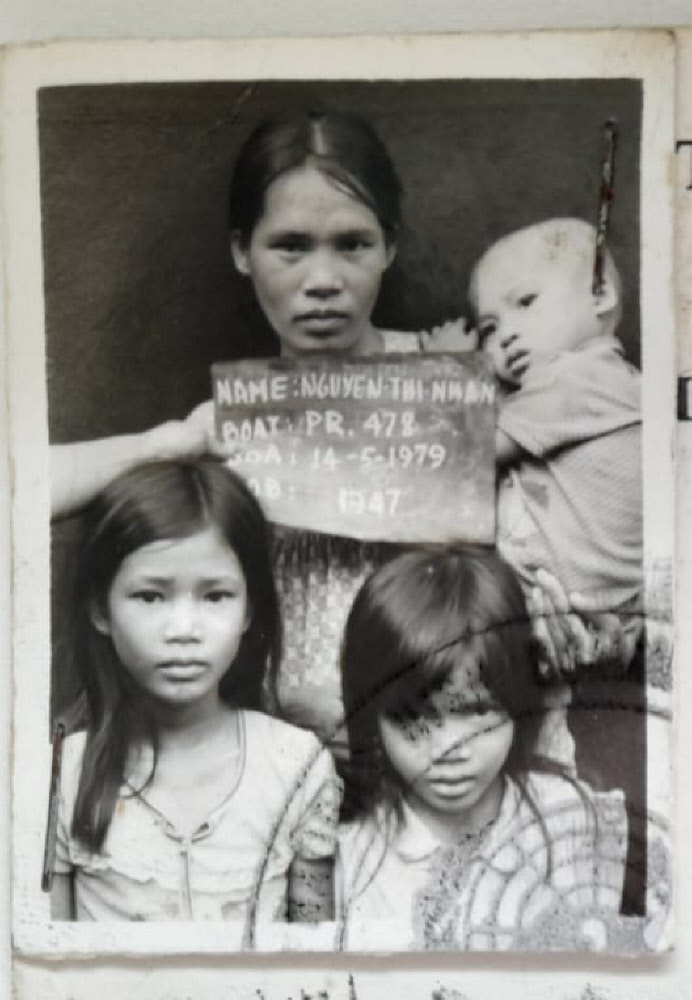
Credit: Hoang
Too small, but it works
In 1982 we moved into a larger apartment in Salzburg. By Western standards, it was far too small for nine people, but we managed. It was a good life, though also hard and full of deprivation. Seven children to care for, a new culture to adapt to, a new language to learn, and a father doing completely different work. I only realized all this later — as a small child, I was just happy to always have someone to play with. And that I always got the most Christmas presents.
At home, my mother took care of everything, while my father worked. She also learned German and got her driver’s license. She organized life for this family of nine, while my father never seemed to really settle in. He only opened up when Vietnamese friends visited — then he was loud, cracking one joke after another. I always tell my wife I got my bad jokes from him (besides, they’re not bad at all).
We children soon spoke only German and integrated, while my parents mostly tried not to stand out. “Better to stay quiet, fit in,” was their motto. Maybe that’s why I liked to rebel and question authority — a quiet protest against that endless bowing and conforming.
That’s why, as a teenager, I clashed with my father more and more often. That changed when he suffered a stroke in 1998. He soon recovered physically, but was never quite the same. The fire in him, it seemed to me, was gone — and it only ever returns in Vietnam.
My father, the sheriff
We have held Austrian citizenship since 1986. We see Salzburg as our home. Only about my father I’m not so sure. Since Vietnam opened up in the early 1990s, my parents have occasionally flown back. And there, he transforms completely. The loud joker returns. “He’s like a sheriff,” my brother-in-law once said after seeing him in Vietnam — confident, taking charge. Just like before.
My parents were also in Vietnam when my youngest brother died in 2009 from a congenital heart defect — a father of two, only 31 years old. My mother had been pregnant with him when my father was in prison after the failed escape attempt. She says that her great fear for him caused my brother’s heart defect.
He had never made it back to Vietnam since the escape. Yet he had desperately wanted to show the country to his two sons when they were older. Whenever I think about it, a dull feeling creeps into my stomach. But it’s getting better.
Never truly left Vietnam
There, in Vietnam, during the few moments I shared with my father, I realized that in his mind he had never truly left that country. That he would have preferred to continue his simple fisherman’s life. And that he endured the escape and all the hardships that followed only to give us children a safe and better life.
All the children completed their education, all of them work, are well integrated and live relatively stable lives. Under those circumstances, that is an achievement that cannot be valued highly enough. We Hoangs often don’t even realize that.
Which reminds me — I’ve never thanked my parents for what they did for us.
Cám ơn. Thank you. For everything.
Not again!
The man I believed to be a former member of the AfD (Alternative für Deutschland) sat in a café on the square in front of the train station in Erfurt. Klaus Stöber had brought an envelope full of documents he wanted to give me. They concerned the far-right AfD leader in Thuringia, Björn Höcke. Shortly before, Stöber had publicly called on the AfD’s federal executive board to expel Höcke from the party. That did not happen.
That was in September 2024. At that time, Stöber had been a member of the AfD for nine years and a member of the German Bundestag for three, but now he seemed to have broken with his party.
Klaus Stöber is 63, born and raised in Thuringia. He joined the SPD (Social Democratic Party) right after the fall of the Berlin Wall, later even running for them in district council elections. In 2010 he left the SPD because he felt it had moved too close to The Left, but to this day he describes former federal chancellor Helmut Schmidt as his political role model. There is even a portrait of him hanging in Stöber’s parliamentary office in Berlin. Stöber was active in the support association of his daughter’s school; he is chairman of the tennis club in the neighbouring town, and sometimes he drives the team to away matches on weekends.
Klaus Stöber is a tax consultant; it was one of his clients who brought him to the AfD. A new party, grassroots democratic, economically liberal, and socially conservative—that appealed to him, he says. Unlike what the AfD has written into its electoral programme, Stöber is against leaving the European Union. Nearly a third of the clients of his tax office, he says, are Vietnamese and Turks, all small business owners; he also advises a few Afghans. Without migrants, Stöber says, Germany cannot solve its shortage of skilled workers.
I thought this man had now realised that the AfD was no longer what he once saw in it. I thought he would leave the party.
Instead, Klaus Stöber told me on the station square that he had no intention of leaving the AfD. Yes, he is against Höcke, but even if Höcke stays in the party, the AfD is still his political home.
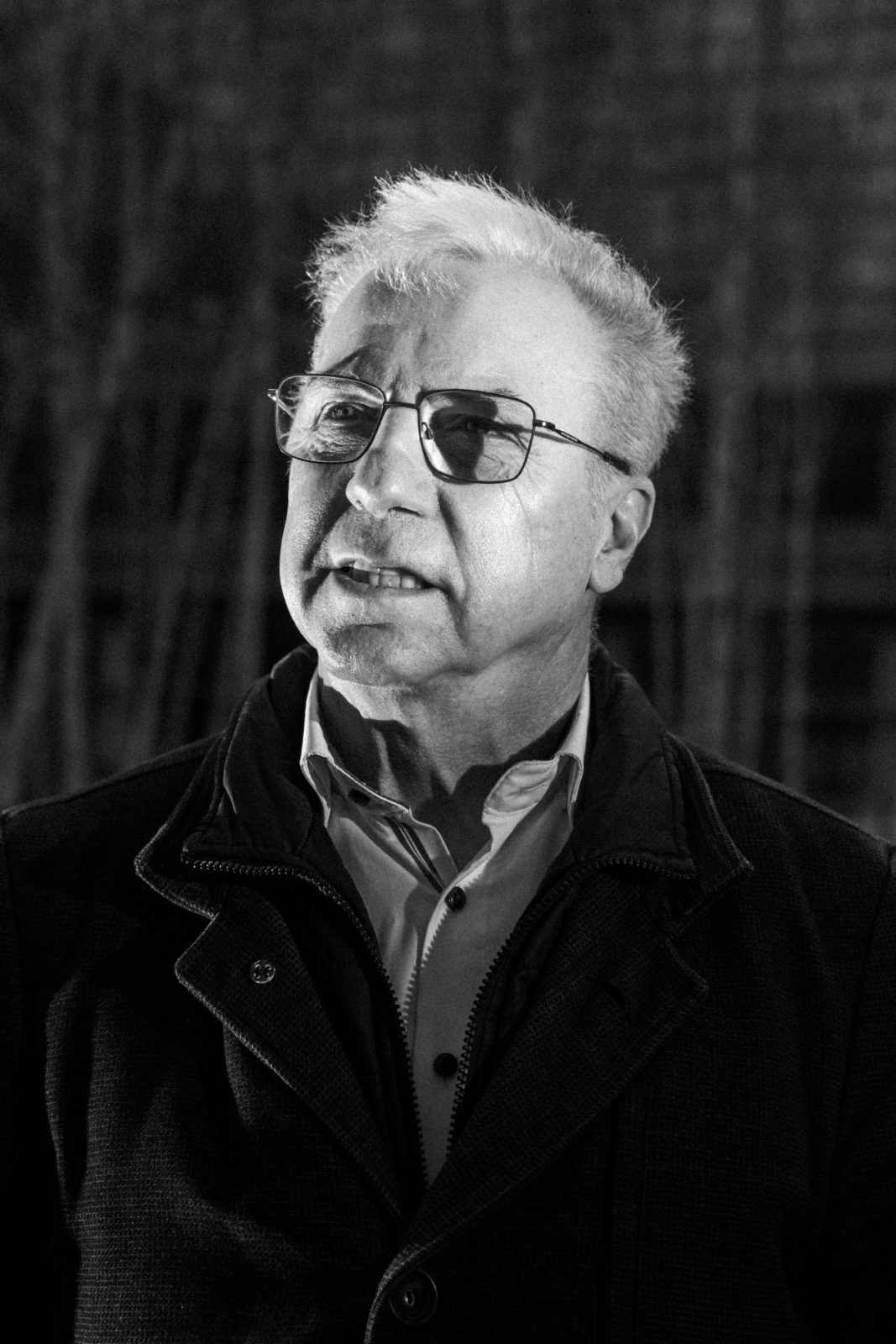
Klaus Stöber
Photo: Hannes Jung
On my way home after our conversation, I was feeling puzzled. How did it all fit together? Then it occurred to me: I know people like Klaus Stöber—I know them from the US.
I reported from the United States for seven years for Die Zeit. During those years, I witnessed the rise of Donald Trump and repeatedly met people who, like Stöber, were involved in their communities—people who would immediately rush to help their neighbour if there was a problem.
And yet, they were enthusiastic about Donald Trump, a man who railed against minorities and, on 6 January 2021, after losing to Joe Biden, incited thousands to storm the American parliament and hunt down politicians there.
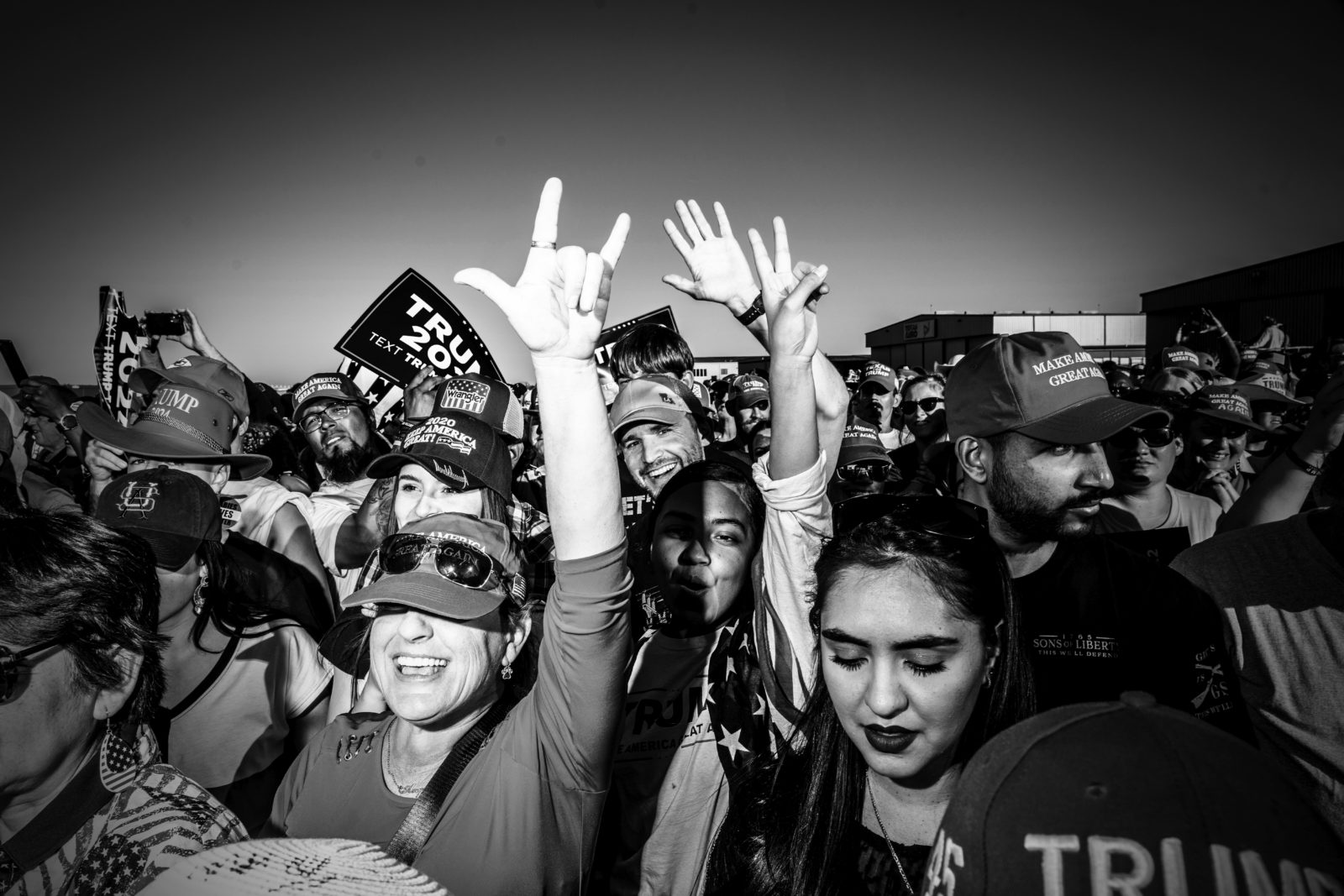
Thousands of supporters at a rally held by former President Donald Trump in Waco, Texas on March 25, 2023.
Photo: Mark Peterson
Over the past eighty years, looking from Germany to America was often like looking into the future. America brought us supermarkets and fast-food restaurants, rock music and skateboards, cable TV and the internet, the women’s and peace movements. The Americans led the way; the Germans followed.
For a long time, I thought the rise of right-wing populists would be different. That this phenomenon could not be transferred to Germany, if only because of Germany’s past. But after meeting Klaus Stöber, I sat on the train feeling like I had experienced all of this before. Here was a man who felt more at home in the largely far-right AfD than in the Christian Democratic Union or the Free Democratic Party, even though he agrees with those parties on many policy issues. I had observed exactly the same thing with many traditional Republicans in the US. They no longer trusted the established candidates of their party. Instead, they supported Donald Trump, even though they criticised much about him.
There are countless explanations for Trump’s success, but they all boil down to the same thing: Donald Trump became so powerful because groups of people supported him whom you wouldn’t expect. If he only appealed to racists, nationalists, and democracy-haters, he wouldn’t even have won the primaries. In the US, moderate conservatives, migrants, trade unionists, and young academics have also long been drawn to right-wing populism.
I now fear that the very same thing could happen in Germany.
Cemal Can is a restaurateur in Hanover. I meet him at one of his two restaurants on the banks of the Leine, near the Lower Saxony State Parliament. Outside, surfers struggle in the drizzle on the Leinewelle, an artificial rapid. Inside, cosy warmth fills the room. Cemal Can, 57, is the son of Turkish guest workers and has been a German citizen for a long time. With his bald head and distinctive glasses, Can reminds me of the actor Telly Savalas, who played the TV detective Kojak. Not a bad look for a restaurateur. Can’s parents came to the Federal Republic in 1968. His mother found work at a manufacturer of radio equipment; his father maintained the city’s sports fields.
Young Cemal trained as a pipe layer and worked in construction. Then, in his early twenties, he and his older brother took over their first restaurant; later a second followed, the one where we are now sitting. Can gestures around the dining room. He did all the remodelling and renovation himself back then. The floor—beautiful, grained wooden planks. “From Belgium,” he says. The ceiling is also made of wood. “From a castle in Saxony.” A wrought-iron spiral staircase leads down to the cellar, which Can converted into a wine cellar. “The largest in Lower Saxony—30,000 bottles,” he says. Today, Cemal Can has twenty employees and a holiday home in Spain.
In the US, there’s the idea that anyone can achieve prosperity through their own efforts. The name for this is the American Dream. If there’s such a thing as a German Dream, I’d say that, for Cemal Can, it has come true. Twelve hours a day in the restaurant, six days a week.
“If you didn’t work, you didn’t earn a thing,” says Can, shrugging. “That’s how it was back then. That was the deal.”
That’s Cemal Can’s story of upward mobility. And now he sits across from me and says he’s still not sure who he’ll vote for, but “Alice Weidel is a good politician.” She has exactly the right topics: asylum policy, citizens’ allowance.
Cemal Can, who himself immigrated to Germany, says there are now too many migrants. He points to his face: olive skin, dark eyes. “On the outside, I’m a foreigner,” he says. Then he taps his heart. “Inside, I’m German.” But he fears Germans no longer recognise that. That they hold him partly responsible for murders like those in Solingen, Magdeburg, and Aschaffenburg. That they no longer distinguish between migrants who commit crimes and him, the hard worker.
Speaking of work, he can hardly find employees anymore, Can says. Because hardly anyone is willing to really roll up their sleeves. Because Germany has become a country that punishes work and rewards laziness. He pronounces the word Bürgergeld—citizens’ allowance—as if it were something indecent. He says he no longer understands this country. The policies of the Merkel government? The policies of the Scholz government? “A disaster,” says Cemal Can.
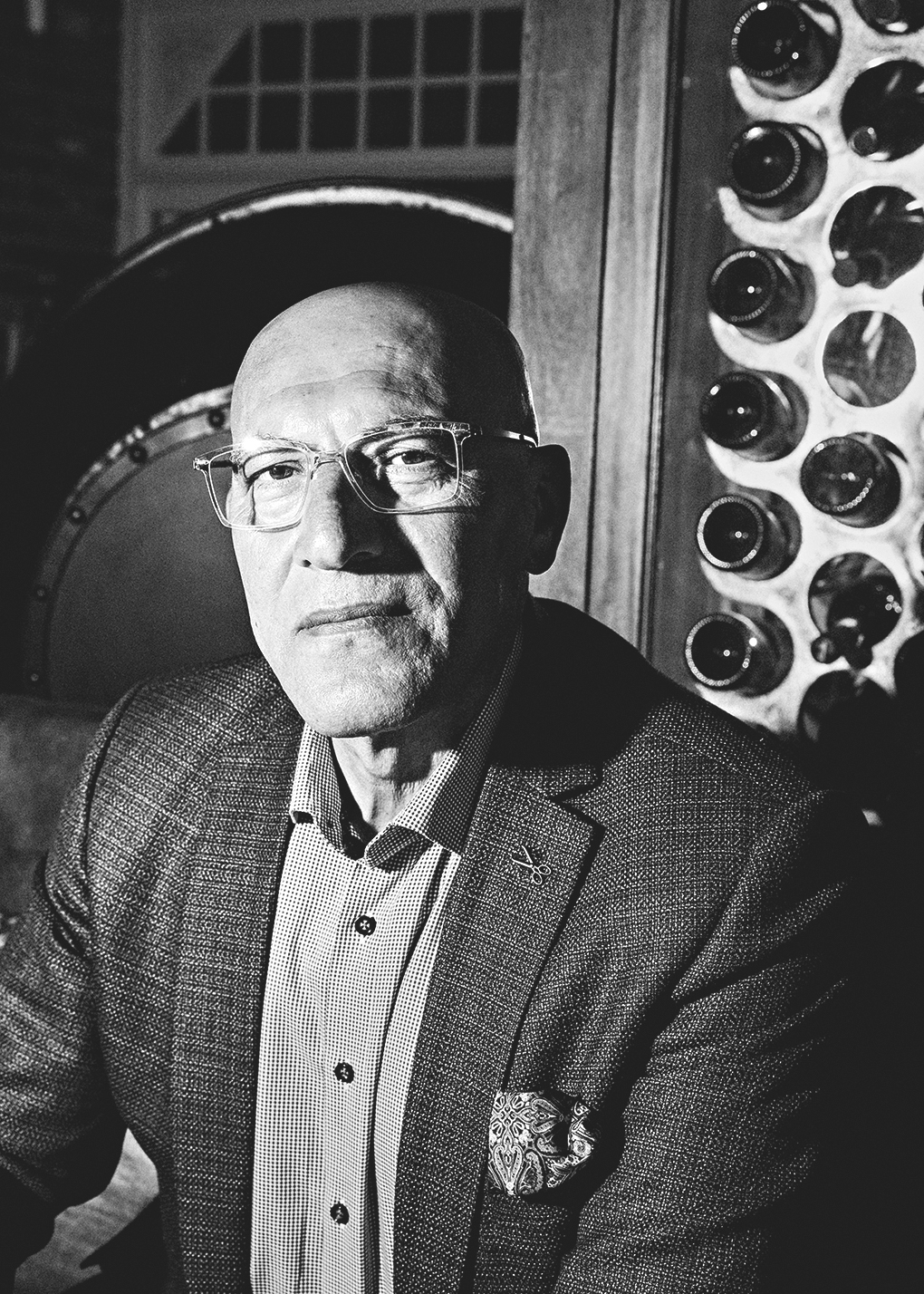
Cemal Can
Photo: Jana Mai
As I listen to him, it feels like another man is talking to me. A man who doesn’t speak German but English, who isn’t called Cemal Can but Abel Ornelas, and who doesn’t live in Lower Saxony but in Iowa, in a small town called Denison.
I met Abel Ornelas in 2016. He’s from Mexico, and came to America illegally as a teenager with his brothers. For years, he toiled in a meat factory, worked double shifts, and lived in a trailer. Today, he rents out apartments, owns a big house, and has an American passport.
Abel Ornelas voted for Donald Trump. But Ornelas doesn’t see that as a contradiction. Just as Cemal Can in Germany, Abel Ornelas in America has managed to rise to the middle class. And now he sees Donald Trump not as the man who calls Latin Americans rapists, but as the man who helps him defend the prosperity he worked so hard to achieve.
Besides, Ornelas told me, he is not even sure whether there might indeed be many criminals among the immigrants. And Ornelas pointed to President Joe Biden, who generously granted residence permits to immigrants from Haiti, Venezuela, and Honduras. Ornelas found that unfair, since he himself had to struggle for years without papers.
Just as Cemal Can in Hanover today is bewildered by citizens’ allowance, Abel Ornelas was bewildered by the help given to more recent migrants.
Traditionally, Latinos in the United States voted for the Democrats, so at first I thought the Trump-voter Abel Ornelas was an exception. Yet that’s no longer the case. In 2016, 28 percent of Latinos voted for Trump. In 2020, it was 32 percent, and in the elections last autumn it was as much as 46 percent. There was an interesting difference: Latinos who had arrived only recently still voted for the Democrats. Those who had lived in the US for a long time, instead, mostly voted for Donald Trump.
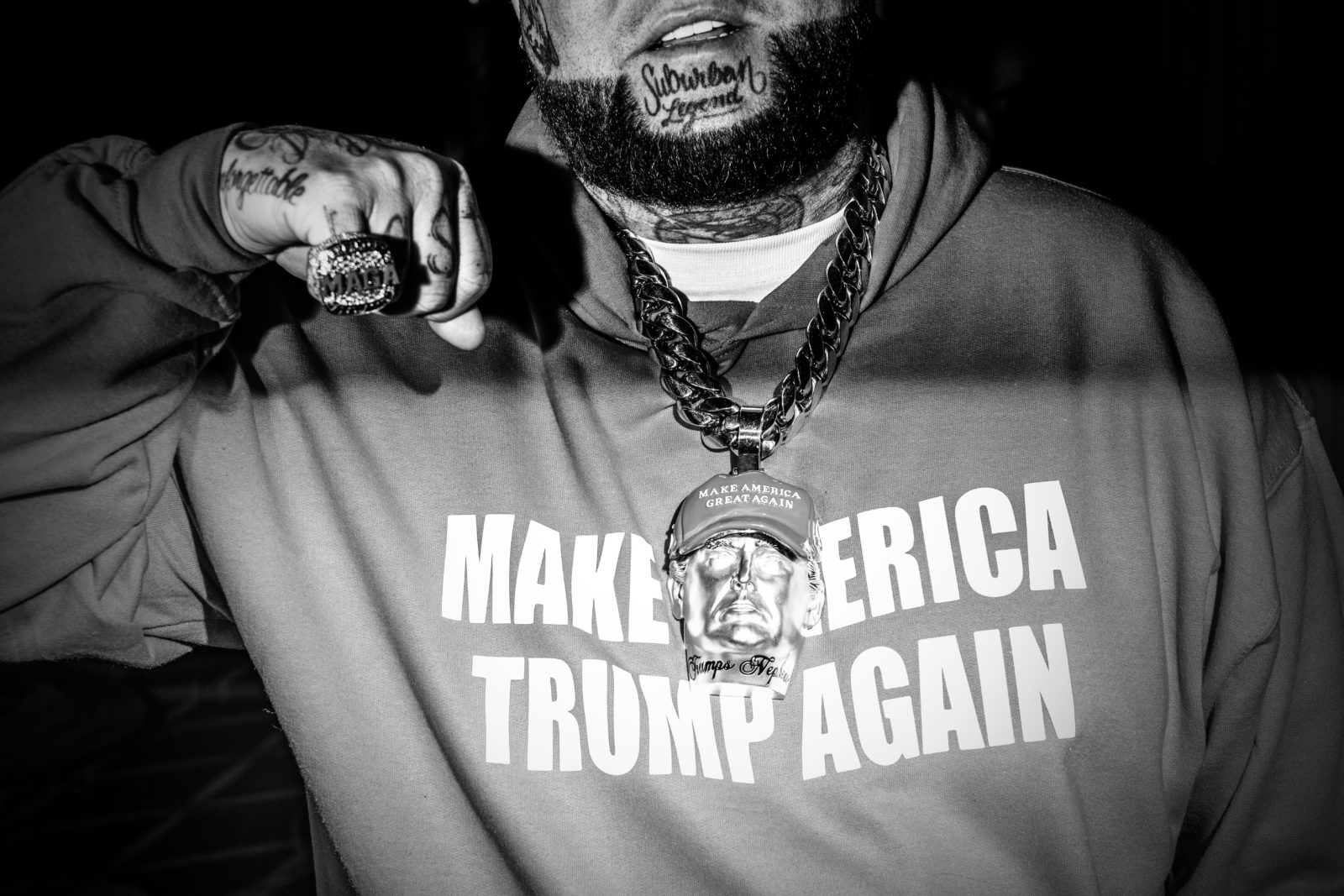
The Conservative Action Political Committee (CPAC) convention at National Harbor, Maryland near Washington DC, February 23, 2024. Rapper and Trump supporter Forgiato Blow.
Photo: Mark Peterson
Unlike in the US, there is hardly any data in Germany about the voting behaviour of people with a migration background. That’s because origin isn’t as routinely recorded as it is in the immigrant country of America. One thing, however, can be inferred from the few German surveys: the further people with a migration background work their way into the mainstream of society, the further to the right they move politically—just like in the US—and the more their voting behaviour resembles that of people without a migration background. Cemal Can seems to be a good example of this.
Besides migrants, there’s another group in the US that reliably voted for the Democrats for decades and has now largely sided with Donald Trump: workers and trade unionists. Ever since the political distinction between left and right has existed, they have always stood on the left, but now they are shifting to the right. In America, they vote for Donald Trump.
And in Germany?
Dirk Rothe, 47, looks a little as if he were on his way to a mountain hike, with his wool cap and fleece shirt. Rothe is an industrial mechanic at the DMK dairy cooperative in Thuringia, where he maintains the machines. Seven years ago, his colleagues elected him to the nine-member works council for the first time. Apparently, he did a good job, because at the next election they voted for him again in large numbers. “Second best result,” he says proudly.
All these years, Rothe was a member of the Food, Beverages and Catering Union (NGG). With its support, the works council at the dairy secured higher wages, now almost on par with comparable companies in the West. “The union does good work,” says Rothe.
And yet, a year ago, on 1 February, 2024, Rothe sat down at his computer and opened his email programme. Then he typed a message to the union. “Subject: Resignation.”
Before that, as he did almost every day, he had looked at the NGG’s Facebook page. And as always, almost every post contained a hashtag like #noafd, #keinFußbreitan-Faschisten, or headlines like “NGG stands up against AfD.” When Rothe saw that, he wondered whether the NGG had any idea what was actually happening in companies—for example at their own workplace, DMK.
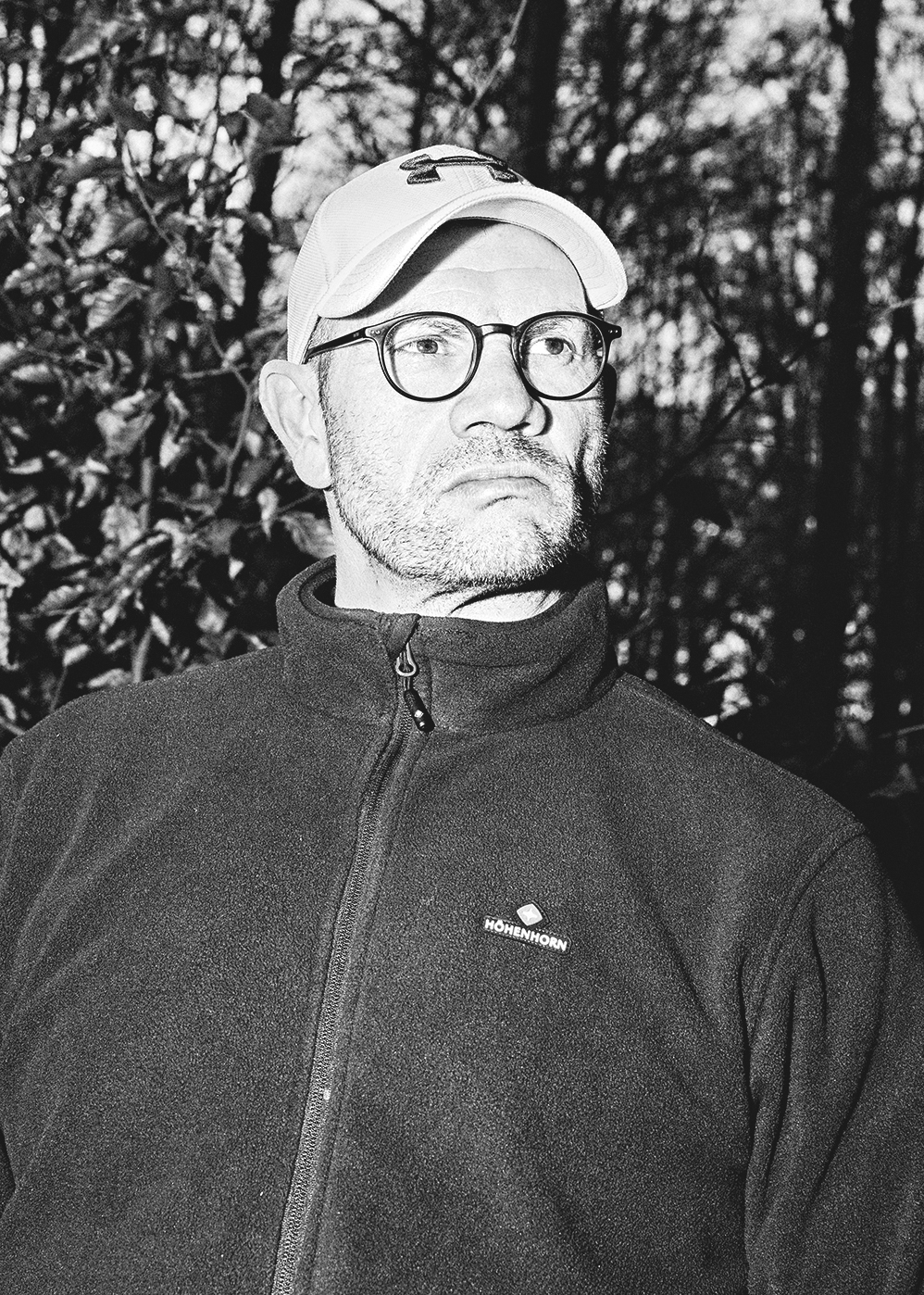
Dirk Rothe
Photo: Jana Mai
At the last works council meeting there, a union official had spoken to the 320 employees, as usual. And as usual, he had told them that in the next elections they should under no circumstances vote for the far-right AfD. But this time, Rothe says, the workers did not simply accept it. Many stood up and left. Twelve later cancelled their membership. And Rothe says he can understand them. He knows these people; he works with them, eats and drinks with them in the break room, discusses things with them—politics included.
In recent years, Dirk Rothe says, many things have built up, even for him. But none of it is reflected on the union’s Facebook page.
That’s why Rothe sat at his computer that day in February and wrote: “I simply don’t support the political agenda you stand for at the moment, because many things are being presented to the people in the wrong way … I vote neither red nor green! That block had its chance and blew it!”
“I was already pretty fed up by then,” he says today.
At the end of our meeting, Rothe gets into his car—he has to go to work. He’s had a few jobs in his life, he says. Rothe was a temp worker and moonlighted as a bouncer. He was on assignment in China and Bavaria, and he’s proud that he was able to buy a house in a village near Erfurt. That he made something of himself in the end. To make ends meet, he now works three shifts at DMK: early, late, and night. He hasn’t voted for The Left for a long time.
When it became clear who in the US was voting for Donald Trump, I still thought: right-wing workers, that only exists in America, a deeply capitalist and individualistic country. But now Dirk Rothe sounded very much like the Trump fans in the factories of the Rust Belt, the industrial region in the north-east United States.
Someone who knows a lot about the thinking of German workers is sociologist Klaus Dörre, who was a professor at the University of Jena until his retirement. For decades, Dörre has repeatedly asked workers in German industrial plants about their opinions and beliefs. In doing so, he noticed something: many workers, Dörre says, have lost faith in social redistribution. Not because they think it’s fair that managers earn 40 or 50 times as much as they do. But because they’ve given up hope that any meaningful redistribution will ever take place. For decades, successive governments have said they would stand up for them. But what has actually happened?
In the past thirty years, median net household incomes have risen only half as much as those of the top ten percent.
Sociologist Klaus Dörre says many workers now feel that nothing more can be expected from the government. Even the traditional mobilisation theme of the left—those at the bottom against those at the top—no longer works. Instead, workers only want to rely on one thing: themselves. The state should just leave them alone.
After turning away from left-wing parties, industrial mechanic Dirk Rothe first voted for the FDP. That was in autumn 2019, at the state elections. In February 2020, FDP politician Thomas Kemmerich was elected prime minister with AfD votes. Numerous federal politicians criticised this. Kemmerich resigned. Yet, says Rothe, he had been democratically elected. Back then, he wondered: “Are they kidding us?”
And then came COVID.
At the dairy, there were many employees who didn’t want to get vaccinated. So the workforce was divided into two groups: vaccinated and unvaccinated. The vaccinated could enter at the front, the unvaccinated had to use the back entrance. “Something broke there,” says Rothe. “Now there were the good ones and the bad ones.”
Dirk Rothe himself did not get vaccinated. Why? It had all happened too quickly for him, he says. A vaccine that had only just been developed, administered in huge vaccination centres where he did not know the doctors. He said this openly at work. “Then I was the troublemaker.”
When the first COVID bonus at the dairy was paid out only to the vaccinated, Rothe filed a lawsuit—and lost. He marched in demonstrations against the COVID measures and found “There were completely normal people there.” Not just about COVID, but also about “New German,” as Rothe calls it. Gender-inclusive language. Union officials have also been using it for some time. When the dairy’s works council negotiated a new pay agreement with management and sent the draft to the union, it came back with a note to please use gender-neutral language.
Dirk Rothe says that in the next federal election he will vote for the AfD—like roughly half of his colleagues at the dairy, he estimates.
I call sociologist Klaus Dörre again. I want to know if the high number of AfD supporters among workers is an East German phenomenon. “No,” Dörre answers. The only difference is that workers in the East speak more openly about their sympathy for the AfD—like Dirk Rothe. In Hesse as well, in the state elections a little over a year ago, almost thirty percent of workers voted for the AfD.
Outside the dairy, Rothe parks his car, puts on his yellow safety vest, and heads for the factory gate. “Milk is more colourful than you think,” is written next to the entrance.
In the end, he didn’t leave the union. After the email, the official talked to him for a long time and asked him to stay. Rothe agreed. In return, the official refrained from warning against the AfD at the next works meeting.
Just like Cemal Can, and just like many Trump voters I’ve met, Dirk Rothe doesn’t seem like a racist to me. But one thing strikes me. During our conversation, Rothe told me about an Afghan colleague. The man works flawlessly, speaks German, is fully integrated, yet still doesn’t have a permanent residence permit. Rothe says he can’t understand it. But when I ask him what he thinks about migration in general, he suddenly speaks about the “flooding” of Germany with foreigners, and says that nowadays only “scum” are coming into the country.
Flooding. Scum. Suddenly, Dirk Rothe sounds just like the AfD—just like Donald Trump.
I ask him why he uses those words. Isn’t that somewhat dehumanising? Rothe thinks for a moment. “Yes, you’re probably right,” he says. “But what else can you say?” Then he adds that he could of course say “criminals” instead of “scum”. He means, for example, those who kill people at Christmas markets. But in his environment, everyone uses these words: flooding, scum.
I noticed something similar with Klaus Stöber. Shortly after the AfD won the state elections in Thuringia last autumn, I went with him to an election party. Lots of greetings, a great atmosphere, strong blue punch. And suddenly there’s this song by Italian DJ Gigi D’Agostino. It was once a harmless party song called L’amour toujours. But last year, a video spread of young people on Sylt singing the song with a changed refrain: “Germany for the Germans, foreigners out!”
Since then, the song has become a kind of anthem for right-wing extremism. Even at the election party in Thuringia, they start it—not the lyrics, just the melody. “Döp dö dö dööp, döp dö dö dööp.” That’s enough by now, it’s clear what it means. Klaus Stöber doesn’t sing along. He sits quietly in the middle of it.
When I ask him afterward whether that moment made him uncomfortable, he says it was no big deal. Just a bit of ironic teasing aimed at the left, which always immediately labels AfD supporters as Nazis.
Political culture often changes when the media changes. The invention of radio enabled propaganda on an unprecedented scale. Television turned half the world into entertainment and, especially in the US, created politicians who are also charismatic entertainers.
And the internet? Many experts believed that social media, which allows everyone to express themselves publicly, would create a society that is smarter, kinder, and less prejudiced. A professor at MIT in Boston even predicted that the internet would bring about world peace and the end of nationalism. Instead, it turned out that the spirit of social media is very different. With their algorithms, they reward anything that attracts attention— and nothing attracts attention like anger. The type of politician who has the greatest impact on social media is the aggressive demagogue.
In Hanover, at the end of our conversation, restaurateur Cemal Can introduced me to his daughter, who has now joined the business. Sara, 24, is a tax specialist and handles all the numbers in the restaurants. She said politics comes to her mainly through one channel: the video platform TikTok.
Sara took her phone, opened the app, and said every third video she sees comes from the AfD. That doesn’t bother her—on the contrary. She could well imagine voting for the party. Sara said she no longer feels safe as a woman in Hanover; she is constantly harassed by young refugees, and the government hands out German passports to foreigners as if they were movie tickets.
After that, I also spent several evenings on TikTok—and discovered it is indeed difficult to escape the AfD and its lead candidate Alice Weidel. She has long since broken through the barrier of attention. As soon as you watch a few of her videos for longer, the algorithm assumes you’re interested. From then on, you get more and more. Alice Weidel on a talk show. Alice Weidel in the Bundestag. Alice Weidel speaking directly to the camera.
Again, I feel like I’ve seen all this before. Weidel has almost exactly adopted Donald Trump’s communication strategy. Like Trump, she has started telling a story about herself.
Donald Trump has always portrayed himself as a successful businessman who closes deals no one else can. Alice Weidel now presents herself as a lesbian woman fighting for the freedom that Arab migrants supposedly want to take away from Germans. A clip of her enthusiastically singing along in a car with her wife went viral on TikTok. In a podcast, she described how uncomfortable she had felt as a blonde girl in a pool surrounded by many young migrants. She pairs this with insults, aggression, and above all Trump’s doomsday rhetoric.
For Alice Weidel, Germany is a broken, ruined country, a sham-democracy. Just like Trump, she paints a picture in her videos made of truth and lies. And just like Trump, Weidel promises to make the country what it supposedly once was. “Make America great again!” is the phrase Trump kept shouting into microphones. Alice Weidel has recently begun saying: “Make Germany great again!”
In the US, alongside Donald Trump’s rise, a whole internet ecosystem of right-wing conservative platforms and websites emerged. Breitbart News, Info Wars, The Daily Caller, The Daily Wire, The Blaze, The Gateway Pundit, and of course the platform of the right-wing TV channel Fox News. They all portray the world as Donald Trump sees it. Would he have become president without them? I don’t think so. These new internet media helped turn Trump the entertainer into Trump the demagogue.
A similar ecosystem is now emerging in Germany. It is still small and still at an early stage, but the outlines are already visible—for example, at the Berlin-based internet platform Apollo News.
The nameplate on the mailbox of the Treptow studio building has been torn off, and on the wall leading to the elevators someone has written in large letters: “right-wing.” The people here don’t seem happy about their new neighbours.
Upstairs, on the second-to-last floor, Max Mannhart, 22, opens the door, wearing a suit and turtleneck. The Apollo News office loft is large and empty; six white desks stand in the middle.
Mannhart invites me into his office. An old typewriter sits on an empty shelf. He founded the platform only last summer; it now has twelve employees, all about his age. Most previously wrote for new-right online magazines like Tichys Einblick, Die Achse des Guten, and Nius—other, somewhat larger parts of the new ecosystem.
Apollo News is aimed primarily at young people. For a long time, being young was synonymous with being left-wing. That was true in America, and in Germany as well. And being left-wing meant questioning the existing system. Today, system criticism often comes from the right. In last November’s US election, almost half of 18- to 29-year-olds voted for Donald Trump.
I first thought that something similar might also be possible in Germany when I looked last spring at the website for the Girls’ and Boys’ Day programme in Berlin, a kind of one-day internship for school students.
In Berlin, the factions in the Bundestag also offered places for that day. The SPD and the Greens had very few, not even ten, and some were still open. The AfD, on the other hand, gave 40 students the chance to get to know the party, and most spots were already taken. A little later, the 16-year-old son of a relative from Rhineland-Palatinate told me that his teacher had conducted an election poll in his high school class. The result: 25 percent would vote for the AfD, and 20 percent for the Greens; the other parties were far behind.
In the autumn came the state elections in Saxony, Thuringia, and Brandenburg. In all three federal states, the AfD was the strongest party among young voters.
In the Apollo News studio in Berlin, Max Mannhart tells me that, as a journalist, he wants to put his finger where it hurts; he wants to criticise the established media, parties, and politics. “It has to be tough sometimes,” he says, sounding a little like a protester from the 1968 generation.
Max Mannhart grew up in Berlin, first in Kreuzberg, then in Friedrichshain. His parents are psychologists—a “bourgeois-left milieu,” says Mannhart. From an early age, he was annoyed that everyone in his circle showed boundless understanding for every problem, that everything was excused. The drugs, the squats, the talk from classmates who adhered to radical Islam.
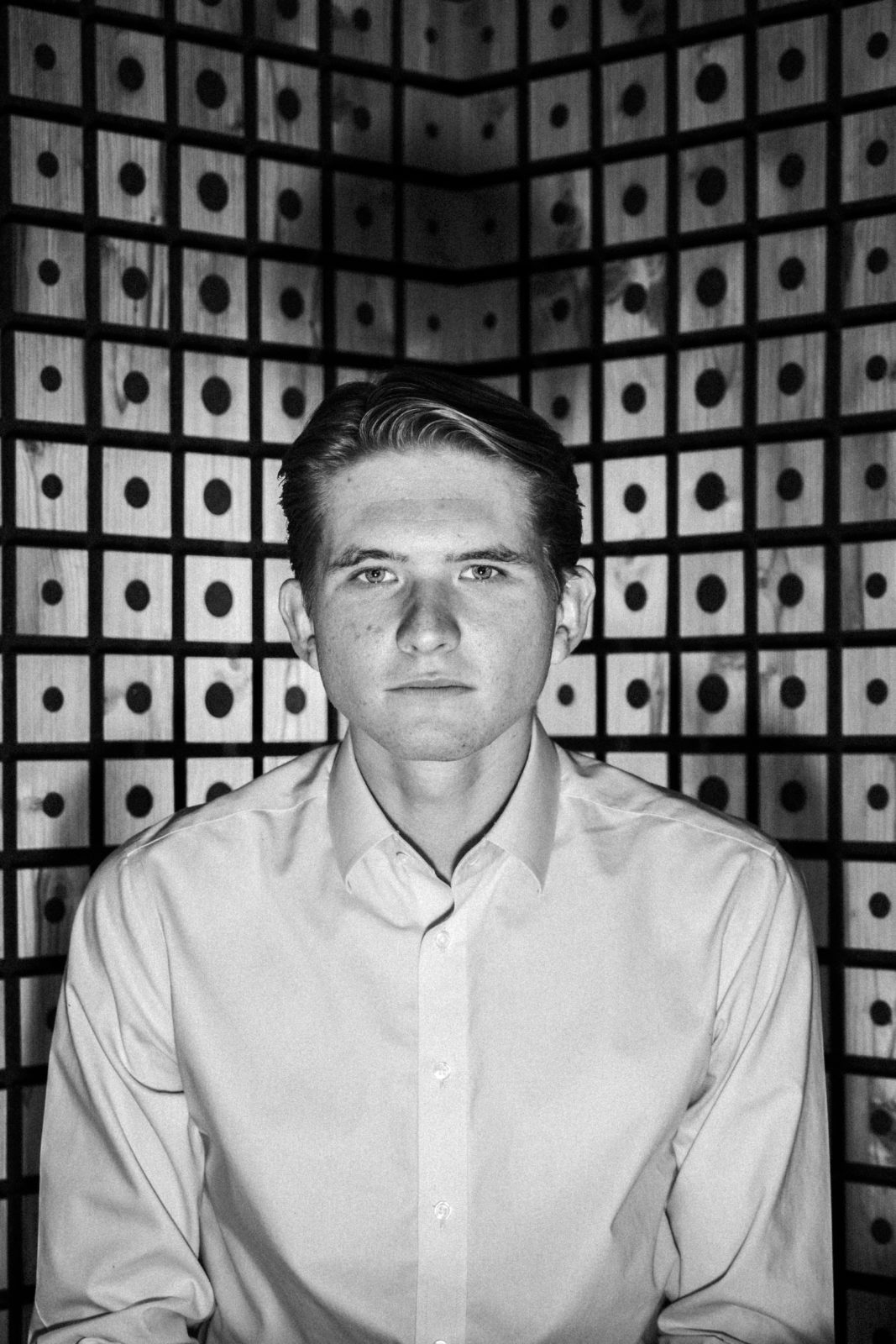
Max Mannhart
Photo: Hannes Jung
No one shouts on Apollo News. There’s no ranting, no hate. The tone is bourgeois and calm, but the range of topics is limited. It’s about Trump, the Greens, mistakes of public broadcasting. Above all, there’s a lot about what the AfD likes to talk about: refugees, crime—and refugee crime. The authors are not only young but also educated; they studied business informatics, law, politics, psychology.
The day I talk to him, Max Mannhart is working on an article about Stephan Kramer, the head of the domestic intelligence service in Thuringia. Mannhart spoke with two former employees of the agency; the text later appears on Apollo News under the headline “The Kramer Complex: Inside the Domestic Intelligence Service—How the Secret Service Became a Political Machine.” Kramer considers the AfD in Thuringia to be confirmed right-wing extremist and supports banning the party. “In the past, the left accused the intelligence service of labelling everything anti-capitalist as anti-democratic,” says Mannhart. Today, he says, it labels everything right-wing as anti-democratic.
The Kramer investigation is a great success. The main article is viewed 113,000 times on the homepage, and the accompanying YouTube documentary is watched 180,000 times. Through donations and YouTube, Apollo News now earns enough money for Mannhart to pay not only the rent for the loft but also his employees’ salaries, which range from 2,000 to 6,000 euros. Apollo News averages seven million page views per month. The comments under the articles clearly show where the readers politically lean: toward the AfD.
If it really is the case that Germany is currently undergoing a development that America has already gone through, then, for all its disadvantages, it would also have one advantage: Germany could learn from America’s mistakes.
The Democrats lost the election to Donald Trump by a surprisingly wide margin. Everything they tried to push back right-wing populism didn’t work.
They called Donald Trump an enemy of democracy, a racist and agitator. That’s not wrong, but it made little impression on his supporters.
They avoided the favourite topics of right-wing populists—migration and crime—and instead tried to score with their own issues: abortion rights, climate change, the situation of the LGBTQ community. Without success.
And they did everything they could to counter the dark picture painted by US right-wing populists with facts. “The country isn’t doing so badly, and we can prove it”—that was the story the Democrats told over and over. But that didn’t work either. Not even with my neighbours in New York.
They had always voted Democratic, and had lived in the city for decades, but now they were considering moving away because they felt increasingly unsafe. This was despite the fact that Democratic politicians emphasised every day that the murder rate in New York had not risen in recent years. Those politicians were right; the murder rate had not increased, the facts were correct. But it was also true that, for example, shoplifting had gone up, as had minor offences, the dirt in the subway and the mess in public parks.
Compared to murders, these are small things. Yet all these small things gave my neighbours the feeling that this was no longer their city—the city where the state maintains order. Where there was trust, mistrust spread. In the presidential election last autumn, the Democrats in traditionally left-wing New York got a million fewer votes than four years earlier.
Insecurity, mistrust, fear—these are the feelings described by Sara, the daughter of restaurateur Can in Hanover. After several break-ins, they have now installed a surveillance camera at the restaurant.
American President Joe Biden had the numbers on his side. He managed to curb inflation, boost the economy, and expand renewable energy. You could say the numbers proved he governed well. But people didn’t really feel the good numbers. They still couldn’t find affordable homes, eggs were still more expensive than five years ago, and in supermarkets, goods were now locked up like cigarettes to prevent theft. All of this made people feel increasingly uncomfortable.
You can brush aside feelings, try to refute them with numbers. The Democrats did that. And they lost the election.
I think this is perhaps the most important lesson from recent American history: the democratic centre must urgently find an answer to the question of how to win elections in a world where small feelings sometimes weigh more than big facts.
PS: Incidentally, the AfD in Thuringia has initiated proceedings to expel Klaus Stöber from the party. He was deemed not loyal enough. He is now running in the election as an independent candidate. Should he be re-elected to the Bundestag, Stöber intends to continue voting in line with the AfD parliamentary group.
Editor: Wolfgang Uchatius