Meet our new PrepCom members
Our entry period is in full swing and there is just about two weeks left to enter work for the 2025 edition of the European Press Prize. Once the entry period is over, our Preparatory Committee’s work is just beginning: reading and judging all projects that were sent in this year.
This year, we are delighted to include four new members in our panel. To introduce them to our audience, we have asked them a few questions about their work. They also share convincing reasons why you should enter work for the Prize.
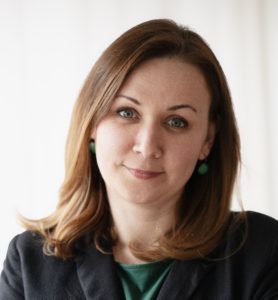
Agnieszka Wądołowska, Deputy Editor-in-Chief of Notes from Poland
Read her full bio here.
 From your experience at Notes From Poland, why is it important to bring national stories about a country to a broader international audience?
Notes from Poland’s mission from day one has been to help the world understand Poland with our English-language reporting on the country that is reliable and independent of politicized and commercial narratives. Notes from Poland seeks to fill in gaps by offering comprehensive coverage of Polish current affairs, society, culture and history, as well as regular analysis and opinion from a wide range of expert authors. Sharing these national stories with an international audience helps to amplify facts and voices that might otherwise go unnoticed while also breaking stereotypes and misconceptions.
How does that translate into the value of bringing national stories to an international audience in general? Well, in an interconnected, globalised world, no human being is an island. We share more common challenges than we often realise. Not only polarisation, climate change, and pandemics have an international impact. Sharing national stories connects these challenges to regional and global audiences building bridges and a more informed, compassionate, and connected world.
Why would you encourage journalists to enter their work?
As journalists and reporters, we often work in heavily underfunded, under-resourced, fast-paced environments. The European Press Prize offers an amazing opportunity for those who do quality, fact-based journalism to be recognised and prized for their vital work and sheds a spotlight on the public-serving stories that require time, empathy, and investigative skills, stories that shouldn’t remain untold.
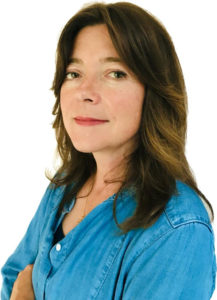
Juliette Garside, deputy investigations editor for the Guardian
Read her full bio here.
You won the European Press Prize in 2023. What was the impact for your project/team after you won the award?
Joy! The recognition is a boost to the team and encourages us to keep going.
Why would you encourage journalists to enter their work?
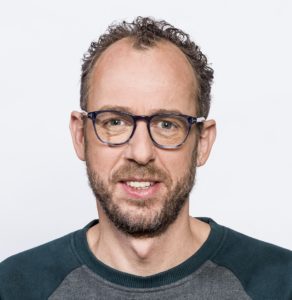
Just Vervaart, investigative journalist specialising in data-driven research at Omroep Gelderland
Read his full bio here.
Can you share an example of an innovative project you contributed to for a regional media that had an impact on the national level?
The regional broadcasters in the Netherlands have jointly conducted a study into the availability of ATMs. The company responsible for the ATMs did not make these figures public. By collecting data ourselves, we were able to demonstrate that they were not meeting their performance obligations. National media picked up the story. In this way, we got the subject on the agenda and ensured that the performance figures are now public so that everyone can check whether things are improving and call them to account.
Why would you encourage journalists to enter their work?
It is a unique opportunity to bring innovative work to the attention of a European audience of journalists and inspire them to undertake similar research.
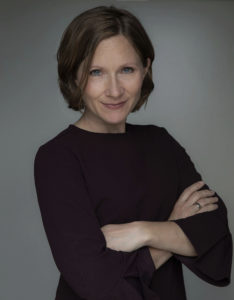
Tanja Stelzer, award-winning reporter writing for DIE ZEIT
Read her full bio here.
As someone who won several journalistic awards with your work, what effect did this have on your further career and experience as a journalist?
It is, for sure, flattering to win a journalistic award, and it brings you together with people you might not have connected with otherwise. My own awards might not have directly led to career steps but I feel that it is quite motivating when you get a prize for a piece that matters to you. We shouldn’t have a prize in our head when we do our work – we should simply do it for our audience. But when it turns out that a good piece you did is awarded, this is a sign to your editor that paying all those expensive research trips and providing the necessary resources is worthwhile. It will encourage you and others to do more of that – more of the kind of journalism that will help people to understand this complicated world.
Why would you encourage journalists to enter their work?
I feel that in a time when journalism is under pressure, wars dominate global events, and democratic values are being challenged, it’s crucial to highlight outstanding journalism, to show what is possible when excellent people have excellent possibilities to do their important work. It is also crucial to foster an international understanding of what happens in the world. Submitting your work provides an opportunity to connect with talented reporters from different countries, gain new perspectives, and perhaps refine your own approach. These connections could also lay the groundwork for future projects.
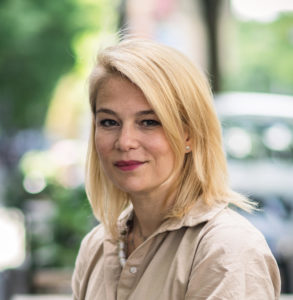
Veronika Munk, award-winning journalist and media manager working for Slovakia’s Denník N.
Read her full bio here.
How can innovations in media help to get people more engaged with the media?
I am a great believer in repackaging content. Different age- and social groups consume media differently. It’s a cliché, but it’s true that younger people prefer audiovisual formats and older people prefer texts. A long article can be turned into a podcast, a social media video, an infographic, and so on. Diversity is the right approach: newsletter, newsfeed, longform article, podcast platforms, social media – all channels should be used. At the same time, the often over-dominance of large platforms means that any innovation that reaches readers directly can contribute to the sustainability of quality media and to the delivery of relevant and demanding stories of public interest to as many people as possible. It also gives a voice to those who often do not have a strong voice in the public sphere.
Why would you encourage journalists to enter their work?
There are several reasons to apply for the European Press Prize, the most important of which, in my opinion, is that it can bring important stories to an even wider audience and international attention. Also, since it is one of the most prestigious awards in journalism, it is a very spectacular form of recognition of excellence, so being shortlisted, or even winning the award, opens countless professional doors and can be a great source of personal development, self-confidence booster and inspiration for colleagues. Also, it gives a wider focus and trust on quality journalism, which is more important than ever.
You now know four good reasons why to enter your work for the European Press Prize. What are you waiting for? Enter your project here before 14 December!
“Journalists are under attack, but we can still write history.” – Beata Balogová
On June 6, 2024, we celebrated the best of European journalism at our annual Award Ceremony. A big highlight of this year’s programme was the incredible Keynote held by Beata Balogová. Beata is the editor-in-chief of SME, a major daily and news site in Slovakia. Beata was nominated for the Public Discourse Award in 2019 and she won the Public Discourse Award one year later, in 2020. From 2021 onwards, Beata has been a valuable member of the Prize’s Preparatory Committee. Read her full speech below.
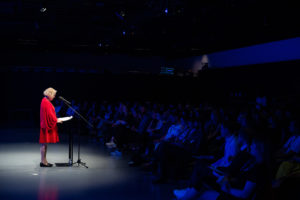
Beata on stage during her Keynote at the 2024 Award Ceremony.
Dear friends of journalistic excellence,
We are here to celebrate the power of journalism in its many forms. However, first, I would like to talk about hate. Hate targeting journalists every day, and we absorb it as if it were in our job description.
After the murder of my colleague Ján Kuciak and his fiancé Martina, I believed that politicians understood that verbal attacks against journalists can morph into a bullet that pierces our bodies.
Six years later, there is more verbal aggression accumulated in public space than before the murder. I am talking about Slovakia, but hate has become a form of warfare against journalists in many other nations.
“I hope that people like you will be shot, hanged or at least expelled from Slovakia, you Jewish-Bolshevik prostitute. There will be celebrations that day, but you will not see them, because you will be dead. We should rather set you on fire, because you are not worthy of a bullet.”
Some politicians thought that hate is like a trained fight dog that they can release into societies and point fingers at any enemy they chose. But they are wrong. Once released, hate can no longer be controlled.
One of the most protected men in Slovakia, Prime Minister Robert Fico was recently shot five times. He fortunately survived the assassination. Editors of all major newspapers and sites condemned the act.
But politicians in power immediately launched attacks on the media. They said journalists should apologise to Fico for critical stories suggesting that his government was corrupt, that his party nominees abused power, and for questions about his luxury apartment and how he paid for it. They demanded apologies for investigations based on verified sources and facts.
In his first public speech after the tragedy, Fico suggested that journalists were part of the evil force that influenced the assassin to commit the horrendous act.
It seems that not only in Slovakia, but in many other countries, we need to go back to basics and explain to the public how exposing power abuse, conflicts of interest, nepotism, fraud, or corruption differs from spreading hate.
We need to be clear in explaining the difference between disinformation sites and actual investigative and data journalism conducted by media with transparent ownership.
“Dirty anti-Slovak prostitutes, swine of George Soros. You and your American whore president look like two curly-haired hogs, and you will go to the slaughterhouse soon. I hope cancer will eat your body away.”
“We absorb it as if
it were in our job description.”
Since politicians legitimised hate against journalists, common people feel justified sending me such insults.
Populists and autocrats often argue that critical free media unfairly join the political fight. They say journalists should only report on the activities of the government and not control it. If they want any power to control, they should run for election.
Since independent media show little or no understanding for the redefinition of their role as mere poles for a microphone, populists and autocrats have started using and legitimising disinformation sites, channels with murky ownership backgrounds, and propagandists with no journalism background.
These sites do not cause them discomfort by posing critical questions. They readily pass on old conspiracy theories coated in fresh makeup, work with opinions rather than facts. They fatally deform society’s relationship with the truth.
Most importantly, they do not practise journalism to serve the public interest. They do not practise journalism at all.
I wish that those who trust disinformation channels understand that free media serve them even when they disagree with their content. Journalism serves the citizens regardless of their political preferences.
If it were not for excellent journalists, we would have never really learned how the friends of Vladimir Putin were able to shield their fortunes from EU sanctions. Many people in Hungary would have never learned how serious the spread of hospital-acquired infections is in their country, and how many people die simply because the government downplays and denies this problem.
Little did we know how the fight against child pornography could be misused for unjustified mass online surveillance across Europe. Without the excellent work of my colleagues, some doctors could continue sexually abusing their patients without much public attention.
It seems far away, but thanks to excellent journalistic work, we can learn how oil exploration in Iraq deprives locals of drinking water — the oil that Europeans need and use.
Excellent journalism takes you to Bakhmut or Mariupol so that you can sense how people live through unimaginable horrors in places where the war tears their lives apart, but they must continue living it. At least they try.
Can boys recover from years of sexual abuse? Is there any help for an injured soldier from Ukraine who did not sleep for 45 days? How did we become so indifferent to the older generation, and the humiliation they experience in places where people should die with dignity?
Some of the authors of these stories are here with us tonight.
“You do
write history.”
No propagandist, no disinformation site, no blogger paid by Putin will take us to these places where we need to combine the deepest of our humanity with reporting skills, empathy, and the ability to give voice to the voiceless.
Besides, we journalists are often blamed for the decline in people’s trust in the media and spread of misinformation and fake news.
Yet, misinformation, cyber warfare, and fake news factories thrive not because journalists from independent media do substandard jobs. They thrive because some governments are the biggest disseminators of misinformation and hate. Some attacks against journalists are, in fact, state-sponsored online hate campaigns.
We do not shy away from self-reflection. We do make mistakes. Most likely every day in every newsroom. But these mistakes do not appear because we have too much freedom and they in no way give the right to political interventions.
Hatred is not a consequence of our journalistic work. It’s a technique of the powerful to prevent us from doing our work.
Much of that hate targets female journalists, degrading them as sexual objects, attacking their credibility.
Sometimes, when I tell my male colleagues that I receive vulgar and aggressive messages, they say they are sorry and think they know what I’m talking about. When I have them read these messages, they are horrified.
Many female journalists in Slovakia and Hungary and many other countries withdrew from the public eye after such attacks. One of the reasons why Slovak President Zuzana Čaputová did not run for re-election was the hateful messages she and her family received. In Hungary, women are disappearing from the top management of the remaining free media.
Please do not tell female journalists that the media environment became rough and that those who can’t handle it should save themselves by leaving.
The Hungarian prime minister does not need to personally attack journalists, he has built a whole propaganda media empire, which does the dirty work on his behalf.
Orbán has made media capture the number one political export product that his counterparts in Slovakia have been eager to follow.
Right now, the public broadcaster as well as the biggest private television are under attack. If journalists at the news department of the privately owned Markíza lose their fight for editorial independence, it will have a very serious impact on press freedom in Slovakia.
I want to thank our Czech colleagues and the international community for raising their voice and expressing solidarity.
Yet, compared to our colleagues who work in war-torn regions and risk their life for telling the story, we are privileged.
We are not helpless. There are many sources of hope. For example, moments like tonight, when we celebrate the best works of our profession. They are seen and heard.
Despite all the political efforts to redefine and weaken the essence of journalism, the European Press Prize remains the guardian of journalistic standards ensuring that in five years or even in a decade, generations of journalists will have reference points.
Your stories. These are the golden standards of journalism.
Originally, I planned to close my piece with a selection of insults I received recently. However, I have decided to instead quote my friend Carlos Dada, an award-winning journalist and the founder of El Faro, whose life was in danger in El Salvador and today works from exile.
When we last met in Sarajevo I asked him what his message would be for his colleagues in Slovakia. But I feel this message is for all of us.
“They are threatening you and attacking you because you excel in your work. It is frustrating to see that the worst and most deceitful political narratives are becoming so powerful. Personally, I have been frustrated because it seems that our efforts have no impact.
But I like to read a lot of history and draw lessons from what I read. Every historical chapter has an end, and when it closes, people look back and try understanding what happened. They often rely on your work to do so. There will be nothing else that helps the next generations understand what happened but our stories. That’s why, in these difficult times, we must be more rigorous, intellectually clear, and morally sound.
We have the privilege of writing the chapters of our countries’ and the world’s history. It is indeed a privilege.
This is why the work you do is so crucial. Yet, in your daily routines, it may not seem that way. I understand it may feel like you’re sacrificing a lot with little return. But that’s not the reality. You do write history.”