
Migration
Journalism
Award
A daring escape from China to the U.S. via the Darién Gap
published by Der Spiegel, Germany


Snake repellent? Chen Ye’s mental list of necessary supplies was quite extensive as he stepped out of the hot midday sun in the Caribbean town of Necoclí, Colombia, and into one of those jam-packed migrant shops selling jungle survival gear. Rubber boots, a tent, maybe a sleeping pad – the things a migrant smuggler had told him to buy. But now, here is this old man trying to sell him a $16 set that includes some sort of liquid, the purpose of which he doesn’t fully understand.
Chen, who has asked that we not use his real name, holds the bottle up to the weak light filtering in through the shop’s door and gives the label a skeptical examination.
“Snake repellent,” the man says.
He points to the liquid and gestures as though he is rubbing it onto the tent.
“No snakes. Okay?”
“Okay, no snakes,” Chen mumbles before letting out a nervous laugh – as though he has just realised that he may have overlooked a not entirely unimportant detail.
Chen, who is still wearing the blue polo shirt from the hotel chain where he worked as a bookkeeper right up until he left Shanghai, is the kind of man who plans things as thoroughly as he possibly can. A few years ago, he put together a to-do list containing 100 things he wanted to accomplish in life. Stop smoking. Get baptised. Have four children. Right at the top, Chen noted that he wants to earn a decent amount of money – enough so that he can donate some of it every month. Emigration was also something he thought he might consider, though it was more of an extravagance than a real plan.
But as he became more serious about turning his back on his country, Chen began taking a closer look at the marketing clips posted by migrant smugglers online. He got in touch with other migrants who had managed to make it through the Darién jungle before him, and he weighed the costs of the various routes against the potential risks. Ultimately, he came to the conclusion that if even children had managed the journey, then it couldn’t be much more difficult than a boy scout excursion.
But snakes?
“Never heard anything about them,” says Chen, standing outside of the shop a short time later. He then gives his survival kit a pat and says: “But whatever. With this stuff, I’ll be safe.”
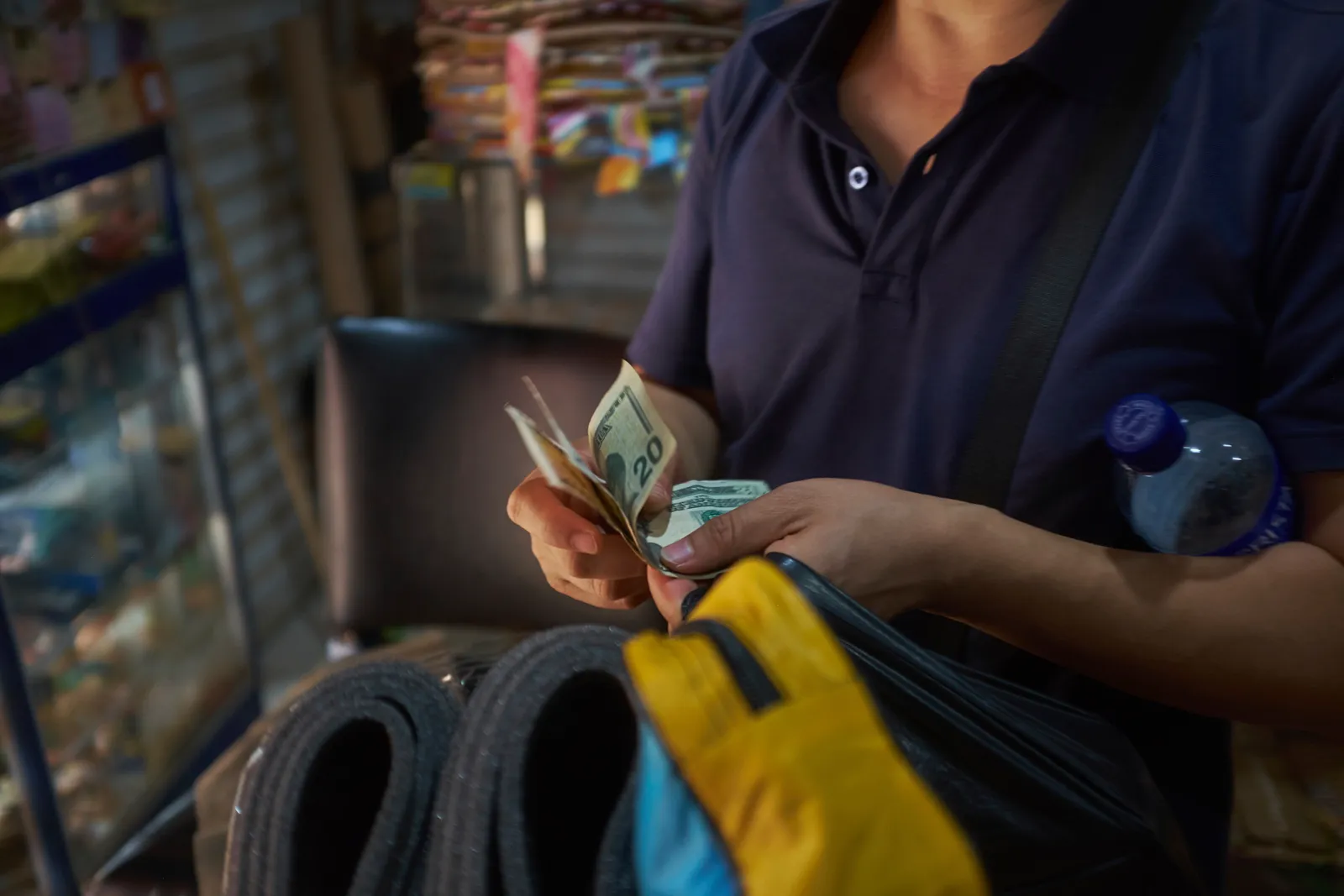
Chen received a list of things he needed to buy from a migrant smuggler. Foto: Gerald Bermudez / DER SPIEGEL
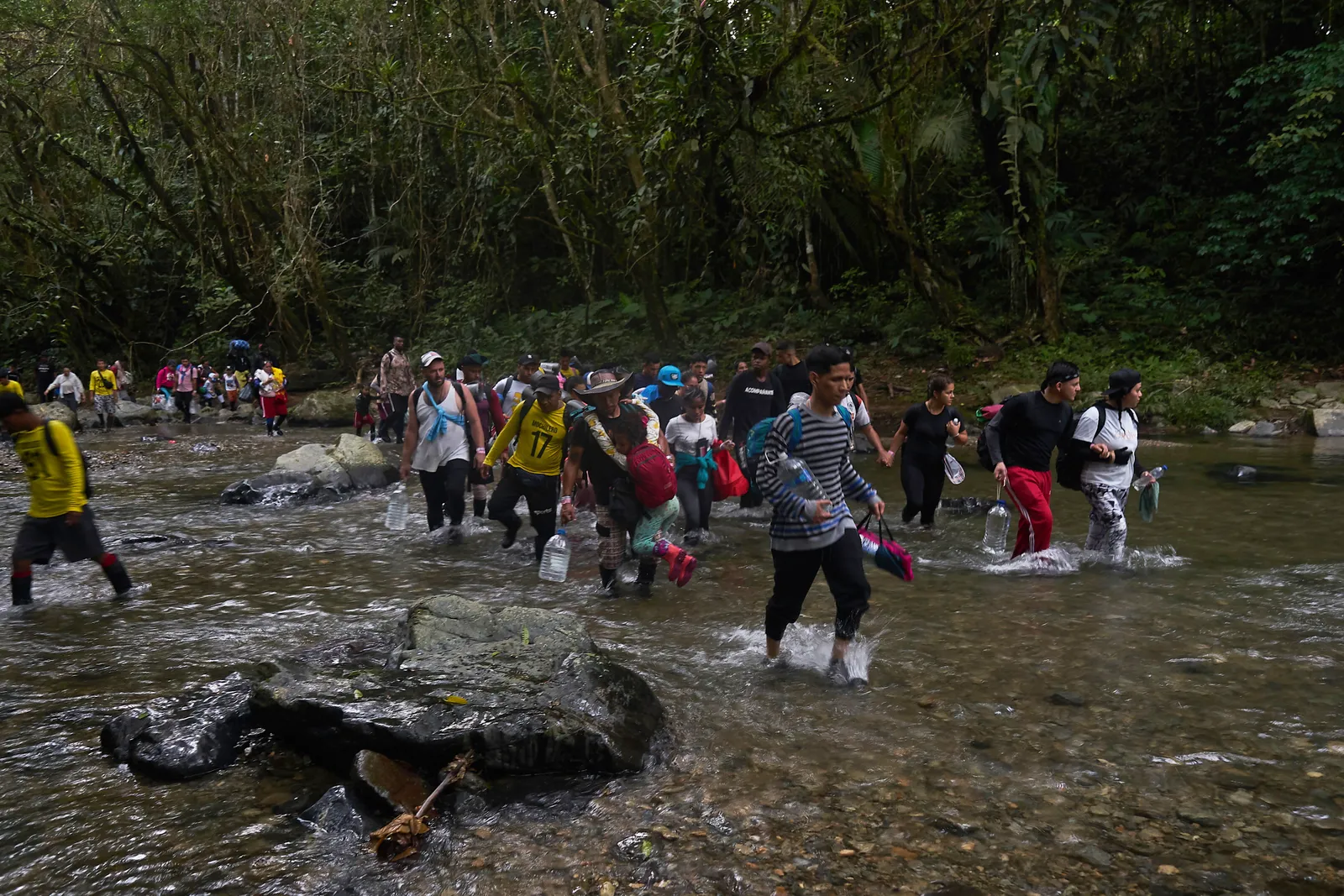
Migrants making their way through a river in the Darién Gap. Foto: Gerald Bermudez / DER SPIEGEL
What else could he say?
By now, he has been on the road for four months, passing through eight countries before even getting to Colombia. Should he turn back now? Just because of this little bottle?
If he wants to make it to the U.S., which, on this October morning, still seems like the Promised Land to him, he has no choice. There is no road connecting South and Central America, no air-conditioned bus. He has to get through the Darién, the rainforest-covered hills of which jut from the horizon like a green wall between Colombia and Panama. A place where the dangerous animals that call the jungle home are actually among the more manageable problems facing migrants.
The Darién Gap is a maze of swampy paths crisscrossing rivers that can instantly swell to deadly currents when it rains. Dozens of people lose their lives in this dense labyrinth every year. Hundreds simply vanish. These are the things the migrant smugglers don’t mention in their videos – but even if they did, it wouldn’t have stopped Chen from coming.
It wouldn’t have stopped anybody.
More than half a million people crossed the jungle in 2023. Chinese migrants made up the fourth largest group, after the Venezuelans, the Ecuadorians and the Haitians – more than 30,000 of them. Most were young men, itinerant workers who are no longer needed back home because the country already has all the roads, bridges and office buildings it needs, desperate people who don’t have the qualifications necessary for a work visa. They are joined by families who have sold all their possessions to pay for this trip halfway around the world – engineers, teachers, bookkeepers like Chen – and who are prepared to take ever greater risks for a financially secure life in freedom.
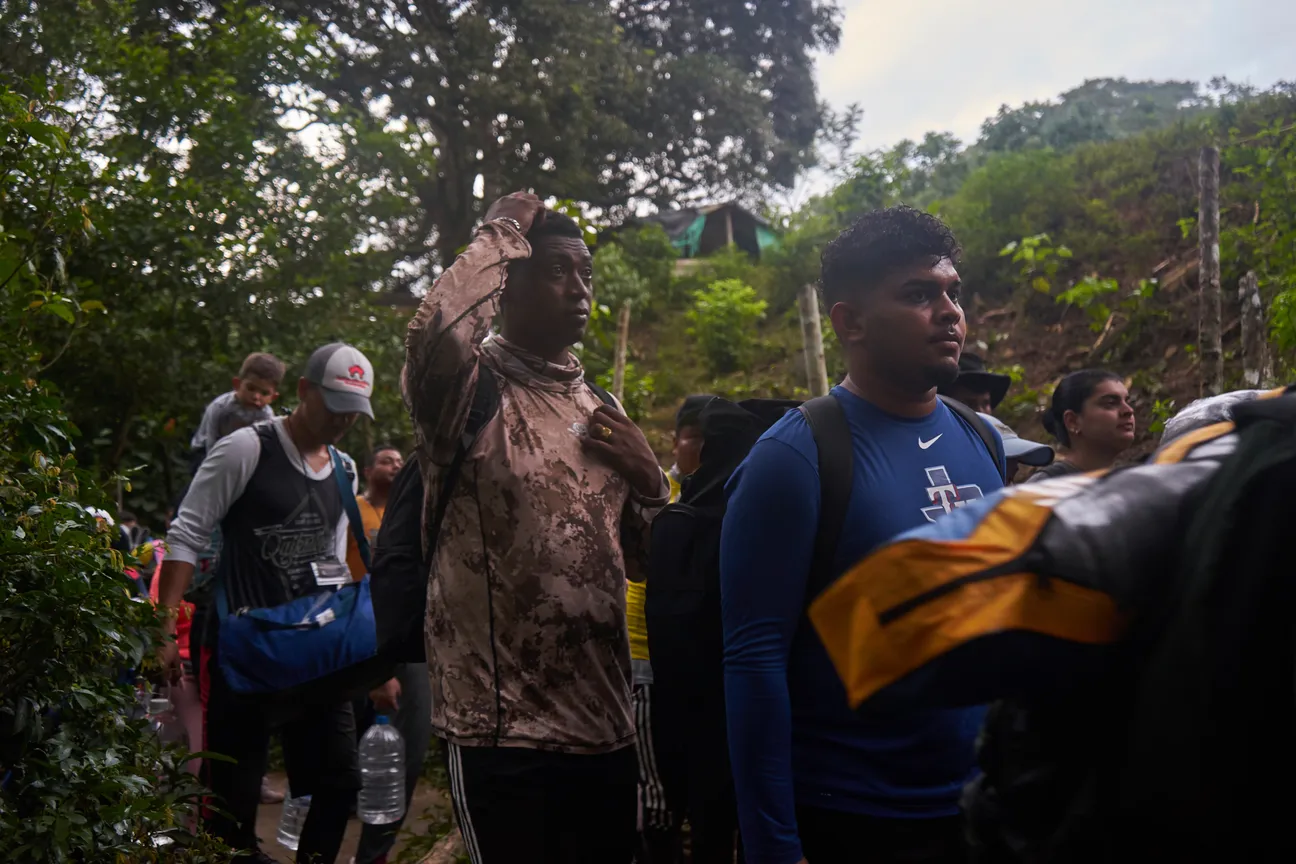
Migrants at the border between Colombia and Panama. Foto: Gerald Bermudez / DER SPIEGEL
It is an exodus that has gone largely unnoticed by the world.
It’s not obvious from the claims made by the government, but China’s growth model, which transformed the country into a global economic powerhouse in recent decades, is increasingly reaching its limits. Infrastructure construction has largely been completed, and factory owners are closing their facilities and moving them to cheaper locations, or they are replacing their low-wage workers with even cheaper machines. The Communist Party’s pledge, that citizens will become increasingly prosperous as long as they agree to forego some individual freedoms, is growing untenable.
The fact that more and more Chinese are seeking their fortune abroad is nothing short of a silent rebellion against the pact that has held the country together for years. China is becoming a country of emigration at the very moment that the U.S. has decided to stop being a country of immigration.
In spring 2024, when Chen packed his bags, Donald Trump, then just a candidate for president, said that people like Chen were part of an invading army that China was sending into the U.S. Trump promised to seal the borders and threatened to carry out mass deportations. But as Chen sinks into a plastic chair on Necoclí beach and plunges his feet into the surf, the idea that he might ultimately find himself trapped in a larger conflict is just a shimmer on the horizon.
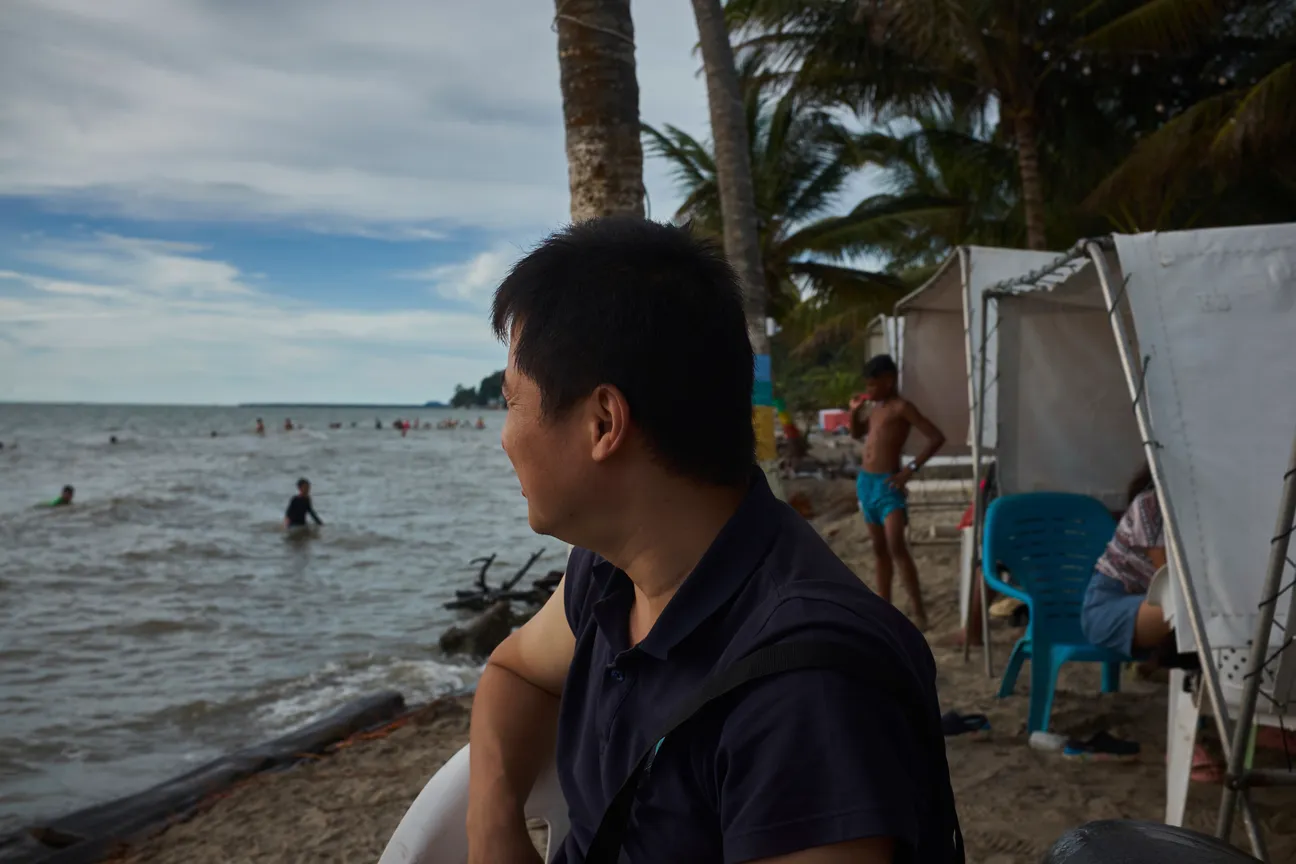
Chen at the Colombia-Panama border. Foto: Gerald Bermudez / DER SPIEGEL
“I have to be strong now so that I can reunite with them someday.”
— Chen Ye speaking about his children.
Reggae is pouring out of a speaker as waiters bring Colombian tourists colourful cocktails.
Chen smiles.
“They know how to enjoy life here,” he says. “In China, it’s all work, work, work, and if you complain on the internet, you have the cyber-police on your tail.”
Chen is in his late 30s. His hair has grown over his ears and the corners of his eyes have the wrinkles of a man who appears to have become used to smiling away his worries. Following a wild bus ride, during which the Amazon and the Andes sped past his window, he checked into a hotel a few days ago where it is possible to pay via the Chinese messaging service WeChat.
His gaze continually returns to the screaming and laughing children playing in the waves. When he left home, says Chen, his family was still with him – his wife, their two daughters aged nine and six, and their two sons, eight and three. Because the Chinese authorities have been instructed to prevent migrants from leaving the country, he booked a one-week beach vacation in Thailand for the family, including the return flight.
It was supposed to look like a vacation, he says, and it even felt a little bit like one. Chen hadn’t seen the children for quite some time before the trip since they live with their mother in her home village. It was his first time on the seaside.
They skipped the return flight, instead traveling onward to Istanbul. During her walks through the city, Chen’s wife would examine the place with the gaze of an anthropologist. “Life here seems pleasant,” she wrote beneath a video of an empty textile market that she uploaded to Douyin, the Chinese version of TikTok. Nobody works on the weekends, she noted.
Their problems began when they were pulled out of the check-in line for their next flight to Quito. Ecuador, which had long been the gate to South America for the Chinese, was suddenly demanding a visa. When he booked the trip, Chen says, there is no way he could have known that the country would succumb to the pressure coming from the U.S.
They were stuck.
As Chen, in their hostel in Istanbul, was searching for a new route, he was contacted by the police from his hometown. The officers, he says, learned of his emigration after his mother turned to the Chinese Embassy in Ankara looking for help. Via text message, they threatened to freeze the family’s bank accounts if they didn’t immediately return. At some point, Chen says, his wife could no longer handle the uncertainty.
“They broke her,” he says.
In late September, shortly before he managed to find a connection via Serbia and the Netherlands to the visa-free country of Surinam, he embraced her one final time in the airport.
Back on the beach in Necoclí, Chen’s eyes fill with tears. He grabs his telephone and calls his wife, but she doesn’t immediately pick up. When she calls back a short time later, she looks at him sleepily. The children miss him, she says.
He shows her the sea.
“I have to be strong now so that I can reunite with them someday,” he says into the silence after the call has ended.
“Snakeheads,” is what Chinese migrants call their smugglers. In Istanbul, Chen realised that he didn’t stand a chance without their help. Still, says Chen, he knows nothing about them. The dialling prefixes are always from the U.S. or the Middle East, but there is never a face attached to the number. They communicate in Chinese and payment must always be made in advance.
Here, in Necoclí, one of these snakeheads put him in touch with a local guide, who explains to Chen that there are different packages he can choose from. The basic rate, which all migrants have to pay to even be allowed into the forest, is around $350. Shortcuts, using boats, horses or motorcycles, cost extra.
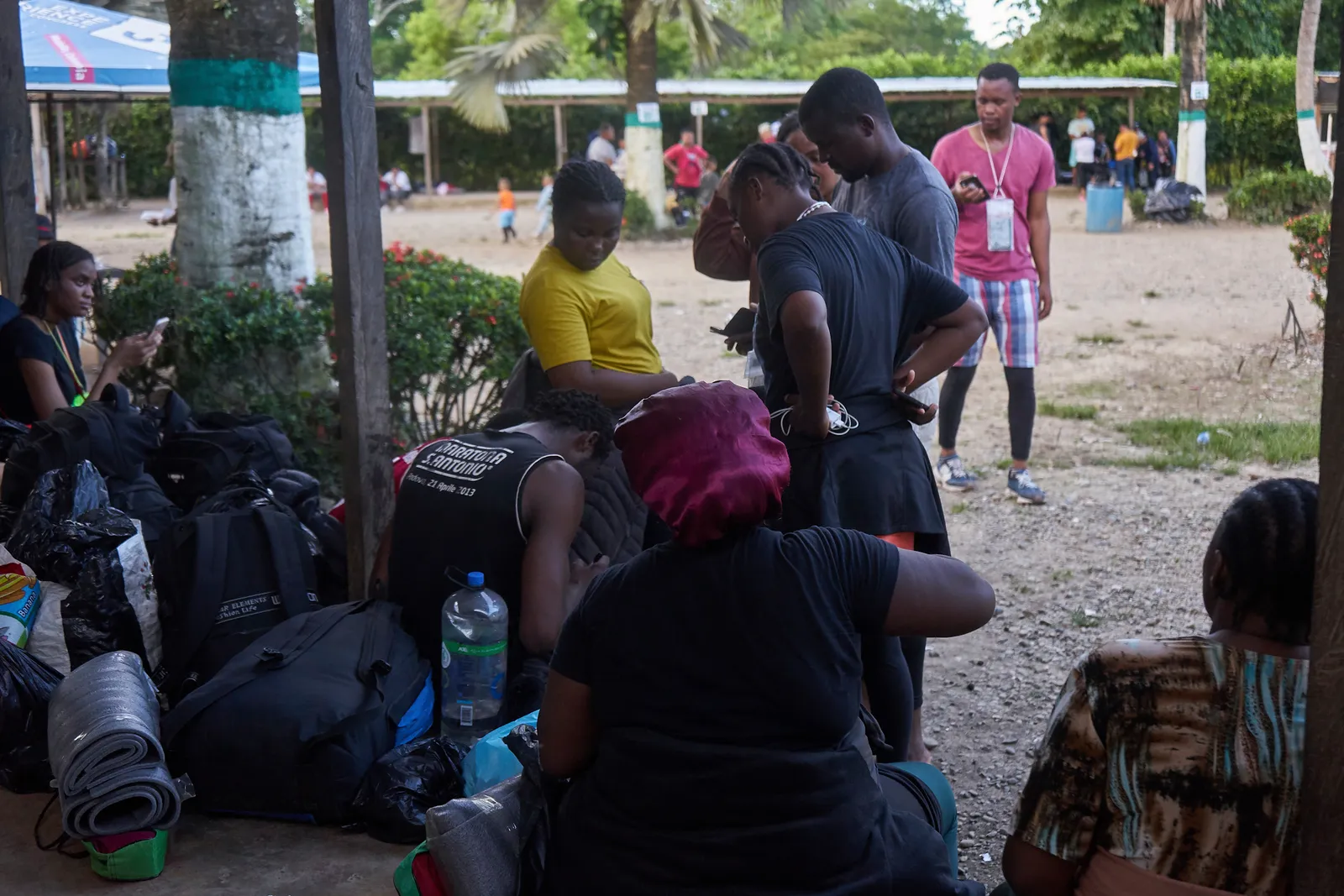
A group of migrants at the first shelter in the Darién Gap. Foto: Gerald Bermudez / DER SPIEGEL
Those are referred to as “VIP packages.”
It is a question of priorities.
Money or speed?
Money or safety?
Chen spends his days lying on his hotel bed, reading the news and chatting with compatriots. The message boards are full of talk that the Panamanian authorities on the other side of the border are intercepting Chinese migrants, though it is possible that the snakeheads are merely fomenting such rumors so they can sell more expensive packages.
Being deported back to China would be a nightmare, says Chen. He believes he would likely end up in prison and the stigma would prevent him from ever finding a job that would enable him to pay off his debts.
Chen sends his final message on October 31. A short time later, he boards a boat and speeds toward the jungle with a VIP package. If he makes it through the Darién Gap, he will then have to cross Panama, Costa Rica, Nicaragua, Honduras, Guatemala and Mexico. In parting, Chen promises to try to stay in touch using his phone but says he can’t guarantee anything.
Struggling to Make Progress
Finding Chen in the first place was no easy task. The migrant smugglers, who work for a drug cartel, instruct their clients not to talk to anyone. Many of the Chinese migrants seemed fearful when approached on the patios of their hotels, with most scurrying off to their rooms without a word.
Chen was one of the few who responded to a letter that was pushed under his door. Perhaps he was feeling lonely. Or maybe he wanted to test out his newfound freedom. Either way, he took a seat in a restaurant one day later and didn’t stop talking. The only thing he requested was that his family not be identified by their real names out of concern for putting them in danger.
He said that he is originally from the eastern province of Anhui. His father left the family early on, and his mother had a small field where she grew corn and beans. Sometimes, during the harvest period, she would take him with her to the field, but he didn’t particularly enjoy digging around in the dirt. Chen preferred to play.
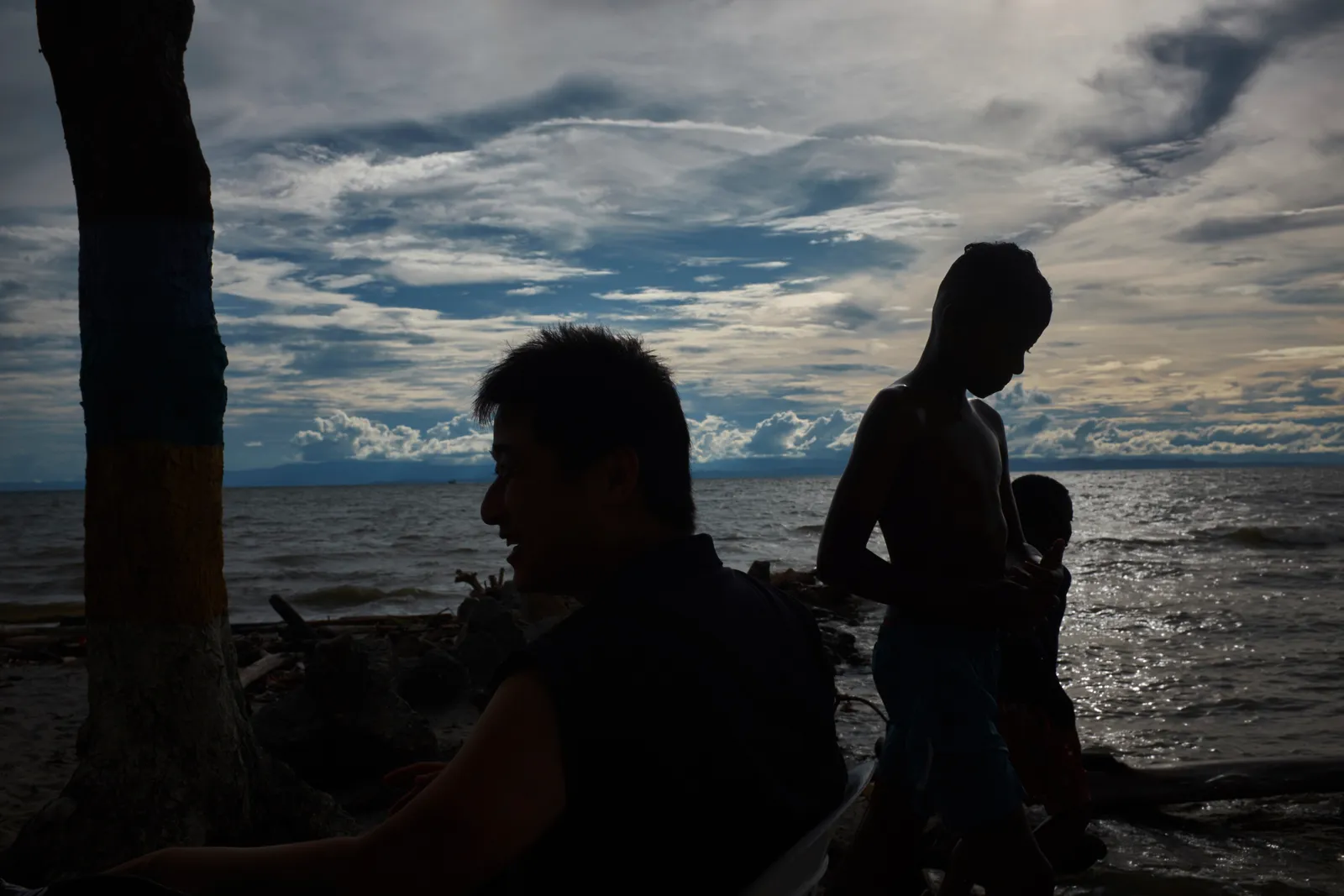
Chen on the beach in Necoclí: “They know how to enjoy life here.” Foto: Gerald Bermudez / DER SPIEGEL
At 19, he went to Shanghai, where he got a job with an agency that sold art prints. Chen would spend his days on the telephone cold-calling potential customers and trying to sell them prints. It was during this period, he says, that he got back in touch with Zhao Tan, to whom he had written love letters back in the fifth grade. She was one of the best students in his class. Had her family been prosperous enough to send her to university in addition to her brother, Chen thinks she probably never would have married him. She would have just smiled politely, he says, when a friend came up with the idea of setting the two of them up.
After the wedding, Zhao joined him for a time in Shanghai, but she moved back to her village during her first pregnancy, into a small house they built on her family’s property. Chen says that he had the feeling something had to change. Through a career aptitude test he took online in an effort to figure out why his performance as a telephone salesman was so average, he learned that he was too honest and too shy. The algorithm suggested that he study something having to do with finance.
It would have taken him 10 years, he says, to become a “Level 3” bookkeeper. The salary of around 3,000 euros per month would have been enough to lead a solid, middle-class life.
When Chen received his Level 1 certificate in his early 30s, he received a contract from the hotel, and he started heading into an office high-rise every morning to spend the day examining invoices that the company could deduct from its taxes. On the weekends that he didn’t spend studying, he would take the train to his wife’s village. His son was born, followed by his second daughter – and it was at some point during this period, a time when the government in Beijing abolished the one-child policy to counteract the country’s aging society, that Chen wrote his list.
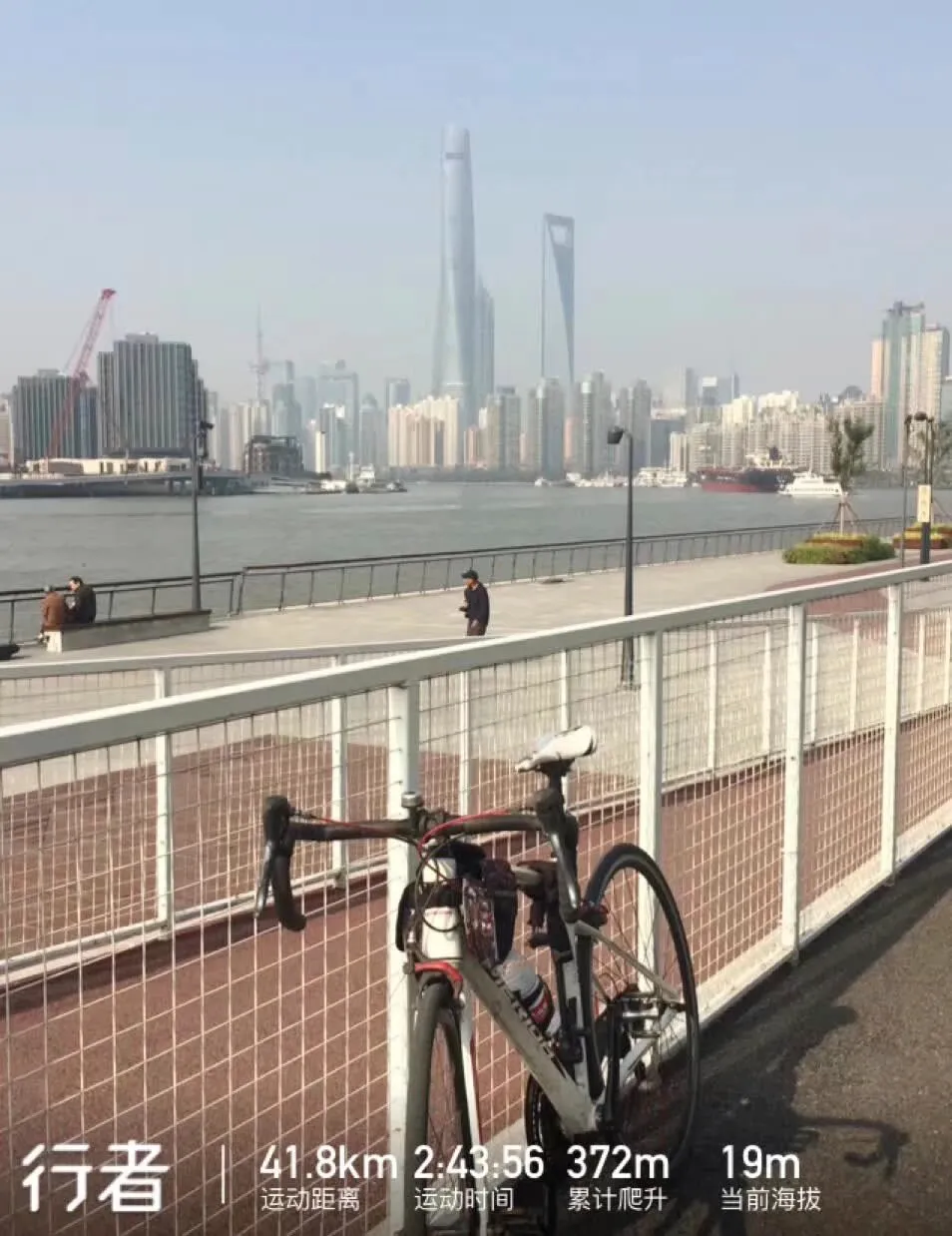
The skyline of Shanghai, where Chen lived before leaving the country. Foto: Chen Ye
“China had always been the country of the future. But I began to realise that this future would never become a reality.”
— Chen
“I was full of optimism,” says Chen, but the money he was able to send home every month was no longer always enough. Electricity, diapers, kindergarten fees, doctors’ bills – none of whom, like the migrant smugglers, would lift a finger before first being paid. Chen was forced to take out a loan to cover all the bills. He started delivering meals on his scooter in the evenings to earn a bit of extra cash. The seven hours of sleep he had noted on his list? A pipe dream.
To save money, says Chen, he moved into a dormitory in Shanghai where he rented the bottom bed of a bunk.
Then the pandemic arrived, and suddenly he was stuck, locked in with 30 other men. When Chen examined his life during these weeks of lock-down, he saw a man who was doing what the world expected of him. He was struggling toward his goals, but he wasn’t actually making any progress.
“China,” he says, “had always been the country of the future. But now, I began to realise that this future would never become a reality.”
Chen, if you like, had reached the limits of his personal growth plan.
He felt cheated, abandoned. Whereas his government was doing nothing to help its starving citizens locked away in quarantine, he saw on his mobile phone that homeless people in America were being provided with food. He learned that doctors there would treat patients even without receiving payment upfront, and that free, public schools weren’t feeding students with the illusory promises of socialism. As an unskilled worker, Chen says, he could immediately earn as much in the U.S. as a Level 3 bookkeeper in Shanghai.
A couple years of slave labor to pay off the debts, and then freedom – it is a view that Chen isn’t alone in holding. A man encountered one evening in Necoclí, for example, can hardly keep straight all of the provinces, mines and factories where he has worked during the last 20 years. In the U.S., too, he says, he’ll be “at the lower end.” But he still thinks it will be better than back in China, even if he has to deliver packages or food.
Or the young baker who was led to Colombia through Cuba and Jamaica – and who is sitting on the rooftop terrace of her hotel one evening and crying. China, she says, is becoming depressed. The catering service she worked for stopped receiving orders, she says, and her parents’ construction supplies store was hardly making any sales.
Her 10-year-old daughter is fiddling with a mobile phone at the neighbouring table.
“I’m doing it for her,” the woman says.
There is a survey showing that doubts about the fairness of the Chinese system are growing. Instead of hard work, many say that a wealthy background is the key to social advancement. Every year, millions of high school and university graduates enter a labor market that has less and less use for them.
The COVID pandemic was the breaking point, and not just because so many companies ceased operations. Being locked in, the daily tests, the surveillance – it all provided many citizens of China their first real look into the soul of their state. Those who voiced criticism could expect to be summoned by the police for tea. Others had their social media accounts blocked, or they ended up in prison – as did hundreds of demonstrators who took to the streets in protest after the authorities allegedly declined to rescue 10 people from a burning building for fear of spreading the virus.
When China finally reopened its borders in late 2022, becoming one of the last countries in the world to do so, it was like a dam broke. Long lines of people stood in front of numerous embassies in Beijing hoping for a visa. Those wanting to try their luck in the U.S. but who were denied a visa sought to avoid the Darién Gap by traveling to Mexico on a Japanese tourist visa. Others tried their luck on the Balkan Route to Europe.
In 2023, the UN Refugee Agency counted 137,143 Chinese seeking asylum around the world. Five times as many as a decade earlier.
China Seeks to Stop the Outflow
“When my husband gets something in his head, it is hard to talk him out of it,” says Chen’s wife Zhao Tan as she walks into a restaurant in eastern China on a smoggy winter morning. Before she left home that morning, she had put on a green army coat as a disguise. She then rode her scooter through the emptiness of the villages before then boarding a bus that delivered her into the anonymity of the district capital.
Zhao cannot speak openly. The authorities have been keeping a close eye on her since she returned from Turkey.
Once the server is out of earshot, Zhao begins to talk, a dainty woman with alert eyes who has recently started working in a factory. “The children have to eat,” she says in a quiet voice. When she sews enough articles of clothing to fulfil her quota, she brings home the equivalent of around 13 euros per day, she says.
As Chen is chasing an uncertain future, Zhao is back where she started before she got married. She spent many years working in a textile factory then as well, she says. As a woman, she had little choice but to trim her dreams down to the scale of a region that didn’t benefit much from China’s emergence. Later, after she got married, Zhao was grateful when they had food on their table and when her husband came home for the Spring Festival like all the others.
Whereas many children in China grow up with their grandparents, Zhao stayed home, doing the washing and changing the diapers, and going to church services on Saturdays. The plans, she says, were made by Chen, who followed the advice of the American investor Warren Buffet and even invested 10 percent of the loans he would take out into funds. To remind him of his target, says Zhao, he would write the number “30 million” in a notebook every day.
That was his goal: During his lifetime, he wanted to earn the equivalent of 3.7 million euros. But then, the pandemic arrived, and Zhao felt his tone growing more bitter. In the messages he would send her from his dormitory, he began complaining about the behaviour of the regime, which was oppressing the people, as he said. “He would rail about the economic crisis,” says Zhao. “And at some point, he started sending me pictures of glittering America.”
“How does he think he’ll be able to bring us to him? The authorities have confiscated our passports!”
— Chen’s wife Zhao
Politics, faraway countries, the freedom to travel: They are all things she had never thought much about. After they had their second child, she says, when she told him it was enough children, he threatened to divorce her – and he wasn’t going to stand for any contradiction this time either. When China reopened its borders, Zhao says, she applied for a passport with the district authorities. Then, she boarded a plane for the first time – without her Bible, because Chen had told her it was too heavy to bring along.
Istanbul was terrible, she says. The pleading of his mother. The threats from the police to freeze their accounts. As the new school year got started back home, Zhao began picturing them having to beg on the streets of South America. She longed for their small house, the garden – not for some pie in the sky.
She had hoped she would be able to change his mind, she says. That he would come home with her, for the children’s sake. But she couldn’t convince him.
“It was the most difficult decision of my life,” she says.
She stares for a few moments into her noodle soup.
Now, she’s back, a single mother who feels like a widow, a woman about whom the others in the village whisper behind her back. Zhao deleted the message Chen sent her when he set off through the Darién Gap out of fear that the police might find it. After she returned home, she was summoned by the police, who demanded to know where she had been. And where her husband was.
Chen is a dreamer, she says. “How does he think he’ll be able to bring us to him? The authorities have confiscated our passports!”
China is doing all it can to prevent migrants from leaving. Hoping to stop the flow before it develops into a stronger current.
Every citizen who approaches the asylum authorities of some distant country and claims to be fleeing a dictatorship does their part to solidify an image of China which, in the eyes of the regime, is a threat.
The capriciousness of this authoritarian apparatus is far away when Chen lands in Tijuana one morning in December, a few weeks after Donald Trump was elected to become the 47th president of the United States. A van brings Chen and six other Chinese to a hotel, where returns to the migrant smugglers – employed by the Sinaloa Cartel here in Mexico – the Japanese passport he had used to check in for the flight that morning.
And there he sits, behind the walls of an unremarkable building. Surrounding him are the streets of the dilapidated old town, home to workshops and dentist offices where people from San Diego – just across the border in California – come to have their cars or their teeth fixed. A few blocks up the Avenida is the border fence erected by former President Bill Clinton in the middle of the desert in the 1990s.
No Last-Minute Risks
Chen had actually agreed to meet up again, but shortly after his arrival, he sends a text apologetically backing out. The migrant smugglers, he says, aren’t letting anyone out on their own.
Trump may not yet have been sworn in, but ever since he has begun issuing threats of punitive tariffs if Mexico doesn’t reduce the number of migrants illegally crossing the border into the U.S., the hunt has been on. Thousands have been arrested in recent days, which is why Chen has jettisoned his original idea of buying a motorcycle in southern Mexico and cruising up the Pan-American Highway.
Too many checkpoints, he writes.
He wants to avoid any unnecessary risks on the last stretch of his journey. Instead, he takes out another online loan, a last $7,000 package. Including the flight and the border crossing.
Around midday, he sends a photo of the Japanese passport the migrant smugglers gave him for the flight. The document, issued on February 18, 2024, looks authentic and is “valid for all countries.” Even his wife, Chen writes, thinks he looks a lot like the owner of the passport.
How did things go in the Darién Gap?
“No snakes,” Chen writes.
After a night in the tent, he writes, he began trekking alongside an older Chinese woman. On the third day, he says, they lost sight of the group with the guide.
They were alone in the jungle.
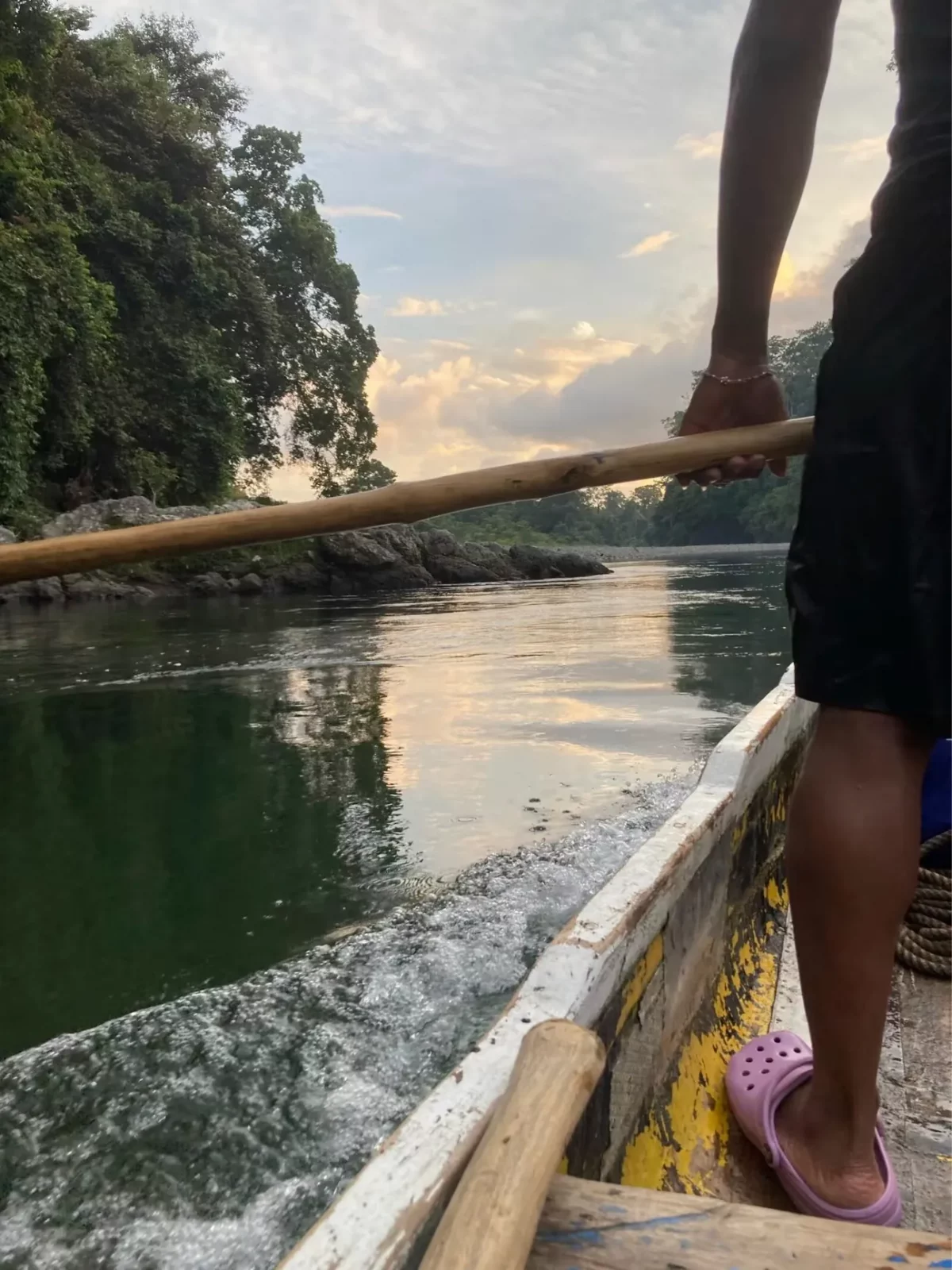
Chen crossing a river in the jungle of the Darién Gap. Foto: Chen Ye
“The children asked if they could call papa.”
— Chen’s wife Zhao
Chen posted a video to one of his social media accounts showing the woman clambering over a tree root with wobbly steps. You can see the blue plastic bags knotted in the undergrowth to mark the route. On the fourth day, Chen writes, they almost drowned crossing a river because the woman lost her balance, jerking the rope connecting the two of them for safety.
By the time they arrived at the refugee camp in Panama a short time later, all he had left were the clothes he was wearing, his telephone, a charging cable and a brush, in the bristles of which he kept his last dollar bills.
“You have two choices: Either you buy yourself a return flight or you stay here forever.” According to Chen’s recollection, those were the words the border guard growled at him and his companion as he locked them up in a prison cell. But it proved to be an empty threat. After the woman refused to eat for a few days, they were set free.
When Chen gets back in touch in the evening, he is speeding through the darkness. The last message he sends on this evening is his location on Google Maps – an industrial park on the other side of the border fence.
He Doesn’t Even Know She Has Moved
Chen had already told his wife that once he gets to America, he wouldn’t be reachable for a time. The thought that he might be locked away in a cell somewhere in an unknown place as the men of Anhui were returning to the village for the Spring Festival to celebrate the dawning of the Year of the Snake made Zhao sick.
“It was the first time he hadn’t been there. The children asked if they could call papa,” says Zhao. But she told them that he didn’t have a telephone at the moment.
It’s a Sunday. Zhao is sitting on a sofa in her brother’s apartment on the fifth floor of a newly built complex. On the table in front of her is a book bound in white: “Adventist Families: Cornerstones for a Happy Family.”
After the festival, Zhao says, she took a closer look at the family finances and realised that her seamstress wages weren’t enough. And because she didn’t know whether Chen would be able to send money any time soon, she decided she wouldn’t just feel like a widow, she would also have to act like one. Zhao began looking for a new job with higher pay near her village. But because she was unable to find anything, she brought the children to her mother-in-law and took the five-hour train ride to the provincial capital, where she now pats down visitors at the gates of a factory.
“I have to plan,” says Zhao. “The children will soon be older, and school is getting more expensive.”
Outside, on the horizon behind the windows, the smoke from the chimneys has turned the sky a creamy red. Chen, says Zhao, is now writing every day. Recently, he has begun complaining that she doesn’t always reply. He doesn’t know, says Zhao, that she isn’t allowed to have her mobile phone with her during her shift. She hasn’t even told him that she has moved.
In Trump’s Dystopian America
It’s a frigid February morning when Chen barges through the door of an Asian eatery in New York, takes a seat at one of the tables and pulls his mobile phone out of the pocket of his down jacket. He swipes across the display and opens the calculator. Chen has just come from a store that sells imported goods from China; they are looking for someone to take pictures of porcelain, jade and statuettes and upload them to E-bay.
Ten dollars an hour. Seven hours a day. Six days a week.
“10x7x25 = 1,750.”
A pained smile appears on his face.
“Not enough,” he says.
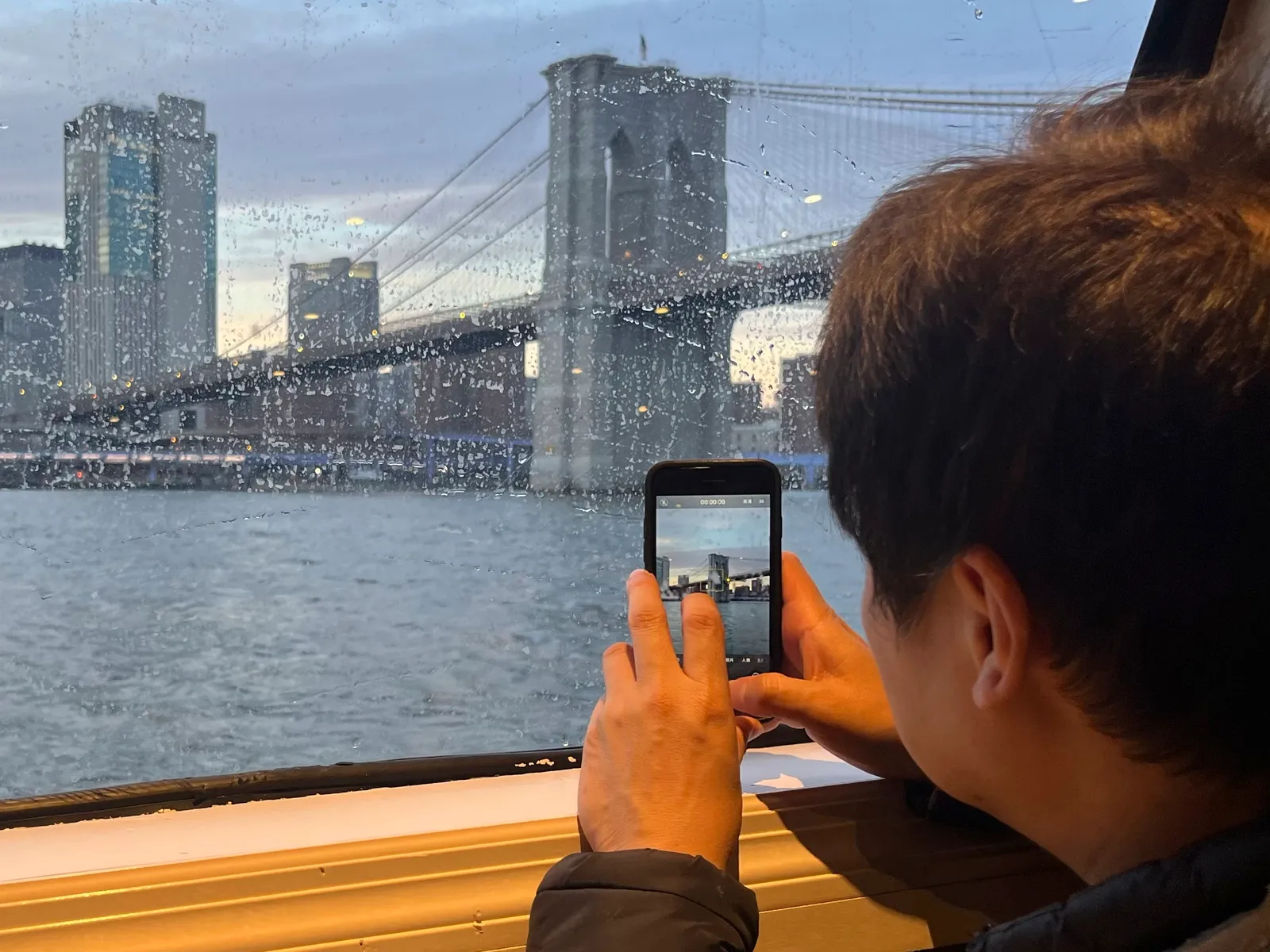
Chen taking a picture of the Brooklyn Bridge in New York. Foto: Der Spiegel
Almost three weeks have passed since Chen was released from immigration detention, where he spent just short of two months. Not long after being picked up by border patrol officers in San Diego, he was brought into an interrogation room one morning. A phone was waiting, and Chen told the officer on the other end of the line that on one occasion, police broke up a church service in Anhui, took him to the station and beat him. He mentioned that Zhao’s passport had been revoked and spoke of internet censorship. But the story was so flimsy that he received a rejection letter a few days later.
After he then went on a hunger strike, says Chen, he was taken before a judge, who found his fear of returning to China more credible. The judge demanded more details and, following standard practice to that point, set him free for the duration of his asylum proceedings.
A few days after Trump was sworn in, Chen boarded a plane that brought him to his ultimate goal: New York, the Flushing neighbourhood, the heart of the Chinese diaspora, a place where the writing on the facades is instantly recognisable to him and the vendors on bustling Main Street speak his language. Chen rented the bottom bunk of a bunkbed in a brick building right around the corner.
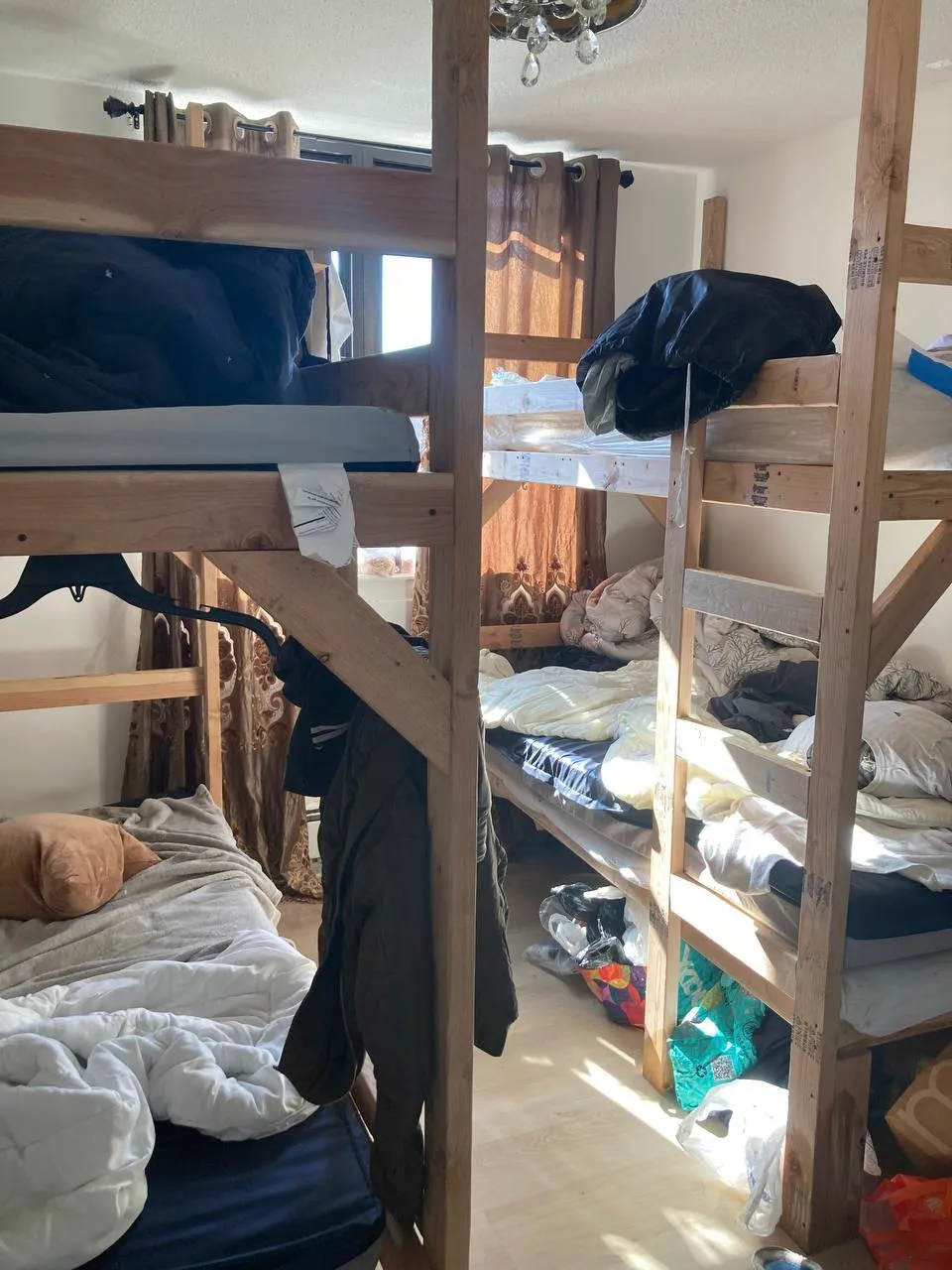
Chen’s shared room in the New York neighbourhood of Flushing. Foto: Chen Ye
“$1,750, that’s not even enough for the payments.”
— Chen
He shares the kitchen and bathroom with 20 other people from China. When he wants a bit of privacy, he hangs a sheet in front of his bed. He is starting over from nothing – or, to be more accurate, at minus 35,000. That is mountain of debt, in euros, that he accumulated on his journey. Six loans are still outstanding, all of them listed on Chen’s mobile phone. They delineate the limits of Chen’s new freedom.
“$1,750, that’s not even enough for the payments,” he says. “And I still have to eat.”
Now, he spends every evening in his bed scrolling through the job apps for the Chinese community. When he recently went to a restaurant for a trial, the boss asked him if he had ever before held a vegetable knife in his hand. When tried out loading boxes full of frozen chicken onto a truck at a poultry factory, he realized that he isn’t built for such work. He would really love to find an office job, says Chen, but for that, he needs a work permit, which most companies have begun requiring.
During the conversation, he repeatedly grabs his phone and updates the ads on “Huaran 168.” When he finds something, he immediately calls the number to ask if they still need someone.
“Okay,” he mumbles as the minutes tick away on his mobile phone contract. “Found someone already.”
“I understand, only with a permit.”
In his apartment, he says, the others have been whispering about raids that have taken place in the neighbourhood. Nobody is taking the risk anymore of hiring people without papers.
Chinese Migrants Are Now Being Deported
The country that Chen has reached is a different place from the one he dreamed about. Trump is taking a wrecking ball to the foundations of a country built on immigration. Military planes have repeatedly been deployed by the Trump administration to deport what the president sees as criminal invaders. For some, their American dream ends in Guantanamo. Others are sent to a high security prison in El Salvador. Panama has begun accepting deportees from other countries and putting them in a camp on the edge of the Darién Gap.
Including migrants from China.
It is a situation that Chen finds confusing. Trump’s rhetoric, that was always the one side of the coin, he thought. But on the other were the facts: Around 11 million irregular migrants who had been tolerated because there was nobody else to take care of the jobs they do. Not to mention China’s refusal to take back those who have left.
That reality, though, is beginning to shift.
There are currently around 100,000 Chinese nationals in the U.S. illegally. For a long time, American officials had no means of dealing with them because China simply refused to recognize them as citizens. The consulates wouldn’t issue them travel documents. At some point last year, though, this approach began to change. The charter flight that took off for China in June 2024 was the first of its kind for several years. Four more would follow, carrying hundreds of deported people back to China.
It isn’t entirely clear what caused this change of heart. There are those who believe that fear of punitive tariffs or visa bans for the Chinese elite drove Beijing to reverse course. Others think the Communist Party wanted to send a signal because the exodus is slowly growing to uncomfortable proportions. If you ask Chen about it, he merely shrugs his shoulders.
“There’s no going back for me,” he says. “I’m not going to leave this country alive.”
So, what now?
Is Chen seen as a terrorist in Trump’s dystopian America even though he doesn’t even dare to cross a completely empty street against the red?
No mistakes. Stay invisible.
Trump’s arm may be long, but it doesn’t extend into every corner of the judiciary. Chen’s work permit, his Green Card – all of that is just a question of time, he tells himself, and that’s also what he tells Zhao, who keeps asking when he will finally be able to send money back home. A few days ago, as he was distributing flyers for a massage studio on a street corner in Manhattan, he filmed a squirrel for her in Central Park. As usual, she didn’t even click on his message. Whenever he calls her, they argue, he says – but he finds the insults easier to deal with than the silence.
The children, he says, only get in touch when they need the password for a video game.
Was it worth it?
Chen clutches his coffee cup and holds back the tears.
“It has to be,” he says.
One morning, he can be found sitting on a wooden bench in a Seventh Day Adventist church that offers a free meal after services. The pastor, a Chinese man in a black suit, says he’s not in the mood to once again talk about a “difficult issue” like migration. Instead, his hour-long sermon focuses on animals in the Bible.
When he calls for donations at the end, Chen reaches into his backpack and pulls out a sack full of coins. It’s all that he has at the moment, a few pesos from Colombia and Mexico, córdoba oro from Nicaragua and Guatemalan quetzals. He puts a handful of these coins in an envelope before walking forward to the altar and getting in line. A smile is on his face as he returns.
“So many coins,” he says with a chuckle. Chen isn’t the only one here who is shedding the final bits of ballast from a long, long journey.
Additional reporting by Xi Xiaodan and Julia Prosinger.